Featured

How to Read Leviticus Without Getting Discouraged

Many Christians plan to read their Bibles through in a year. Typically, they begin at the beginning, and by the time they arrive at the latter part of Exodus, it becomes cumbersome. Then, once you get to Leviticus, you might find yourself a tad discouraged. Here’s another way to look at Leviticus.

A mother had instructed her son not to play in a particular part of the woods behind their house because it was occupied by a family of skunks. One day, however, the son decided to inspect this area to learn more about skunks, since his curiosity was too intense to resist. At first glance, they seemed like cats, but with specific coloring. He moved in to see if he could hold one, but the younger ones moved away as the father stood his ground. As skunks often will do to warn, the father walked on his two front feet, putting the rest of his body in the air, as if he were walking on his hands. The little boy thought the skunk was doing a trick, so he moved closer, and then the father lifted his tail, took aim, and sprayed the boy with the noxious odor to repel him. 

The boy ran frantically home, coughing and choking over the stench. As he cried out for his mother, she came to the front porch, and as her beloved son approached, she caught a whiff of the skunk and knew what had happened. She commanded the boy to stop because she couldn’t tolerate the odor. She didn’t stop loving her son, but he wouldn’t come into the house smelling like that. So what did the mother do? She didn’t hate her son. She didn’t reject her son. She wanted to help him. She prepared one of their troughs with a solution made of laundry detergent, peroxide, and baking soda. She placed her son in the trough and scrubbed him till the smell was gone. Then, he was able to come into the house, sit in his mother’s lap, and be comforted. When we think about sin and its effect, it’s similar to this story. We have become tainted by sin and its odorous effect, so we can’t come into God’s presence. However, God doesn’t look at us with hatred and malice, but with compassion and grace. He prepares a solution for us so that our sins may be removed and we can come into His presence once more.

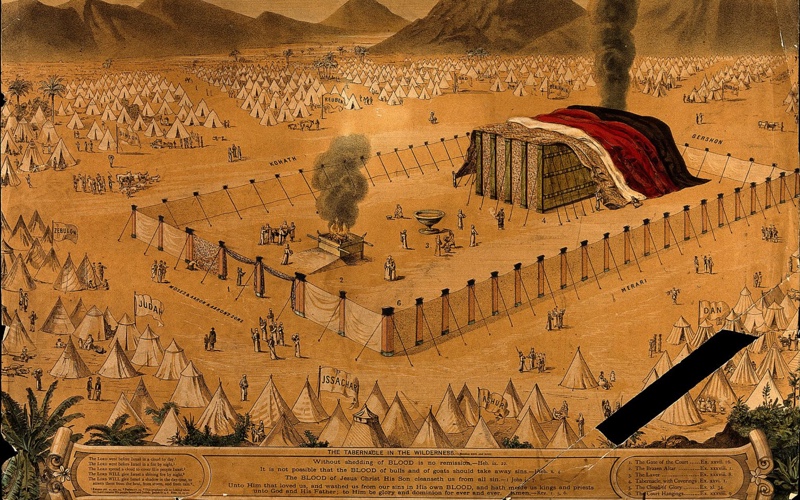
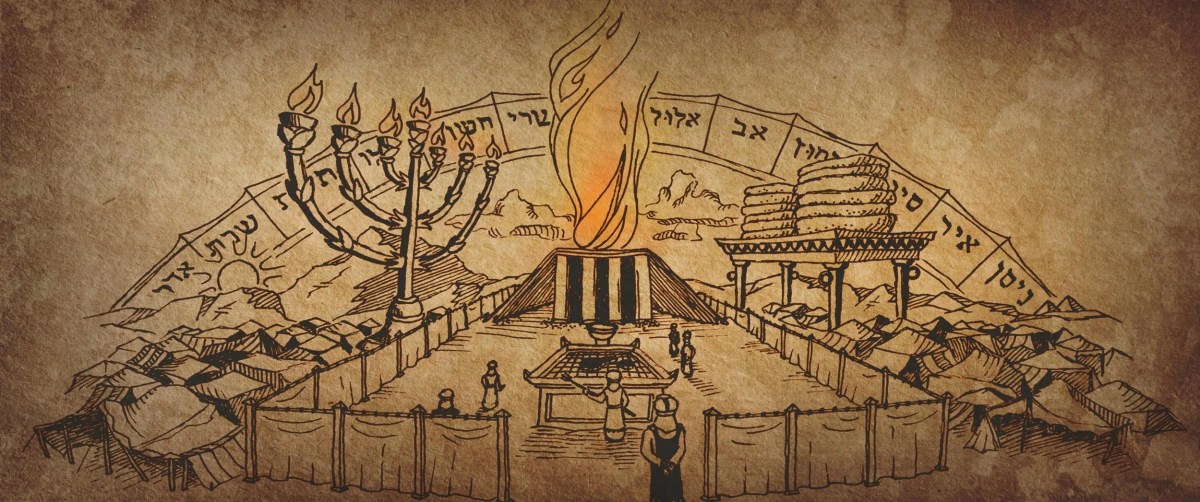
When God chose His special people, Israel, He wished to dwell among them. However, for Israel to live in God’s presence, God provided remedies by which He could dwell in their midst, and they could approach Him. This is what we read about in the book of Leviticus. What’s important to remember is the ending of Exodus, however, because it gives sense to the first verse of Leviticus. 

Then the cloud covered the tabernacle of meeting, and the glory of the LORD filled the tabernacle. And Moses was not able to enter the tabernacle of meeting, because the cloud rested above it, and the glory of the LORD filled the tabernacle. Whenever the cloud was taken up from above the tabernacle, the children of Israel would go onward in all their journeys. But if the cloud was not taken up, then they did not journey till the day that it was taken up. For the cloud of the LORD was above the tabernacle by day, and fire was over it by night, in the sight of all the house of Israel, throughout all their journeys. (Exod. 40:34–38)

The glory—kavod literally means “weightiness”—of God is best thought of as a mantle of light enveloping God, and the cloud gave off the luminosity by day and appeared as fire by night.¹ When Moses first saw the Lord’s presence in the burning bush, he hid his face because he was afraid to look upon God (Exod. 3:6). Later, however, Moses’ faith in God had grown exponentially to the point that he wanted to see the glory of God. Still, he couldn’t see anything but the “goodness,” because seeing God’s face would have killed Moses (Exod. 33:18–23). Even then, God protected Moses from seeing Him. 

After Moses communed with Yahweh, he came from Mt. Sinai with his face shining (Exod. 34:29–35). There’s a great lesson from this passage: The fear of Israel upon seeing Moses’ face parallels that of their fear of drawing near to God. Similarly, because Moses would cover his face with a veil when among Israel, this demonstrates that the holy of holies had to be partitioned off and enveloped in layers, yet accessible to the people.² Now, when we arrive at Leviticus, the question arises: “How can a people stained with sin live among the holiness of which they are afraid?” For the priests of Israel and the rituals prescribed in Leviticus, God provides in His mercy and grace the ways that He can be among a sinful people, and they dwell in His holy presence. It’s best to think of God’s holiness as the sun, which in its unadulterated form is powerful, and anything mortal that gets near it will burn up. The sun doesn’t hate such things but consumes them. 

To outline Leviticus, we must identify its three major components: Sacrifices (Lev. 1–7, 23–37), Priests (Lev. 8–10, 21–22), and Purity (Lev. 11–15, 18–20). The sacrifices are ways to say “thank you” (i.e., grain and fellowship offerings) or “I’m sorry” (burnt, sin, and guilt offerings). Some of these occur on holy days when festivals were held. These were times of celebration to retell Israel’s history and explain why God chose them. Mediating these sacrifices were individual representatives who advocated for the people, called “priests.” These servants worked so closely to God’s presence that they were chosen to represent God to the people and the people to God. Such people were ordained and had to live by higher standards, similar to those of our pastors. Finally, the purity laws concerned cleanliness and uncleanliness. Cleanliness or purity is a state in which one can be in God’s presence, whereas the opposite is that of uncleanliness. Some of these concerned sexual relationships, social justice, and interpersonal relationships. These categories summarize the second-greatest command: to love your neighbor as yourself. Summing up the greatest commandment to love God with our whole being, we find that it includes dietary laws, skin diseases, dead bodies, and bodily fluids. Many of the latter three concerned life and death: one was sacred, and the others resulted from sin. Going before God in an impure state was inappropriate. 

Tucked in the middle of the book is the Day of Atonement. On this day, the entire nation had sinned, perhaps unnoticed and unknown. The high priest would atone for the whole country by taking two goats and slaying one whose blood was brought to God’s presence to atone for the sins. God has said that the blood of a creature was life, so the life of the goat was to take the place of Israel and the penalty of their sin. The other goat was presented to the priest, who would lay his hand upon its head, confess the sins of the nation, and send the goat out into the wilderness, carrying the sins of the country away from them into the barren land. By this goat, God graciously removed Israel’s sins. 

Christ became not only our high priest but did so while being tempted yet remaining pure (Heb. 4:14–16). As the high priest, not only offered the perfect offering but was Himself the offering so that He could go into the true holy of holies to minister for us (Heb. 9:11–14). What we learn from Leviticus only prepares us for the cross. Jesus Christ is now how we may live in the presence of the holy God. 


¹ Robert Alter, The Five Books of Moses: A Translation with a Commentary (New York: W. W. Norton & Company, 2004), 535.

² Ibid., 513. 

Featured

Intro to 1 Peter

Writing from Rome (which he calls “Babylon” in 5:13), along with John, Mark, Peter addresses a network of churches that comprises modern-day Turkey. Early church writers made explicit citations of 1 Peter as early as the 90s AD, through to the latter part of the second century, which attests to the authority of the letter as well as its apostolicity. How the gospel came to be in this area isn’t altogether clear, but we know that Jewish believers from some of these areas were present on Pentecost (Acts 2:8–11). Additionally, Emperor Claudius (AD 41–54) established Roman colonies in these regions.

One central question is who the audience was: Jewish, Gentile, or both. The descriptor of “pilgrims of the Dispersion” was typically how Jewish exiles from Judea were addressed (cf. James 1:1). There are also further descriptors such as “Sarah’s children” (1 Peter 3:6), “God’s elect” (1 Peter 1:1, 2, 4, 9) and those called to holiness (1 Peter 1:15–16). They are also contrasted with Gentiles (1 Peter 2:12; 4:3), but by this time, all Christians might have been considered as one with Jewish believers, and the Gentiles were non-Christians. However, we also know that Peter was an apostle to the circumcised (Gal. 2:9), and readers from Eusebius in the fourth century to John Calvin agree that the primary audience is Jewish Christians. Still, some descriptors indicate pagans were among the audience (1 Peter 1:14, 18; 2:9–10, 25; 4:3), but prophetic language sometimes regarded apostate Israelites as pagans. We can assume there’s a mixture and that this letter would not have been sectarian or racially distinguishing between believers in Jesus (cf. Rom. 8:29–30).

The entirety of the letter addresses their suffering, which was likely caused by social scorn, shaming, slander, and stigma. They were likely viewed as social deviants and may have faced verbal and physical pressure to return to the norm. Given that Christianity grew out of Judaism, we can look to history to see how Jews were viewed to get a picture of how these Christians were regarded. Rome banished Jews on some occasions. There was a time when Tiberius was emperor, and again during Claudius’ reign. Claudius viewed them with animosity from the beginning of his reign. When Christianity was young, Jews were expelled from Rome. In Christianity’s earliest decades, it bore no outward distinction from Judaism as perceived by the Romans. The Jews were expelled at the instigation of “Chrestus,” according to Suetonius. 

When Diodorus wrote about Antiochus Epiphanes subduing the Jews, he referred to their customs as “wicked.” Cicero also viewed the Jews as enemies because of their behavior when they assembled. They showed no regard for the interests or laws of the Republic, and that won them no favor with Rome. Because they wanted to keep Judea pure from Roman occupation and rule, they resisted Rome. Their actions were rebellious and drew attention to the Jewish religion as the source of their unruliness and eventual disdain by the Romans. Horace believed that they were manipulative and coercive. He viewed them as always proselytizing and forcing others to join their religion. Because they proselytized, many were Jews by conversion rather than birth.  Furthermore, they believed in silly superstitions and were weaker because of their Sabbath keeping. Juvenal viewed their Sabbath keeping as idleness. Their customs were “base and abominable,” and they were the worst villains among all other peoples. As a race, they were believed to have been a curse to others, and Moses, their lawmaker, was detested. While many Jews upheld practices that distinguished them from other people, those who observed them wrote about the Jews’ hypocrisy in doing some of the very things that they seemed opposed to otherwise. If early Christians were treated anything like Jews, we get but a glimpse of it in this letter. Peter urges them to identify with Christ’s suffering (1 Peter 4:12–16) and await eternal glory (1 Peter 1:7; 2:11; 4:13; 5:4, 10–11). 


Works Referenced

 Acts 18:2; Suet. Claud. 25.4.

 Diodorus, Bibl. Hist. 34.1.3.

 Cicero, Flacc. 28.66–69.

 Horace, Sat. 1.4.142–3; cf. Matt. 23:15.

 Acts 2:10; 13:43. Cf. Juvenal, Sat. 14.102–03. A Gentile could become Jewish by circumcision, immersion, and a sacrifice (Keritot 9a; cf. Pesahim 8.8; Exod. 24:8).However, Gentile conversion was not always welcomed and in some cases was even rejected.

Juvenal, Sat. 1.5.100. To the Roman mind, anything other than what had been appointed at the founding of Rome was “vile and alien” (Livy 39.15.3). See also Juvenal, Sat. 15.1–13.

 Juvenal, Sat. 14.96, 105–06.

 Tacitus, Hist. 5.5.

 Quintilian, Inst. 3.7.21.

Featured

A Reversal of Fortunes (Esther 5-7)

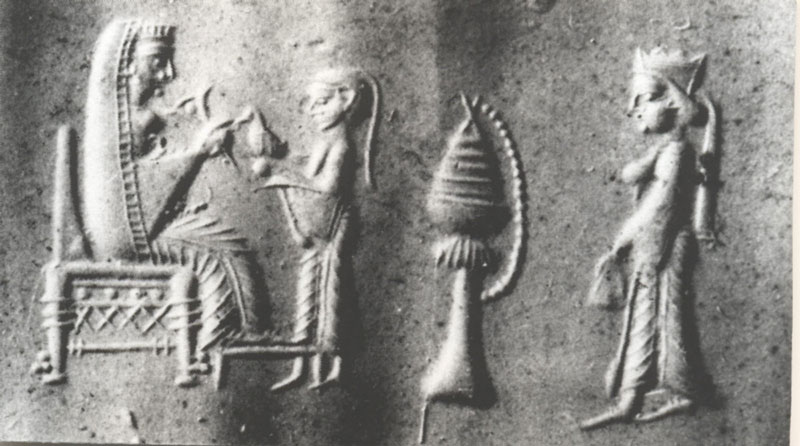
After three days of fasting, Esther presents herself to the king. Unlike Mordecai, she wears her royal robes. The royal palace of Susa has been excavated, and the audience hall was over 350 feet square and divided into several chambers. Whatever separated them for thirty days, the king looks favorably upon her. Banquets figure into this story a lot. It began with a banquet that evolved into a second one, where the king grew upset with his queen. Esther’s banquet is already prepared in anticipation of a positive answer, and this will lead to a second banquet where the king’s ire turns to his right-hand man, Haman. The Greeks observed that the Persians made most of their important decisions while drunk, and when they drank wine, Ahasuerus asked what Esther requested. 

Haman is touched to be included, but his delight turns to rage when Mordecai refuses to stand when he walks by. Haman goes so far as to state his extensive wealth, sons, and the king’s esteem as prizes he possesses. However, the one thing that means the most to him is what Mordecai won’t give—homage. When is it enough? So what if that one guy doesn’t do what you want him to do? You even stated all you have, so take the wins and move on. Psychologists would say that Haman is a narcopath. “A ‘narcopath’ is a term sometimes used to describe individuals who display a combination of narcissistic and sociopathic traits, characterized by grandiosity, lack of empathy, a need for admiration, and manipulative, antisocial behavior,” according to Google’s AI overview. 

As the story progresses, the king’s sleepless night works to Mordecai’s favor. Haman has spikes prepared to impale him. Meanwhile, the king reads the annals and he hears what Mordecai had done and wishes to reward him, so since Haman was on his way to ask this of the king, he is selected to give the king’s honors to Mordecai. Because he’s so self-absorbed, he thinks the king is talking about Haman when he asks what shall be done for whom the king wishes to honor. Haman’s plan, which he believed to be for himself, is charged with implementing it on the man he hates. 

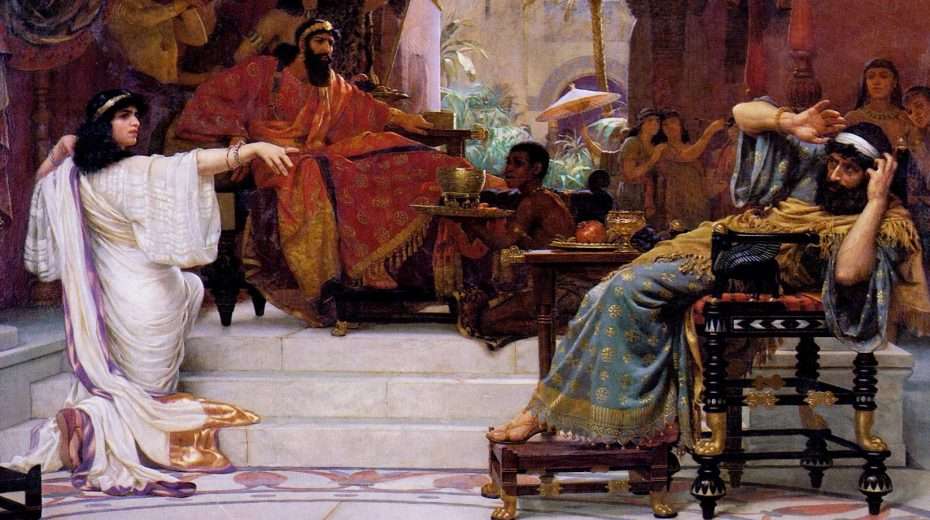
At the second banquet, the king asks her request, and Esther finally discloses that she is Jewish. As an alternative to being slaughtered, she uses the price Haman offered against him by saying that they could have been sold into slavery. After all, they were conquered by the Babylonians, who then fell to the Persians. Slaves were often composed of conquered people, and Haman has already referred to them as rebellious (Esth. 3:8). Haman either falls on the couch or the queen. Whatever it was, his actions were seen as an assault on the queen. Assyrian law prohibited coming closer than seven paces of the king’s harem, so something like this may have been in mind. Before the Japanese surrendered in WWII, it was prohibited for anyone to walk on the Emperor’s shadow. To try to lie with the queen, which he is accused of, is to lay claim to the throne too. Ahasueras feels betrayed by his most trusted minister. Neither knew of Esther’s ethnicity, but the king expected that Haman should have. 

Featured

For Such a Time as This (Esther 4)

Now that news of the impending slaughter has made its way around, Mordecai displays grief in a standard way in antiquity. Sackloth is a rough, coarse material that was uncomfortable to wear. Grief was often expressed in dramatic ways, such as wearing this garment, rolling in ashes, or placing ashes on the head. Mordecai cries bitterly while Jews throughout the empire add fasting. Though prayer to God isn’t outright mentioned, we might assume that it accompanies fasting. Because Persian monarchs were somewhat self-serving, bringing grief to them is prohibited (cf. Neh. 2:2), so Esther sends proper garments so Mordecai can pass through the king’s gate. Yet, he refuses. 

Mordecai’s refusal of appropriate attire brings in an intermediary to go between the adoptive father and daughter. How Mordecai came to learn of the plot has been debated. It was sent throughout the entire empire. Still, one theory suggests that he was a scribe for the palace and translating this in Aramaic gave him firsthand exposure (cf. Esther 8:9–10). Eunuchs weren’t just errand boys for the palace. Many of them were highly educated, so Hathach may have needed to read the edict to a presumably illiterate Esther. 

Knowledge of court practice was widespread. Mordecai likely knew this, and Esther knew that if she went before the king presumptuously, it could end with her death. Her hesitation to do so may indicate that she was no longer in the king’s favor and that by doing so, she was gambling a 50/50 chance. Furthermore, if she does nothing, her head will be on the chopping block. Mordecai expresses his faith when he says that deliverance will arise from elsewhere. He’s most likely acquainted with the promises God made to Abraham, and God will not allow his chosen people to be blotted out from the earth. Mordecai and Esther demonstrate a measure of faith. He believes in God’s promises, and she resigns herself to the possibility of death. At least she can take the shot and try to stop what is inevitable. To further add to this, she asks her countrymen to host a three-day fast in preparation for her actions. 

There are two main lessons from this chapter: 1) speak faith to your problems, and 2) never underestimate your ability to make a change. To the first point, Mordecai believed in God’s promises to Abraham, although this isn’t mentioned in the story, but he was confident that deliverance would come for the Jews. Did he wail and bemoan the state of affairs? Absolutely, but he still spoke faith to his problems. Abraham, likewise, spoke faith to his situation. When God asked him to take Isaac and sacrifice him on Mount Moriah, Abraham told his servants, “The boy and I will go over there; we will worship, and then we will come back to you” (Gen. 22:5). He didn’t know how things would play out, but he trusted God. Even in the face of sacrificing the promised son through whom many would be blessed, he spoke faith in his situation. When Daniel’s three friends were threatened with the fiery furnace, the king asked, “Who is the god that will deliver you out of my hands” (Dan. 3:15). Their reply is an epic example of speaking faith to one’s circumstances. 

O Nebuchadnezzar, we have no need to present a defense to you in this matter. 17 If our God whom we serve is able to deliver us from the furnace of blazing fire and out of your hand, O king, let him deliver us. 18 But if not, be it known to you, O king, that we will not serve your gods and we will not worship the golden statue that you have set up. (Dan. 3:16–18). 

Adding to this, we can also always take our problems to God. “Cast all your anxiety on him, because he cares for you” (1 Peter 5:7). Speaking faith to your situation, accompanied by prayer, is living by faith, and faith is the victory that overcomes the world (1 John 5:4)

To the second point, Esther initially didn’t believe she could be the difference between annihilation and survival. There are many stories throughout Scripture where one person made a difference. The Ethiopian Eunuch had Phillip; Nineveh had Jonah. Even Peter had Andrew. Andrew is often forgotten because Peter eclipsed him, but Andrew brought his brother to Jesus. Never sell yourself short. We may never know when and how God will use us. 

Featured

Before Hitler, There Was Haman (Esther 3)

What’s interesting about chapter three is its beginning phrase, “After these things.” What things? After Mordecai disclosed the plot to assassinate King Ahasuerus, Haman was promoted. We aren’t told why, but his introduction is key to understanding what follows. Being a descendant of Agag, king of the Amalekites, tells us about the animosity that is to come. King Saul was to have killed all the Amalekites, but he spared Agag only for Samuel to finish the deed (1 Sam. 15). Earlier, Mordecai’s lineage ties him directly to King Saul (Esth. 2:5), so this is like a rematch of Saul and Agag through their descendants. A knowledge of Scripture tells us who the victor will be, because God had said that he would see to it that the Amalekites would be blotted out (Deut. 25:17–18). 

While everyone is drooling over Haman’s exaltation, Mordecai does nothing of the sort. As far back as Late Antiquity, the reason given for his refusal is religious. He won’t kneel to flesh and blood. One wonders if there weren’t also political or personal motives involved. Mordecai told those who inquired that he was a Jew, which has led to the conclusion that his refusal was on religious grounds. Persian religion at the time was based on the belief in a god of light, Ahura Mazda, and a god of darkness, Angra Mainyu, who were constantly at odds with each other. It’s called Zoroastrianism, named after the prophet Zarathushtra, dating to the second millennium BC. Key to this religion is the ideal of thinking good thoughts, speaking good words, and doing good deeds. This is important because it’s precisely a story about good and evil.  

By the time of these events, Esther would have been queen for five years. The month of Nisan is April, and the month of Nadar is March, so for a whole year, this decree will be issued and the Jews will have this timeframe to contemplate the date of their deaths. When Ahasuerus gives Haman his ring, he has essentially given him carte blanche to do as he pleases. He now has royal power with which to act. The king and Haman drink, the city of Susa is confounded, and the Jews are terrified. 

Racism is something taught; it’s not something we are born with. Haman undoubtedly heard from childhood how he is a descendant of a king; a king whom the Jews put to death and whose lineage they tried to destroy. Now, he has grounds on which to finish the work of his forebearers who wanted to obliterate the Jews when they left Egypt. He’s in the prime position to make it happen, and Mordecai and the “rules” of the Jews give him his justification to persuade the king to allow it. 

In Scripture, we observe Jesus behaving kindly towards people that his own race hated—the Samaritans. He tells the parable of the Good Samaritan, he speaks with the Samaritan woman at the well, and he restrains his disciples when they want him to rain hellfire and brimstone on a Samaritan village. Even the book of Romans is a book about racial reconciliation. The Jews were expelled from Rome for several years. When the Caesar who issued such an edict died, another took his place and allowed them to return. They saw their Gentile brothers and sisters leading the church in their absence, and they wanted to run things since they had returned. It turns into a battle between races and their different traditions. Paul wrote to relieve that tension. To the Galatians, he wrote that there is neither Jew nor Greek, so when you read the New Testament, the issue of racial bigotry is something even the church dealt with. 

At every turn in Scripture, especially the New Testament, there is an appeal to end racial bigotry. The Jews called non-Jews Gentiles. The Romans and Greeks called those who were not of their own race “barbarians.” Every group believes itself superior to others. Why speak about racism? Aren’t we Christians supposed to be beyond that? We should, and I hope we are, but we also have to keep in mind that though we may not have incurred racism, some of our brethren have. 

My longtime mentor, Sellers Crain, told me a disturbing story about his early days in ministry. He was preaching at a congregation in Louisiana when he noticed that most of the men were missing on a particular Sunday near the beginning of the services. He’d seen them arrive, but they were now absent. He began looking for them when he saw that most of them were outside around a car. He went out to see what was happening and noticed that many of the men had surrounded a car containing a family. What made this particularly notable was that the family wasn’t white, but black. After hearing some of the chatter among the congregation’s men, he disbursed the crowd, telling them that he’d handle it. When the frightened father rolled down his window, Sellers had to say to them, much to his chagrin, that the men wouldn’t allow the family to join them in worship. He informed them that there was a congregation of black saints. The father thanked him, and then they drove off. Sellers told me how much this bothered him and how it almost led him to quit the ministry. He learned that many of those men were members of the Ku Klux Klan and that their actions were motivated by racial bigotry, these having been the days of the Civil Rights Movement. 

Sometimes there are things we do that we may not think are racist, but to others they may be. Then again, some people can be so hyper-sensitive that you don’t know what’s acceptable and what’s not. For example, among my tribal family, we often refer to ourselves as Indians. That’s the nomenclature used for a long time to describe native peoples. Even many tribal elders that I know use that term to speak of our people. Yet, others find that term offensive. It can be hard to know what to do, so on both sides, I believe it’s necessary to extend grace. Growing up, I’ve often been asked what I am. I don’t take offense to it, but others do. I see it as an opportunity to talk about my Choctaw family and ancestors. I’ve been asked about mascots and Halloween costumes. Again, a variety of opinions exist. There’s only one time that I’ve ever felt angered by what someone said. It was a much older white man who, when he learned that I was going to give a talk about Native American History, asked what they ever contributed. It was the way he asked it, but he later came and apologized, so I gave him the grace I would have wanted if I realized that I might have upset someone. 

Featured

A New Queen Emerges (Esther 2)

Between Esther I and II, Xerxes unsuccessfully attempted to subdue Greece. With his tail tucked between his legs, he has returned to Persia, and the loss has overshadowed his wrathful feeling born from Vashti. Yet, he returns a king with no queen to greet him. As with Chapter I, advisers urge the king on what to do. Xerxes appears to be a passive king, led by his advisers. A beauty contest will be held to decide who will be the next queen, and she’ll be quartered in the king’s harem. It may seem odd that he wouldn’t take a Persian queen, but it isn’t without precedent—Artaxerxes I and Darius II had Babylonian queens. 

“Mordecai” and “Esther” are Babylonian names; the former is a play on Marduk, and the latter is from Ishtar. Mordecai’s father’s name is Hebrew, so this only shows how much exiled Jews assimilated. This isn’t a statement on their fidelity to God because Daniel and his compatriots were given pagan-based names as well. They may have had Hebrew names used within their Jewish community (Hadassah means “myrtle”). Mordecai’s lineage traces back to Israel’s first king. The term translated as “son” can mean descendant. The author shows us that these two characters belong to a prominent Benjamite family. Mordecai adopted his first cousin, some suggesting he was in his thirties and she was in her late teens. In verse seven, Esther is described precisely how Joseph was (cf. Gen. 39:6). Many similarities exist between Esther and Joseph in the story. For example, their stories are rags-to-riches. They are both attractive Hebrews and find favor with courtiers; they also have archenemies to overcome and reach the inner palace circles. 

The “cosmetics” the women underwent were to make them as unblemished and attractive as possible. Spending a night with the king has its own implications that need not be discussed. Suffice it to say, this was trial by bedding. However, because of who she was and how she was, finding favor with all she encountered won her a king. As the story goes, we’re not told why the two eunuchs became enraged, but their plot is foiled when Mordecai informs the queen of their intentions. These men weren’t “hanged” as we would envision a noose. They were impaled and displayed for the public. 

Esther reminds me of the passage from 1 Peter, “Rather, let your adornment be the inner self with the lasting beauty of a gentle and quiet spirit, which is very precious in God’s sight” (3:4). God’s providence is witnessed in this passage: “The King’s heart is in the hand of the LORD, like the rivers of water; He turns it wherever He wishes” (Prov. 21:1). Even though the Persian king doesn’t worship God, it still doesn’t remove him from God’s soverignty. God gave his own people into the hands of the Assyrians, the Babylonians, and the Persians. Even those not necessarily aligned with God can still be used by him. That’s the whole point of Habakkuk—God would use the Babylonians’ swiftness and conquering to humble his people. Yet, because of the Babylonians’ actions, God used the Persians to overcome them. Cyrus the Great was tolerant of other religions and allowed the Jews to return to the Promised Land to rebuild.

Featured

After a Long Party

Esther belongs to the court tale genre. In this genre, a drama occurs within the royal court, and a hero foils the plot of their enemy to receive royal favors later. It is debated whether to read it historically, like Kings and Chronicles. Yet, the writer was familiar with Persian customs. Another type of story that fits this genre is the Tale of Ahiqar. Esther is used as an etiological explanation of the birth of Purim. On this holiday, they exchange gifts of food and drink, donate to the poor, eat a celebratory meal, and recite the scroll of Esther along with the appropriate liturgical prayers. Some scholars believe the story was invented to justify the holiday of what amounts to a party. Yet, court tales are usually based on historical events and people. Esther is somewhat unique in that the story is secular because the book contains no references to God or anything particularly religious. However, one can certainly see the providence of God throughout the story. 

His Persian name was Khashayar, which means “ruler over heroes,” but his name in Hebrew is what we see in Esther. To the Greeks, he was Xerxes, and he ruled from 486–465 BC. He reigned from India (Pakistan) to Nubia (northern Sudan and southern Egypt) and gave a banquet in the third year of his reign. This lavish banquet lasts for half a year, suggesting that little business is getting done. After this period, he gives Susa a one-week banquet. The details of the fineries are present to convey the austerity of the event. 

Simultaneously, Queen Vashti threw a banquet for women. The king and his guests are in the courtyard (v. 5), while the women are in the palace. “Vashti” is believed to derive from Persian and meant something like “the best” or “the beloved,” so it wasn’t a proper name so much as a title. Herodotus wrote about the Persians and named Amestris the queen, but what’s problematic is that she was queen before and after his attempted conquest of Greece. This conquest occurs between chapters one and two in the story of Esther, and Esther becomes queen in chapter two. “Amestris” derives from Persian and means “strong woman,” which may have been the title that Herodotus gave the queen. The hunt seems futile since we aren’t necessarily dealing with proper names. Plus, Queen Vashti may have remained his wife and just exiled (cf. verse 19) because we know that Darius I had more than one wife.  

According to the Persepolis Fortification Tablets, royal wives often acted independently from their husbands. Jewish Midrash (interpretation) suggests that the king wanted his queen to appear naked before his guests, something usually required of concubines rather than queens. On the one hand, he wanted her to wear the crown, denoting her high status, but on the other, he wanted to parade her, thus denigrating that status. Her refusal must serve as an example because her actions, if they are made known, threaten the patriarchy of Persia. 

How much is dignity worth? It is cheaper, but it depends on who you ask and what the subject is. The modesty and dignity with which Vashti acted conveyed that she was worth more than just some eye piece. She wasn’t an object, but a person deserving dignity, not to be paraded before a bunch of drunk men to be ogled. Moms and dads should tell this story to their daughters and then contrast it with Herodias’ daughter, who, when presented by her mother, must have danced provocatively for Herod to offer up to half of his kingdom. The Jewish girl dances seductively verses the heathen Persian who revelaed her dignity.

Featured

A Crisis of Faith that Birthed a Movement

John Wesley was an Anglican priest who traveled to Georgia to evangelize the natives. While en route, the ship encountered a storm that threatened the lives of all souls aboard. Also aboard the vessel were Moravians. This church has its history in Bohemia and Moravia, the present-day Czech Republic (Czechia). In the mid-ninth century, two Greek Orthodox missionaries took the gospel to the area. They also translated Scripture into the people’s language. Still, in the centuries that followed, this area gradually fell under the ecclesiastical jurisdiction of Rome, leading some of the people to protest. John Hus, an admirer of John Wycliffe, led the charge a century before Martin Luther’s reformation. The Moravians were also going to Georgia at the behest of General Oglethorpe’s philanthropic endeavor. As the storm raged, Wesley became increasingly worried about himself. Meanwhile, the Moravians sang hymns throughout the storm, impressing Wesley. Given their calm and worshipful demeanor through the storm, Wesley was convinced that his faith wasn’t as strong as he believed and began to have a crisis of faith. 

When John was at university, he joined a group his brother Charles and some friends founded. They covenanted to lead a holy and sober life, to take communion once per week, to be faithful in private devotions, to visit prisons regularly, and to spend time together each afternoon to study the Bible. John was the only ordained minister in the group, so he often took the lead. Outsiders mocked them as a “holy club” and “methodists.” The young priest doubts his faith in Georgia but keeps doing the work. He returned to England feeling adrift, so he contacted the Moravians, and Peter Boehler became his counselor. Boehler urged him to keep preaching the faith until he had it and to continue preaching once he had it. One night, he was with a group where Luther’s preface to Romans was being read. The reader spoke about the change that God works in the heart through faith in Jesus, and Wesley writes, “I felt my heart strangely warmed. I felt I did trust in Christ, Christ alone for salvation: And an assurance was given me, that he had taken away my sins, even mine, and saved me from the law of sin and death.” The notion of having a “feeling” or warmness of heart is something that is seen at the Cane Ridge Meeting in  1801. In early America, and in the major denominations, one told of their “experience” and were then baptized and accepted as members. This is something that Alexander Campbell would later argue was unbiblical in conversion.

A fellow preacher of Wesley’s, George Whitefield, began preaching in a fiery manner. When he asked Wesley to fill in for him when he went to America, Wesley wasn’t as fiery a preacher as Whitefield. During his preaching, he noticed people moaning and weeping aloud. Others collapsed in anguish. Wesley was more suited to a solemn atmosphere, but he decided that such displays were a struggle between Satan and the Holy Spirit. Wesley was Arminian and not Calvinistic. Whitefield was the latter, so they parted ways, and Wesley remained an Anglican priest, holding meetings outside the worship of the Church of England that became dubbed Methodist. His Methodist meetings were meant to prepare people for Anglican worship and communion. 

Wesley didn’t intend to establish another church, but his followers were organized into societies that met in private homes until they required a building. As the movement grew, they were divided into classes that had eleven members and a leader. They met weekly to read Scripture, pray, discuss religious matters, and collect funds. To be a leader, one didn’t need to have the credentials of an Anglican priest, so it allowed people to serve who otherwise felt unequipped in Anglicanism. However, a few Anglican priests joined over time. Lay preachers became familiar and were seen as God’s answer to the movement’s need for preachers. They didn’t replace clergy and couldn’t offer communion. Wesley held periodic meetings among the priests who had joined and the lay leaders, and this became the Annual Conference, where each was appointed to serve a circuit for three years. English law was changed to allow non-Anglican services and buildings, but they had to be registered. By doing so, it meant that they weren’t Anglican. Wesley reluctantly did so, taking the first legal step of creating a separate church. In the same way that Luther didn’t want to establish a new church but was forced to, so was Wesley.  

After the Revolutionary War, Wesley wanted representatives in the United States, so he appointed Thomas Coke as superintendent—using the word translated as “bishop” for the role. He later sent Francis Asbury, a driving force in spreading Methodism westward into the American frontier. American Methodists became their church because they didn’t feel the need to follow Wesley, so the American church became the Methodist Episcopal Church. Coke and Asbury began calling themselves bishops, contrary to Wesley’s use of “superintendent.” This group merged with the Evangelical United Brethren Church in 1968 to form the United Methodist Church. The Evangelical United Brethren Church rose around the same time as the Methodist Church did in the United States. It was primarily made up of Germans who immigrated to the colonies. Its two heads were Philip William Otterbein (German–Reformed) and Martin Boehm (Mennonite), so two other denominations had united to form the Evangelical United Brethren Church. 

In recent years, the United Methodist Church has split primarily over LGBTQ+ rights. Whether or not to ordain gay clergy and perform same-sex marriages has caused a divide, with many churches buying out of the Methodist Conference. Since 2019, over 7,000 congregations have left the church. That’s about a quarter of all Methodist churches. The debate had been ongoing for a decade as to operating with “inclusion” as a part of their culture while homosexuality had not been congruent with their teachings. Some have remained Methodist but are now Global Methodists, adhering more to the teachings of John Wesley. Others have simply remained autonomous congregations, operating as they see fit.

Featured

Not Far Enough for John Smyth

Many didn’t believe the church went far enough when England became Protestant. Those who read Scripture and applied it rather stringently were called Puritans. While some Puritans argued against episcopacy, others saw it as applicable but not divinely ordered. They argued for elders in each congregation; among those who argued for this, some believed congregations should be independent, and they were called Presbyterians. Baptists arose among the independents at the behest of an Anglican priest, John Smyth. Because of their views, they were persecuted by Mary Tudor, which led to their exile in Amsterdam. 

While in Amsterdam, Smyth studied Scripture and determined that infant baptism was invalid, so he took a bucket and ladle and poured water over his head and that of his followers. The early custom of the Baptists wasn’t immersion but pouring over a believer’s head. Returning to England, they established the first Baptist Church in 1612. Two schools of thought arose between Baptists—many agreed with John Calvin’s doctrine of predestination. Others followed the belief of Jacobus Arminius, who rejected predestination and advocated that God had limited control concerning man’s freedom and response. These were called Arminians and were known as General Baptists. The other group was referred to as “Particular Baptists.” 

Today, there are a variety of Baptist Churches. 

  1. Independent Baptists are autonomous as opposed to Southern Baptists, who are primarily governed by the decisions of the Southern Baptist Convention. Those that aren’t independent send a percentage of their funds to a general fund overseen by the convention or association to which it belongs. The convention determines the financial and spiritual priorities of the congregations under their umbrella. 
  2. Primitive Baptists are largely Calvinist and can somewhat resemble Pentecostals. They trust the Spirit to move in their worship, which can take a person anywhere. There is a Pentecostal Free Will Baptist church that believes in free will. Then again, there are Free Will Baptist Churches, too. 
  3. Seven-Day Baptists hold the Sabbath as sacred and binding. This type of Baptist Church was first established in America in Newport, Rhode Island, in 1671. 
  4. Missionary Baptist Churches focus on evangelism and helping the local community. 
  5. Baptist Churches that are called “First Baptist Church” are to suggest that they were the first in the town or community. 
  6. There are more than 65 Baptist denominations, but the majority belong to just five. 

Many churches have eliminated denominational titles because they indicate division and the bad press associated with things that have occurred. One of the hallmarks of many evangelical groups, with which Baptists are often associated, is the sinner’s prayer. In 2012, David Platt, a Baptist minister, criticized the sinner’s prayer as unbiblical and superstitious. 

Thomas Kidd informs that Anglo-American Puritans and evangelicals used the phrase “receive Christ into your heart” in the seventeenth and eighteenth centuries. The phrase became more formalized during the nineteenth-century missionary movement and was a helpful way to explain that a person needed to make the personal decision to follow Jesus. This phrase’s commonality rose in the 1970s. Kidd also notes that George Whitefield published a hymn called “A Sinner’s Prayer.” 

God of my salvation, hear, and help me believe:

Simply would I now draw near, thy blessings to receive.

Full of guilt, alas I am, but to thy wounds for refuge flee; 

Friend of sinners, spotless lamb, they blood was shed for me.

One thing they believe that’s a significant divergence from us is that you can be saved before baptism. Also, they don’t partake in the Lord’s Supper weekly and use instruments. On this last point, this development is only 200 years old. Even some of their number opposed instruments.

“I would just as soon pray with machinery as to sing with machinery.” —Charles Spurgeon (Baptist) on Psalm 42

“Staunch old Baptists in former times would have as soon tolerated the Pope of Rome in their pulpits as an organ in their galleries. And yet the instrument has gradually found its way among them and their successors in church management, with nothing like the jars and difficulties which arose of old concerning the bass viol and smaller instrument of music.” —David Benedict (Baptist Historian) “Fifty Years among the Baptists”

Preceding Baptists, Mennonites, and Quakers was a group referred to as Anabaptists. As far back as the fifth century, when infant baptism was made the standard, as seen in the fifth Council of Carthage (ca. AD 401), dissidents who would be baptized as adults after being so as infants were called such. Their congregations grew and did well during the Roman Empire despite Catholicism persecuting them. Many were called Novatianists (third-century), Donatists (fourth-century), Albigenses, and Waldenses. Baptists often consider themselves inheritors of this history.

Featured

After King Henry VIII Left Catholicism

Last week, we concluded with the Lutheran Church and the Church of England (Anglicanism). We must understand that our separation of church and state exists for the reasons we’ll see as we go along. When King Henry VIII died, there was a bit of an issue with succession. At the time, the king’s male heir was to become king regardless of birth order. The late King Henry VII’s great-granddaughter was the Queen of the Scots, Queen Mary Stuart. This is important because of the line of succession: it went Edward, Mary Tudor, Elizabeth, and Mary Stuart (Queen of the Scots). Why this is important is discussed below.  

The reformer John Knox had spread the Reformation wide over the English island. Knox was located in Scotland and was the leader of the Scottish Reformation. While Edward reigned, Knox was given liberty from the French, who had pinned the reformers down at St. Andrews. Edward died at fifteen due to tuberculosis. Edward had named his mother his successor, but it didn’t work like that. Mary Tudor became monarch and was named “Bloody Mary” by protestant opponents for the apparent reason of persecution. So, Henry VIII left Catholicism. His son Edward was the first king raised as a protestant, but Mary Tudor was Catholic. She was the remaining daughter of his first wife, Catherine of Aragon. Elizabeth was the daughter of his second wife, Anne Boleyn, and Edward was the son of his third wife, Jane Seymour.  

Mary Tudor resumed the persecution of protestants, and Knox fled to Switzerland, where he met and learned from John Calvin. Mary Stuart, Queen of Scotland, wed the heir to the French throne and, at the age of sixteen, was queen consort of France and queen of Scotland. When Mary Tudor died in 1558, her half-sister Elizabeth succeeded her. Catholics claimed that Elizabeth was illegitimate, which would nullify her claim to the throne. If this was the case, the throne belonged to Mary Stuart, who began proclaiming herself the queen of England while in France. The protestants who had organized among Scotland and England sent word for Knox to return. 

Knox returned to Scotland while Elizabeth reigned. Mary Stuart’s husband died, and she was requested to return to Scotland to reign since her regent had also passed. Mary had mass celebrated in her private chapel, and Knox preached against the “idolatry” of the “new Jezebel.” He and other reformed leaders organized the Reformed Church of Scotland. Each congregation elected elders and a minister, the latter examined by fellow ministers before being appointed. They were governed by the Book of Discipline, the Book of Common Orders, and the Scots Confession. Mary’s meddling in affairs alienated her from her lords so much that her army refused when she attempted to use them against the lords. Forced into exile, her cousin, Queen Elizabeth, gave her a castle residence. Yet, she conspired to have Elizabeth murdered so that she could sit on the English throne and restore Catholicism. She went so far as to include Spanish troops to aid her cause, but when the conspiracy was discovered, Mary was tried and condemned to death. 

Years later, when Elizabeth died, her nephew, who was already the King of Scotland, became king of England. He united the two crowns in the act of unification, but the church looked different in each country. In Scotland, it was called Presbyterian because each congregation had elders, presbyteros being the Greek term translated as “elder.” In England, their leadership style was called episcopal, episcopos translated as “bishop.” King James, after whom the King James Bible was given, favored the episcopal form because it better supported the king as the head of the church, while Presbyterians did not. 

Presbyterianism was among the most prominent denominations in early American history, with Baptists and Methodists equally present. The theology of John Calvin primarily led to Presbyterian dogma. An acronym arose to sum up his doctrine: TULIP. These stand for total depravity, unconditional election, limited atonement, irresistible grace, and preservation of the saints. The sovereignty of God overshadows the doctrine of them all. His magnum opus is Institutes of the Christian Religion, wherein he repeatedly quotes Augustinian views. 

Their central tenets revolve around their definition of the sovereignty of God, the authority of Scripture, justification by grace through faith, and the priesthood of all believers. They traditionally lived by the Westminster Confession of Faith, but today, they have The Book of Confessions and The Book of Order. The former contains: 

  1. The Nicene Creed
  2. The Apostles’ Creed
  3. The Scots Confession
  4. The Heidelberg Catechism
  5. The Second Helvetic Confession
  6. The Westminster Confession of Faith
  7. The Shorter Catechism
  8. The Larger Catechism
  9. The Theological Declaration of Barmen
  10. The Confession of 1967 (a revision of the Westminster Confession)
  11. The Confession of Belhar   

The latter is regarded as the Constitution of the Presbyterian Church and contains the foundations of polity, form of government, directory for worship, and church discipline. The Presbyterian Church practices infant baptism has female clergy and uses instruments in worship. Recent activity has included social justice issues.  

Featured

A Primer on the Reformation

The Latin Vulgate was the standard Bible in the West since AD 400, but translations into local vernacular were emerging. The fourteenth-century Oxford scholar John Wycliffe produced the first English manuscripts of Scripture. He opposed the established church because he believed it was contrary to Scripture, so the Bible in English for the common man to read became a goal. His manuscripts were produced from the Latin Bible, the only source available. Wycliffe so angered the Pope that he had his remains dug up, crushed, and scattered in the river forty-four years after he died. One of Wycliffe’s followers, John Hus, continued his mission and advocated that people should be able to read the Bible in their own language. He opposed the tyranny of the Roman church. Hus was burned at the stake, and Wycliffe’s manuscripts were used as kindling for the fire. The year was 1415, and Hus’ last words were, “In 100 years, God will raise up a man whose calls for reform cannot be suppressed.” In 1517, Martin Luther nailed his famous ninety-five theses to the door at Wittenberg—an act often regarded as the spark that began the Reformation.

In the spring of 1517, Martin Luther encountered Johann Tetzel, a preacher of indulgences. Luther was an Augustinian monk, and Tetzel was a Dominican friar. To be an Augustinian monk meant you were a member of a community that followed the Rule of Saint Augustine, a fifth-century Christian scholar. Similarly, the Dominican order followed the teachings of the priest Dominic de Guzman. 

In Catholicism, there are several sacraments. These are considered holy acts one can perform. One of them is the sacrament of penance. An indulgence was a remission of sin, so Tetzel taught that paying a fee could lessen the suffering of a departed loved one being punished in purgatory. Usually, the pope initiated indulgences that were traditionally used to pay for pet projects. Tetzel’s indulgences and others paid off a bank loan a bishop had taken out for a second estate and rebuilt St. Peter’s basilica. There were tales of Tetzel’s rhyme: “When the coin in the coffer rings, the soul from purgatory springs.” Luther saw this as an abuse of penance, and on October 31, 1517, he nailed his 95 theses on the door of the Castle Church in Wittenberg, Germany. This is referred to as the spark that ignited the Reformation. Eventually, the protestations of Luther birthed the Lutheran Church. They view Christ as the head of the church, Scripture alone determines doctrine, a person is saved by grace through faith alone, rejects transubstantiation, and does not regard Mary and the saints as intercessors. They also do not believe in purgatory. To learn more, look up and read the Augsburg Confession. 

Martin Luther’s reading of Romans during the Reformation changed the book’s Western interpretation for centuries. John Wesley, of Methodist notoriety, obliged Luther’s translation. Luther’s reading of Romans led to justification by faith alone. In Romans 3:28, Luther added “alone” after faith. Because he was an Augustinian monk, undoubtedly following Augustine’s interpretation of verses 22 and 26 as “faith in Christ” rather than “the faithfulness of Christ,” Reformation theology followed a chain of error. First, with Augustine, who was Ambrose’s protégé, then Luther, an Augustinian monk, and throughout the West and centuries, Reformed theology has taught this way. Romans, however, in the rendering of the syntax, doesn’t altogether disagree with it. Still, even Luther admitted that “alone” or “only” wasn’t present in the text in his 1530 Translating: An Open Letter.

In 1534, King Henry VIII wanted to divorce his wife, Catherin of Aragon, to marry his mistress, Anne Boleyn. The pope refused to grant it, but Henry had reformers in his court—Thomas Cromwell and Thomas Cranmer. They argued that he shouldn’t be subjected to the pope’s jurisdiction, so Henry made Cranmer Archbishop of Canterbury, and in 1534, Parliament passed the Act of Supremacy, solidifying a break from the Catholic Church. All Catholic property (e.g., monasteries) reverted to the Crown, so Henry distributed them to loyalists. Though they look a lot alike, Anglicans don’t believe in the doctrine of transubstantiation; they allow women to be ordained as priests, and they may diverge on marriage and divorce and issues of morality. 

Featured

Some Developments in Early Christianity (and later)

Catholicism and Orthodoxy were the same for centuries, claiming to be the original church. A split came in the Great Schism in 1054. They share seven ecumenical councils and adhere to the decisions that are derived from them (kind of). However, the Roman Catholic church changed the Nicene Creed (AD 325) to add filioque (“the son”), which upended the doctrine of the Trinity. What changed was that the creed said the Holy Spirit came from God the Father, but by adding the filioque, it read that the Holy Spirit came from the Father and Son, thus making the Spirit subjective to both and lessening his standing in the Trinity. Orthodoxy does not acknowledge this change that was added in the Middle Ages (AD 589).  

Roman Catholicism also added doctrines through the pope’s primacy: purgatory, immaculate conception, stigmata, and praying the rosary, among others. They differ on original sin. Catholicism teaches that every person born is tainted with the guilt of the sin of Adam. This is why they “baptize infants.” Actually, they sprinkle them. “Baptize” means to immerse, which they don’t do. There’s a Greek term for sprinkling seen in Hebrews concerning the blood of bulls and goats (Heb. 9:19-21). That term is rhantizo. Orthodoxy views original sin as having the proclivity to sin because we are all born in the flesh. Still, newborns are innocents who will someday act upon that proclivity and invite sin into their lives. They immerse infants for around forty days of life. 

Ignatius of Antioch was the first to mention the catholic church (Smyrneans 8; ca. AD 107), and he did so as a call to unity around the congregational bishop who was to protect the church from heresy. The usage of “orthodox” was prevalent by the fourth century to distinguish those of the apostolic tradition from heretics. Here are changes that occurred that varied from apostolic teaching:

  • In the early second century, the local congregation’s leadership went from elders, deacons, and ministers (1 Tim. 3) to one elder being chosen as bishop among his fellow elders. Jerome later regarded this change as a “result of tradition, and not by the fact of a particular institution by the Lord” (Comm. Titus 1.7; cf. Did. 15.1; 1 Clement 42.4; Poly., Phil. 5-6; Shep. Herm. vis. 8.3). This bishop was over the elders, deacons, and congregation. At times, you couldn’t take the Lord’s Supper unless the bishop was present to preside over it unless he appointed a proxy in his absence from among the elders. More and more became tied to the bishop, so he performed baptisms exclusively (see Ignatius, Mag. 2; Trall. 2; Smyrn. 8).
  • The Protoevangelium of James is a second-century apocryphal Christian text, considered to be an “infancy gospel,” that narrates the birth and early life of Mary, the mother of Jesus. It includes details not found in the canonical New Testament, most notably the idea of her perpetual virginity; it is believed to have been written sometime around the mid-2nd century. This is the earliest evidence of special attention given to Mary, which would give rise to the practice of venerating her. 
  • By the third century, Cyprian of Carthage (ca. AD 200–258) wrote about baptizing infants as a passing matter (Epistle 58; cf. Acts 8:12, 36–37; 16:29–33), which suggests the practice was entirely common by his time. Discussions of the matter appear as early as Irenaeus (ca. AD 120/140–200/203; Contra Haer. 2.22.4) and Tertullian (ca. AD 200; On Baptism 18). 
  • In the latter third century, veneration of martyrs on the anniversary of their deaths became common. For Origen (ca. 185–254), explicitly, veneration stood with Jesus and not in competition with him (1 Tim. 2:5; cf. Lev. 19:31; Is. 8:19; Eccl. 9:5–6). In the fourth century, they were regarded as sancti, from which “saints” arose. 
  • The Council of Elvira imposed celibacy on clergy (canon 33; ca. AD 300–310), contrary to 1 Timothy 4:3. 
  • By AD 428, Pope Celestine rebuked bishops for not wearing distinguishing attire, which means clerical garbs arose sometime before then (cf. Matt. 23:5). 
  • Owing to their view of original sin, they celebrated Mary’s immaculate conception as early as the fifth century. This doctrine teaches that she was conceived without original sin so that she could bear Jesus. The doctrine was officially defined in 1854.
  • The term “mass” appears around AD 604. It derives from the Latin term missa, meaning “to go.” It was pronounced at the end of worship and is closely associated with “mission.” 
  • In AD 595, the Patriarch of Constantinople, John the Faster, assumed the title “Ecumenical Patriarch.” Gregory the Great, or Pope Gregory I, wrote to the emperor, begging him not to acknowledge it. Emperor Maurice accepted it. A few years later, Emperor Maurice was slain by a usurper—Phocas. Pope Gregory sent letters of praise to the new emperor. However, in AD 606, Phocas transferred the title “Universal Bishop” to Boniface III, the bishop of Rome, thus establishing the modern-day Catholic Church of Rome.
  • The doctrine of transubstantiation, elaborated by Scholastic theologians from the 13th to the 15th century, was incorporated into the documents of the Council of Trent (1545–63). This doctrine taught that when the priest blessed the bread and wine, it became the literal body and blood of Jesus. 
  • Papal infallibility was established in 1870. 

Perhaps the most significant difference between us is our views on Scripture. They contend that the church created the canon, thus exercising authority with and greater than Scripture. To them, the church is the proper interpreter of Scripture. I believe writings were already acknowledged as Scripture in the New Testament (2 Peter 3:15-16). Paul quoted Luke 10:7 in 1 Timothy 5:18. We also note that unanimity was taught in all the churches (1 Cor. 4:17; 7:17; 16:1). Also, New Testament writings were circulated among the churches (cf. Col. 4:16; 1 Thess. 5:27; 1 Peter 1:1; Rev. 1:4). Here are a few other factoids:

  • Didache (AD 50–60) refers to the Lord’s Prayer as it appears in Matthew. 
  • The letter 1 Clement was written near AD 95, and he alludes to the writings of Paul as Scripture and Matthew, Luke, Acts, James, and 1 Peter. 
  • In AD 110, Ignatius alludes to Matthew, Luke, and John. 
  • Polycarp, in AD 110, called Ephesians Scripture. He also references Romans, 1 Corinthians, Galatians, Philippians, 2 Thessalonians, and 1 & 2 Timothy; he quotes Matthew, Mark, and Luke.

I wouldn’t say the church created the New Testament. I would contend that they acknowledged and compiled the books identified as Scripture since the apostolic age. This was done as a reaction to proposed canons, some of which omitted the inspired books. This may have begun with Marcion, the second-century heretic who omitted all of the Old Testament and only recognized Luke’s gospel and some of Paul’s epistles as Scripture. In addition, we have Bryennios’ List, the Muratorian canon, Melito’s canon, Origen’s commentaries, and others. Many of these agree with minor variations, but they didn’t create them so much as to recognize what was a part of the apostolic tradition.

Featured

What is “Sound Doctrine?” 

The term “doctrine” derives from Latin and is related to the word “doctor,” which means “teacher.” When we think of doctors today, we think of medical practitioners, but in the Roman Empire, doctors were instructors in a specific field. Therefore, “doctrine” means “teaching.” The Greek term is also fitting for this translation. Christian doctrine derives from commandments focused on “love from a pure heart, a good conscience, and from sincere faith” (1 Tim. 1:5). Paul uses “sound doctrine” (1 Tim. 1:10) to describe how the law ought to be used, and it’s connected to one’s behavior. In Titus 2:1, Paul wrote, “But as for you, speak the things which are proper for sound doctrine.” The term “sound” also refers to those who are physically well instead of sick (Luke 5:31; 7:10; 3 John 2). When the prodigal son returned, he was received safe and “sound” (Luke 15:27). All other usages refer to doctrine, not physical health. Still, there’s a lesson herein: those who are physically healthy are sound, or well, so it may reasonably follow that those who are spiritually healthy are sound too.

Many people denounce doctrine as too divisive. It can be, but it ought not to be. Some people exclaim, “I just want Jesus, don’t give me doctrine.” The fault in that statement is that we cannot separate the truths of Jesus from the Person of Jesus, so without sound doctrine, we have no Jesus. John contended with this in his day, “By this you will know the Spirit of God: Every spirit that confesses that Jesus Christ has come in the flesh is of God, and every spirit that does not confess that Jesus Christ has come in the flesh is not of God. And this is the spirit of the Antichrist, which you have heard was coming, and is now already in the world” (1 John 4:2–3). The way some are today might have said, “Just give me Jesus. I don’t want doctrine,” but for John, it mattered whether or not Jesus appeared in the flesh as a matter of orthodoxy. We tend to dismiss such issues because they seem so minor. There are times when matters are minor, but there are also times when they aren’t. Paul was concerned with sound doctrine, too, and this was what Timothy was to teach and uphold. 

Those who lead sinful lives did not order their lives according to “sound doctrine” (1 Tim. 1:8–11; 6:1–5; 2 Tim. 4:3–5; Titus 2:1–10). When one reads all of these passages, we’re struck by how when sound doctrine is mentioned, behavior should follow. We can see here that those behaviors do not accord with sound doctrine, and anyone claiming to represent God is to call things what God calls them and exhort others to order their lives around sound doctrine. Sadly, many fear calling specific actions, lifestyles, or choices sinful, so we dilute orthodoxy to avoid hurting feelings. We can and should be able to call sin what it is and simultaneously be compassionate and loving towards sinners, among whom we are also counted. Sound doctrine, therefore, is spiritual health. When one is healthy, one manifests that in one’s actions. The spiritually healthy person formed by sound doctrine does the things that please God.

How do we get doctrine? Commandments, prohibitions, and examples are a few ways. When God commands something through one of his chosen prophets or mediums, we must do what is commanded. If he prohibits something the same way, we should not do what’s forbidden. If we note patterns of behavior that are commendable, we can mimic the action and know we are not doing wrong. The problem comes when we bind something that God has not bound.

Though Scripture is inspired, interpretation is not. We conclude when we take a topic and study it as a whole. Some conclusions are rather logical and can be taken at face value, but if an interpretation is questioned, there ought to be answers to justify it, or adjustments should be made. For example, “Abstain from every form of evil” (1 Thess. 5:22). In churches of Christ, I have observed some who have employed this passage to prohibit dancing. A reading of 1 Thessalonians would not have that in mind, but there is a way to use it. When Herodias danced before Herod, we might conclude that it was rather provocative (Mark 6:22). After all, he wanted to offer her anything. In this case, dancing can be viewed as sinful. We can’t say that all dancing is terrible. The older son in the parable of the prodigal son came near the house and “heard music and dancing” (Luke 15:25). This story is about rejoicing over a lost son returning to salvation, and they were dancing as a matter of celebration. 

No human is the arbiter of determining what is doctrine and shouldn’t be. One interpretation among some in churches of Christ is that the Holy Spirit indwells the believer by proxy–through the Word of God. Since some of us know more Scripture than others, do we have more of the Spirit? When you look at interpretations from the first few centuries, this conclusion hasn’t been reached as far as I have read. It’s hard for me to believe that doctrine because the earliest Christians had a different take. That doesn’t mean they’re always right, but it also doesn’t mean they’re wrong.

I believe it’s best for us to give grace to one another and assume the best. Just because I arrive at a different conclusion than you doesn’t mean I’m malicious. Some Christians read the creation account literally. I happen to take parts of it literally while considering how I understand that an ancient Near Eastern audience would have understood it. Still, I hold no ill will if someone reads it literally. We both love Jesus and want to serve God.


Featured

That Ugly Word: “Tradition”

In churches of Christ, the term “tradition” is a no-no. We associate tradition with creeds and confessions of faith created by denominational bodies. Many Americans were governed by the Philadelphia Confession of Faith a couple of centuries ago. The Westminster Confession of Faith led others. Then you have the Apostle’s Creed, the Nicene Creed, and more. While there are positives to having such definitive statements (“Don’t shoot me!”), our history has seen them result in division. For example, among Presbyterians were the Anti-Burghers, Auld Licht, Old-Light Anti-Burgher Seceders, and others. Among Methodists were the Episcopal Methodists and Republican Methodists. The Restoration Movement advocated doing away with these creeds and confessions of faith and going by the New Testament as our guide for being Christians and, therefore, the church. There are still splits among us: Disciples of Christ, Christian Church, Churches of Christ. Just among the churches of Christ are non-instrumental, non-institutional, one-cuppers, and others. We had noble intentions, but humanity is flawed no matter how hard we try to help ourselves. 

Matthew (15) and Mark (7) tell the story of Jesus rebuking tradition. Matthew wrote that the scribes and Pharisees accused Jesus’ disciples of “transgressing” the tradition of the elders (15:2). Mark explains washing hands for his audience. At the same time, Matthew assumes his audience understands this, hence some of the differences in the accounts. Jesus’ gripe with them was that their traditions nullified the word of God in how they circumvented the command to honor their father and mother. They used a loophole they created by saying that any funds that might be used to care for their elderly parents have been devoted to God. The Mishnah discusses how if something is consecrated to God, no one could benefit from it, similar to what Jesus says in Matthew 15:5 (cf. m. Ned. 5.6). These “traditions” circumvent God’s clearly stated will and when bound on others, cast them as transgressors. Here’s the deal: Scripture is inspired; interpretation is not inspired. Their interpretations of how to be pious and faithful to God contradicted the will of God. In this case, tradition is bad. 

What we sometimes do is view all traditions as “bad.” Yet, we have our own. The most obvious one in churches of Christ is the invitation at the end of a sermon, and the invitation song is meant to conclude with a public response. You will not read about this in the New Testament; it grew out of the altar call in early American evangelicalism. If we used our logic against ourselves, we’d be violating the interpretation we have bound on another. Sunday school and Wednesday night services are also traditions. God hasn’t decided that we meet twice on a Sunday or once midweek. Sometimes, what we see as a tradition should fall under Christian liberty (cf. Rom. 14). If something doesn’t violate a commandment of God’s or apostolic tradition (“don’t shoot me”), we might find a method of doing something. We notice that the early church sang, but how isn’t specified. They chanted, but we sing in four-part harmony. We’re told to go into the world with the good news, but we aren’t told how to do it. We do this by radio, live stream, airplane, and other methods.  

Another bad kind of tradition is human tradition (Col. 2:8). Paul links this to philosophy, but philosophy itself wasn’t bad. He likely meant it so broadly in his context to include the occult, as we might understand. When he refers to “the basic principles of the world,” he uses a word that seems to be a designation for spiritual beings (cf. Col. 2:10, 20–23). This was, after all, how the term was often used in literature across the board. Simply put, he is thinking of the demonic, which was why I used the term occult. You might also include superstitions in this. For example, believing it to be bad luck to open an umbrella inside or to walk under a ladder is nonsense. Another may be when you spill salt, how you’re supposed to throw a handful of salt over your right shoulder. I don’t know where these originated, but we don’t hang our hopes on luck; we live by faith. 

Paul also uses tradition to convey the practices pleasing to God (2 Thess. 2:15; 3:6). For Paul, it can be given first-hand or in writing. With many centuries between us and the apostles, we rely on what’s written. Some groups contend that what they practice was preserved throughout the centuries as tradition. I believe that’s a way of stopping further inquiry into their practices. Is it to say they’re wrong? Not necessarily, but it’s like a get-out-of-jail-free card to reply with, “It’s holy tradition.” It could be, or that could be a way not to justify what one does. Plus, with the great schism, whose traditions are we to rely on? There are separate traditions in Orthodoxy and Catholicism, though there are similarities. This is where Christian liberty may be most helpful and why I tend to side with the forebearers of the Restoration Movement. As best as we can, let’s live by Scripture. Even with that, someone can become a legalist, so room for grace and liberty is necessary. At the end of it, we’re all trying to do our best to live for God. No one gets it perfectly.   

Featured

Living in the Kingdom (Matt. 7:6-29)

People today treat their dogs better than humans. I have three dogs, two of which live outside and one inside. I love them but would never grill a steak or pork chop for them. If anything, they might get the leftovers. Jesus’ phrase “what is holy” could refer to meat because it necessitated a banquet whenever an animal was sacrificed. Eating what had been sacrificed to God was considered holy, and to give it to dogs was unthinkable. Also, no one would throw pearls to pigs because they don’t understand their value. Therefore, the gospel, represented as what’s holy and pearls, shouldn’t be wasted on those who scorn them. We want to share the good news, but some people don’t like it. Don’t waste it on them. If anything, pray for them to be receptive, but you can lead a horse to water. 

There are several ways to interpret the ask, seek, and knock passage. The first is relative to prayer, and the second to the kingdom of God as the church. When you look at Acts, the latter is understood in the context by some and see how all resources are pooled together so that no one is lacking. This interpretation focuses on verses 9–11 regarding basic needs and that God, through his church, provides for the saints. It’s not a flawed interpretation, but prayer is truer to the context given Matthew’s usage of “ask” concerning it(cf. Matt. 18:19; 21:22) and Jesus’ focus on prayer in the sermon (Matt. 5:44; 6:5–13). Compared to God, who is the absolute good (Matt. 19:17), parents, regardless of how loving they are of their children, are evil. If evil parents can give good gifts to their children, how much more will God? This doesn’t mean that every prayer we pray is answered “yes.” God gives us good things, and not everything we ask for is 1) a necessity (“bread” and “fish”) and 2) good. 

The golden rule was meant to guide the interpretation of the Law (7:12). It parallels similar statements from other civilizations. 

Watch yourself, my son, in everything you do, and discipline yourself in all your conduct. And what you hate, do not do to anyone. (Tobit 4:14–15; second century BC)

Let us show our generosity in the same manner that we would wish to have it bestowed on us. (Seneca, De Beneficiis 2.1.1; contemporary of Jesus)

What is hateful to you, do not do to your neighbor. That is the whole Torah. The rest is commentary. Go and learn! (Hillel, b. Sabb. 31a; 70 BC–AD 10)

Do not do unto others what you would not want others to do unto you. (Confucius, Analects 15.23)

Anything that might seem like we should treat another in a certain way must be turned on ourselves and asked whether or not we’d wish to be treated that way. 

Verses 13–14’s two ways have parallels in other passages (Deut. 30:15; Ps. 1:1–2). The false prophets of whom Jesus speaks (7:15–20) must be set in the backdrop of how he said we should regard our enemies. In the decades following Jesus, prophets arose, leading revolts against the occupying Romans. Theudas (AD 44–46) led a band of people massacred by a squadron, the head of Theudas being paraded through Jerusalem. During Felix’s reign (AD 52–60), an Egyptian led several thousand people to the Mount of Olives, where he promised to command the city walls to fall and subsequently be installed as Israel’s king. Hundreds were killed, and hundreds were imprisoned, the Egyptian man having escaped. They could tell who the false prophets were by their fruits—if contrary to what Jesus taught them (non-violence), they were known to be untrue. 

Once more, he emphasizes proper action over confession (7:21–23). The false prophets would be known by their fruits. His disciples were to let their light shine through their good works (5:16). He wanted their righteousness to exceed that of the Pharisees and scribes (5:20). At every turn, Jesus wanted his disciples to show, by their actions, fidelity to God. They’re not to make a show of it for others but to quietly serve God, trusting in him. Their house will stand if they heed his instructions (7:24–27). The response to Jesus’ teaching as having authority stems from his teaching coming directly from himself. Pharisees and rabbis would have cited the collective wisdom of the rabbis, the Law, or other Jewish writings. Jesus alludes to them but speaks with authority and settles the matter. He taught, unlike any other teacher who lived, not citing different sources. 

Featured

Judge Not! (Oh, really?)

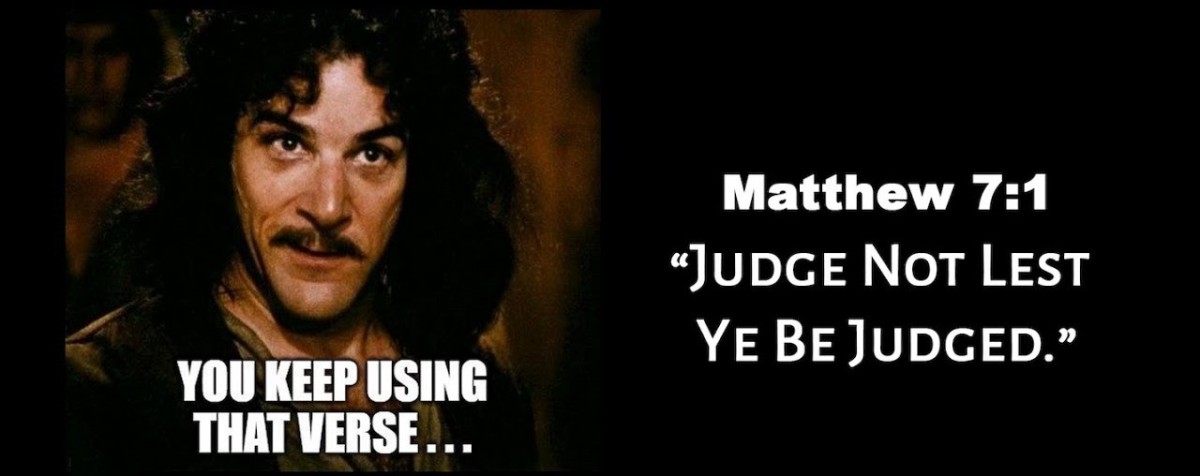
Everyone and their mother knows this verse (Matt. 7:1), and they use it—often inappropriately. Yet, there’s more to this passage than telling people not to judge. For example, just a few verses later, Jesus warns against false teachers. To dub a person a false teacher, you have to be willing to judge what they teach and how they live (Matt. 7:15–20). When a teacher grades an assignment, they are making a judgment. To call one thing good and another thing terrible is ultimately making a judgment. How did Jesus mean this? First, the term translated as “judge” denotes a habit of sharp, unjust criticism. The Greek term is krinete, from which our English word, “critic,” comes. We’re not talking about judging in the sense that we may think of it, but criticism. Notice what follows: how we judge is how we will be considered (7:2). This critical person sees only the fault in others but none in themselves (7:3–5; cf. Rom. 14:4, 10, 13).

We’re to judge righteously (John 7:24). Unrighteous judgment is according to appearance. Righteous judgment, however, is with grace, mercy, and God’s will as the standard. There’s always what we see and reality. Sometimes the two are the same, but sometimes they’re not. When we look for the worst, that’s what we’ll find every time. This was what the Pharisees did—look to find fault. They are the ones who are judged harshly and not with righteousness. In matters of righteousness, we’re to judge our brethren and not outsiders (1 Cor. 5:12). Judgment here isn’t a condemnation but discernment. When a Christian doesn’t bear the fruits of the Spirit but works of the flesh, we must address the issue. When you read the thought uninterrupted, it flows into the next chapter, which denounces lawsuits among brethren. This matter is one of discipline (cf. Deut. 17:6–7; Matt. 18:15–20).

A few standards of judgment would be good to avoid. The first would be judging someone by the worst thing they’ve ever done. This can be difficult because Jeffrey Dahmer did some pretty horrible things. Yet, you may not know that before he died, he became our brother, obeying the gospel while in jail thanks to Oklahoma minister Curt Booth and Wisconsin minister Roy Ratcliff. F.B. Meyer once said that when we see a brother or sister in sin, there are two things we do not know. First, we do not know how hard he or she tried not to sin, and second, we do not see the power of the forces that assailed him or her. We also do not understand what we would have done in the same circumstances. It can be challenging for some to fathom that a person like Dahmer could now be in heaven after all he did, but we cannot negate how powerful Jesus’ death was in comparison. If it isn’t powerful enough to wash away those sins, then it isn’t capable of anything. 

Another standard of judgment is imposing modern morals on the past. Slavery is agreed to be abhorrent. Yet, it has existed since the dawn of time, or pretty close to it. It still exists, believe it or not. The latest Global Estimates of Modern Slavery from Walk Free estimates that 49.6 million people live in slavery, either through forced labor or marriage. A quarter of those are children. North Korea has the highest percentage of slaves, and Africa and the Middle East have countries with considerably high numbers of slaves. Slavery didn’t begin with the trans-Atlantic slave trade. Yet, you don’t see activists caring much for these slaves, only those of the past. However, had we lived in that time and had the means, would we have had slaves? Would we have been slaves? We must remember that an evolving interpretation of Scripture led to its abolition in England and the United States. 

Our time would be better spent attending to our own blind spots (Matt. 7:3–5). How can we be a light to the world when we occupy our time with the judgment of others as if it were a spiritual gift given by the Holy Spirit? For some of us, being judgmental comes easy. It’s an all-too-tempted way to operate. Yet, how we judge is the same way we shall be judged. If we are harsh, we will receive harsh judgment. If we are gracious, we can receive God’s grace in judgment.  

Featured

Treasures in Heaven (Matt. 6:19-34)

Who hasn’t worried? We all do it, and sometimes with good reason. Worrying is not a sin, as some might persuade us to believe. There is, however, a component of faith that is absent when we worry because we have forgotten the sovereignty of God over all things. Yet, before worrying, fasting and prayer are things you’ll note in the sermon that were observed in the church a lot (cf. Acts 10:30; 13:1–3; 14:23). Psychologists teach such methods as meditation, mindfulness, breathing, and so on. These are grounding techniques when, in a moment of anxiety, someone centers themselves to face whatever worries them. Sometimes, we live in a lane so long that it becomes home, but neuroplasticity suggests that our brain is equipped to rewire itself. Praying the Our Father reminds us that God is outside time and space and greater than us and our worries. Plus, when we pray for his will to be done on earth as in heaven, we must submit to his will, whatever it may be. When we place our worries in the context of prayer and fasting, we give ourselves to God and entrust him in the process. 

We have contrasted riches and necessities. The two are different. If we are fortunate enough to amass wealth, Jesus says, it should be in heaven, where it cannot be destroyed or diluted in value. We are acquisitive by nature. It’s easier to accumulate things than to give them. In high school, I returned home one day—the first to leave and return home—to find the door ajar. I knew I had closed it all the way, but I went in to discover the house ransacked and robbed. My great-grandfather’s 12 gauge shotgun was gone. He used it when he was young, so I prized that possession. That robbery taught me then and there that placing meaning in things is meaningless. The relationship we had and the love we shared were more valuable than the shotgun. It was sentimental, and that’s why the loss hurt so much. However, that taught me not to lay up treasures on earth because thieves break in and steal. 

No matter how much you have, it’s never enough (Eccl. 5:10; cf. 1 Tim. 6:10). No one can serve two masters. No one can serve God and mammon. That word is Aramaic; some translations render it “riches” or “wealth.” The root of the term means “trust” or “reliance.” We cannot trust or rely on stuff against God. This point is no better illustrated than in the parable of the rich fool (Luke 12:13–21). This man did what Jesus warns against here—he “stored” up treasures for himself. The very word Matthew uses as “lay up” (Matt. 6:19–20) appears at the end of this parable (Luke 12:21). Cyril of Alexander (ca. AD 412–444) described being rich toward God as having one’s “hand … open to the needs of the poor, comforting the sorrows of those in poverty according to his means and the utmost of his power. He gathers in storehouses that are above and lays up treasures in heaven” (Luke, Homily 89). Another example of trusting in riches is illustrated differently than the rich young ruler (Matt. 19:16–22).

The relationship of the eye to the soul has been a staple of philosophy for centuries. When I used to live in Central Kentucky, there was an Amish man people went to because he was an iridologist. He could look into your eyes and tell you if you’ve had your gallbladder removed or diagnose other issues you may have. In antiquity, people believed your eyes projected light, hence the eye/lamp connection. We now know that the eye’s receptors convert light into electrical signals that our brains interpret. We’ve heard phrases such as the all-seeing eye, the evil eye, and the stink eye. What is it that we will set our gaze upon? That determines whether it is good or bad. 

Saying not to worry is easier sometimes than actually doing it. If we fast, we won’t worry about food and drink. If we pray, we give our worries to God (cf. Phil. 4:6–7). Paul knew what it was to suffer from want, so he replaced his worry with contentedness (Phil. 4:12–13). In the community of Jesus, we share our bread and drink. We look out for one another to ensure everyone isn’t lacking (Matt. 25:34–45). Plus, when we look at nature, we see that everything is provided for nature, so why wouldn’t we have faith that God will provide for us? Unlike nature, we sow and reap but can learn a lot from it. So, strive for God’s kingdom, and all else falls into place. Years ago, a college student was preparing for a nursing degree, and she was a cheerleader and belonged to a sorority. She hadn’t been at church, so my wife and I met her for lunch, and I told her that if she prioritized God, her worries and pressures would be resolved. It’s human nature to sacrifice Bible study, worship, and fellowship to ensure things are handled. However, when we prioritize them, we are saying to God that he is more important, and we trust that all we have to face is something he will tend to. 

Featured

The Lord’s Prayer (Matt. 6:9-13)

We must remember that when Jesus spoke about prayer, he urged that it be private and not as a show-off. He also adds that we shouldn’t presume that wordy prayers avail more than simple, concise prayers. In this context, Jesus gives his disciples a prayer to pray, something rabbis often gave their followers. Unlike our prayers today, there were and are liturgical prayers. These are prayers worded verbatim and not extemporaneously as we tend to do today. In synagogues, the shema is prayed on the Sabbath. This is the first word of Deuteronomy 6:4, “Here!” Jewish prayers are often named after the first word or words. The mi shebarach (“May the one who blessed”) has become increasingly common in synagogue meetings. The Lord’s Prayer would have been prayed verbatim. While modern Christians say it’s a model prayer to base our prayers on, the disciples would have repeated precisely these words. 

Prayer is not a way to get God’s attention—we already have it. It is a way to express our feelings honestly and without reservation. Whether worry, anger, thanksgiving, or celebration, the Psalms reflect the various emotions expressed, from despair to joy, from repentance to gladness. Sometimes, the psalmist praises God above all that is, and at other times, lays blame at God’s feet. Prayer can strengthen our relationship with God just as any form of communication enhances a relationship. Muslims pray five times a day; Jews pray three times a day. Christians, however, have little to no discipline about prayer unless you’re in a specific branch that emphasizes it. 

There are three versions of this prayer—Matthew’s, Luke’s (11:2–4), and one in Didache (ca. 50–60). In Luke’s version, the disciples ask Jesus to teach them how to pray. Didache is very similar to Matthew, with a few differences. 

Our Father, who art in Heaven, hallowed be thy Name, thy Kingdom come, thy will be done, as in Heaven so also upon earth; give us today our daily bread, and forgive us our debt as we forgive our debtors, and lead us not into trial, but deliver us from the Evil One, for thine is the power and the glory for ever. Pray thus three times a day. (8:2–3)

The doxology at the end of Matthew’s version is a later addition. Interestingly, the earliest Greek and Latin manuscripts do not contain it. Even early church fathers knew of the shorter version. It makes you wonder why the doxology was added and kept in Matthew’s final version. Even a version of Luke contained, “May Your Holy Spirit come upon us and purify us,” instead of “Your kingdom come.” This is attested to by Marcion’s version of Luke (ca. 85–160); Gregory of Nyssa also wrote about this version. Several amulets have been found in Egypt on which the Lord’s Prayer was inscribed, so we see this prayer as transmitted through time. 

Many Jewish prayers address God with formality, “Blessed be the Name of the LORD our G-d,” though not exclusively (cf. Mal. 2:10). Here, however, Jesus makes it intimate, addressing God as our father, denoting paternal love, protection, and provision. God alone is one’s father (Matt. 23:9). Saying that God was in heaven, the text says “heavens,” speaks about his ability to transcend the physical world. Jews at the time believed in three heavens (2 Cor. 12:2). The third commandment of the Torah was to not use the Lord’s name in vain (Exod. 20:7), and the wording in Exodus means to take a vow or oath in God’s name, as well as in casual conversation. 

When Jesus prays for God’s kingdom to come, many say we should omit this portion of the prayer because the kingdom is already spoken of as something in the present tense (cf. Luke 9:27; 1 Cor. 15:23–25; Col. 1:13; Rev. 1:9). In this sense, I would agree; however, the kingdom has come in that God’s rule is on earth through the church. Yet, the fullness of his kingdom is to be realized after the judgment. Christians live in God’s kingdom, but there are still things on the earth, such as death, that occur that aren’t a part of God’s kingdom. 

When we follow God’s will as we know it on earth, we may also see it done in heaven. We can learn this from the Scriptures that have been preserved for us. Jesus used those Scriptures to combat the devil in the wilderness. He also said he didn’t come to destroy the law and prophets but to fulfill them. The wording about daily bread isn’t as truthful to the text as many English translations give it. In Greek, “daily” isn’t expressed, but giving us tomorrow’s bread today is more accurate to the language. On the one hand, it envisions the messianic banquet (cf. Matt. 8:11). On the other, it reminds us that Jesus is our bread of life (John 6:35, 48, 51). 

Sin is often regarded as a debt (cf. Matt 18:21–35; Luke 7:40–43). We accrue debts through our sins. These debts are too outstanding for our repayment, but the merciful God will forgive us our debts as we forgive our debtors. If we practice canceling debts rather than calling in repayment, we will have our debts canceled (Matt. 6:14–15). When we think about temptation, we think of something that entices us to sin. The term translated as “temptation” refers to outward tests of all kinds. You could render the term “trials” or “ordeal.” These can lead to temptations, but they are not in and of themselves (cf. Prov. 30:7–9). Jesus’ hunger in the wilderness could have turned to sin had he succumbed to Satan’s temptation to turn stones into bread. Judas was not delivered from the evil one, mainly because he did not seek God’s will. Because of this, he opened himself to Satan (cf. Luke 22:3; John 13:27). Just as Satan tempted Jesus through his trial, he can use our ordeals to tempt us, giving that we become weak or despairing in them. 

Featured

Praised by God, Not By Men (Matt. 6:1-18)

Jesus wants his disciples not to be show-offs. A balance must be struck between personal piety, the salt of the earth, and letting our light shine (Matt. 5:13–16). When we compare these, it all boils down to intention. To be the salt of the earth isn’t to show off but to be a blessing. Just as salt has taste and color affects whatever it touches when used. It can preserve, melt, season, and other such things. By being what we are, we are meant to be a blessing by being that salt. Just as there are various uses for salt, so there is for light. Many of us remember that plants require light to grow. Solar panels harness direct sunlight’s power, which can be stored in batteries. My house has several solar paneled motion lights and string lights. The string lights illuminate every night around our deck, and whenever the dog or someone walks by the motionlights, it illuminates. It’s very dark in the country, and these lights are helpful and cheaper than running electricity everywhere. You may have heard that darkness is the absence of light. When God ordered the cosmos, he commanded light as the first act of creation (Gen. 1:3).  When the final, heavenly Jerusalem appears, there will be no more night (Rev. 22:5). We’re told to let our light shine so that our good works are seen, and we glorify our heavenly Father. Where’s the balance?

Jesus mentions almsgiving, prayer, and fasting as three areas of piety. He stresses that we do things to be rewarded by our Father and not people (Matt. 6:3–4, 6, 18). So, here are the two areas of tension that will be resolved by noting the intention. Here’s an example that helps me: let’s say you’re out to eat at a restaurant. When your food comes, you and your family bow your heads and offer a prayer. You’re not doing it for attention but to give thanks. That’s letting your light shine because, let’s say, an elderly couple walks by and commends you for that, saying it’s nice to see a young family give thanks without shame. Your light has shone, but you have done it not for praise but out of personal devotion and commitment to God. On the other hand, if you prayed so loud that everyone around you was forced to notice, that’s not good, and the showing off is of concern here. In closing chapter five, Jesus said to be perfect as our Father is, so the instructions that came before and follow that statement show us how to do that. Our word, translated as “perfect,” doesn’t mean “without fault.” I advocate that it should be translated as “complete.” At least, that’s how we’d understand it today.  

The conclusion of intention is shown in each example. In almsgiving, don’t blow the trumpet (Matt. 6:2). In prayer, it’s to be seen by men (Matt. 6:5). With fasting, it’s appearing to men (Matt. 6:16). This is the motivation of the hypocrites. They want to be seen. However, as this chapter closes, we seek God’s kingdom and righteousness first (Matt. 6:33). The law made caring for the poor a central command (Deut. 15:11). What’s interesting is that the term translated “almsgiving” is tzadik. The word for righteousness is tzedakah, which shows the relationship between the two. Doing it for public recognition should not be our motivation. What we give isn’t so much a matter as well, but how we give (cf. Mark 12:41–44). 

Similar sentiments could be said of prayer. This doesn’t rebuke corporate prayer because that’s commanded (1 Tim. 2:1–3) and observed in the early church (Acts 12:5, 12). The emphasis should be on God and not the one praying. Sometimes, people use prayers as sermon times. They give a little sermon for those listening more so than addressing God himself. So, Jesus identifies the praying person who wants to be seen; then, he points out the one who uses vain repetitions. 

The Gemara asks: And one who prolongs his prayer; is that a virtue? … Anyone who prolongs his prayer and expects it to be answered, will ultimately come to heartache … How does he prolong his prayer? By increasing his supplication. (B. Ber. 55a)

A professor once corrected me in a paper by telling me to stop bloviating. I looked the word up because I didn’t know what it meant. Essentially, use fewer words rather than extra unnecessary words. Don’t say in fifty words what can be said in ten. This is why the disciples ask Jesus to teach them how to pray. Rabbis often gave their disciples prayers to pray verbatim. In the early church, the Lord’s Prayer was to be prayed thrice daily (Didache 8.2–3). The Psalms are also a good blueprint. Fasting is also to be private. This religious devotion was associated with mourning, repentance, discipline, or waiting upon the Lord. 

Featured

Oaths, Retaliation, and Love (Matt. 5:33–48)

Regarding oaths, Jesus doesn’t quote any specific passage but summarizes the concept of taking an oath, specifically invoking God’s name (Exod. 20:7; Lev. 19:12; Num. 30:3–15; Lev. 24:19–20). Dire consequences could result from invoking God’s name in an oath. They were required occasionally, however (Exod. 22:10–13; Num. 5:16–22). By the time of Jesus, Jews avoided using God’s name lest it be in vain, so they would swear by sacred things (cf. Philo, Special Laws 2.1.5; Nedarim 1.3–4). Jews believed one was obligated if he swore by the temple’s gold or the altar’s offering but not by the temple or altar themselves (Matt. 23:16–22). You weren’t required to keep an oath if you swore by heaven or earth, but if you used any variation of God’s name, you were required to fulfill your oath (Shebuoth 4.13). Because they used loopholes in fulfilling their vows, they were hypocrites and deceitful, profaning God’s name. Just answer truthfully (cf. 2 Cor. 1:17–24; James 5:12). Jesus’ attitude was shared by the Essenes. 

They are eminent for fidelity, and are ministers of peace; whatsoever they say also is firmer than an oath; but swearing is avoided by them, and they esteem it worse than perjury; for they say, that he who cannot be believed without [swearing by] God, is already condemned. (Josephus, Wars 2.8.6)

This isn’t a prohibition against oaths per se because Jesus answered the High Priest while under oath (Matt. 26:63–64). 

The eye for an eye concept appears in three places and spells out different ways compensation may be made for damage to a person’s body (Exod. 21:23–25; Lev. 24:19–20; Deut. 19:21). This concept wasn’t unique to Judaism. Similar ideas appear in Roman Law and the Babylonian Code of Hammurabi, but the Torah concept treated everyone equally and not according to social class. It was meant to limit vengeance. We don’t see a trace of this being carried out because, more often than not, financial compensation was provided for the injury. Jesus gives us the commands not as to how to respond to physical harm but to public humiliation. His examples are the slap (cf. 2 Cor. 11:20), lawsuit, and conscription. Not escalating matters is to shame the attacker and maintain one’s honor. Usually, the response to a slap would be to either cower or hit back. Hitting back escalates, and cowering relinquishes a person’s dignity. Standing firmly, offering the other cheek, is a way to control the situation. With the lawsuit, a person can avoid the court, which would result in arrest, or they could accept the verdict, which might entail suffering (cf. Exod. 22:26–27). The injustice of the whole situation is revealed by giving the tunic with the cloak. Roman law compelled a person to obey for a mile (cf. Matt. 27:32). To refuse meant a beating. To comply is humiliation, so going beyond what was compelled by law is intended to humiliate the one who has conscripted a person. 

The first part of verse 43 derives from Leviticus 19:18. The Torah doesn’t say to hate your enemies, but in the Dead Sea Scrolls, we read, “He is to teach them to love everything [or everyone]. He chose and to hate everything [or everyone] he rejected” (1QS 1:3–4). There are other Old Testament passages mitigating how one feels about their enemies. When an enemy falls, we’re not to gloat (Prov. 24:17); otherwise, God will be displeased (Prov. 24:18; cf. 25:21–22). When Judah was exiled, they were supposed to pray for their city (Jer. 29:7). Paul iterates doing good to enemies is bound to frustrate them (Rom. 12:20). Praying for them not only is for their benefit but ours as well. It orients our minds towards them how it should be rather than allowing bitterness to take root. To be like our heavenly father is to love those who are unlovable. It’s to go above and beyond what is customarily anticipated or endorsed. To fall short of this is to carry the same deformity as our enemies. 

Featured

Lust and Divorce (Matt. 5:27-32)

This specific topic is a hot-button issue. Divorce is widespread, and divorced people tend to be ostracized in the church. I am a child of divorced parents. Both of my parents remarried and have since divorced. Both sets of my grandparents were divorced. Growing up in that environment doesn’t inspire much hope in marriage, but when we look to God, he gives us the proper view. I am one person and can only do what I can do. My wife also wants to live for Jesus, which helps our marriage. If either of us became selfish, it could end in divorce. 

I have empathy for divorced people because they tend to be viewed one way by the church, but what a lot of people may not know is how hard some have fought to preserve their marriages. Through no fault, they could only do their part and not their spouse’s part. There are some scenarios that Jesus doesn’t address—desertion, physical and mental abuse, toxicity in marriage (substance abuse), and some others. My rule is that you must leave if you are in a home where you live in fear. My mother suffered domestic abuse, and the bravest thing she did was to go. Many women stay for reasons most of us won’t understand, some to their peril. We should support such people, especially those who hold our beliefs about this topic. Some will not leave because of what Scripture says on this topic because they feel they will be sinning, and I have had to remind several women that Jesus commands the husband to love his wife as Christ loves the church. Many husbands fail to do this when they are careless or abusive in any specific way. 

According to Forbes, half of all first marriages end in divorce. Second and third marriages fail at a higher rate. The average length of a marriage is eight years. When I do premarital counseling, I encourage couples to agree on four things: 1) religion (I would discourage a Christian marrying a Muslim, atheist, etc. We’re not to be unequally yolked), 2) money, 3) children (do you want to have them; how many do you want; how will you raise/discipline them?), and 4) inlaws (setting boundaries). Marriages will have their ups and downs, but when we are married, we say, “I do,” not, “I’ll try.” 

Jesus builds a hedge against adultery, saying that if you look at a woman with lust, you’ve already committed adultery. The term gyne is used here, and it is not a term that can be translated as “maiden” (kore) or “virgin” (parthenos). The woman in question may have been another man’s wife, so to look at another man’s wife with lust is adultery. Were it the other two, it may not be adultery unless the man looking upon her was married. In that case, it would be fornication. Both are sinful, but it’s essential to be as precise in the context as possible. The law prescribed that both offenders were to be put to death (Lev. 20:10), reminding us of the woman caught in adultery (despite the man not being brought forth). I couldn’t find evidence of this capital punishment being carried out. 

Amy-Jill Levine wrote that a Jewish man could have sexual relations with a divorcee, prostitute, or another unmarried and unengaged woman. At the same time, he was married, and it wasn’t considered adultery, which I find odd. The command is one-sided here and likely so due to the makeup of society at the time. Women are as capable of doing what the man here does. “Lust” could be translated as “covet” or “desire.” Israel was guilty of adultery by her eyes in lusting after idols (Ezek. 6:9). The rest of what he says in verses twenty-nine and thirty are standard rabbinic hyperbole. He isn’t commanding bodily mutilation but emphasizing that whatever is the cause of the temptation is what should be eliminated from the person’s life lest they are cast into hell. In our time, it may be social media, rendezvous with someone of the opposite sex, etc. A lot of people criticized Mike Pence because he doesn’t meet with women alone, something called the Billy Graham rule, but he does that to protect himself and his marriage because people talk.  

Jesus begins his discussion on divorce by referring to Deuteronomy 24:1–4. Our phrase “some uncleanness” in Hebrew is vague. At its root, it means “nakedness,” “genitals,” or “indecent.” Some suggest this has to do with barrenness. Others say that it has to do with infidelity. Robert Alter points out that the same idiom appears in Deuteronomy 23:14 (v. 15 in his text) and denotes prohibited sexual nakedness. The jury remains out of what was meant, but when we turn back to Matthew, Jesus says a man may divorce his wife for “sexual immorality” and not “adultery.” We have two different words for the two used a few verses earlier. Sexual immorality derives from the word that gives us the English word “pornography.” This term is broad and encompasses adultery, harlotry, incest, idolatry, and fornication (which can include premarital sex). In Deuteronomy, the summary was that if a husband divorced his wife and she married again, he could not take her back because another man had defiled her. Here, however, whoever marries this divorced woman commits adultery. Jesus restricts the meaning they had. 

On another occasion, Jesus is tested on this topic in Matthew 19. Once more, Deuteronomy 24 begins the conversation. There were two prevalent schools of thought at that time. The House of Shammai was pretty conservative in that a person could only divorce for adultery (Gittin 9:10). The House of Hillel takes a no-fault position, which means for any reason. Jesus appeals to God’s intent on creation by making one man and one woman. Their joining together isn’t meant to be separated. God hates divorce (Mal. 2:16), but we have to remember that God divorced Israel (Jer. 3:7–8), so he has a vested interest in the topic. He explains why they were given the exception when they pressed the topic. This teaching is so conservative that his disciples ponder celibacy.

There’s one last text worth looking at that some call the Pauline exception in 1 Corinthians 7:10–16. In context, some had converted while their spouse remained unconverted to faith in Jesus. In this case, they were to live with one another peaceably. Still, some use a phrase to justify divorce and remarriage: “A brother or a sister is not under bondage in such cases” (v. 15). They suggest that this permits the believer who’s been deserted to marry again. I can’t see Paul contradicting Jesus, and I don’t believe that’s what he means. The whole context is him urging Christians to remain or reconcile with their unbelieving spouse, but if the unbeliever departs, the believer isn’t obligated to stay with them. 

Featured

Jesus’ View of the Law and Murder (Matt. 5:17-26)

Rumors had undoubtedly circulated about Jesus’ view on the Law and Prophets—two of the three divisions of the Hebrew Scriptures; the last is the Psalms. The Law entails the first five books of the Bible. We usually only think of Isaiah, Jeremiah, and the like regarding the prophets. However, Joshua, Judges, the books of Samuel, and the Kings are considered former prophets in Jewish circles. He spoke of it with great reverence since Jesus and his disciples were living under the law. The “jot” is the Hebrew yod, and the tittle is the extension of the dalet when compared with the resh or vav. Any minor alteration in the law could have changed the meaning, so scribes were meticulous to preserve the text. No matter how insignificant someone believes it is, every part is meaningful. We can learn much from Jesus’ regard for the law, which should also inform how we view Scripture. We can also look at his call to righteousness in one of two ways: denigrating the scribes and Pharisees or as a high bar. There is an element of the former, but the latter seems to be more accurate. 

In Jesus’ commentary on the law, he says, “You have heard it said,” and then follows up with, “But I say to you.” We see this six times in the remainder of chapter five. The first commandment he addresses is murder. There’s a difference between murder, killing, manslaughter, and justice. Murder is premeditated with malicious intent. Even the commandment in Hebrew reads, “You shall do no murder.” If I were to strike a pedestrian with my truck because they ran in front of me and they died, I would not have murdered them. However, if I see this person and target them, then that’s murder. Were I negligible in hitting them, say because I was inebriated, I could be charged with manslaughter. When the state executes a criminal, it’s supposed to be in the name of justice, and murder was a capital offense (cf. Num. 35:16–18). The murderer being put to death is justice and not another murder or killing. What’s interesting, though, is how God protects Cain after he murdered Abel and Moses after he killed the Egyptian. 

Words matter, and “murder” is the appropriate term in both Greek and Hebrew. Yet, Jesus takes it farther than murder. He builds a hedge around the commandment, much like rabbis in his time. He begins with anger and progresses to insults—something that could be a legal offense.  Depending on your translation, you may have the wording as having anger “without a cause.” Most translations, if they don’t include the phrase, have some sort of note ascribing it to some ancient manuscripts. The earliest manuscript of Matthew 5:22 is dated between AD 125–50 and is designated as the Barcelona papyrus (P67). This fragment doesn’t contain the phrase “without a cause.” Two other manuscripts contain it—Coptic and Old Syriac (third–fourth centuries). Its appearance or disappearance doesn’t affect the overall meaning of our faith. Jesus teaches us to rid our lives of anger if it’s excluded. If it does appear, we later read how to handle someone we may be angry with in the following verses (cf. Matt. 18:15–17). 

A person becomes angry with another, then begins to insult them, and they call them the worst thing imaginable in that culture (cf. Eph. 4:29–32). The progression builds up to murder, which is why Jesus begins with anger. Rather than getting that far, Jesus urges reconciliation before worship, possibly alluding to Cain and Abel. Jews taught that you had to seek peace with your neighbors before reconciliation with God (Prov. 6:1–5). Today, however, most Christians give this no mind. If you’re offended, you just go somewhere else. Sometimes, people may not even know that you feel wronged. Meanwhile, you carry the weight of the hurt, expecting the offender to lift it when they might be clueless. In his context, Jesus urged reconciliation, and Paul urged suffering wrongdoing rather than seeking retribution (cf. 1 Cor. 6:1–6). Please remember that the context is within the community of faith (church), as indicated by the term “ brother.”

Featured

The Magna Carta of Christianity

In the year 1215, a very important document was issued. This document was the first to put into writing that the king and his government were not above the law, so it placed limitations on royal authority by establishing law as a power in itself. I’m talking about the Magna Carta. The pioneer law inspired legislation in the West from there on out. The Sermon on the Mount is the Christian version of the Magna Carta in that it sets forth the heart of God and the nature of his kingdom. Where misunderstandings existed, Jesus clarified. Where obscurities puzzled, Jesus explained. 

When we arrive at Matthew 5, we must recall how Jesus’ fame had spread through Syria, Galilee, and Judea at the end of the previous chapter. They undoubtedly follow when he ascends the mountain, but they may be more concerned with being fed or healed. Yet, Jesus is speaking to his disciples. What’s unsure is whether Matthew has in mind all twelve or just the ones he’s called thus far: Peter and Andrew, James and John. Jesus speaks to them, but anyone who overhears is welcome to listen. As Moses ascended Sinai to receive the Law from God, so God ascended a mountain to deliver his Sermon on the Mount. There’s a new lawgiver in town, and it’s God in the flesh. 

He inaugurates his sermon by pronouncing blessings. “Beatitude” comes from the Latin Bible, where the word beati is in the place of “blessed.” It denotes “blessed,” “happy,” and even “rich,” with the connotation that they are divine in nature. Many Jewish prayers begin with the Hebrew version, baruch, as in, “Blessed are you, Lord our God.” Examples abound in the Hebrew Scriptures (Jer. 17:7–8; Ps. 118:26). The situations in which Jesus pronounced this blessing seem like the most unlikely candidates for it. This is the nature of God’s kingdom—it turns the world right side up. The wisdom of God is wiser than the wisdom of the world, so we will have to overhaul our thinking to think as God does. 

“Poor in spirit” has always intrigued me. It doesn’t mean weak in faith. According to David Bentley Hart, the word describes a beggar who seems to be cowering. These folks lack pride and are beneficiaries of the help others offer. They will even pay it forward and help others in need. I believe they recognize their dependence on God and live with that realization in acting. Because this is in the present tense, it’s not something in the future but the present. The kingdom of heaven is theirs now, not in some distant time. In the next one, bereavement could describe not only those mourning loss but the state of women and children who were often destitute and impoverished if no male was present. Their comfort could come in the manner of material help as well as emotional support. Mourning shouldn’t be minimized, however. Trite sayings and platitudes aren’t helpful. To mourn means that you had someone in your life that you truly loved, whose absence now leaves a void. While a dreadful feeling, comfort is promised. 

You may have heard the saying, “Meekness is not weakness, but strength under control.” It’s a nice saying with some truth. This beatitude resembles Psalm 37:11, and the same word is used regarding Jesus in Matthew 11:29 and 21:5. There’s no weakness but strength under control. Jesus never lorded his power over his disciples. He served and led them by serving them (cf. Phil. 2:6–11). Environmentalists love the play on inheriting the earth and tying it to treating the world well. I’m not sure Jesus meant that, but caring for the planet is still good. I believe Jesus’ intention concerns the new heaven and earth (cf. 2 Peter 3:13; Rev. 21:1). Some usually take the next beatitude to mean Bible study or knowledge. After all, the will of God in Scripture is righteous and leads us to such, but that’s an internal reading. It’s more of a state of things—of justice. There needn’t be a qualifier placed on the word “justice” (i.e., environmental, gender, etc.). We should desire it on the personal, societal, and global levels. We see so many injustices, so our hunger and thirst for such are met in God’s kingdom.

The next one is misleading. From an initial impression, it means that a forgiving person is blessed and they will be forgiven. However, the term translated as merciful denotes sympathy felt towards another, leading to action. This would be like seeing an elderly person struggling to open a door, so you open it for them. We call it common courtesy, which can be in little or big things. When I envision someone that’s pure in heart, several people come to mind. They were good people who wanted only good and didn’t wrap themselves with worldliness. God was at the forefront of their very being. 

The peacemaker beatitude has been popularized and applied to law enforcement, but the idea is more about one who isn’t a tattler or busybody. We all can do things to stir up trouble, but as peacemakers, we don’t offer to do so. In the first century, a group called the Zealots were a revolutionary group that wanted to restore the kingdom of Israel using violence. They aimed to depose the Roman oppressors. Their influence penetrated all Jewish society (cf. John 6:15; 18:10–11), but this wasn’t what Jesus wanted (cf. John 18:36). This was not the kingdom of God. 

The beatitudes are closed out by blessings pronounced on those who will suffer for righteousness’ sake (1 Peter 4:14–16). “Revile” is an antiquated term. It’s better to think of “insult,” as we understand it. Physical harm, ostracizing (cf. Luke 6:22), verbal abuse, and false accusations may occur. If it’s the result of being a Christian, Jesus says we are blessed. 

Featured

Ancient Interpretations (Acts 8:16)

In Acts, Luke uses a similar phrase for different meanings. Given the context, it’s up to the reader to discern what he means by what he says. Let’s lay the groundwork. In Acts 2:38, we’re told that when one repents and is baptized, they receive forgiveness of sins and the Holy Spirit. This is stated with a promise to those present, those who come after them, and all who are far off, as many as the Lord calls to Himself by preaching the gospel. We conclude that everyone who repents and is baptized, obeying God, receives forgiveness and, more pointedly, the gift of the Holy Spirit. Some folks disagree as to what the gift of the Holy Spirit is. Still, I interpret it as the believer being given the Holy Spirit himself. If you disagree, that’s a discussion we can have another time since that isn’t the focus of this article.

As we read through Acts, we come to Acts 8, where Philip is preaching to the Samaritans. We read that after Philip preached and worked wonders, many people, men and women, believed the preaching and were baptized (Acts 8:12). We read a couple verses later that Peter and John are sent to Samaria to pray “for them that they might receive the Holy Spirit” (Acts 8:15–16). Have we misunderstood our earlier interpretation? Many brethren interpret as I do as a double entendre (a word or phrase open to two interpretations). In Acts 2:38, we don’t see Christians working signs and wonders. Only the apostles could work signs and wonders (Acts 2:43; 4:33; 5:12). Even in Acts 8:18, the laying on of apostolic hands conferred the ability to work signs and wonders. What are we to make of these two interpretations?

 Let’s ask an ancient Christian by the name of John Chrysostom. He flourished around the end of the fourth century and was Bishop of Constantinople. While we may have many disagreements about how church was done in his time, we must credit him for being a great expositor of Scripture. That second name, Chrysostom, wasn’t a surname but an honorarium given to him by many people. It means “Golden-mouthed” in Greek because John was a gifted orator who captivated audiences with his eloquent speaking style. He preached a series of homilies in the book of Acts, and when he comes to Acts 8:16, here’s what he wrote: “How was it then that they did not receive the Spirit? They had received the Spirit of remission of sins but not the Spirit of the signs.… To show that this was the case and that it was the Spirit of signs that they had not received, notice how Simon, once he saw the result, came and asked for this.” It would seem that John agrees with our conclusion, and he did centuries before we opened the Word.

Featured

Ancient Interpretations (Romans 10:9–13)

When studying a passage, I enjoy reading commentaries, word studies, and other research materials. Yet, I’ve learned to also consult Christians who lived closer to the time of Jesus than the scholars and commentators who give us great work. Neither the early church leaders nor modern scholars are always right, but it doesn’t mean they didn’t get anything right.

Some good neighbors instruct a person to be saved using Romans 10:9–13, and they even use this passage and say, “Invite Jesus into your heart,” or, “Pray the sinner’s prayer.” Allow me to say that I don’t question a person’s sincerity in their beliefs. As the late Antonin Scalia once said, “I attack ideas. I don’t attack people. Some very good people have some very bad ideas.” Neither the sinner’s prayer nor asking Jesus into your heart is in the Bible. This notion can be traced back to Billy Graham popularizing it in his crusades.

Historian Thomas Kidd traces it back to Anglo-American Puritans in the seventeenth and eighteenth centuries. The Puritan devotional writer John Flavel spoke of those who heard the gospel but would “receive not Christ into their hearts.” Thomas Boston, a Scottish Calvinist, encouraged Christians to take communion to receive “Christ into their hearts.” Benjamin Colman wrote in the early eighteenth century that Christians should “receive Christ into their hearts and hold him forth in their lives.” The phraseology became more and more formalized as time passed.

How should this passage be interpreted? Let’s ask some ancient Christians. While many have commentaries on this passage, I want to introduce you to Augustine. Augustine lived from the middle of the fourth century into the fifth century. He was a rather worldly fellow until he heard the preaching of Ambrose of Milan. Ambrose communicated the gospel in a way that appealed to Augustine because the sinner was also a philosopher and very intelligent. Most of the preachers he heard preached so simply that it turned him away, but Ambrose helped him. Later on, Augustine would become the bishop of Hippo (now Algeria). Western civilization owes a lot to Augustine. He lived to see the fall of the Roman Empire, and his writings have shaped much of Western civilization.

In his writing entitled The Christian Life, Augustine writes, “This condition is fulfilled at the time of baptism when faith and profession of faith are all that is demanded for one to be baptized.” Just as we do today, we ask for their confession before baptizing someone. They confess that they believe that Jesus is the Son of God. We also see it in verses such as Acts 2:21, 9:14, 22:16, and 1 Corinthians 1:2 in one form or another.

Featured

The Holy Spirit Told Me

Some Christians will say, “The Holy Spirit told me.” I never doubt a person’s sincerity, but I don’t quite know what to make of this. I have a lot of questions. For example, how did He tell you? What did He say? What do you mean that he told you? Was it a dream? An email? Help me understand this. 

If you read it in Scripture, fair enough, I can understand that. I recommend you see a counselor if you’re hearing voices. Others have listened to voices in their heads, sometimes leading to awful things (e.g., drinking the Kool-Aid, Waco). Sometimes, you and I intuit or suspect a specific path or action should be followed. I urge caution about attributing something that might have arisen in our minds to the Holy Spirit. Along with this is often the statement that “God called me to do x, y, or z.” The only semblance of a divine calling is the call all Christians receive through gospel preaching (cf. 1 Peter 2:9–10; 1 Cor. 1:9; 2 Thess. 2:13–14). 

We have the indwelling of the Holy Spirit as promised by God (Acts 2:37–39). By the way, please refer to Him as Him and not as “it.” That’s how He’s referred to in Scripture. What, precisely, does He do for us?

  • He comforts us (Acts 9:31). 
  • He pours out the love of God (Rom. 5:5).
  • He helps with our prayers (Rom. 8:26–27). 
  • He causes hope to abound (Rom. 15:13). 
  • He transforms us (2 Cor. 3:18). 
  • He produces fruit (Gal. 5:22–23). 
  • He strengthens us (Eph. 3:16). 

As God’s children, His Holy Spirit can lead us, but only if we so choose (Rom. 8:12–14). When we live according to the Holy Spirit’s teachings, we are led by Him. These teachings are attested to in Scripture since he is the Divine Author. Being led by the Spirit depends primarily upon surrendering to Him (cf. Gal. 5:16, 18, 25). 

Aside from Scripture, I’m unsure how He might lead a person in our time. I don’t presume that He does now as he did in the apostolic era. There are non-micaculous things he does for us, as mentioned above. I haven’t the knowledge to explain how He does these things, but it’s in Scripture, and I’m content to accept what He has told us—without understanding all the ins and outs. He was given to us as a pledge (2 Cor. 1:21–22; 5:5) to be redeemed when Jesus returns. He seals us to show we belong to God (Eph. 1:13–14; 4:30). Going beyond what Scripture says is in many people’s sentiments. Though they are well-meaning, I would need clarification on what they mean by this type of talk. There are times when coincidences occur. We sometimes say, “That’s a God thing.” Could it have been the Holy Spirit? There’s the possibility, but it could also be providence. I’m just cautious about attributing something to the Holy Spirit without certainty that it was Him.

If people through whom the Holy Spirit directly acted can misuse His gifts, we’re not better off. Take the Corinthians Church. Paul commanded that an interpreter be present for those who spoke in tongues so that the church might be edified (1 Cor. 14:10–14). Moreover, tongues were a sign for unbelievers, not believers (1 Cor. 14:20–23). Is this how we see the alleged use of tongues today? No. Instead, those who claim to speak in tongues today behave as the Corinthians Church whom Paul rebuked. Then, he limits the number of the tongue speakers for the sake of order (1 Cor. 14:27–28). He wraps a bow around this by reminding them that the spirits of the prophets are subject to the prophets (1 Cor. 14:32–33), so any accusation that they cannot exercise control when the Spirit is working is something Paul would not have accepted. 

Featured

The”Church” Did Not Create the Bible?

The most significant difference between Orthodox/Catholics and us is the place Scripture and the church hold. After conversing with several priests and members of those traditions, they often say that the church created the Bible. Therefore, only the church (e.g., clergy) can correctly interpret it and have authority beyond it. Our position isn’t that they created the Bible but recognized what God had inspired and held as such throughout the existence of the church and Israel. 

They already recognized certain writings as Scripture (2 Peter 3:15–16). Paul quoted Luke 10:7 in 1 Timothy 5:18, thus attributing to Luke’s gospel as Scripture. Unanimity was taught so that what was taught in one church was taught in all (1 Cor 4:17; 7:17; 16:1), and New Testament writings were circulated (Col. 4:16; 1 Thess. 5:27; 1 Peter 1:1; Rev. 1:4). Even New Testament writings are cited in early Christian letters. 

Didache (AD 50–60) refers to the Lord’s Prayer as it appears in Matthew. The letter 1 Clement was written near AD 95, and he alludes to the writings of Paul as Scripture and Matthew, Luke, Acts, James, and 1 Peter. In AD 110, Ignatius alludes to Matthew, Luke, and John. Polycarp in AD 110 calls Ephesians Scripture. He also references Romans, 1 Corinthians, Galatians, Philippians, 2 Thessalonians, and 1 & 2 Timothy; he quotes Matthew, Mark, and Luke. The point is that from the first century until the Bible was officially canonized, early Christians quoted from books we call Scripture as though they were divinely inspired and authoritative. 

In the second century, Melito of Sardis wrote about the Hebrew Scriptures and the books regarded as divine. 

Accordingly when I went to the East and reached the place where these things were preached and done, I learned accurately the books of the Old Testament, and I send them to you as written below. These are their names: Of Moses five, Genesis, Exodus, Numbers, Leviticus, Deuteronomy; Joshua the son of Nun, Judges, Ruth, four of Kingdoms, two of Chronicles, the Psalms of David, Solomon’s Proverbs or Wisdom, Ecclesiastes, Song of Songs, Job; of the Prophets: Isaiah, Jeremiah, the Twelve [minor prophets] in one book, Daniel, Ezekiel, Esdras.

Eusebius Eccl. Hist. 4.26.14

Other lists predated Melito’s (e.g., Josephus, Against Apion [AD 94]; Bryennios List [AD 100–150]). 

What precipitated the New Testament was the proposal of a canon that rejected many of the already regarded books. In AD 144, Marcion listed the gospel of Luke and ten of Paul’s epistles, omitting the rest of the New and Old Testaments. A response came in AD 180 in what’s known as the Muratorian Canon. It contained twenty-two of our twenty-seven New Testament books. This was also when Melito gave his list of the Old Testament. Athanasius’ 39th Festal Letter (AD 367) has the list of New Testament books we employ.  

One rebut you may encounter is that authority among clergy is apparent in the Jerusalem Council in Acts 15. Subsequent councils look to this example as to how the church makes determinations. Eastern Orthodoxy is often called the church of Councils because it is how they solve disputes and come to the census. There are four stages: 1) assembly (Acts 15:6), 2) testimony (Acts 15:7–12), 3) decision (Acts 15:13–21), and 4) adoption (Acts 15:22–29). The main difference between then and now is that the Holy Spirit inspired those men, and they even invoked the Spirit’s activity among Cornelius to arrive at their conclusion. Moreover, when they use the word “church,” they have the clergy in mind. The church doesn’t consist solely of her ministers. 

Featured

The Frequency With Which We Partake of the Lord’s Supper (i.e., Communion, Eucharist)

One unique feature of Christ’s Church compared to many other fellowships is the weekly observance of the Lord’s Supper. Many others take it daily (Catholic Church), while some observe it quarterly or on “holidays” (e.g., Easter, Christmas). Nevertheless, the weekly observance is observable when looking at Scripture and early church history. The book of James is likely the earliest written letter of the New Testament (AD 45–48), but 1 Corinthians, written in AD 55, contains the earliest description of a worship service (1 Cor. 11–16). From that passage, we can draw out what they did by how Paul rebukes them for not doing it correctly. 

In 1 Cor. 11:17–18, Two phrases stick out in this passage: 1) “when you come together” in verse seventeen, and 2) “when you come together as a church” in verse eighteen. The phrases “coming together” (1 Corinthians 11:20) and “same place” are most often to be understood as the worship assembly unless the immediate context determines otherwise. We see a variant of these phrases in 1 Corinthians 14:23—“If, therefore, the whole church comes together …” A rather famous passage used of Christian worship in this respect is Hebrews 10:25, “Not neglecting to meet together …” 1 Cor. 11:20 explained the purpose of their coming together—the Lord’s Supper. Who partook? The church, or Christians (1 Cor. 11:22; cf. 12:13). Paul spoke of Christians, not visitors or outsiders. His entire discourse in chapter 12 was regarding the body, the church. Prophecy and the speaking of tongues that he spent so much time on would have been their equivalent of our modern notion of preaching since they were revelatory (1 Cor. 13:1–2, 8–9; 14:1–5). Prayer and singing are next mentioned. Each of these was followed by a congregational “Amen” (1 Cor. 14:14–16; cf. v. 26). At the portion of the worship where praying, singing, and preaching occurred, we read of visitors being present in the assembly (1 Cor. 14:23–24).

We note from 1 Cor. 14:33–35 that women were to have been silent in teaching/preaching since Paul was coming off the heels of speaking about preaching (1 Cor. 14:27–32). This may reflect his earlier mentioned women praying and prophesying (1 Cor. 11:5). Some people say this was a command only for the Corinthians. However, Paul told the Corinthians other things he told all the other churches (1 Cor. 4:17; 7:17; 14:33; 16:1). Paul takes a momentary detour and talks at length about the resurrection in 1 Cor. 15. However, he twice notes that the things he speaks of were “according to the Scriptures,” which suggests that the Scriptures (likely the OT) were read during the assembly as well (1 Cor. 15:3–4). Finally, in 1 Cor. 16:1–3, he mentions a contribution for the relief of those in Jerusalem that was to have been collected “on the first day of the week.” Some versions insert the term “every,” but it’s not present in the Greek, though Paul might have meant it. Everything he mentioned from 1 Cor. 11:17–18 are the “acts of worship.” There was the Lord’s Supper, preaching, praying, singing, Scripture reading, and a collection. We mention the five acts of worship, but there are six here when you account for Scripture reading. This was done, according to 1 Cor. 16:2, “on the first day of the week.”

Another passage regarding the weekly partaking of the Lord’s Supper is in Acts 20:7–12. This passage implies that they broke bread on the first day of the week or Sunday. The Sabbath was the last day of the week, the seventh day of the week. Along with this supper was the proclamation of the word. Luke writes as if his audience is aware of the custom, so he doesn’t go into detail but mentions what they did. 

Even in Christian history, we see a weekly observance. In a writing that was likely written around the same time as 1 Corinthians or thereabouts, we read, “Having earlier confessed your sins so that your sacrifice may be pure, come together each Lord’s day of the Lord, break bread, and give thanks.” (Didache 14). Often referred to as “breaking bread,” the Lord’s Supper was under discussion here since the author(s) mentioned it only a few verses earlier.  

Even 100 years later, Justin Martyr wrote to the Emperor a defense of Christianity called his 1 Apology, in which he describes the weekly Christian worship meeting. 

Having ended the prayers, we salute one another with a kiss. There is then brought to the president of the brethren bread and a cup of wine mixed with water; and he taking them, gives praise and glory to the Father of the universe, through the name of the Son and of the Holy Ghost, and offers thanks at considerable length for our being counted worthy to receive these things at His hands. And when he has concluded the prayers and thanksgivings, all the people present express their assent by saying Amen. This word Amen answers in the Hebrew language to γένοιτο [so be it]. And when the president has given thanks, and all the people have expressed their assent, those who are called by us deacons give to each of those present to partake of the bread and wine mixed with water over which the thanksgiving was pronounced, and to those who are absent they carry away a portion. And this food is called among us Εὐχαριστία [the Eucharist], of which no one is allowed to partake but the man who believes that the things which we teach are true, and who has been washed with the washing that is for the remission of sins, and unto regeneration, and who is so living as Christ has enjoined … And on the day called Sunday, all who live in cities or in the country gather together to one place, and the memoirs of the apostles or the writings of the prophets are read, as long as time permits; then, when the reader has ceased, the president verbally instructs, and exhorts to the imitation of these good things. Then we all rise together and pray, and, as we before said, when our prayer is ended, bread and wine and water are brought, and the president in like manner offers prayers and thanksgivings, according to his ability, and the people assent, saying Amen; and there is a distribution to each, and a participation of that over which thanks have been given, and to those who are absent a portion is sent by the deacons. And they who are well to do, and willing, give what each thinks fit; and what is collected is deposited with the president, who succours the orphans and widows and those who, through sickness or any other cause, are in want, and those who are in bonds and the strangers sojourning among us, and in a word takes care of all who are in need. But Sunday is the day on which we all hold our common assembly, because it is the first day. on which God, having wrought a change in the darkness and matter, made the world; and Jesus Christ our Saviour on the same day rose from the dead.

1 Apology 64-66

By the fourth century, it was observed daily. The medieval church required penance before taking it, so many believers only took it annually, the absolute minimum permitted by the clergy. This was right before the Reformation. “The Lord’s Table should have been spread at least once a week for the assembly of Christians, and the promises declared in it should feed us spiritually” (Calvin, Inst., 4.17.46; c. 1536). The powers-that-be in Geneva, where Calvin reformed, were unwilling for the Reformation to go this far, but they permitted it to be taken four times a year. This is why many Protestant churches observe it as infrequently as they do, while the ancient Christians observe it weekly.

Now, infrequency will not make it more meaningful as much as weekly partaking makes it less significant. God has given the supper its meaning, and nothing can change that. Moreover, why not only give once a quarter or have the preacher deliver a sermon only infrequently? If someone finds it too familiar, that’s a heart problem, not the observation. We partake in the manner of our forebearers because they, having the apostles of Jesus, were so instructed.

Featured

The One Question Members of Churches of Christ Are Asked

“Y’all don’t believe in music, do you?” “You’re the ones that don’t use music, right?” “Why doesn’t your church use instruments?” Let me add the following caveat: my earliest years were spent in the Baptist Church. If you remember Ray Stevens and his song “The Mississippi Squirrel Revival,” the video was shot in the little Baptist Church I attended with my grandfather. New Hope Baptist Church in Hermitage, TN. Then, the church had a pianist and choir. As they grew, a full band, the choir, soloists, etc. My wife grew up Roman Catholic, and they also had their instruments. The first time I went to a church of Christ, I asked, “Where’s the choir supposed to stand?”

The short answer to why we don’t praise God with instruments hinges on identity. We aim to be as close to how the church was in the New Testament as we can observe. Scripturally and historically, the early church never used instruments in their worship. The Temple cult had instrumentalists and singers until its demolition by the Romans in AD 70. Also the pagan cults used them as well. The early church wanted to do as much as possible to distance themselves from both Judaism and paganism, though they more resembled the former rather than the latter. And by that, I mean the early church meetings were similar to synagogue meetings in many ways. Many scholars assert that the synagogue was the precursor to the church in organization, liturgy, etc.

They asserted, however, that the sum and substance of their fault or error had been that they were accustomed to meet on a fixed day before dawn and sing responsively a hymn to Christ as to a god, and to bind themselves by oath, not to some crime, but not to commit fraud, theft, or adultery, not falsify their trust, nor to refuse to return a trust when called upon to do so. When this was over, it was their custom to depart and to assemble again to partake of food–but ordinary and innocent food. 

Pliny, Letters 10.96-97 (AD 111-113)

The first question one tends to have is if using them is sinful or not. I don’t think in those terms. That’s like asking, “What’s the least amount I have to do or that I can get away with?” Again, for me, it’s about identity. I want to be as they were in the first century. If only I had some apostles and prophets around …

“Acapella” has been defined since the twentieth century as “unaccompanied vocal music.” Still, the etymology of the term itself is of Italian derivation and means “in the manner of the chapel [church]” or “according to the chapel” and was used in older church music (pre–1600) written for unaccompanied voices. Therefore, if the very term we use for singing without instruments means “according to the chapel” or “church,” then the word defines the music style used by the church. 

For the first decade of Christianity, the only Christians were Jewish. They often met in either houses or synagogues (James 2:2), so the service would naturally resemble what occurred in a synagogue. Prayers, the law, and the prophets were read. An interpreter would translate what was read in Hebrew to those who didn’t understand it. The prayers were chanted or intoned. There were no hymns sung, unlike at the Temple. Yet, that changed, and in the assembly, Christians sang (1 Cor. 14:15; Eph. 5:18–19; Col. 3:16–17; Heb. 13:15; James 5:13). Ambrose of Milan, so I’ve read, introduced instruments in the West in the fourth century but was met with opposition. The organ was introduced in the West in the mid-eighth century, but instruments were widely used in the West by the tenth century. The East never adopted them (i.e., the Orthodox Church). The commonality of instruments in denominations only goes back 150 years, give or take. So, I might ask, “Why does your church use them?”

Many people don’t know that respected teachers in their denominations opposed them. Their main opposition was because it was “Catholic” to use them. Read what they had to say.

  • The instrument in worship is an ensign of Baal. (Martin Luther [Catholic, then founder of the Lutheran Church]) 
  • Musical instruments in celebrating the praises of God would be no more suitable than the burning of incense, the lighting of lamps and the restoration of other shadows of law. The Papists, therefore, have foolishly borrowed this, as well as many other things, from the Jews.  Men who are fond of outward pomp may delight in that noise; but the simplicity which God recommends to us by the apostle is far more pleasing to him. (John Calvin [Puritans, Presbyterians, and earlier Baptists follow his theology] commenting on Psalm 33:2) 
  • I am an old man, and an old minister; and I here declare that I never knew them [instruments] productive of any good in the worship of God; and have reason to believe they were productive of much evil. Music, as a science, I esteem and admire: but instruments of music in the house of God I abominate and abhor. (Adam Clarke [Methodist] commenting on Amos 6:5) 
  • I have no objection to instruments of music in our chapels, provided they are neither HEARD nor SEEN. (John Wesley, as quoted by Adam Clarke in Amos 6:5) 
  • I would just as soon pray with machinery as to sing with machinery. (Charles Spurgeon [Baptist]  commenting on Psalm 42) 
  • Staunch old Baptists in former times would have as soon tolerated the Pope of Rome in their pulpits as an organ in their galleries. And yet the instrument has gradually found its way among them and their successors in church management, with nothing like the jars and difficulties which arose of old concerning the bass viol and smaller instrument of music. (David Benedict, in his book Fifty Years Among the Baptists
  • More important than explicit opposition to instruments is the simple fact that they are not used in the patristic period [A.D. 100-450]. (James W. McKinnon [Catholic] wrote this in his dissertation “The Church Fathers and Musical Instruments”)

Represented are Lutherans, Presbyterians, Wesleyans (Methodists and Church of Nazarene), Baptists, and Catholics—all of whom did not esteem instruments in Christian worship.

Once more, I point out the short answer: we don’t use instruments in worship because the early church didn’t either. We simply don’t use them because we seek to be as much like them as possible. Some people believe it adds to worship. We might disagree, but worshipping God shouldn’t be like a concert. If you look at passages depicting heaven (cf. Isaiah 6; Revelation 4-5), the hosts always praise God with their voices. I guess you could say we use instruments, but only the ones God created.

Featured

What I Understand About Hamas and Israel

“For all have sinned and come short of the glory of God,” so wrote Paul to the Romans. My views on this war aren’t meant to absolve anyone of wrongdoing at any point in history.

Israel as a state has only existed since 1948. Yet, before then, Jews and Arabs lived in the region. The late prime minister of Israel, Golda Meir, said she had Arab and Israeli passports. There was no Palestine, she said. That notwithstanding, Palestinian supporters have contrived the existence of an Israeli state as colonialism. The British and American governments indeed had a hand in establishing this state, but they eventually became self-governing, no longer vassals of either. Being a Choctaw and knowing that my ancestors were driven from land they occupied for millennia, I sympathize with the Israelites because they occupied that land as far back as 1300 BCE. There was the exile to Babylon, but the Roman siege really dealt a blow to Israel. Still, Jews have lived in the area for a long time, so to have a state is something I can appreciate. My people became a self-governing body just a few years before Israel, so if Mississippians tried to fight us off the land, you might see how that would be regarded.

Hamas is a terrorist group. They’re not liberators, freedom fighters, or a militant group. They are classified as terrorists by the United States, Canada, the EU, and others. They are funded by Iran and Syria. They will not stop until Jews are killed, and Israel no longer exists. Israel hasn’t occupied Gaza since 2005, but they have supplied it with water and power until this aggression. Also, the Palestinians voted for this body to govern them. Their headquarters is in the basement of a hospital. They hide caches of weapons in mosques and near schools. They hide behind civilians, even children when facing members of the IDF. They have posted numerous videos of them beheading Israelites, including women, children, and elders. They have posted videos of them desecrating the bodies of dead Israelis. They have posted videos of them raping women, some of them very young, and some may be minors. Many of the people who support them are people Hamas would kill.

Israel is a democracy, the only functioning one in Arabia. Tel Aviv has a large and concentrated group of LGBT people who are not closeted. Do you think Hamas would tolerate that? Israel was on the cusp of making peace with Saudia Arabia, which would have tipped the scales away from the favor of Iran. Concern about classified information leaks from Trump’s presidency has been suggested as an impetus for this attack. Biden had unfrozen 6 billion to Iran, which many have said funded this attack, as well as funded Palestine. Biden’s actions were an undoing of Trump’s policies.

On top of this, Hezbollah has fired rockets as of today, and Israel has responded by bombing the south of Lebanon. Much like the invasion of Israel by the Egyptians and Syrians fifty years ago, Israel is now facing a war on two fronts. Yet, the Israeli Air Force, arguably the most dangerous in the region, has entered the fray. While Israel isn’t targeting civilians, some will perish in this war. Hamas, however, has targeted civilians in various ways. And they’ve been keen to share their exploits on social media. Beware, if you have a weak stomach or nerves, don’t look up these videos. It’s brutal and only shows how barbarous these terrorists are. Meanwhile, Israeli reservists from all over the world are returning to their homeland to defend it.

Shalom Israel. Shalom Gibbor Chayil.

Featured

When You See Jerusalem Surrounded By Armies …

Last night, my wife and I watched the movie Golda starring Helen Mirren. This film tells the story of the Egyptians and Syrians’ invasion of Israel in 1973. Just fifty years later, Hamas attacked Israel. Whenever something geo-political occurs with Israel, “end times” messages rise from the ashes like a resurrected Phoenix. These messages usually have three components: end times talk, antichrist talk, and events in Revelation.

First, we have lived in the last days since Pentecost (Acts 2:17; cf. Heb. 1:1–2; James 5:3; 1 Peter 1:20). It didn’t suddenly happen because of what’s occurring in Israel. Why not point to the invasion fifty years ago if that were the case? Second, beware of how one interprets Matthew 24, Revelation, Daniel, and other passages. Let’s start with Matthew 24.

Critical to understanding this passage is what Jesus said at the end of Matthew 23:36 and 24:34. Back up to Matthew 24:1–2; “But when you see Jerusalem surrounded by armies, then know that its desolation is near” (Luke 21:20). Jerusalem was destroyed, and the temple was leveled in AD 70 by the Roman general Titus. Still, some held out and would not fall until AD 74 at Masada, when they committed suicide rather than suffer capture. Unlike before, the signs of such would be warfare (vv. 6–8). We must pause and look to Acts 5:36–37 and 21:38. The Zealots led the Jewish revolt that destroyed Jerusalem (which began in AD 66). The famines and pestilences are the results of warfare (v. 7) but also the results of earthquakes. Agabus foretold a famine in Jerusalem (Acts 11:27–30 [AD 54]). Earthquakes during Nero’s reign throughout Asia (Suetonius, Nero, §48). John Gill cites The Life of Apollonius and Orosius as recording earthquakes in Crete and various cities of Asia Minor. We must note that Jesus said that at these things, “the end is not yet” (v. 6). Verse three speaks of the end of the age and not the world. The Greek word aiōn means age or time. They were not asking about the end of the world but the end of the present state of things—the Jewish state (cf. v. 14).

Those persecuted are chronicled throughout the Bible and extra-Biblical sources, but we know that Stephen and James met their deaths while Paul was beaten, imprisoned, and tried. Those false prophets were noted: Simon Magus, those who taught another gospel (Galatians), Hymenaeus and Philetus (2 Tim. 2:17–18), and John wrote of false spirits going throughout the world (1 John 4:1). Romans 1:8; 10:18; & Colossians 1:23 said the message had been proclaimed worldwide. The abomination (Dan. 9:27; 12:11) is the Roman presence within the temple. Josephus records: “The Romans … brought their ensigns to the temple, and set them over against its eastern gate; and there did they offer sacrifices to them” (Wars, 6.6.1; cf. Luke 21:20). If this was referencing the second coming:

  1.  Fleeing to the mountains would do no good (v. 16; cf. 2 Peter 3:10–14).
  2.  There would be no need to fear for the Christian (v. 19–20; cf. 1 Thess. 4:13ff).
  3.  Housetops aren’t utilized today as they were then (v. 17).
  4.  Notice verse 34.

In verses 27-31, Jesus uses the term immediately, but before saying, “This generation shall not pass, till all these things are fulfilled.” Verse 27—when we read about the coming of the Lord, we must understand that “coming” isn’t always talking about His second coming. In Matthew 16:28, Jesus said that some standing before Him wouldn’t taste death until they saw Him coming into His kingdom. Sometimes, the usage dealt with a specific period or particular trial. The language of verse 29 is akin to Isaiah 13:10. In this passage, Isaiah describes the fall of Babylon in figurative terms. Jesus must have intended its meaning to be the same. These elements typically represented authorities and dignitaries in the Jewish mind (cf. Gen. 37:9ff). This could speak of the Jewish authorities (e.g., High Priest, Priests, and members of the Sanhedrin). This imagery proposes that Christ is coming. The Lord’s coming must represent His coming punishment on Jerusalem and not His second coming. For His coming with the clouds, see Daniel 7:13–14, which is about His ascension to the right hand of God.

One term that excites the mind is “antichrist.” You can find it along with interesting terms such as the mark of the beast, armageddon, rapture, and the thousand-year reign. The history of interpreting antichrist outside the Bible goes as far back as a disciple of John named Polycarp, who wrote, “For everyone who does not confess that Jesus Christ has come in the flesh is antichrist” (Phil. 7), which is essentially what John himself wrote (1 John 2:18). Antichrist was thought to be the Roman Empire throughout history. Popes of the crusade era said the Turks were the antichrist. The reformers believed the pope was the antichrist (Isaac Newton too). Puritans said Cromwell was the antichrist. Napoleon, Hitler, Mussolini, Stalin, etc. Yet, in 1 John, there’s the mention of antichrists (plural). He also speaks of them as a present reality in his time, not as something to come in the near or distant future.

Most Evangelical commentators tend to assert that Revelation was written with three periods of time in mind: 1) things John saw in chapter one, 2) those that were in chapters two and three, and 3) those that would take place afterward, beginning with chapters four or six. Charles Ryrie—in his study, Bible notes—advocates the former while John MacArthur—in his Bible handbook—advocates the latter. What some Evangelicals argue for is that chapters six through twenty-two are end-time (eschatological) material that hinges upon a thousand-year reign. However, internal terminology would refute this claim.

  • “The time is near” (1:3; 22:10; cf. Matt. 3:2; 4:17)
  • These things “must soon take place” (22:6)
  • Jesus said he was “coming soon” (22:12, 20; cf. 1:1)

The terms in English and Greek speak to a swift course of action and certainly not one that would be delayed over two millennia. Granted: the judgment scene in chapter twenty appears to be the true end-time material that may be exempt from the interpretation. However, at what point does the contextual divide speak to the original audience and all thereafter come somewhere in chapter twenty and onward unless one holds to a more symbolic interpretation of the final three chapters? A case for understanding the time frame in which John’s original audience may have understood this prophecy is found when comparing his work to other prophetic literature.

Daniel was told to seal up his vision because it referred to many days from his time (Dan. 8:26). He was also told that the book was to remain sealed “until the time of the end” (12:4). As time went on knowledge would increase as to the culmination of these prophecies. He was urged to go his way because the words of his prophecy were “sealed till the time of the end” (12:9). Studying history along with Daniel’s prophecy reveals that it was not for another four hundred years that those kingdoms came which he had been told of (cf. Dan. 2). Therefore, Daniel would not live to see the fulfillment of the prophecies; hence his being instructed to seal the book. So, the sealing of a prophecy book looked ahead to a distant period.

When John wrote Revelation, the angel told him not to seal the words of his book (Rev. 22:10). Why? Because “the time [was] at hand.” If Daniel’s prophecy saw fulfillment some four hundred years later, and he was told to seal the book, would not John’s prophecy have been fulfilled long before the same time since he was told not to seal his book?

Rather than trying to discern the times because of what’s happening in Israel, let’s pray for Israel and Palestine. Let’s pray that God judges Hamas and all associated with this terrorism. My prayer is that peace may reign, but if it isn’t, that evildoers meet their end.

Featured

Why “Worship” Is Too Broad

I was conversing with someone at church who relayed the statement another made about worshipping in their car while the radio played on the Christian station. After they told me what was said, I replied, “I think the term ‘worship’ is too broad. There are three Greek terms translated as ‘worship’ in the New Testament, and they each denote something different that our word ‘worship’–which has become a catch-all term for anything we consider to be worship.”

The first thing we need is a real revolution in our relation to language ….  It simply no longer occurs to us that everything that we have all known for so long, and all too well, could be otherwise—that these grammatical forms have not dissected and regulated language as such since eternity like an absolute, that instead, they grew out of a very definite interpretation of the Greek [language].

Martin Heidegger

Andrew McGowan addresses this in his book, Ancient Christian Worship. The form for a wedding pronouncement as far back as 1549 entailed these words when the groom placed the ring on his bride: “With this ring I thee wed; this gold and silver I thee give; with my body I thee worship; and withal my worldly goods I thee endow.” Certainly, we’re not talking about the sort of worship one gives to God! McGowan observes that at that time, the sharing of wealth was worship.

Here are the terms we see in the New Testament.

  • Proskyneses—This term spoke to a person’s posture before another more worthy than they. We “bow” our heads for prayer when, decades ago, men would kneel. In some congregations, people stand during the reading of the Bible. In denominations, some will prostrate themselves at certain times. Our posture is reflective of our attitude. Some argue that we don’t have to have any particular posture but should be the posture of one’s mind and heart. However, our physical posture sometimes moves our mind and heart to be in sync. When Peter entered, Cornelius met him and fell down at his feet and worshiped [proskunesen] him. But Peter lifted him up, saying, “Stand up; I too am a man.” (Acts 10:25–26 ESV)
  • Latreia—This term was used regarding cultic forms of worship and the accompanying tasks. Anna, the prophetess, worshiped [latreuousa] “with fasting and prayer” (Luke 2:37). In Hebrews, the term is used in this particular vein as well when referring to the worship in the Temple and Tabernacle (Hebrews 8:5; 9:9; 10:2; 13:10).
  • Leitourgeo—“liturgy” is simply a transliteration of the Greek word used in the Bible several times. In Luke 1:23, it’s translated as “service” to describe Zechariah’s priestly service in the temple. It’s also used in sacrificial, worshipful contexts as “offering” (Philippians 2:17) and “worship” (Hebrews 9:21). We see it explicitly in Acts 13:2.

We have taken several terms and boiled it down to one word, “worship.” However, first-century Christians understood that it included one’s physical posture, a particular task or act performed, and a ritualistic nature to what was done. In some ways, we use the term correctly, but we may also use it as a catchall for what we believe is worship. The issue may not be resolved so easily, because even Augustine of Hippo encountered the same problem.

To make offerings and sacrifice, and to consecrate our possessions and ourselves . . . is the worship [cultus] that is due to the divinity . . . and since no Latin term sufficiently exact to express this in a single word occurs to me, I shall avail myself, where needed, of Greek. Latreia, whenever it occurs in Scripture, is rendered by the word “service” [servitus]. But that service that is due to humans, referring to which the apostle writes that servants must be subject to their own masters, tends to be referred to by another word in Greek, whereas the service that is paid to God alone by worship [cultus], is always, or almost always, called latreia in the usage of those who wrote down the divine oracles for us. So if we only used the word “worship,” it would not seem to be due exclusively to God; for we also speak of “worship” of humans, whom we celebrate with honors, whether in memory or in the present.

City of God 10.1.2
Featured

Leviticus 19:28 and Tattoos

The picture is of an eighty century Sudanese Christian woman whose mummy shows that she had a tattoo.

For disclosure, I have five tattoos. I didn’t get them before I was a preacher, but only in the last few years. No, I’m not having a mid-life crisis. I always wanted tattoos, but my dad told me to wait until I was older so I wouldn’t get something I would regret. I don’t regret any of them. On my left arm are three: the chi/rho symbol flanked on each side with alpha/omega. This was the symbol used by Emperor Constantine’s soldiers on their shields. Just beneath that one, the second is Deuteronomy 6:4 in Hebrew because that was the first verse I memorized while taking Hebrew classes. Under that is in Roman Numerals the date that I met my wife. I suppose you might say that my left arm is the arm of antiquity. On my right arm are two. The first is the seal of my tribe, the Mississippi Band of Choctaws. Under that is a tribal symbol that tells the story of our people.

I know some fellow Christians are opposed to tattoos, and they invoke Leviticus 19:28, which reads, “You shall not make any gashes in your flesh for the dead or tattoo any marks upon you: I am the Lord” (NRSV). Robert Alter offers this note, “The polyvalent Hebrew noun nefesh often means ‘person,’ but in some contexts it refers to a dead person or corpse, and the implication of mourning here points to that meaning” (The Five Books of Moses, p. 630). My SBL study Bible simply says, “Pagan mourning rites.” Marking oneself as a sign of mourning was meant to convey a heightened expression of sorrow (Jer. 16:6; 41:5).

Dr. David Bernat observes that the noun translated as “tattoo” only appears here in all the Hebrew Scriptures. Its root, moreover, indicates writing of some kind but is unspecified. Abraham ibn Ezra (c. 1089-1167) interpreted with the connection to mourning, as have others I’ve mentioned above. Agreeing with this position was Moshe Isaac Ashkenazy (c. 1821-1898). His theological explanation was:

The reason for tattooing was to remember the beloved dead, and they would carve the person’s name or picture on their hand or arm with a needle…so they would be before them always…and this is a bad practice, since it denies the survival of the soul after dead…since according to our faith, after a short time, we will see the other person again after death, we should not try so hard to have keepsakes, and those who are particular about this, to the point that they cause pain to their own flesh with this harsh act, show that they are not confident that they will see their departed loved ones again, and if so, they are deniers of the immortality of the soul.

Here’s the thing: I could provide more rabbis and scholars who hold this view. Nevertheless, as a Christian, the law is no longer something by which I am bound in Jesus. I am justified by faith in him and not the keeping of the law. Furthermore, Christians who invoke this passage, if they are to remain logically consistent, must observe everything contained in Leviticus. Also, in keeping with the premise, what about plastic surgery or any other modifications one makes to the body?

In early Christianity, tattoos were degrading and reserved for criminals and outlaws by Roman Law. It was a form of public punishment, like wearing the scarlett letter. Some early Christians claimed that their tattoos appeared as a miraculous experience that referred to the wounds of Christ or the early martyrs (e.g., Macrina). The Montanist sect took Revelation 7:3 literally and would tattoo “slaves of God” on their foreheads. Coptic Christians have tattooed themselves as far back as the eighth century. Apparently, they branded crosses on their foreheads, temples, and writsts. After the Muslim conquest of Palestine and Israel, Christians were tattooed by the state with a cross on their inner right wrist. Pilgrims who go to the Holy Land often commemorate their experiences with a tattoo of a cross on their inner wrist. History also attests to medieval Christians receiving tattoos upon making pilgrimages to the Holy Land. In fairness, some of the Church Fathers were of the opinion that they should be prohibited, so there isn’t a uniform view throughout early Christianity and even into late antiquity.

If anything, I would view it as a matter of Christian liberty. If you don’t want them, don’t get them. If you get them, make sure it isn’t something that would be offensive to God. I know some will invoke “the body is a temple” passage, and that’s fine. But tell me you eat healthy and that you never played a sport that affects your joints and wellbeing. If we’re to interpret the passage in that vain, I’m sure I could use it against anyone throwing it at me. Let’s just leave it to personal choice and reserve judgment for things that really matter.

Featured

Translation is Interpretation

Translators have to make judgment calls all the time. Sometimes they hit the nail on the head, and other times they don’t. Nevertheless, it’s worth noting that the job isn’t the easiest and they do their best. Let’s take one passage as an example: 1 Thessalonians 4:4

NIV: That each of you should learn to control your own body in a way that is holy and honorable. 

NASB: That each of you should know how to possess his own vessel in sanctification and honor. 

I would translate it as, “To know each one of you his own vessel how to acquire/possess in holiness and honor.” The term “vessel” was often used concerning a wife in antiquity because she received the seed of her male counterpart in sexual intercourse (cf. 1 Peter 3:7). Simply put, Paul may be giving instructions on acquiring and having a wife. Since the vessel was utilized as a receptacle, we see it elsewhere in Scripture: Paul was God’s chosen vessel (Acts 9:15), and indeed he received the Holy Spirit (Acts 9:17). Believers, too, were vessels meant for honorable use while unbelievers were for dishonorable use (Rom. 9:21; cf. 2 Tim. 2:20–21). The honorable were receptors of the Holy Spirit like Paul (Rom. 8:9–11) and mercy, while the dishonorable were receptors of wrath (9:23). Since her husband ruled the wife in ancient Rome, she was considered his possession. Therefore, the proper acquisition of a wife demands the husband avoid passion. One reason this interpretation is plausible is based on verse six, which discusses exploiting a brother or sister.

Passion was the dishonorable loss of self-control, according to the ancients. As one scholar put it, “Vices of excess bring shame upon those who commit them [1 Cor. 7:35-36; cf. 6:18].” The active form of decorum referred to a dignified appearance obtained through the control of elimination of all passions, particularly those relevant to drinking alcohol, overeating, and sex. Pleasures overindulged in were seen as filled with passion and ugly practices. What was Paul advocating? Paul likely encourages that men regard women as valued. Perhaps even Christian equality, friendship, and mutual openness. 

This was counter to the Greco-Roman view:

For this is what living with a woman as one’s wife means—to have children by her and to introduce the sons to the members of the clan and of the deme, and to betroth the daughters to husbands as one’s own. Mistresses we keep for the sake of pleasure, concubines for the daily care of our persons, but wives to bear us legitimate children and to be faithful guardians of our households. (Demosthenes 59.122; ca. 382–322 BC)

Avoid impurity to the utmost of your power before marriage, and if you indulge your passion, let it be done lawfully. But do not be offensive or censorious to those who indulge it, and do not be always bringing up your own chastity. (Epic. Ench. 33.8; ca. AD 55–135)

While it was not unusual for Roman citizens to have multiple sexual partners, homosexual encounters, and engagement with temple prostitutes, Christians stood out precisely because of their refusal to engage in these practices.

“One in mind and soul, we do not hesitate to share our earthly goods with one another. All things are common among us but our wives” (Tertullian, Apol. 39). 

 “[Christians] share their meals, but not their sexual partners” (Diogn. 5.7).  

Christians “do not commit adultery nor fornication” and “their men keep themselves from every unlawful union” (Aristides, Apol. 15).

In his defense to Octavius, Marcus Felix (c. third century) contrasts the sexual ethic of the pagan world with that of Christians:

Among the Persians, a promiscuous association between sons and mothers is allowed. Marriages with sisters are legitimate among the Egyptians and in Athens. Your records and your tragedies, which you both read and hear with pleasure, glory in incests: thus also you worship incestuous gods, who have intercourse with mothers, with daughters, with sisters. With reason, therefore, is incest frequently detected among you, and is continually permitted. Miserable men, you may even, without knowing it, rush into what is unlawful: since you scatter your lusts promiscuously, since you everywhere beget children, since you frequently expose even those who are born at home to the mercy of others, it is inevitable that you must come back to your own children, and stray to your own offspring. Thus you continue the story of incest, even although you have no consciousness of your crime. But we maintain our modesty not in appearance, but in our heart we gladly abide by the bond of a single marriage; in the desire of procreating, we know either one wife, or none at all (31).

Now, for argument’s sake, let’s say that he isn’t talking about having a wife. The other interpretation would be how one uses his or her own body in holiness and honor by avoiding fornication. Either interpretation is in keeping with Christian doctrine and morality. Yet, you see why some translations would prefer body to vessel.

Featured

A History of the English Bible

When considering the Bible in English, we have to begin in England. Christianity’s arrival in England is alleged to have occurred in the first century but is attested to by AD 200 (Tert., Adv. Judaeos 7). According to tradition, Aristobulus was sent by the Church at Tyre to Britain in AD 37. In Wales, there’s a town named after him, and Eusebius and Hippolytus attribute him as the first bishop in Britain. The first British Christian martyr was St. Alban in AD 304. Later, in AD 313, three bishops from London, York, and Lincoln (maybe?) attended a conference in Arles, France. 

The Latin Vulgate was the standard Bible since AD 400, but translations into local vernacular were emerging. English derives from the West-Germanic and Indo-European language family. Among the earliest English manuscript is the Anglo-Saxon Proto-English that dates to AD 995. As a matter of consistency, John 3:16 will be used to compare the evolution of the language. 

God lufode middan-eard swa, dat he seade his an-cennedan sunu, dat nan ne forweorde de on hine gely ac habbe dat ece lif. 

The fourteenth-century Oxford scholar John Wycliffe produced the first English manuscripts of Scripture. He opposed the established church because he believed it was contrary to Scripture, so the Bible in English for the common man to read became a goal. 

For god loued so the world; that he gaf his oon bigetun sone, that eche man that bileueth in him perish not: but haue euerlastynge liif.

His manuscripts were produced from the Latin Bible, the only source available. Wycliffe so angered the Pope that he had his remains dug up, crushed, and scattered in the river forty-four years after he died. One of Wycliffe’s followers, John Hus, continued his mission and advocated that people should be able to read the Bible in their language and he opposed the tyranny of the Roman church. Hus was burned at the stake, and Wycliffe’s manuscripts were used as kindling for the fire. The year was 1415, and Hus’ last words were, “In 100 years, God will raise up a man whose calls for reform cannot be suppressed.” In 1517, Martin Luther nailed his famous ninety-five theses to the door at Wittenberg—an act often regarded as the spark that began the Reformation. 

Many others would follow in this endeavor, but William Tyndale was the first to print the New Testament in English. At the time, this was forbidden, so he took these to be printed in Cologne.

However, his intention was discovered, and the printing was halted while he fled. Around 1526, he had 3,000 copies produced in Worms. Tyndale was strangled and burned at the stake in October 1536. Only three copies of his Bible exist today. One of Tyndale’s disciples, Myles Coverdale, continued his work, translating the Old Testament and producing the first complete Bible in English in 1535—Coverdale Bible.  

The Great Bible was an English translation authorized by the Church of England in 1539, but a more significant English translation followed—the Geneva Bible (c. 1560). It was the first Bible to add numbered verses and chapters for quick reference—the works of Shakespeare quote from this translation. This was the standard version for over 100 years. It retained over 90% of Tyndale’s translation and was a significant source for the King James Bible (c. 1611). The Geneva Bible was the first English translation taken to America by the Puritans and Pilgrims. Nevertheless, when the King James Bible was published, they were so large that they were chained to the pulpits in every church in England. It was decades before King James surpassed the Geneva Bible. Here’s how it read when published in 1611: 

For God so loued the world, that he gaue his only begotten Sonne: that whosoeuer beleeuth in him, should not perish, but haue everlasting life.

A note of interest: the first Bible printed in America was in the native Algonquin language by John Eliot in 1663. 

Noah Webster, after whom Webster’s Dictionary is named, translated the Bible into the vernacular in 1833. Many remained loyal to the 1611 edition of the KJV and refused Webster’s version. Yet, in the 1880s, England produced the Revised Version to replace the KJV. More ancient manuscripts were discovered by this time, making a revision necessary. Until this time, the Bible had eighty books. In the 1880s, the Apocrypha was eliminated, giving us the sixty-six books we now have. Americans produced the American Standard Version in 1901 in response to the Revision Version. This was the standard version until 1971 when the New American Standard was printed. The NASB was considered the best word-for-word translation of the Bible from Hebrew and Greek into English that has ever been produced. In the same year, the first paraphrase of the Bible was created—The Living Bible. Another translation philosophy had arisen. 

A couple of years later, critics of the direct and literal translation wanted something they believed would flow better in English, so the NIV was produced. Until this time, the philosophy that guided translations was formal equivalence which aimed at matching the form and structure of the original as close as possible. The NIV translation philosophy would be dynamic equivalence, translating the ideas into contemporary language. Wherever there are poetic or archaic-sounding ideas, dynamic equivalence puts that into modern parlance for the reader’s sake. This new philosophy would make it so that a junior-high student could read and understand what the Bible was saying. 

The New King James Version was created in 1982 to update the wording for KJV loyalists. In 2002, an attempt was made to synthesize the NIV’s readability and the NASB’s precision, producing the English Standard Version—deriving from the NRSV. Next, we’ll explore some challenging passages to translate and how they’re resolved. 

Featured

The Earliest Bible Translations

The Old Testament was originally written in Hebrew, with some portions appearing in Aramiac—specifically in Daniel and Ezra. The oldest copies of the Old Testament were discovered around the Dead Sea and are referred to as the Dead Sea Scrolls—dating to the third–second centuries BC. Before this discovery in the twentieth century, the oldest copy of the Old Testament was a Masoretic Text dated to AD 1008–09 (Leningrad Codex). The original Hebrew Bible contained only consonants but between AD 500–700, Jewish scribes known as Masoretes produced copies in which they added vowels to preserve pronunciation. This is the standard authoritative text used in synagogues and by Catholics and Protestants as the source text for their Old Testament translations. 

In the third century BC, seventy (or seventy-two) Hebrew scholars translated the Old Testament into Greek. This is the earliest translation of the Hebrew Bible and is often called the Septuagint, or LXX—referring to the seventy who translated it. We don’t know what copies they translated from, but it includes second-century BC fragments of Leviticus and Deuteronomy. This is stated because the LXX has variants that differ from the Masoretic text. For example, Jeremiah 27:19–22: 

Septuagint (NETS) 19 … Even some of the remaining vessels 20 which the king of Babylon did not take when he exiled Jeconiah from Jerusalem, shall enter into Babylon, says the Lord.

Hebrew Bible (NRSV) 19 … and the rest of the vessels that are left in this city 20 which King Nebuchadnezzar of Babylon did not take away when he took into exile from Jerusalem to Babylon King Jeconiah son of Jehoiakim of Judah, and all the nobles of Judah and Jerusalem—21 thus says the Lord of hosts, the God of Israel, concerning the vessels left in the house of the Lord, in the house of the king of Judah, and in Jerusalem: 22 They shall be carried to Babylon, and there they shall stay, until the day when I give attention to them, says the Lord. Then I will bring them up and restore them to this place.

I prefer to think of these differences like how we read the Synoptic Gospels—as variations rather than contradictions. There are many between the LXX and Hebrew Bible. The Orthodox Church uses the LXX for their Old Testament since the early church used it. This translation was the basis for the Old Latin, Coptic (Egyptian), Ethiopic, Armenian, Georgian, Slavonic, and part of the Arabic translations. 

The Samaritan Pentateuch was comprised in the second century BC (approx. 122 BC). It was written in Samaritan Hebrew in contrast to Tiberian Hebrew among the Jews. Samaritans only acknowledged the Bible’s first five books, and we have variations from the Old Testament. For example, in Acts 7:4, Stephen says that Abraham left Haran for Canaan after his father died, agreeing with the Samaritan Pentateuch; the Masoretic Text claims that Abraham’s father died sixty years after he had left (Genesis 11:32). In the Septuagint and the New Testament book of Acts (7:14), Jacob had seventy-five descendants rather than the seventy found in the Hebrew Bible. A few years later, portions of Scripture were translated into Aramaic since that was the most spoken language in Palestine. It’s known as the Targum, Aramaic for “translation.” 

The New Testament was written in Koine Greek in the first century AD. In the second century, however, the Old Testament was translated into Syriac, spoken by Jews in northern Syria. This version was called the Peshitta (“simple”). Later, Syriac Christians adopted it and added a Syriac version of the New Testament. 

Featured

Mount Ebal Produces the Oldest Hebrew Inscription

Years ago, one of my professors and I casually discussed God’s providence. Because my studies centered on the canon of the Great Books of the Western World, compiled by Mortimer Adler, I often read works based on the Enlightenment and unkind to faith. As we spoke, I made a point that around the time of these critiques was when archaeology was surging. While many “scholars” criticized the Bible for, as they claimed, not being based on history, archaeologists were discovering artifacts confirming the Bible’s history.

In Deuteronomy 27:15–26, Moses instructed the Levites to lead Israel from Mount Ebal with eleven curses against anyone who partakes in idolatry, dishonors their parents, or moves their neighbor’s boundary stone. In Joshua 8:30, Joshua built an altar on Mount Ebal after taking Ai, where he repeated the curses of Moses. In the 1980s, archaeologists sifted through Mount Ebal, cataloging discoveries. In 2019, discarded material thought to be irrelevant was examined further. Recently, an amulet was run through an x-ray tomographic measurement to reveal a hidden text—“You are cursed by God YHW.” The YHW is God’s name, often considered “Yahweh.”

One scholar believes the inscription dates to the 13th century BC, which was the time that Joshua and Israel settled in the land of Canaan. Others believe it is older, making this discovery the oldest Hebrew inscription. Before this discovery, the oldest Hebrew inscription dated to the late tenth century, which is the period during which Saul and David were kings.

What’s neat, at least to me, is how these discoveries confirm the biblical account and do so in the timeline established. Since some think this inscription is older than the 13th century—the timeline of Joshua—it is likely that it was during Moses’ lifetime—roughly the middle of the fifteenth century onward. While some continue to doubt the Scriptures, plenty of evidence confirms their historicity. Hopefully, we have faith enough that we don’t need this evidence to “prove” what we already believe. Instead, it is nice to see the confirmation of a divinely given, inspired Bible. 

Featured

Praying, They Were Singing

I’ve always been impressed with the verbiage of Acts 16:25. “About midnight Paul and Silas were praying and singing hymns to God, and the prisoners were listening to them” (NRSV). What’s fascinating is the Greek verbiage, not the English. In English, singing and praying are two things, but in Greek, it’s seen as one and the same.

A. T. Robertson’s Word Pictures reads: “Praying they were singing (simultaneously, blending together petition and praise).” Wayne Jackson’s New Testament commentary reads: “The Greek construction suggests they were ‘singing prayers.’” Alford’s Greek Testament notes: “…in their prayers, [they] were singing praises. The distinction of modern times between prayer and praise, arising from our attention being directed to the shape rather than to the essence of devotion, was unknown in these days.” Vincent’s Word Studies notes: “Lit., praying, they sang hymns. The praying and the praise are not described as distinct acts. Their singing of hymns was their prayer, probably Psalms.”

I find this so interesting because we distinguish prayer and praise, but in the early church, they were not as distinct as we made them out to be. There are many passages where prayer is isolated from praise (Matt. 26:39; Luke 22:44; Heb. 5:7; et. al.). Even in worship, prayer is sometimes distinguished from praise, but it’s often mentioned near to praise (1 Cor. 14:15; James 5:13; Rev. 5:8-9). These commentaries made me wonder if even those of the Reformation understood this concept better than we because Charles Spurgeon commented on Psalm 42 in his Treasury of David, “I would just as soon pray with machinery as to sing with machinery.” Makes you think, doesn’t it?

Orthodox philosopher and theologian David Bentley Hart’s New Testament translation accurately reflect this nuance. “And at about midnight, as they were praying, Paul and Silas sang hymns to God, and the prisoners listened to them.” I also consulted N. T. Wright’s New Testament translation, but he doesn’t reflect this. Most English translations don’t, but why are so many commentaries keen to point this out? Why not translate it as it should be?

Featured

Let’s Talk Revelation (Part 2)

In Revelation 7, we read about the 144,000. As you look at this passage, we can first note some information about the four winds. According to Jewish thought, four winds stood at each compass corner. These winds could destroy a nation (Jer. 49.36) or bring new life (Ezek. 37.9). Zechariah portrays these winds as chariots pulled by different teams of horses which leave the Lord’s presence and go out into all the earth (Zech. 6.5-7). Jesus taught that at His coming during the destruction of Jerusalem that the angels would gather the elect from the four winds (Matt. 24.31). 

We, next, observe the faithful being sealed. Ezekiel 9 sets the backdrop for the sealing of God’s faithful. This imagery of the seven executioners is present in Babylonian literature as well. There they punish those having committed religious offenses, as is the case here (Ezek. 9.4). The imagery of Ezekiel’s seven would have reminded the audience steeped in idolatry about the impending punishment that comes from Yahweh. The mark on their forehead in Hebrew was the taw. This was the last character of the paleo-Hebrew alphabet, and it looked like a modern “X,” or cross. Moreover, the Greek letter “chi” was equivalent to taw and was the first letter in Christ’s name in Greek. The church father Origen (A.D. 185-254) wrote, “A third [person] one of those who believe in Christ, said the form of the Taw in the old [Hebrew] script resembles the cross, and it predicts the mark which is to be placed on the foreheads of Christians.”

In Revelation, the seal separates God’s faithful from the faithless. A pseudepigraphical writing called the Psalms of Solomon was composed in the first century B.C. (it details Pompey’s capture of Jerusalem in 63 B.C.). It also gives a little insight into the marking of God’s people: “For the mark of God is upon the righteous for salvation. Famine, sword, and death shall be far from the righteous; for they shall pursue sinners and overtake them, and those who do lawlessness shall not escape the judgment of the Lord” (15.6-8). Sometimes branding in antiquity was also a sign of a slave (3 Macc. 2.29). In Christianity, sealing became symbolic. The Holy Spirit sealed the Asian churches (Eph. 1.13; 4.30). This wasn’t a physical mark, as some might think. It was a mark distinguishable only by God and His agents of wrath (cf. 2 Cor. 1.22), and it distinguished the faithful from the wicked (cf. 2 Tim. 2.19). This seal in Revelation is to protect God’s faithful, as in Ezekiel (Rev. 7.3).

Now, we arrive at 144,000. This list in Revelation of the 12 tribes differs from other lists (see Gen. 35.23-26; 49.3-27; Deut. 33.6-25): Reuben usually heads the list, but Judah does here likely because this is the tribe from whence Jesus, the lion of the tribe of Judah, came (Rev. 1.5; 5.5); and John included Manasseh while omitting Ephraim and Dan (see 1 Kings 12.29-30). Since this group is spared divine wrath but not earthly persecution, it may be that they will be those who complete the number of the slain souls under the altar (Rev. 6.9-11). These twelve tribes are used figuratively for Jewish Christians (James 1.1). Jewish Christians were predominant over the first decade of the early church. Staying with the Jewish identity, their being “first fruits” (Rev. 14.4) was also well founded as spoken of by the Jews (Jer. 2.3; Rom. 11.16; James 1.18). If this concerns Jewish believers, the great multitude in Revelation 7.9ff were Gentile believers. This could also reference the church — God’s new Israel (Gal. 6.16; cf. Gal. 3.7-9, 29).

Whomever they were, they sang a new song described as the roar of rushing waters, a loud peal of thunder, and harpists playing their harps. No heavenly creature could learn this song because participation is limited to those redeemed from the earth (cf. 1 Peter 1.12; Eph. 3.10) centered on redemption by the Lamb from the beast. They were “virgins” (cf. 2 Cor. 11.2) who were blameless (Rev. 14.4). This may mean that they maintained ritual purity before battle (Deut. 23.9-10; 1 Sam. 21.5; 2 Sam. 11.11). Later on, Babylon (Rome) is referred to as the mother of harlots (Rev. 17.3-5), and those who consort with her would have defiled themselves (cf. Rev. 2.22).

Featured

Let’s Talk Revelation (Part 1)

TIMELINE OF EVENTS

Most Evangelical commentators tend to assert that Revelation was written with three periods of time in mind: 1) things John saw in chapter one, 2) those that were in chapters two and three, and 3) those that would take place afterward, beginning with chapters four or six. Charles Ryrie—in his study, Bible notes—advocates the former while John MacArthur—in his Bible handbook—advocates the latter. A key passage to their supposition is 1:19, where it is written:

Write therefore the things that you have seen, those that are and those that are to take place after this.

What Evangelicals argue for is that chapters six through twenty-two are end-time (eschatological) material that hinges upon a thousand-year reign. However, internal terminology would refute this claim.

  • “The time is near” (1:3; 22:10; cf. Matt. 3:2; 4:17)
  • These things “must soon take place” (22:6)
  • Jesus said he was “coming soon” (22:12, 20; cf. 1:1)

The terms in English and Greek speak to a swift course of action and certainly not one that would be delayed over two millennia. Granted: the judgment scene in chapters twenty and onward appears to be the true end-time material that may be exempt from the interpretation. However, at what point does the contextual divide speak to the original audience and all thereafter come somewhere in chapter twenty and onward unless one holds to a more symbolic interpretation of the final three chapters? A case for understanding the time frame in which John’s original audience may have understood this prophecy is found when comparing his work to other prophetic literature.

Daniel was told to seal up his vision because it referred to many days from his time (Dan. 8:26). He was also told that the book was to remain sealed “until the time of the end” (12:4). As time went on knowledge would increase as to the culmination of these prophecies. He was urged to go his way because the words of his prophecy were “sealed till the time of the end” (12:9). Studying history along with Daniel’s prophecy reveals that it was not for another four hundred years that those kingdoms came which he had been told of (cf. Dan. 2). Therefore, Daniel would not live to see the fulfillment of the prophecies; hence his being instructed to seal the book. So the sealing of a prophecy book looked ahead to a distant period.

When John wrote Revelation, the angel told him not to seal the words of his book (Rev. 22:10). Why? Because “the time [was] at hand.” If Daniel’s prophecy saw fulfillment some four hundred years later, and he was told to seal the book, would not John’s prophecy have been fulfilled long before the same span of time since he was told not to seal his book?

Featured

I Dug Deeper and No Longer Believe Joshua is a Book About Genocide

For the longest time, I struggled with the Book of Joshua. I thought it was a book about genocide mainly because that’s how most people, even many Christians, described it. One of the most complex parts of the book is how violent it is and how this reflects on God’s character. After all, it was in Leviticus (19:18) that God commanded Israel to love their neighbor as themselves. Jesus reiterates this too, so how do we face the rampant violence in the book?

I am wholly unsatisfied with Reformed theology’s explanation of the matter–the sovereignty of God and how we shouldn’t question what he does. Well, even that’s not biblical. People throughout the Old Testament question God, not to challenge his authority, but to understand.

I’ve read that “God so loved the world,” and “God is love.” That doesn’t seem very loving at all. That’s the kind of thing Zeus or Mars would have done. That sounds like a schizophrenic person. The first thing I admitted was that God IS love and that I must be misunderstanding the matter. Rather than laying my emotions on God, I put them on myself and decided I was wrong. That led me to a deeper study.


First, if we consider that Abraham lived around 2100 BC, we can place the mercy and longsuffering of God within a 700-year period. God promised the land to Abraham, but when he did, the sins of the Amorites weren’t complete (Gen. 15:16). God’s judgment/conquest of the land wasn’t something that he just planned at the last minute. He, in his omniscience, knew it would come to this. Yet, 700 years should be enough time for people to get their act together (cf. Deut. 9:5). Sadly, they did not, so God ordered their utter destruction (Deut. 7:1–2; 20:16–18). 

Second, we observe that God would preempt removing people from the land. He didn’t intend those folks’ complete extermination or annihilation, and Scripture states as much. God promised to send pestilence to the land before the conquest to drive them out little by little (Exod. 23:28–30; Deut. 7:22–24). He wanted to drive them out (Deut. 9:4), but if any remained, they would be destroyed. 

Third, archaeology has demonstrated something: cities like Jericho and Ai weren’t civilian centers but military outposts. Archaeology also discloses that the towns and cities in Canaan were nearly uninhabited in the period we believe the conquest occurred—the thirteenth century. Plus, after the “conquest,” we observe Canaanites living among the Israelites. The book of Judges points out how this cohabitation was problematic for Israel.     

Fourth, Israel was commanded to offer peace terms before battle (Deut. 20:10–13). Only the Hivites of Gibeon accepted the peace terms, but everyone else did not (Josh. 11:19). 

Fifth, not everything we read should be taken literally. This is often an error when reading the Bible, but ancient battle narratives were not written like modern books of history. Ancient war narratives contained battle idioms. When someone says, “It’s raining cats and dogs,” we know not to take that literally. The understanding is that the rain is heavy. Another part of ancient battle narratives is an exaggeration. While we expect a level of accuracy that conforms to journalistic standards, ancient writers wrote for literary effect. We might think of it, sometimes, as talking trash. Another example is how Joshua uses language to state that they took all the land, defeated all the kings, and utterly destroyed the Canaanites. The point was that God had exerted complete control over the land. As you read through Joshua, he often says that Canaanites still lived in the land.

Featured

Why Do Some Translations Have Extra Verses That Others Don’t?

Depending on your Bible translation, you will either have or lack Matthew 17:21; 18:11; 23:14; Mark 7:16; 9:44, 46; 11:26; 15:28; Luke 17:36; 23:17; John 5:3b-4; Acts 8:37; 15:34; 24:6b-8a; Rom. 16:24; 1 John 5:7b-8a. Older translations contain them, such as the King James and New King James. Newer versions, however, do not. Since the KJV and NKJV are among the oldest English translations, they are often pointed to as the standard of English translations. Yet, just because they are “older” English translations doesn’t mean they are the best.
The very first Greek New Testament to be comprised was by Erasmus in 1516. He used 12th-century manuscripts of the New Testament. Remember that we’re focusing on the New Testament, translated from Greek. There was a Greek Old Testament, the Septuagint, in Jesus’ day. Nevertheless, at Erasmus’ time, the oldest manuscript was from the 10th century, but he opted for those from the twelfth century. As time passed, scholars made revisions that echoed Erasmus’ text. Most English translations through 1880 used the same Greek New Testament, called Textus Receptus (“received text”). 

By the 1700s, many more manuscripts had been discovered. Some were six to nine centuries older than what Erasmus had available. These older manuscripts lacked the passages mentioned earlier. A common belief was that a scribe may have mistaken an explanatory marginal comment for a correction and copied it into the text, which accounts for why older English translations have a few more verses. A new Greek New Testament was made and appeared in 1831. Since the manuscripts were older than Erasmus used, they omitted the sixteen passages to construct a more ancient version, reflected in many English translations today.  
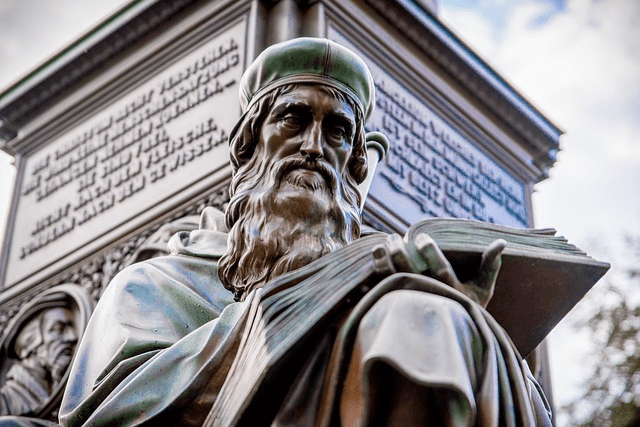
Since 1611, the King James Bible has reigned as the preeminent English translation. However, because of the newer Greek New Testament, a Revised Version was commissioned in England in 1881. The Revised Version would later birth the New Revised Standard Version, which would later birth the English Standard Version. When the Revised Version appeared, there was a considerable uproar since the long-dominant KJV had set the standard. The omission of the verses was seen as blasphemous, and people cited Revelation 22:19 to those who upheld the Revised Version. Revelation 22:18 is more relevant if you want to argue the point. 

Translations that omit these added verses usually contain a footnote or marginal note explaining that they appear in later manuscripts. Modern translations do not leave these verses out per se any more than the older ones added them. They are simply the product of the information available at the time. Now that we have older information, the translations that omit them should be more commonly used.
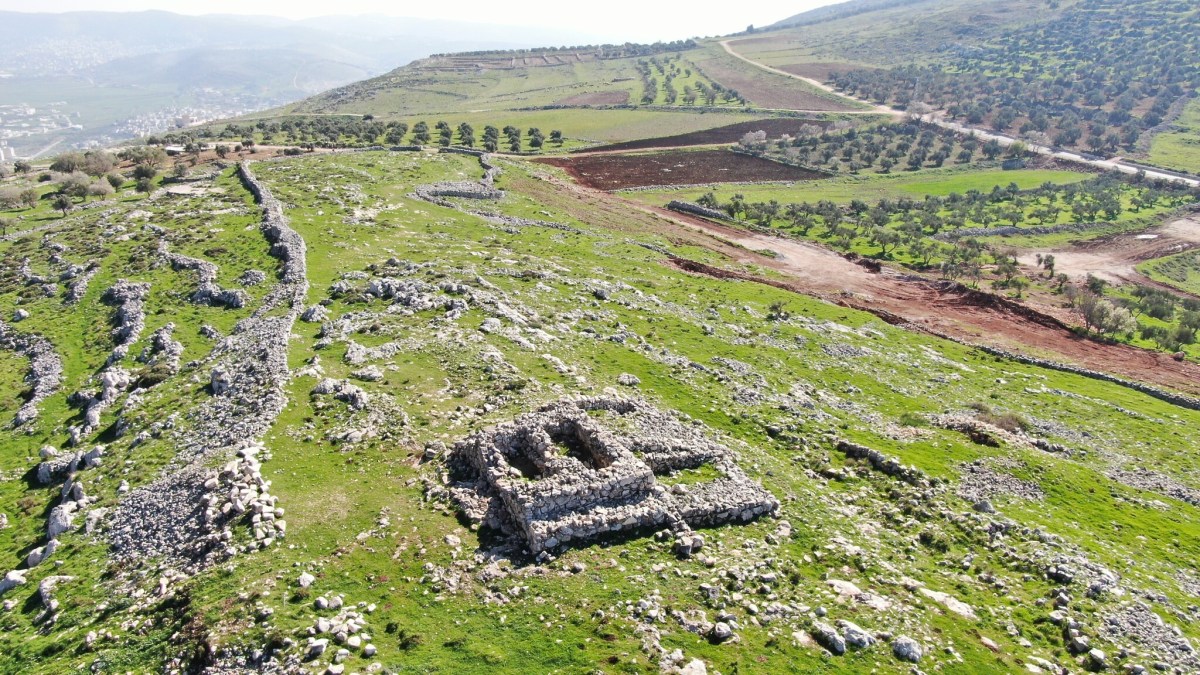
More recent translations utilize a vast amount of sources. The standard for most English translations is the Masoretic text of the Hebrew called Biblia Hebraica Stuttgartensia; the Greek New Testament used is Novum Testamentum Graece. Translators often consult, alongside these sources, the Dead Sea Scrolls, the Septuagint (Greek Old Testament), the Samaritan Pentateuch (Law of Moses), the Syriac Peshitta (Syriac Bible), the Latin Vulgate, and other sources that may help shed light on texts that may be difficult to translate. 

Featured

The Sordid History of Daniel 4-5

*In my haste to publish this, I neglected to mention that one of my sources is my friend, Michael Whitworth’s book, The Derision of Heaven: A Guide to Daniel (Bend, Oregon: Start2Finish, 2013).

My Wednesday Bible class has been studying the book of Daniel. We’ve concluded the first six chapters and will begin chapter seven this evening. Our focus has, thus far, been on how Daniel, Hananiah, Mishael, and Azariah lived faithfully to God while living in a society unfriendly to their religion. Furthermore, we have noted and discussed how we as Christians can live faithfully to God while living in our own Babylon–be that our nation, workplace, home, or where ever. Yet, when we arrived at chapters four and five, the history of Daniel did not align with other document histories.

Something that always catches my attention is when Scripture and secondary sources disagree. This usually leads me down a rabbit hole of historical investigation. I’ve always believed that when Scripture and any other authority are at odds, I’ve misinterpreted one or both. Chapters four and five have information that historians point out as non-historical, at best, or manipulated to fit into the various prophetic schema of Israel, at worst. 

Nabonidus was the king when Babylon fell to Cyrus the Great, so why are Belshazzar and Darius the critical figures in chapter five? For so long, historians had dismissed the book of Daniel as folklore that spun together various prophetic passages to Israelite favor. Yet, in 1854, British explorers uncovered the temple of Ur, finding cylinders from Nabonidus’ reign. Moreover, listed among a prayer for the king was the inclusion of his son, Belshazzar. Since then, extensive documentation has corroborated this information to the extent that it’s common knowledge and doesn’t require citation. 

Folks have also remarked that the madness of Nebuchadnezzar in chapter four was misplaced because Nabonidus was known to have had a mental breakdown for about a decade. However, Eusebius of Cesarea (4th century CE) quotes Greek historian Abydenus (c. 250–200 BCE), whose history of the Assyrians is preserved in quotations from various later historians—the writings, aside from these quotations, are lost in history. Abydenus quotes from a historian whose work was closer to the period than his, Megasthenes (c. 350–290 BCE). Eusebius quotes, 

[Megasthenes] subsequently relates from the Chaldeans’ [accounts] that when [Nebuchadnezzar] had returned to the royal court, some deity took control of his mind and spoke in this manner: ‘Oh brave Babylonians, I, Nebuchadnezzar, I predict that grief will befall you.’ He continues on in this vein for a while and then the historian [tells us] that after this eloquent speech he suddenly disappeared from sight. Then [his] son, Amilmardochus [Evil-morodach in the Hebrew Scriptures; Amul-Marduk in history], ruled. (Chronicle 1.11)

Nabonidus was the last Babylonian king, but he lived in exile because of his favoritism towards the moon god, Sin, while Marduk was the city’s chief god. During this exile, Belshazzar was co-regent. When the Persians, under Cyrus the Great, conquered Babylon, Belshazzar was killed, and his father exiled once more. Another detail is that Nebuchadnezzar is referred to as Belshazzar’s father (Dan. 5:2, 11). Nabonidus was Belshazzar’s father, who led a coup to take the throne, being no son of Nebuchadnezzar. 

Belshazzar is regarded as king in this chapter because of his father’s absence, and he acts as a regent in his father’s absence. Nebuchadnezzar may be described as Belshazzar’s father because the latter succeeded the former. This designation is seen in other literature when no direct relation existed. One possible explanation for Darius the Mede may be that he was Gobryas (Greek), the general who captured Babylon on Cyrus’ behalf. He was governor of Gutium in Media. Another possible explanation is that in Daniel 6:28, the text could read, “The reign of Darius, that is, the reign of Cyrus.” Kings often had multiple regnal names (cf. 1 Chron. 5:26). Cyrus took over the Median Empire, having a Median mother. Therefore, it wouldn’t be implausible that he would be called the king of the Medes. Yet, this is my best attempt at setting the record straight.  

Featured

Settling the New Testament?

The twenty-seven books that make up the New Testament appear in the 39th Festal Letter of Athanasius (c. 367)—a prominent bishop—and this is the typical starting point for many regarding their history of the canon. Because of such a detailed letter regarding the New Testament, some have concluded that the canon was a late invention considering the letter’s dating. Still, the canon emerged in the first century and is evident in the writings of the early church fathers as functional before the fourth century. Athanasius wrote this letter to end the disputes about other orthodox letters believed to be equal to apostolic writings—Shepherd of Hermas and Epistle of Barnabas. It also detailed Peter’s epistles and Revelation’s authenticity, which was questionable to some.

Earlier than his festal letter, a catalog from North Africa listed twenty-four books named the Mommsen Catalog (c. 359). Cyril of Jerusalem had earlier listed all the books except Revelation (c. 350), but the Council of Nicea is often the canon’s accepted settling point (c. 325). However, the council’s entirety wasn’t about the canon, but the divinity of Jesus, hence the Nicene creed. Because they affirmed the canon doesn’t mean they “created” it. Similarly, regional church councils acknowledged the canon but didn’t determine it. As Michael Kruger puts it, “These councils were declaring the way things had been, not the way they wanted them to be.” 

Around 250 CE, the early church theologian, Origen produced a list of the New Testament in his commentary on Joshua.

Matthew … Mark also; Luke and John each …  Even Peter … in two of his epistles; also James and Jude. In addition, John … through his epistles, and Luke, as he describes the Acts of the Apostles … in fourteen of [Paul’s] epistles. (Hom. Josh. 7:1; cf. Hom. Gen. 13.2)

This list would have included Revelation and John’s epistles; Hebrews would have counted as a letter of Paul because some in the early church believed that Paul wrote Hebrews. 

What, however, precipitated the list and the official declaration of the canon? It all began around 144 CE because of an early church heretic, Marcion. He only listed the gospel of Luke and ten of Paul’s epistles, omitting the pastorals and Hebrews. A harmony of the four gospels appeared in 170 CE by Tatian and was entitled Diatessaron. At about the same time, Melito of Sardis identified the Old Testament canon used by the Jews. The earliest response to Marcion’s list with list is the Muratorian Canon (c. 180), named after its discoverer. It contains twenty-two of our twenty-seven books, omitting James, 1 & 2 Peter, 3 John, and Hebrews. Interestingly, around the same time as the Muratorian Canon, Irenaeus was the first to refer to a New Testament (Adv. Haer. 4.15.2).  

This leads to the truth that some books we now acknowledge as inspired weren’t always regarded as such by everyone in the early church. Athanasius explained the reasoning for excluding two well-regarded writings, but a few were disputed earlier, such as 2 Peter, 2–3 John, Jude, and James. Other writings were outright rejected: Acts of Paul, Apocalypse of Peter, Gospels of Peter, Thomas, and Matthias (Eus. Eccl. Hist. 3.25). 

Featured

Early Hints of a New Testament

One can easily make the case that a New Testament, or a canon of the new covenant Scriptures, was expected. When we examine the Mosaic covenant, we notice in Hebrews 9:18–21 the facets making up the first covenant that appears in Exodus 24:3–8, and among them is the book (Heb. 9:19). Unlike the first covenant, no tabernacle or vessels in the New Covenant are cleansed because the church and individual Christians are God’s temple (1 Cor. 3:16; 6:19). Nevertheless, we who comprise the church and are of the Way are sprinkled with the lamb’s blood in our baptisms, and in due course, a book would necessarily emerge. Now, this perspective isn’t accepted by everyone. Some scholars contend that the New Testament could not have been foreseen and wasn’t expected. Others contend that the canon wasn’t created until the end of the second century CE, but I tend to disagree with both of those propositions. 

The earliest hint of an emerging canon appears in 2 Peter 3:16. Peter recognizes Paul’s writings as on par with Scripture. What he has in mind when referring to Paul’s letters isn’t altogether clear because Paul wrote some widely accepted letters while others were questionable. Peter assumes that his audience knows what he’s talking about, and he likely expects that they receive his letter similarly, given that he addressed himself as an apostle (2 Peter 1:1; cf. 2 Peter 3:2). Another hint at recognizing authoritative writings in the first century is 1 Timothy 5:18, which is a quotation from Luke 10:7 and Deut. 25:4. The opening phrase, “For the Scripture says,” recognizes both passages as Scripture. This initial phrase comes from Deut, while the rest is identical to Luke’s wording. Thus far, Paul’s writings and Luke’s gospel account are considered Scripture based on internal evidence from the letters. 

Another aspect worth considering is the nature of public readings in the assembly. In several New Testament letters, we observe the command to have them read publicly, which indicates that they carried authority (Col. 4:16; 1 Thess. 5:27; 2 Cor. 10:9; Rev. 1:3). We’re able to base this conclusion, in part, on how portions of the Old Testament were read in synagogue meetings (Luke 4:17–20; Acts 13:15; 15:21). Other scholars have additionally pointed out that the Greek structure of Matthew and Mark lent itself to a liturgical structure—which means that they would have been used for year-round public readings. The fact that such letters were urged to be read publicly along with Paul’s command to “devote yourself to the public reading of Scripture” (1 Tim. 4:13) may, in fact, suggest that he already believed his writings to have been such (cf. 2 Peter 3:2). 

The earliest historical source about a Christian assembly details the authority of the apostolic writings. 

And on the day called Sunday, all who live in cities or in the country gather together to one place, and the memoirs of the apostles or the writings of the prophets are read, as long as time permits; then, when the reader has ceased, the president verbally instructs, and exhorts to the imitation of these good things. (Justin Martyr, 1 Apol. 67.3)

What’s clear from history is that Scripture was not exclusively read in early church assemblies. Some popular writings that were often read in the church but were not placed among the acknowledged books were The Shepherd of Hermas (Eus., Eccl. Hist. 3.3.6; cf. Rom. 16:14) and 1 Clement (Eus., Eccl. Hist. 4.23.11). Serapion, the Antiochian bishop (190–211 CE), wrote to dispel the Gospel of Peter that had been read in Rhossus because it had led some astray (Eus., Eccl. Hist. 6.12.2). Certain epistles were well esteemed because of the author, while others were forgeries.  

Some might find the notion of reading non-canonical letters in the assembly challenging. However, these writings weren’t ultimately included in the canon because they were not universally accepted. There were three criteria for canonicity: 1) universality, 2) apostolicity, and 3) orthodoxy. If a writing fit into all three, it was accepted into the canon. However, there’s debate over another point: did the church create the canon? If so, authority primarily rests with the church—which is what Catholics and Orthodox believe, their definition of “church” here meaning the priesthood. However, while it’s true that prelates assembled to formalize the canon, they didn’t “determine” so much as “acknowledge” what had, up to that time, been regarded as Scripture. From the latter point of view, Scripture is more authoritative. This is the great divide between Protestants and Catholics/Orthodox.


See Harry Y. Gamble, The New Testament Canon: Its Making and Meaning (Philadelphia: Fortress, 1985), 12; James Barr, Holy Scripture: Canon, Authority and Criticism (Philadelphia: Westminster, 1983), 12. 

 Lee Martin McDonald, “New Testament Canon”, n.p. [cited 25 Mar 2021]. Online: http://www.bibleodyssey.org/tools/ask-a-scholar/new-testament-canon 

Michael D. Goulder, Midrash and Lection in Matthew (London: SPCK, 1974), 182–83; Phillip Carrington, The Primitive Christian Calendar: A Study in the Making of the Marcan Gospel (Cambridge: Cambridge University Press, 1952). 

Featured

Why Some Old Testaments Have More Books Than Ours

When we speak about the Old and New Testaments’ collected books, we use the word “canon.” This term is in Galatians 6:16 and appears as “rule.” When we speak about the canon of the Bible, we’re typically referring to the 66 books we have, but others have more books in their Old Testaments in other traditions. These extra books are the apocryphal books of the Old Testament (deutero-canonical to the Orthodox Church). They are considered canonical in the Roman Catholic and Eastern Orthodox churches.

The Apocrypha is a group of writings that date from 300 BCE to 100 CE. They consist of history (1 Esdras, 1 & 2 Maccabees), fiction (Tobit, Judith, and additions to Esther/Daniel), wisdom literature (Ecclesiasticus, Wisdom of Solomon, Baruch, The Prayer of Manasseh), and apocalyptic literature (2 Esdras). While they appear with Scripture, Jews didn’t consider them to be canonical. Some people argue for accepting the apocryphal books as Scripture based on their inclusion in the Greek Old Testament’s earliest codices (Septuagint, or LXX) that date to the 4th–5th centuries CE. However, they were omitted when the LXX was initially translated in the 3rd–2nd centuries BCE and Jerome refused to include them when he composed the Latin Bible in 383 CE.  

They are, however, included in the oldest manuscripts of the Bible, among which is the Codex Vaticanus. A codex is a way of saying “ancient book,” and the plural is “codices.” This book was found in the Vatican library and has almost all Old and New Testaments, plus other books therein. It dated to the middle of the fourth century and was used by Erasmus in the Renaissance to complete his Textus Receptus. In addition to the Old Testament books they have, 3 Esdras, Wisdom, Prologue to Ecclesiasticus, Ecclesiasticus, additions to Esther Judith, Tobit, Baruch, Epistle of Jeremiah, and additions to Daniel are included. 

The Codex Sinaiticus was found in 1859 by Count Tischendorf at the Monastery of St. Catherine on Mount Sinai. It dates to the later fourth century and has the entire New Testament with half of the Old Testament in Greek. It adds 1 & 4 Maccabees, Tobit, Judith, Wisdom, and Ecclesiasticus to the Old Testament. A fifth-century codex, Alexandrinus contains the Old Testament in Greek as well as the entire New Testament, but the New Testament adds the first epistle of Clement of Rome. It adds 2 & 3 Maccabees. These three oldest codices agree on the inclusion of Judith, Tobit, Wisdom, and Ecclesiasticus (a.k.a. Ben Sira). Many have equated codices with canon, but it’s not the same.     

Josephus did not include the Apocrypha in his list of books:

For we have not an innumerable multitude of books among us, disagreeing from and contradicting one another [as the Greeks have], but only twenty-two books, which contain the records of all the past times; which are justly believed to be divine; and of them five belong to Moses, which contain his laws and the traditions of the origin of mankind till his death .… but as to the time from the death of Moses till the reign of Artaxerxes, king of Persia, who reigned after Xerxes, the prophets, who were after Moses, wrote down what was done in their times in thirteen books. The remaining four books contain hymns to God, and precepts for the conduct of human life. It is true, our history hath been written since Artaxerxes [d. 425 BCE] very particularly, but hath not been esteemed of the like authority with the former by our forefathers, because there hath not been an exact succession of prophets since that time. (Against Apion 1.8) 

What does Josephus mean by, “has not been esteemed of like authority?” Jews didn’t believe a prophet lived among them during the Intertestamental Period. After the Gentiles defiled the altar, they tore it down and “stored the stones in a convenient place … until a prophet should come to tell what to do with them” (1 Macc. 4:46). They later made someone their leader and high priest forever “until a trustworthy prophet should arise” (1 Macc. 14:41). Between these two events, history even recorded that the distress arose in Israel so great since the prophets ceased appearing among them (1 Macc. 9:27). 

Melito of Sardis, a second-century elder, also failed to include them in his Old Testament list.

Accordingly when I went to the East and reached the place where these things were preached and done, I learned accurately the books of the Old Testament, and I send them to you as written below. These are their names: Of Moses five, Genesis, Exodus, Numbers, Leviticus, Deuteronomy; Joshua the son of Nun, Judges, Ruth, four of Kingdoms, two of Chronicles, the Psalms of David, Solomon’s Proverbs or Wisdom, Ecclesiastes, Song of Songs, Job; of the Prophets: Isaiah, Jeremiah, the Twelve [minor prophets] in one book, Daniel, Ezekiel, Esdras. (Eusebius Eccl. Hist. 4.26.14) 

The Council of Trent (Session IV, 1546) is historically the first point at which the Catholic Church formally recognized these books as “Divine Scripture.” They were not included in the original Hebrew Scriptures but were declared “genuine parts of Scripture” by the Councils of Jassy (1642) and Jerusalem (1672). 

“The Septuagint contains in addition ten further books, not present in the Hebrew, which are known in the Orthodox Church as the “Deuter-Canonical Books.”…most Orthodox scholars at present day, however, following the opinion of Athanasius and Jerome, consider that the Deutero-Canonical Books, although a part of the Bible, stand on a lower footing than the rest of the Old Testament.” (Timothy Ware, The Orthodox Church, new ed. [New York: Penguin Books, 1993], 200)

These books, however, do have value for understanding first-century Judaism. When the voice of prophecy had ceased, these books voiced what happened between the Testaments religiously, literarily, and historically. The two books of the Maccabees detail the struggle of the Jews for religious and political freedom, and they record a heroic period of Hebrew history. These books also help us understand the spiritual, philosophical, and intellectual life of the Jews before Christ’s birth. 

Featured

The Intertestamental Hebrew Scriptures

Thus far, we’ve established that with Moses living around 1500 BCE, the books attributed to him date between 1450–00 BCE. These books were vested with authority  by the command that they are read every seven years (Deut. 31:10–13), and they were read by Joshua in the 13th century BCE (Josh. 8:34–35). The 8th century BCE prophet Isaiah urged the reading of prophetic books (Is. 34:16). By the 7th century BCE, King Josiah’s court had discovered a copy of the law, likely the book of Deuteronomy (2 Kings 22:3–20), and read from it and inquiring of Huldah what such things meant. Jeremiah (6th cent. BCE) urged something to read of his scroll as authoritative (Jer. 36:6–26). During Jeremiah’s tenure, Judah was exiled to Babylon. 

When the exiles returnedMaccabean Revolt’s time to their land after decades of absence, they did so under one journey where the scribe Ezra led them. Ezra was one who “set his heart to study the Law of the LORD, and to do it and to teach his statutes and rules in Israel” (Ez. 7:10; cf. 7:6, 25; Deut. 16:12). Ezra’s knowledge of the Law enabled him to advocate for the Law in the reestablishment of Israel, so when the people assembled for a reading of the law, their response was remorse and weeping. The return from exile and covenant renewal did not prohibit a lukewarm response to the Law. By the prophet Malachi, the priests had turned from the Law (Mal 4:4). Their neglect of the Law, perhaps a response to unfulfilled prophetic expectations, led them to apathy towards religious observance. They were neglecting their duties manifested in the lack of reverence towards God so that instead of teaching the Law, they turned from it (Mal. 2:1–9).

The Law taking center stage is assumed to have been ongoing by the time of the Maccabean Revolt when the books of the Law were seized from the temple and any who possessed copies. The seizure was followed by a subsequent destruction of the law documents, which gave rise to Jewish zeal for the customs of their ancestors (1 Macc. 1:56–57). The Jews had formed the habit of searching the Law’s book when faced with national threats (1 Macc. 3:48), and they’d read from their holy books even before going into battle (2 Macc. 8:23). Following Ezra and Nehemiah’s example, they became stringent in their observance of studying the Law and turning to it. This was a dramatic shift from their pre-exilic mindset. 

The Essenes dwelt around the Dead Sea while some lived in cities. The Qumran community mandated a third of every night for reading the book and studying the law as a community. Their study and reading of the law were likely oral rather than silent because of the Maccabees’ customs.  

For just as it is harmful to drink wine alone, or, again, to drink water alone, while wine mixed with water is sweet and delicious and enhances one’s enjoyment, so also the style of the story delights the ears of those who read the work. And here will be the end. (2 Macc. 15:39)

In the time of my maturity I remained with my husband, and when these sons had grown up their father died. A happy man was he, who lived out his life with good children, and did not have the grief of bereavement. While he was still with you, he taught you the law and the prophets. He read to you about Abel slain by Cain, and Isaac who was offered as a burnt offering, and about Joseph in prison. (4 Macc. 18:9–11)

Baruch read the words of this book to Jeconiah son of Jehoiakim, king of Judah, and to all the people who came to hear the book…. And you shall read aloud this scroll that we are sending you, to make your confession in the house of the Lord on the days of the festivals and at appointed seasons. (Baruch 1:3, 14)

The Essene’s method of interpretation was to not depart from the commandments and not add anything to them. The preservation of God’s commands in their most accurate form was a significant concern for this community. Hence, they believed that their interpretation of the law was the last. Their proper, communal study of the Law was thought to atone for the land, whereas earlier generations had ignored the Law’s reading and hearing. Since the community also had priests and Levites as members, and these clerics read the text aloud in the assemblies that required a minimal number of ten. 

By the time of Philo, the Jews were regularly meeting in synagogues where they would read the scriptures and, after that, explain whatever was unclear. However, scripture reading was not restricted to the synagogue or scribal community. Among the Therapeutae, Philo recorded that scripture readings and the sermons that followed were common at banquets.

While the origin of the synagogue is widely debated as originating with Moses or sometime during or after the exile, the literary value of its activity as it is observed in the New Testament would give greater weight to sometime after the removal. Nevertheless, the synagogue rose during the Intertestamental Period. The earliest New Testament reference to a synagogue meeting came in Luke’s Gospel when Jesus read from the prophets and gave a sermon. The synagogue meetings were not for worship per se but religious instruction. Synagogues were institutions of religious education; to speak of synagogue worship negates the temple’s place in the life of the ancient Jew. The temple was where worship was rendered, as well as Scripture read at times too.

There were at least two readings in a synagogue meeting — one from the Law and the other from the prophets. The latter was followed by the synagogue ruler asking if anyone had a message after the reading. The Law was read on a liturgical calendar and in its entirety every three years. Had a priest or Levite been present, and they would have been given preference over an educated Israelite reading, so Jesus’ reading infers the absence of both. The reading of the prophets formed the conclusion of the synagogue service known as the Haftarah. Since this portion of the reading was not preselected, the reader, at their discretion, could select the passage to read.

When the church was born, it was not considered distinct from Judaism, so synagogue and temple meetings continued until apostolic preaching went to the Gentiles. Upon conversion of the Gentiles and before their conversion, the early Christians primarily met in houses. Within, the worship of the early church became defined as separate from the temple or synagogue. Still, the early church’s house meetings shared many organization and style practices with those of the synagogue. 

Featured

Writing the Old Testament

The first instance of recording Scripture occurs at Moses’s hand at the covenant’s inauguration between YHWH and Israel (Exod. 24:4–8). Scholars mostly agree that the Book of the Covenant mentioned there entailed chapters 21–23 of Exodus, but opinions vary. Moses’ upbringing in Egypt explains how he became a scribe in the first place, because they placed a high amount of esteem and respect on the scribe. They believed that a scribe was his own boss and the highest of trades to which one could aspire. Moses obviously had scribal training in Egypt in the first forty years of his life in the higher echelons of society, and that skill would serve him well as the leader of Israel. 

Even in Israel’s later history, we see the scribe as one moving in royal circles ( 2 Chron. 24:11; Esth. 3:12). The scribal chamber was within the palace (Jer. 36:12), and their work often detailed the exploits of the monarchs they served (1 Kings 11:41) as well as the reign of the monarchy itself (1 Kings 14:19, 29). They also served by writing the decrees ordered (Dan. 6:8) and taking dictation (Jer. 36:32). Some might be sent to record the military skirmishes the realm was engaged in (Jer. 52.25), and a useful skill for the scribe to possess in later times was to be bilingual (2 Kings 18:26). Following the station of Moses as a prophet were other prophets who recorded books or records here or there (Josh 24:26; 1 Sam 10:25). Later, we even read about some later holy people referring to what had been written (Dan. 9:2; Neh. 8:1). 

This process led what we know as the Old Testament to be formed around 400 BCE, with some arguing that the Law, or Penteteuch (first five books of the Bible), itself was authoritative by that time if not earlier. By 200 BCE or earlier, the prophets were canonized (cf. Is. 34:16; Jer. 36:6ff). Unlike our Christian Bibles where the Old and New Testaments are major divisions, the Hebrew Bible (Tanakh) grouped its books differently. There are three groupings of books: 

  1. The Law (Torah)
    1. Gen–Deut. 
  2. Prophets (Nevi’im)
    1. Josh, Judg., Samuel and Kings (Former Prophets)
    2. Isaiah, Jer., Ezek., and the Twelve (Latter Prophets)
  3. Writings (Ketuvim).
    1. Song of Songs, Ruth, Lamentations, Ecclesiastes, and Esther (Five Megillot)
    2. Daniel, Ezra and Nehemiah, and Chronicles. 

This tripartite division is reflected from Ben Sira, who was the first to refer to it in this way (180–175 BCE), but may be earlier than him. 

Centuries before this time, King Josiah (622 BCE) found a copy of the Law in the temple, and his subsequent reverence of it as such demonstrates its authority in the life of Israelite society (2 Kings 22:3–20). After captivity, Ezra had a copy of the Law in which to lead the nation (Ezra 7:6; Neh. 8:1ff). Centuries before them, Joshua (13th century BCE) read the same (Josh 8:34–35), and King David was to have had a personal copy (Deut. 17:18–20; cf. Deut. 31:9, 25–26). We know David consulted it after Uzzah died (2 Sam. 6:1–10; cf. 1 Chron. 15:1–13), but it’s obvious that it wasn’t central at all times.  

The interlude from the reading of Joshua until the next reading is a noted period of silence of public readings. During that time, the united kingdom of Israel was divided, and the northern kingdom following an idolatrous path while the southern kingdom sinned as well, but with periods of reformation. The next public reading came after the high priest Hilkiah found the Book of the Law in the temple during the reign of King Josiah of Judah. Hilkiah took the book to the king’s secretary who then took it to the King. Upon hearing the words of the Book of the Law, King Josiah grieved and sent to inquire of the Lord because all the curses of the book were to be rendered to the unfaithful people of Judah (2 Kings 22–23; 2 Chron. 34). When Josiah assembled the people to have the Book of the Law read in their hearing, Josiah led a covenant renewal to which the people consented. However, because of so many years of apostasy that began with King Solomon, changing the trajectory of Judah was unrealized because of so many years of neglecting to read the Law. Therefore, the land was purged of its inhabitants so that it could undergo a period of cleansing (cf. Lev. 18:28; 20:22).

This points us to the authority the Law and Prophets had. What we find was that those who were well regarded, adhered to the Law. We also note that the absence of it from the life of Israel resulted in an ignorance that permitted apostasy.  

Featured

The Genesis of the Bible (for the average Christian)

We have in our possession a sacred book that is nonetheless a book. Scripture was written over 1,400 years by various authors. The Bible wasn’t put together until centuries after all the writings were collected, but some writings remained together as a corpus (e.g., Torah). How did this process occur? That’s what many wonder. How and who created the Bible is remarkable and something that isn’t required to know but is very enlightening. 

Allow me, first, to give you a timeline of pertinent events as it relates to writing altogether and the Bible.  

3200 BCE — Writing began in Sumer through pictographic means. 

3000 BCE — Egyptian hieroglyphs were developed. 

2100 BCE — Abraham lived around this time. 

1800 BCE — An alphabet is created in Egypt. 

1500 BCE — Moses lived around this time. 

1200 BCE — Ugaritic, a language from Ugarit—a northwestern area in Syria—is used, and Exodus 15 and Judges 5 have stylistic patterns that resemble them. These similarities lead linguists to conclude that these two chapters are the oldest in the Bible and date to 1100–1200 BCE. 

1000 BCE — The monarchical period of Israel’s history begins. 

1000–900 BCE — The earliest Hebrew inscription on a potsherd is discovered (Khirbet Qeiyafa ostracon). 

516→ BCE — We have manuscripts dating to this time period, known as the Second Temple Period, with the oldest dating to the late 4th century BCE. 

250→ BCE — Dead Sea Scrolls 

This timeline provides us a rough idea and overview of what we know about written communication. This information results from linguists, philologists, archaeologists, and other related areas of study.  

Materials used in writing were stone (Exod. 34:1, 28; Deut. 27:2–3), clay (Ezek. 4:1), wood (Is. 30:8; Hab. 2:2), and leather (Jer. 36:23). Additionally, papyrus leaves were mostly that upon which the New Testament was written. These plants grew along the Nile River and had been used as far back as 3000 BCE, but became common among the Greeks and Romans for making a book (codex) or books (codices). The average roll was 30 feet long and 9–10 inches high. Scribes would write on one side mostly and occasionally on both sides (cf. Rev. 5:1). Animal skins, referred to as either vellum or parchment, were another common material used in making a letter. 

Whenever you hear about the discovery of a manuscript or something that scholars date to thus-and-such a period, they base this off the material upon which it was written, the language, dialect and syntax, and even carbon dating. Because we know that certain materials were used by particular people during a specific time period, this allows archaeologists to pinpoint a general time frame that contributes to our overall knowledge of the history of a text. 

The Birth of the Bible

It’s difficult to fix a date when the Bible was written or began to be written. Believing that Moses lived around 1500 BCE, the books attributed to his authorship would have been written sometime in the second half of the fifteenth century, with redactions throughout the centuries (cf. Num. 12:3; Deut. 34:5–6). However, the book of Job is believed to have been written in the second millennium BCE, or it at least is about that period if it was written later. To put it in perspective, Job is believed to have been a patriarch akin to Abraham, Isaac, and Jacob in their time. 

Regarding what’s extant, the tenth-century BCE potsherd known as Khirbet Qeiyafa ostracon is the eldest. This dates to the reign of King David and was found on the north side of the valley of Elah (1 Sam. 17:1–3). Differing interpretations of what it says exists, so suggesting it is Scripture may not be altogether true. However, this discovery also can’t be ruled out as unreflective of Scripture. The Ketef Hinnom amulets, however, are among the oldest finds that contain language akin to the priestly blessing of Numbers 6:24–26 and date to the seventh century BCE. Since many scholars believe that the Old Testament is primarily a product of Israel’s post-exilic period, these two finds cast that conclusion into doubt, given the language they each demonstrate.

Behind these fragmentary pieces, the Dead Sea Scrolls are the oldest full-manuscript evidence of our Old Testament. They are a collection of over 900 manuscripts discovered around Qumran from 1947–56. Copies of every Old Testament book except Nehemiah and Esther were found in 11 caves around the Dead Sea, and the oldest dates to the third century BCE. Before this discovery, the Leningrad Codex was the oldest Old Testament manuscript, dating to 1008 CE. Scholars compared the two texts, being greater than a millennium apart, and found that little had changed. This attests to the accuracy of the Hebrew Bible transmission. The notion supported by Bart Ehrman and company that we can’t fully trust Scripture because of the lack of original copies is a bit of a farce when one considers the accuracy between these two texts.  Stay tuned!

Featured

From Prison

Matthew 11:2–30; Luke 7:18–35

John the Baptist is next depicted as imprisoned, and the reason given is detailed in Mark 6:17–20. As a man who preached the message of repentance, John the Baptist was sure to know the law and point it out. Perhaps John’s resolution stemmed from his sense of duty as a prophet (Ezek. 3:18–19). John was right to warn Herod. The law prescribed that a man not marry his living brother’s wife (Lev. 18:16; 20:21), and both Herod’s wife and Herodias’ husband were still living when they married (Antiq. 18.5.4 [136]). Jesus would later preach that if one married another after divorcing for any reason other than infidelity, they were an adulterer (Matt. 19:9). This relationship was adulterous. John pointed that out to his disparagement.

The result of John pointing out that Herod and Herodias were sinning was imprisonment. While in prison, John heard about the works of Christ and sent his disciples to Him. However, his inquiry was odd given that John had previously acknowledged Christ as Messiah: “Behold, the Lamb of God, who takes away the sins of the world” (John 1:29; cf. 1:32; 3:30). John’s inquiry may have been legitimate for several reasons: it may have been for the benefit of his disciples. They chose to remain with John after the revelation of Jesus being the Messiah (John 3:26). John may have wanted to continue to point to Christ while decreasing himself (John 3:30). Secondly, the expectation of Jesus doing the works John said He would perform may have created impatience within John. Perhaps John wanted to know when Jesus would fulfill the prophecy he had proclaimed (Matt. 3:7–12). A final possibility may rest within John’s humanity. The Baptist may have wanted to confirm what he already knew. Given the pressure of imprisonment on John, it is possible that he had a moment of weakness.

John’s scriptural knowledge was so excellent that Christ used scripture to answer John. When in prison, the Baptist sent his disciples to ask Jesus who he was. When Jesus answered John (Luke 7:22), he quoted Isaiah’s prophecies about the coming age of the Messiah and those things that would accompany His coming (Isaiah 29:18–19; 35:4–6). To John, Jesus’ usage of this passage would have communicated what John expected from the Messiah. 

When the disciples of John left, Jesus addressed the crowd. “A reed shaken in the wind” speaks of John’s character in one of two ways: 1) Israel is described as a reed easily uprooted (1 Kings 14:15), and John was undeterred in his commitment to God’s mission, or 2) King Herod’s insignia on coins of his minting was a reed so that John couldn’t be bought. Either interpretation fits John’s character because he was a true prophet, not a straw man.

Luke further shows the typology of John being likened to Elijah (cf. Luke 1:17) when he quotes from Exodus 23:20 and Malachi 3:1. The latter passage is linked with Malachi 4:5, where Elijah is identified as the messenger. These passages, along with Isaiah 40:3, are commonly identified with John the Baptist though he denied that he was Elijah incarnate (John 1:21–23).

Those who rejected his baptism and message were those who Jesus likened to brats. They didn’t initiate the game so they won’t play. Those who play and abstain are bad, while those who play and partake are bad too. Moreover, the imagery is akin to a marriage, and this imagery has been used of Christ being the bridegroom (Luke 5:33–35). Either way, those who rejected John and Christ could not be satisfied because of their lack of wisdom. 

Next, Jesus denounces the places where he performed some of his miracles (Matt. 11:20–30).  He does this by comparing them to cities that suffered wrath at the hands of God in a time past. These evil cities, whose stories were infamous to the Israelites, were Tyre and Sidon—who worshiped Baal and were notorious for their immortality and corruption—and Sodom, which was destroyed for their wickedness. Had these evil cities seen what Jesus had done, they would have repented, unlike the cities that saw the good works of Christ and did not. The point is this: those cities that didn’t repent were cozy with sin and not burdened by it in the least. Twice in Jeremiah, the prophet says that God’s people didn’t know how to blush (Jer. 6:15; 8:12). Every one of us has somehow become desensitized to sin. When was the last time someone used curse words that did not bother me? Was I one of the hypocrites who quit watching a television show because of homosexual relationships while the same show otherwise was about fornication and adultery (e.g., Grey’s Anatomy)? Maybe those aren’t the sins we’re desensitized to, but we all likely have some that just don’t bother us, and they may be some in our lives.

Jesus’ invitation, then, follows a prayer. After rebuking the cities, He doesn’t stew or fixate on them but prays. Then, He explains the prayer to those present, inviting them to come: The invitation is to the one who labors under the heavy burden of manufactured religious traditions spurred by the law. No one can measure up no matter how hard they try. The invitation is to the one who labors under the heavy burden of their sins. Sin is exhausting because we then think we must use our resources to please God.