Years ago, one of my professors and I casually discussed God’s providence. Because my studies centered on the canon of the Great Books of the Western World, compiled by Mortimer Adler, I often read works based on the Enlightenment and unkind to faith. As we spoke, I made a point that around the time of these critiques was when archaeology was surging. While many “scholars” criticized the Bible for, as they claimed, not being based on history, archaeologists were discovering artifacts confirming the Bible’s history.
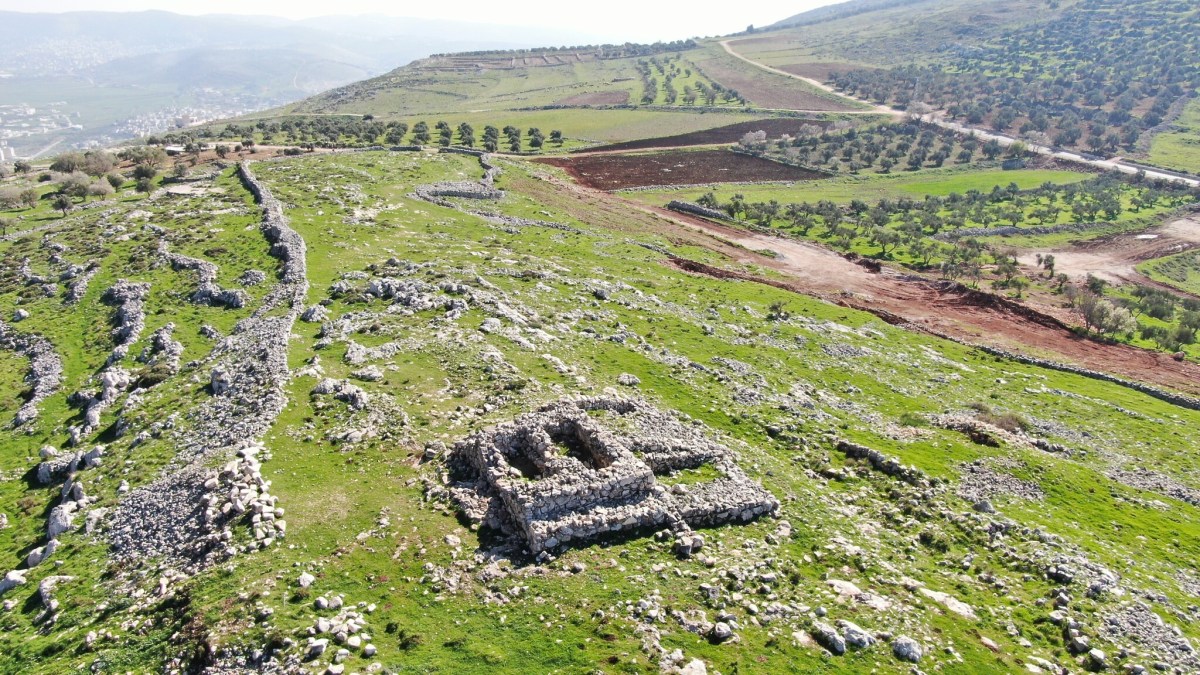
In Deuteronomy 27:15–26, Moses instructed the Levites to lead Israel from Mount Ebal with eleven curses against anyone who partakes in idolatry, dishonors their parents, or moves their neighbor’s boundary stone. In Joshua 8:30, Joshua built an altar on Mount Ebal after taking Ai, where he repeated the curses of Moses. In the 1980s, archaeologists sifted through Mount Ebal, cataloging discoveries. In 2019, discarded material thought to be irrelevant was examined further. Recently, an amulet was run through an x-ray tomographic measurement to reveal a hidden text—“You are cursed by God YHW.” The YHW is God’s name, often considered “Yahweh.”
One scholar believes the inscription dates to the 13th century BC, which was the time that Joshua and Israel settled in the land of Canaan. Others believe it is older, making this discovery the oldest Hebrew inscription. Before this discovery, the oldest Hebrew inscription dated to the late tenth century, which is the period during which Saul and David were kings.
What’s neat, at least to me, is how these discoveries confirm the biblical account and do so in the timeline established. Since some think this inscription is older than the 13th century—the timeline of Joshua—it is likely that it was during Moses’ lifetime—roughly the middle of the fifteenth century onward. While some continue to doubt the Scriptures, plenty of evidence confirms their historicity. Hopefully, we have faith enough that we don’t need this evidence to “prove” what we already believe. Instead, it is nice to see the confirmation of a divinely given, inspired Bible.

 A Minister's Study