The Lord’s Prayer (Matt. 6:9-13)

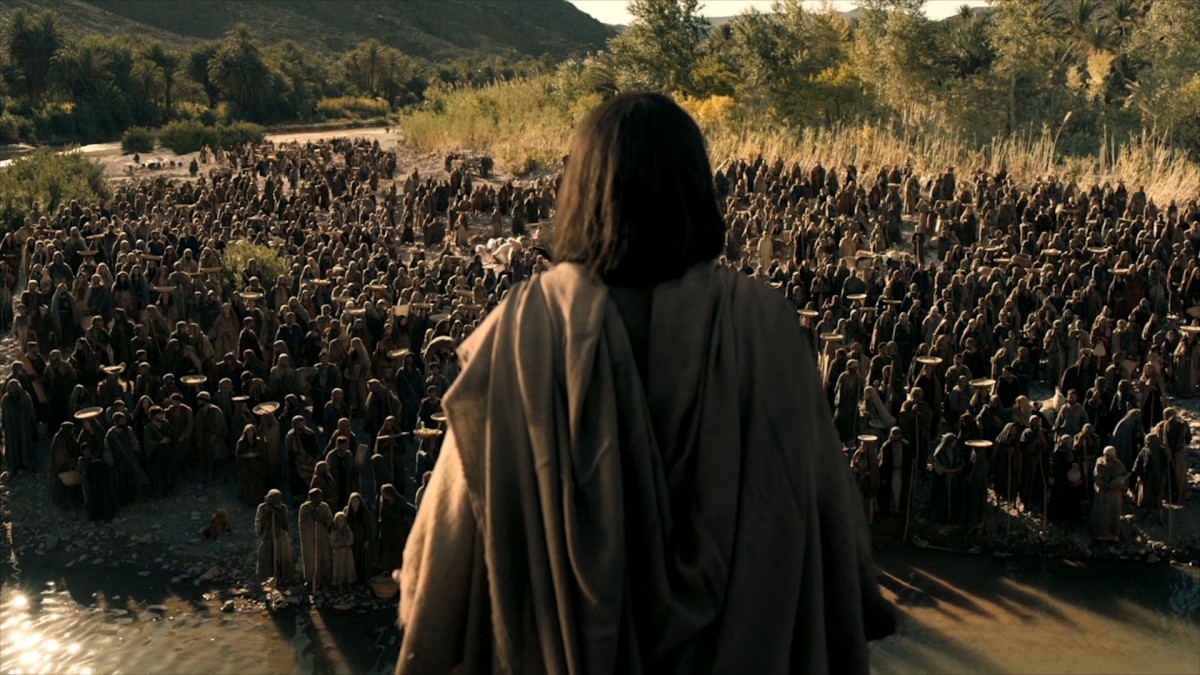
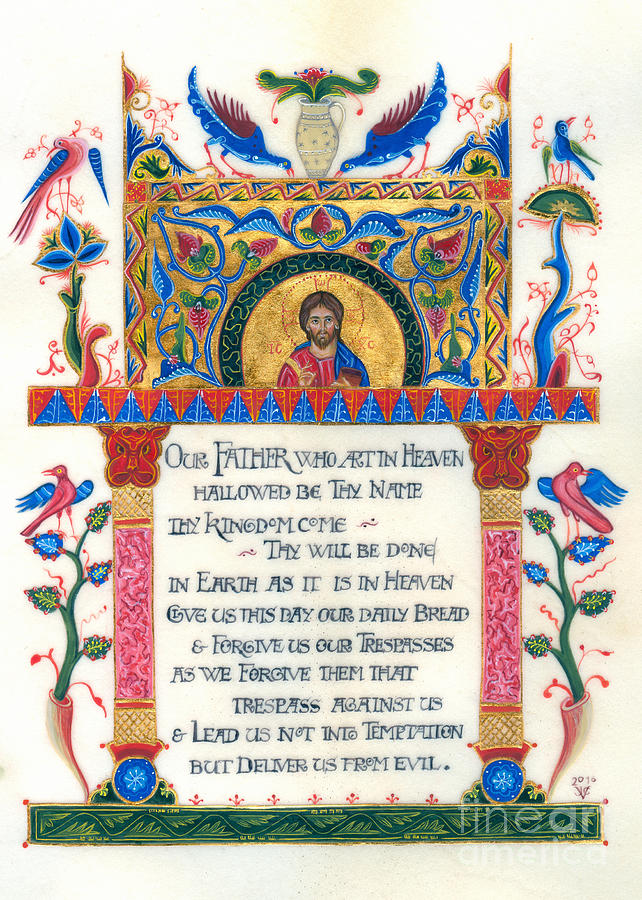
We must remember that when Jesus spoke about prayer, he urged that it be private and not as a show-off. He also adds that we shouldn’t presume that wordy prayers avail more than simple, concise prayers. In this context, Jesus gives his disciples a prayer to pray, something rabbis often gave their followers. Unlike our prayers today, there were and are liturgical prayers. These are prayers worded verbatim and not extemporaneously as we tend to do today. In synagogues, the shema is prayed on the Sabbath. This is the first word of Deuteronomy 6:4, “Here!” Jewish prayers are often named after the first word or words. The mi shebarach (“May the one who blessed”) has become increasingly common in synagogue meetings. The Lord’s Prayer would have been prayed verbatim. While modern Christians say it’s a model prayer to base our prayers on, the disciples would have repeated precisely these words. 

Prayer is not a way to get God’s attention—we already have it. It is a way to express our feelings honestly and without reservation. Whether worry, anger, thanksgiving, or celebration, the Psalms reflect the various emotions expressed, from despair to joy, from repentance to gladness. Sometimes, the psalmist praises God above all that is, and at other times, lays blame at God’s feet. Prayer can strengthen our relationship with God just as any form of communication enhances a relationship. Muslims pray five times a day; Jews pray three times a day. Christians, however, have little to no discipline about prayer unless you’re in a specific branch that emphasizes it. 

There are three versions of this prayer—Matthew’s, Luke’s (11:2–4), and one in Didache (ca. 50–60). In Luke’s version, the disciples ask Jesus to teach them how to pray. Didache is very similar to Matthew, with a few differences. 

Our Father, who art in Heaven, hallowed be thy Name, thy Kingdom come, thy will be done, as in Heaven so also upon earth; give us today our daily bread, and forgive us our debt as we forgive our debtors, and lead us not into trial, but deliver us from the Evil One, for thine is the power and the glory for ever. Pray thus three times a day. (8:2–3)

The doxology at the end of Matthew’s version is a later addition. Interestingly, the earliest Greek and Latin manuscripts do not contain it. Even early church fathers knew of the shorter version. It makes you wonder why the doxology was added and kept in Matthew’s final version. Even a version of Luke contained, “May Your Holy Spirit come upon us and purify us,” instead of “Your kingdom come.” This is attested to by Marcion’s version of Luke (ca. 85–160); Gregory of Nyssa also wrote about this version. Several amulets have been found in Egypt on which the Lord’s Prayer was inscribed, so we see this prayer as transmitted through time. 

Many Jewish prayers address God with formality, “Blessed be the Name of the LORD our G-d,” though not exclusively (cf. Mal. 2:10). Here, however, Jesus makes it intimate, addressing God as our father, denoting paternal love, protection, and provision. God alone is one’s father (Matt. 23:9). Saying that God was in heaven, the text says “heavens,” speaks about his ability to transcend the physical world. Jews at the time believed in three heavens (2 Cor. 12:2). The third commandment of the Torah was to not use the Lord’s name in vain (Exod. 20:7), and the wording in Exodus means to take a vow or oath in God’s name, as well as in casual conversation. 

When Jesus prays for God’s kingdom to come, many say we should omit this portion of the prayer because the kingdom is already spoken of as something in the present tense (cf. Luke 9:27; 1 Cor. 15:23–25; Col. 1:13; Rev. 1:9). In this sense, I would agree; however, the kingdom has come in that God’s rule is on earth through the church. Yet, the fullness of his kingdom is to be realized after the judgment. Christians live in God’s kingdom, but there are still things on the earth, such as death, that occur that aren’t a part of God’s kingdom. 

When we follow God’s will as we know it on earth, we may also see it done in heaven. We can learn this from the Scriptures that have been preserved for us. Jesus used those Scriptures to combat the devil in the wilderness. He also said he didn’t come to destroy the law and prophets but to fulfill them. The wording about daily bread isn’t as truthful to the text as many English translations give it. In Greek, “daily” isn’t expressed, but giving us tomorrow’s bread today is more accurate to the language. On the one hand, it envisions the messianic banquet (cf. Matt. 8:11). On the other, it reminds us that Jesus is our bread of life (John 6:35, 48, 51). 

Sin is often regarded as a debt (cf. Matt 18:21–35; Luke 7:40–43). We accrue debts through our sins. These debts are too outstanding for our repayment, but the merciful God will forgive us our debts as we forgive our debtors. If we practice canceling debts rather than calling in repayment, we will have our debts canceled (Matt. 6:14–15). When we think about temptation, we think of something that entices us to sin. The term translated as “temptation” refers to outward tests of all kinds. You could render the term “trials” or “ordeal.” These can lead to temptations, but they are not in and of themselves (cf. Prov. 30:7–9). Jesus’ hunger in the wilderness could have turned to sin had he succumbed to Satan’s temptation to turn stones into bread. Judas was not delivered from the evil one, mainly because he did not seek God’s will. Because of this, he opened himself to Satan (cf. Luke 22:3; John 13:27). Just as Satan tempted Jesus through his trial, he can use our ordeals to tempt us, giving that we become weak or despairing in them. 
Praised by God, Not By Men (Matt. 6:1-18)

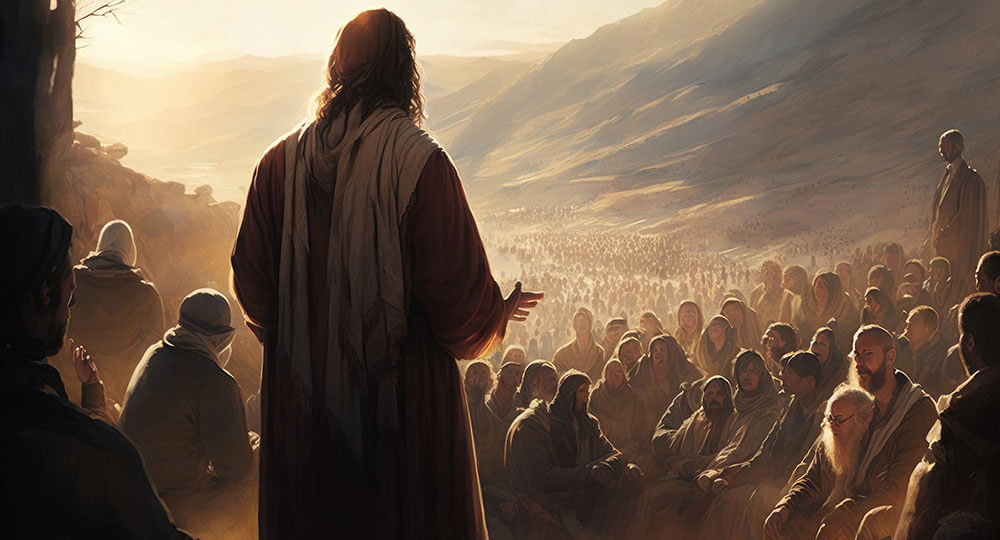
Jesus wants his disciples not to be show-offs. A balance must be struck between personal piety, the salt of the earth, and letting our light shine (Matt. 5:13–16). When we compare these, it all boils down to intention. To be the salt of the earth isn’t to show off but to be a blessing. Just as salt has taste and color affects whatever it touches when used. It can preserve, melt, season, and other such things. By being what we are, we are meant to be a blessing by being that salt. Just as there are various uses for salt, so there is for light. Many of us remember that plants require light to grow. Solar panels harness direct sunlight’s power, which can be stored in batteries. My house has several solar paneled motion lights and string lights. The string lights illuminate every night around our deck, and whenever the dog or someone walks by the motionlights, it illuminates. It’s very dark in the country, and these lights are helpful and cheaper than running electricity everywhere. You may have heard that darkness is the absence of light. When God ordered the cosmos, he commanded light as the first act of creation (Gen. 1:3).  When the final, heavenly Jerusalem appears, there will be no more night (Rev. 22:5). We’re told to let our light shine so that our good works are seen, and we glorify our heavenly Father. Where’s the balance?

Jesus mentions almsgiving, prayer, and fasting as three areas of piety. He stresses that we do things to be rewarded by our Father and not people (Matt. 6:3–4, 6, 18). So, here are the two areas of tension that will be resolved by noting the intention. Here’s an example that helps me: let’s say you’re out to eat at a restaurant. When your food comes, you and your family bow your heads and offer a prayer. You’re not doing it for attention but to give thanks. That’s letting your light shine because, let’s say, an elderly couple walks by and commends you for that, saying it’s nice to see a young family give thanks without shame. Your light has shone, but you have done it not for praise but out of personal devotion and commitment to God. On the other hand, if you prayed so loud that everyone around you was forced to notice, that’s not good, and the showing off is of concern here. In closing chapter five, Jesus said to be perfect as our Father is, so the instructions that came before and follow that statement show us how to do that. Our word, translated as “perfect,” doesn’t mean “without fault.” I advocate that it should be translated as “complete.” At least, that’s how we’d understand it today.  

The conclusion of intention is shown in each example. In almsgiving, don’t blow the trumpet (Matt. 6:2). In prayer, it’s to be seen by men (Matt. 6:5). With fasting, it’s appearing to men (Matt. 6:16). This is the motivation of the hypocrites. They want to be seen. However, as this chapter closes, we seek God’s kingdom and righteousness first (Matt. 6:33). The law made caring for the poor a central command (Deut. 15:11). What’s interesting is that the term translated “almsgiving” is tzadik. The word for righteousness is tzedakah, which shows the relationship between the two. Doing it for public recognition should not be our motivation. What we give isn’t so much a matter as well, but how we give (cf. Mark 12:41–44). 

Similar sentiments could be said of prayer. This doesn’t rebuke corporate prayer because that’s commanded (1 Tim. 2:1–3) and observed in the early church (Acts 12:5, 12). The emphasis should be on God and not the one praying. Sometimes, people use prayers as sermon times. They give a little sermon for those listening more so than addressing God himself. So, Jesus identifies the praying person who wants to be seen; then, he points out the one who uses vain repetitions. 

The Gemara asks: And one who prolongs his prayer; is that a virtue? … Anyone who prolongs his prayer and expects it to be answered, will ultimately come to heartache … How does he prolong his prayer? By increasing his supplication. (B. Ber. 55a)

A professor once corrected me in a paper by telling me to stop bloviating. I looked the word up because I didn’t know what it meant. Essentially, use fewer words rather than extra unnecessary words. Don’t say in fifty words what can be said in ten. This is why the disciples ask Jesus to teach them how to pray. Rabbis often gave their disciples prayers to pray verbatim. In the early church, the Lord’s Prayer was to be prayed thrice daily (Didache 8.2–3). The Psalms are also a good blueprint. Fasting is also to be private. This religious devotion was associated with mourning, repentance, discipline, or waiting upon the Lord. 

Oaths, Retaliation, and Love (Matt. 5:33–48)

Regarding oaths, Jesus doesn’t quote any specific passage but summarizes the concept of taking an oath, specifically invoking God’s name (Exod. 20:7; Lev. 19:12; Num. 30:3–15; Lev. 24:19–20). Dire consequences could result from invoking God’s name in an oath. They were required occasionally, however (Exod. 22:10–13; Num. 5:16–22). By the time of Jesus, Jews avoided using God’s name lest it be in vain, so they would swear by sacred things (cf. Philo, Special Laws 2.1.5; Nedarim 1.3–4). Jews believed one was obligated if he swore by the temple’s gold or the altar’s offering but not by the temple or altar themselves (Matt. 23:16–22). You weren’t required to keep an oath if you swore by heaven or earth, but if you used any variation of God’s name, you were required to fulfill your oath (Shebuoth 4.13). Because they used loopholes in fulfilling their vows, they were hypocrites and deceitful, profaning God’s name. Just answer truthfully (cf. 2 Cor. 1:17–24; James 5:12). Jesus’ attitude was shared by the Essenes. 

They are eminent for fidelity, and are ministers of peace; whatsoever they say also is firmer than an oath; but swearing is avoided by them, and they esteem it worse than perjury; for they say, that he who cannot be believed without [swearing by] God, is already condemned. (Josephus, Wars 2.8.6)

This isn’t a prohibition against oaths per se because Jesus answered the High Priest while under oath (Matt. 26:63–64). 

The eye for an eye concept appears in three places and spells out different ways compensation may be made for damage to a person’s body (Exod. 21:23–25; Lev. 24:19–20; Deut. 19:21). This concept wasn’t unique to Judaism. Similar ideas appear in Roman Law and the Babylonian Code of Hammurabi, but the Torah concept treated everyone equally and not according to social class. It was meant to limit vengeance. We don’t see a trace of this being carried out because, more often than not, financial compensation was provided for the injury. Jesus gives us the commands not as to how to respond to physical harm but to public humiliation. His examples are the slap (cf. 2 Cor. 11:20), lawsuit, and conscription. Not escalating matters is to shame the attacker and maintain one’s honor. Usually, the response to a slap would be to either cower or hit back. Hitting back escalates, and cowering relinquishes a person’s dignity. Standing firmly, offering the other cheek, is a way to control the situation. With the lawsuit, a person can avoid the court, which would result in arrest, or they could accept the verdict, which might entail suffering (cf. Exod. 22:26–27). The injustice of the whole situation is revealed by giving the tunic with the cloak. Roman law compelled a person to obey for a mile (cf. Matt. 27:32). To refuse meant a beating. To comply is humiliation, so going beyond what was compelled by law is intended to humiliate the one who has conscripted a person. 

The first part of verse 43 derives from Leviticus 19:18. The Torah doesn’t say to hate your enemies, but in the Dead Sea Scrolls, we read, “He is to teach them to love everything [or everyone]. He chose and to hate everything [or everyone] he rejected” (1QS 1:3–4). There are other Old Testament passages mitigating how one feels about their enemies. When an enemy falls, we’re not to gloat (Prov. 24:17); otherwise, God will be displeased (Prov. 24:18; cf. 25:21–22). When Judah was exiled, they were supposed to pray for their city (Jer. 29:7). Paul iterates doing good to enemies is bound to frustrate them (Rom. 12:20). Praying for them not only is for their benefit but ours as well. It orients our minds towards them how it should be rather than allowing bitterness to take root. To be like our heavenly father is to love those who are unlovable. It’s to go above and beyond what is customarily anticipated or endorsed. To fall short of this is to carry the same deformity as our enemies.