Before Hitler, There Was Haman (Esther 3)

What’s interesting about chapter three is its beginning phrase, “After these things.” What things? After Mordecai disclosed the plot to assassinate King Ahasuerus, Haman was promoted. We aren’t told why, but his introduction is key to understanding what follows. Being a descendant of Agag, king of the Amalekites, tells us about the animosity that is to come. King Saul was to have killed all the Amalekites, but he spared Agag only for Samuel to finish the deed (1 Sam. 15). Earlier, Mordecai’s lineage ties him directly to King Saul (Esth. 2:5), so this is like a rematch of Saul and Agag through their descendants. A knowledge of Scripture tells us who the victor will be, because God had said that he would see to it that the Amalekites would be blotted out (Deut. 25:17–18). 

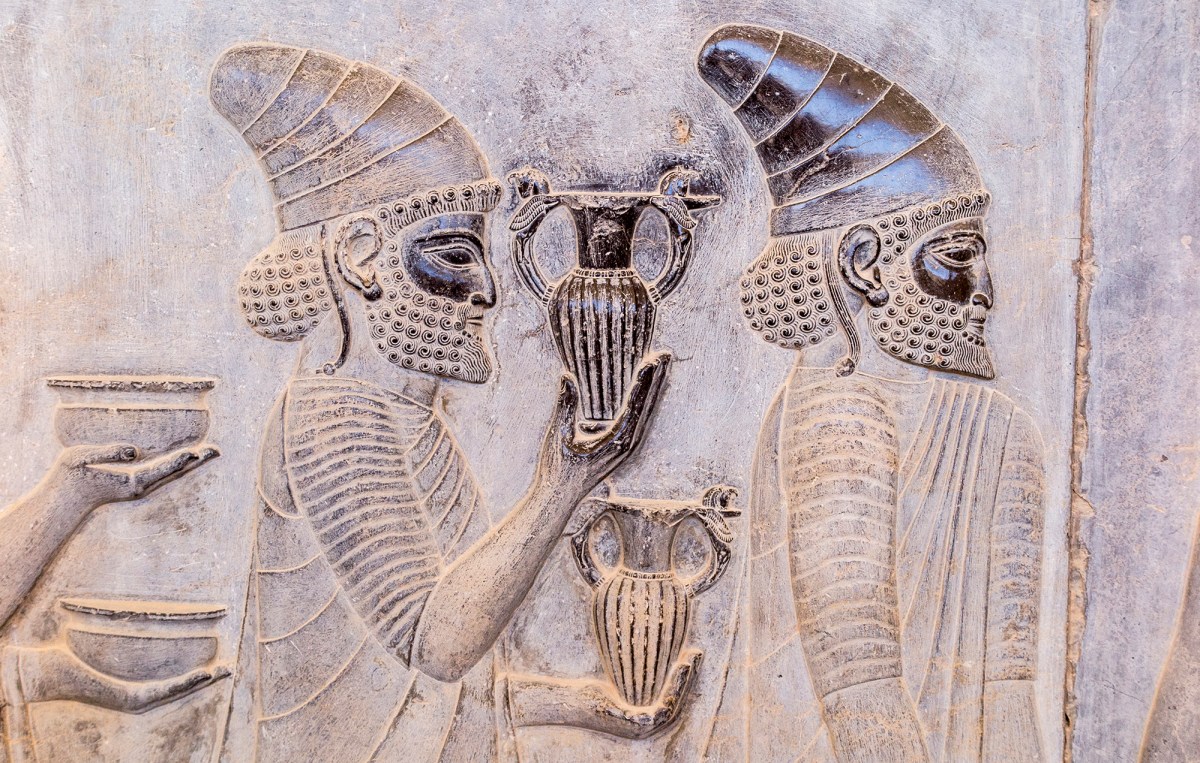
While everyone is drooling over Haman’s exaltation, Mordecai does nothing of the sort. As far back as Late Antiquity, the reason given for his refusal is religious. He won’t kneel to flesh and blood. One wonders if there weren’t also political or personal motives involved. Mordecai told those who inquired that he was a Jew, which has led to the conclusion that his refusal was on religious grounds. Persian religion at the time was based on the belief in a god of light, Ahura Mazda, and a god of darkness, Angra Mainyu, who were constantly at odds with each other. It’s called Zoroastrianism, named after the prophet Zarathushtra, dating to the second millennium BC. Key to this religion is the ideal of thinking good thoughts, speaking good words, and doing good deeds. This is important because it’s precisely a story about good and evil.  

By the time of these events, Esther would have been queen for five years. The month of Nisan is April, and the month of Nadar is March, so for a whole year, this decree will be issued and the Jews will have this timeframe to contemplate the date of their deaths. When Ahasuerus gives Haman his ring, he has essentially given him carte blanche to do as he pleases. He now has royal power with which to act. The king and Haman drink, the city of Susa is confounded, and the Jews are terrified. 

Racism is something taught; it’s not something we are born with. Haman undoubtedly heard from childhood how he is a descendant of a king; a king whom the Jews put to death and whose lineage they tried to destroy. Now, he has grounds on which to finish the work of his forebearers who wanted to obliterate the Jews when they left Egypt. He’s in the prime position to make it happen, and Mordecai and the “rules” of the Jews give him his justification to persuade the king to allow it. 

In Scripture, we observe Jesus behaving kindly towards people that his own race hated—the Samaritans. He tells the parable of the Good Samaritan, he speaks with the Samaritan woman at the well, and he restrains his disciples when they want him to rain hellfire and brimstone on a Samaritan village. Even the book of Romans is a book about racial reconciliation. The Jews were expelled from Rome for several years. When the Caesar who issued such an edict died, another took his place and allowed them to return. They saw their Gentile brothers and sisters leading the church in their absence, and they wanted to run things since they had returned. It turns into a battle between races and their different traditions. Paul wrote to relieve that tension. To the Galatians, he wrote that there is neither Jew nor Greek, so when you read the New Testament, the issue of racial bigotry is something even the church dealt with. 

At every turn in Scripture, especially the New Testament, there is an appeal to end racial bigotry. The Jews called non-Jews Gentiles. The Romans and Greeks called those who were not of their own race “barbarians.” Every group believes itself superior to others. Why speak about racism? Aren’t we Christians supposed to be beyond that? We should, and I hope we are, but we also have to keep in mind that though we may not have incurred racism, some of our brethren have. 

My longtime mentor, Sellers Crain, told me a disturbing story about his early days in ministry. He was preaching at a congregation in Louisiana when he noticed that most of the men were missing on a particular Sunday near the beginning of the services. He’d seen them arrive, but they were now absent. He began looking for them when he saw that most of them were outside around a car. He went out to see what was happening and noticed that many of the men had surrounded a car containing a family. What made this particularly notable was that the family wasn’t white, but black. After hearing some of the chatter among the congregation’s men, he disbursed the crowd, telling them that he’d handle it. When the frightened father rolled down his window, Sellers had to say to them, much to his chagrin, that the men wouldn’t allow the family to join them in worship. He informed them that there was a congregation of black saints. The father thanked him, and then they drove off. Sellers told me how much this bothered him and how it almost led him to quit the ministry. He learned that many of those men were members of the Ku Klux Klan and that their actions were motivated by racial bigotry, these having been the days of the Civil Rights Movement. 

Sometimes there are things we do that we may not think are racist, but to others they may be. Then again, some people can be so hyper-sensitive that you don’t know what’s acceptable and what’s not. For example, among my tribal family, we often refer to ourselves as Indians. That’s the nomenclature used for a long time to describe native peoples. Even many tribal elders that I know use that term to speak of our people. Yet, others find that term offensive. It can be hard to know what to do, so on both sides, I believe it’s necessary to extend grace. Growing up, I’ve often been asked what I am. I don’t take offense to it, but others do. I see it as an opportunity to talk about my Choctaw family and ancestors. I’ve been asked about mascots and Halloween costumes. Again, a variety of opinions exist. There’s only one time that I’ve ever felt angered by what someone said. It was a much older white man who, when he learned that I was going to give a talk about Native American History, asked what they ever contributed. It was the way he asked it, but he later came and apologized, so I gave him the grace I would have wanted if I realized that I might have upset someone. 
A New Queen Emerges (Esther 2)

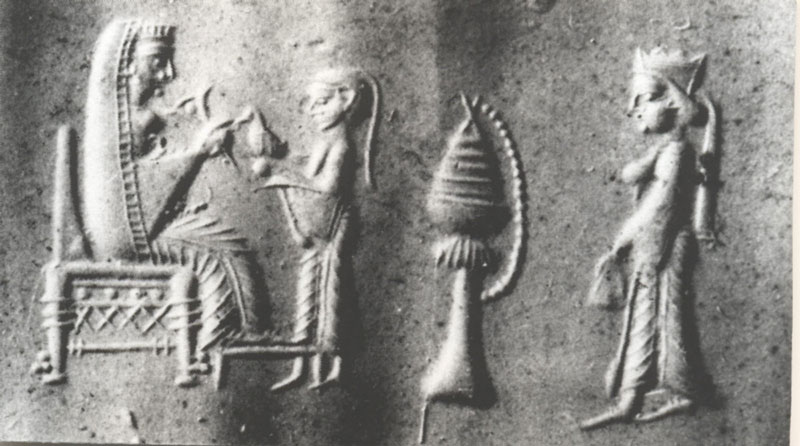
Between Esther I and II, Xerxes unsuccessfully attempted to subdue Greece. With his tail tucked between his legs, he has returned to Persia, and the loss has overshadowed his wrathful feeling born from Vashti. Yet, he returns a king with no queen to greet him. As with Chapter I, advisers urge the king on what to do. Xerxes appears to be a passive king, led by his advisers. A beauty contest will be held to decide who will be the next queen, and she’ll be quartered in the king’s harem. It may seem odd that he wouldn’t take a Persian queen, but it isn’t without precedent—Artaxerxes I and Darius II had Babylonian queens. 

“Mordecai” and “Esther” are Babylonian names; the former is a play on Marduk, and the latter is from Ishtar. Mordecai’s father’s name is Hebrew, so this only shows how much exiled Jews assimilated. This isn’t a statement on their fidelity to God because Daniel and his compatriots were given pagan-based names as well. They may have had Hebrew names used within their Jewish community (Hadassah means “myrtle”). Mordecai’s lineage traces back to Israel’s first king. The term translated as “son” can mean descendant. The author shows us that these two characters belong to a prominent Benjamite family. Mordecai adopted his first cousin, some suggesting he was in his thirties and she was in her late teens. In verse seven, Esther is described precisely how Joseph was (cf. Gen. 39:6). Many similarities exist between Esther and Joseph in the story. For example, their stories are rags-to-riches. They are both attractive Hebrews and find favor with courtiers; they also have archenemies to overcome and reach the inner palace circles. 

The “cosmetics” the women underwent were to make them as unblemished and attractive as possible. Spending a night with the king has its own implications that need not be discussed. Suffice it to say, this was trial by bedding. However, because of who she was and how she was, finding favor with all she encountered won her a king. As the story goes, we’re not told why the two eunuchs became enraged, but their plot is foiled when Mordecai informs the queen of their intentions. These men weren’t “hanged” as we would envision a noose. They were impaled and displayed for the public. 

Esther reminds me of the passage from 1 Peter, “Rather, let your adornment be the inner self with the lasting beauty of a gentle and quiet spirit, which is very precious in God’s sight” (3:4). God’s providence is witnessed in this passage: “The King’s heart is in the hand of the LORD, like the rivers of water; He turns it wherever He wishes” (Prov. 21:1). Even though the Persian king doesn’t worship God, it still doesn’t remove him from God’s soverignty. God gave his own people into the hands of the Assyrians, the Babylonians, and the Persians. Even those not necessarily aligned with God can still be used by him. That’s the whole point of Habakkuk—God would use the Babylonians’ swiftness and conquering to humble his people. Yet, because of the Babylonians’ actions, God used the Persians to overcome them. Cyrus the Great was tolerant of other religions and allowed the Jews to return to the Promised Land to rebuild.

After a Long Party

Esther belongs to the court tale genre. In this genre, a drama occurs within the royal court, and a hero foils the plot of their enemy to receive royal favors later. It is debated whether to read it historically, like Kings and Chronicles. Yet, the writer was familiar with Persian customs. Another type of story that fits this genre is the Tale of Ahiqar. Esther is used as an etiological explanation of the birth of Purim. On this holiday, they exchange gifts of food and drink, donate to the poor, eat a celebratory meal, and recite the scroll of Esther along with the appropriate liturgical prayers. Some scholars believe the story was invented to justify the holiday of what amounts to a party. Yet, court tales are usually based on historical events and people. Esther is somewhat unique in that the story is secular because the book contains no references to God or anything particularly religious. However, one can certainly see the providence of God throughout the story. 

His Persian name was Khashayar, which means “ruler over heroes,” but his name in Hebrew is what we see in Esther. To the Greeks, he was Xerxes, and he ruled from 486–465 BC. He reigned from India (Pakistan) to Nubia (northern Sudan and southern Egypt) and gave a banquet in the third year of his reign. This lavish banquet lasts for half a year, suggesting that little business is getting done. After this period, he gives Susa a one-week banquet. The details of the fineries are present to convey the austerity of the event. 

Simultaneously, Queen Vashti threw a banquet for women. The king and his guests are in the courtyard (v. 5), while the women are in the palace. “Vashti” is believed to derive from Persian and meant something like “the best” or “the beloved,” so it wasn’t a proper name so much as a title. Herodotus wrote about the Persians and named Amestris the queen, but what’s problematic is that she was queen before and after his attempted conquest of Greece. This conquest occurs between chapters one and two in the story of Esther, and Esther becomes queen in chapter two. “Amestris” derives from Persian and means “strong woman,” which may have been the title that Herodotus gave the queen. The hunt seems futile since we aren’t necessarily dealing with proper names. Plus, Queen Vashti may have remained his wife and just exiled (cf. verse 19) because we know that Darius I had more than one wife.  

According to the Persepolis Fortification Tablets, royal wives often acted independently from their husbands. Jewish Midrash (interpretation) suggests that the king wanted his queen to appear naked before his guests, something usually required of concubines rather than queens. On the one hand, he wanted her to wear the crown, denoting her high status, but on the other, he wanted to parade her, thus denigrating that status. Her refusal must serve as an example because her actions, if they are made known, threaten the patriarchy of Persia. 

How much is dignity worth? It is cheaper, but it depends on who you ask and what the subject is. The modesty and dignity with which Vashti acted conveyed that she was worth more than just some eye piece. She wasn’t an object, but a person deserving dignity, not to be paraded before a bunch of drunk men to be ogled. Moms and dads should tell this story to their daughters and then contrast it with Herodias’ daughter, who, when presented by her mother, must have danced provocatively for Herod to offer up to half of his kingdom. The Jewish girl dances seductively verses the heathen Persian who revelaed her dignity.