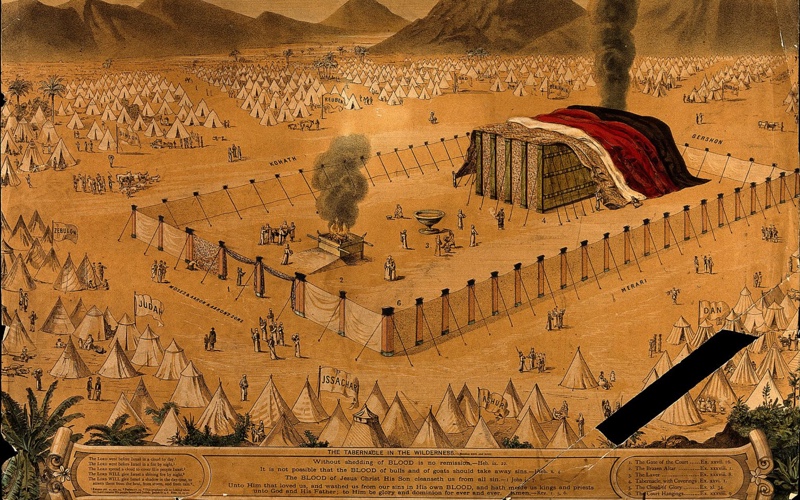
Leviticus chapters 1–7 are about the various sacrifices that are offered to cover one’s sins. It’s a constant reminder of both God’s grace and justice. He wants to forgive, but punishment must be meted out. The animals that die take the place of the sinner, and this has been the case since the fall. When Adam and Eve sinned, they made garments for themselves from fig leaves (Gen. 3:7). The term there, translated as “coverings,” literally means “loincloths.” Later in that chapter, God made coats of skin (Gen. 3:21). A sacrifice was necessary to “cover” humanity’s sins. Hence, this practice in the tabernacle is a continuation of the first covering of sin.
Exodus concludes with Moses’ inability to enter the tabernacle because of God’s glory. Leviticus begins with God calling Moses from the tabernacle. The first chapter details the burnt offering, which was the offering of a whole animal. If a person were affluent enough, they would offer a bull. If not, a goat; the most humble offering was turtledoves and pigeons. After Jesus was circumcised, Mary and Joseph presented the most humble offering they could (Luke 2:24), indicating her lowly station in life. In chapter two, grain offerings are detailed. Even if a person did not have livestock, they were still allowed to present a sacrifice. The term translated as “grain offering” has the primary meaning of “a tributary payment,” suggesting that the offerer was a vassal of God. They were to be presented with salt (Lev. 2:13). On the one hand, salt made food palatable (Job 6:6). Still, it was also a sign of the perpetuity of a covenant (Num. 18:19). This may have been what Jesus had in mind when he called his disciples “the salt of the earth” (Matt. 5:13).
The peace offering (Lev. 3) is a way to surrender to God since sin puts a person in a state of hostility to God (Rom. 5:10–11). By the fourth chapter, a new category of sacrifices begins, with the first being the sin offering. This was offered to expunge the effects of an inadvertent sin, also called the sin of omission. This sacrifice is communal and also individual (Lev. 4:13, 22, 27). The trespass offerings of chapter five move beyond unintentional to intentional. Confession accompanies this offering (Lev. 5:5). After this, we return to unintentional (Lev. 5:14, 17) sins towards holy relics. This is a restitutional offering. It also extends to other people and returns to intentions (Lev. 6). Next, the Lord gives the various laws regarding the respective sacrifices and how they are to be carried out by the priests. One stipulation is that no blood or fat is to be consumed (Lev. 7:22–27; cf. Acts 15:20).

 A Minister's Study