Since God intended for Israel not to live as the Egyptians or Canaanites, beginning chapter eighteen with such a plea and ending chapter twenty with it once more, the next things that come are a reflection of that point. Canaanite religion had a cult devoted to the dead. Again, anything linked with death is seen as unclean, so a corpse might have been thought of as intrinsically contaminating. Baldness was associated with pagan mourning rites, so it was to be avoided. Nearing this was a prohibition against cutting the flesh. Disfigurements of any kind were off limits. The High Priest is prohibited from contact with corpses altogether, while priests have exceptions. As we go on, it seems unfair that certain people would be prohibited from the Lord, but we must assume that as an animal without blemish is offered, so is the offerer to be without blemish. However, they may partake of the sacrifice.
Should a priest be in a state of uncleanness and come in contact with sacred things offered, the priest risks profaning God’s name. It can cost him his priestly privileges. The final verse (v. 15) closes the section as the chapter began: “they shall not profane the holy offerings.” The remainder of the chapter emphasizes acceptable and unacceptable offerings. A parallel can be to our worship. Do we offer what’s acceptable to God or not? Could it be said that in our worship, we, like Nadab and Abihu, offer “strange fire?” Rather than a free-for-all, we have commandments and examples as to how the early church worshiped the Lord. If there were anything unacceptable to Him, we would see it pointed out in some way (cf. 1 Cor. 11:27–30; Matt. 22:11).
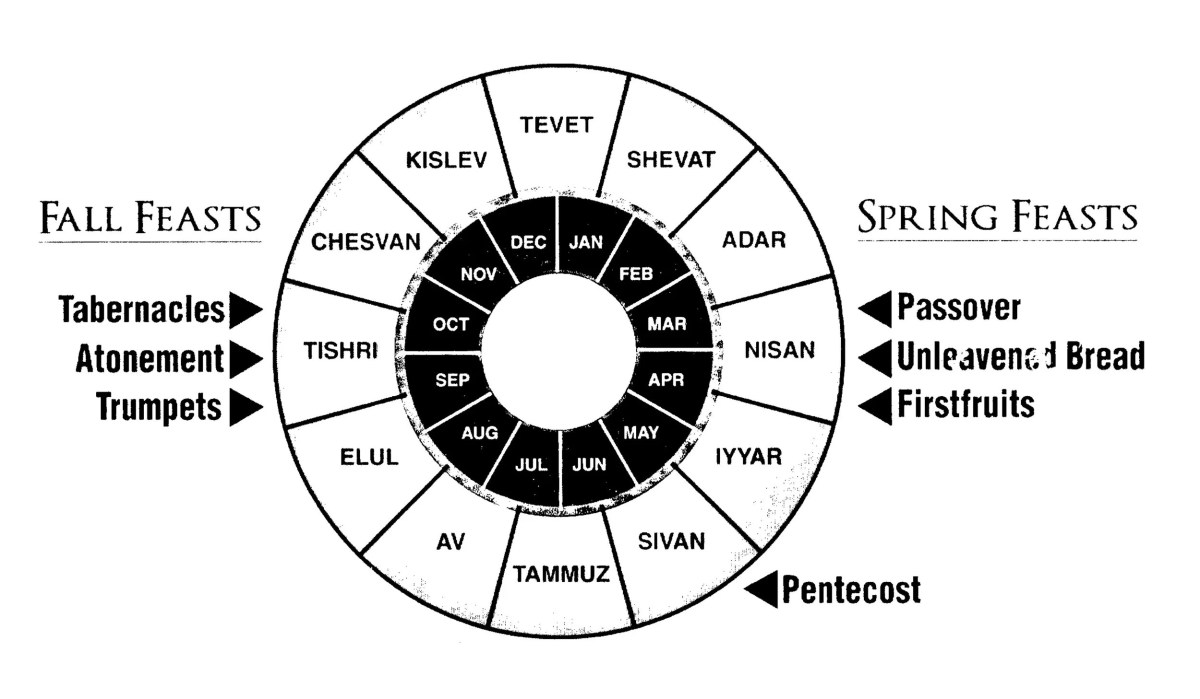
The calendar begins with the Sabbath, leading us to believe that failing to observe these holidays is equivalent to breaking the Sabbath. These are called “holy convocations” (23:4) because there was a call to worship, if you will. Passover is highlighted as a sacred day, and this was to remind them that they were once slaves in Egypt and God delivered them. Of their produce, the firstfruit was to be given to the priests. One meaning behind this was the law of the firstfruits in that what they had was because God provided for them (cf. Exod. 23:19). The Feast of Weeks is Pentecost because it comes fifty days after Passover. This celebrated the harvest God gave. The Feast of Trumpets has been understood as having God take note of Israel through the horn blasts. The Day of Atonement, we have already noted. The Feast of Tabernacles remembers the wandering in the wilderness. Only after this last feast are they told to rejoice before the Lord for a week. This would have occurred after the final harvest of the agricultural year.
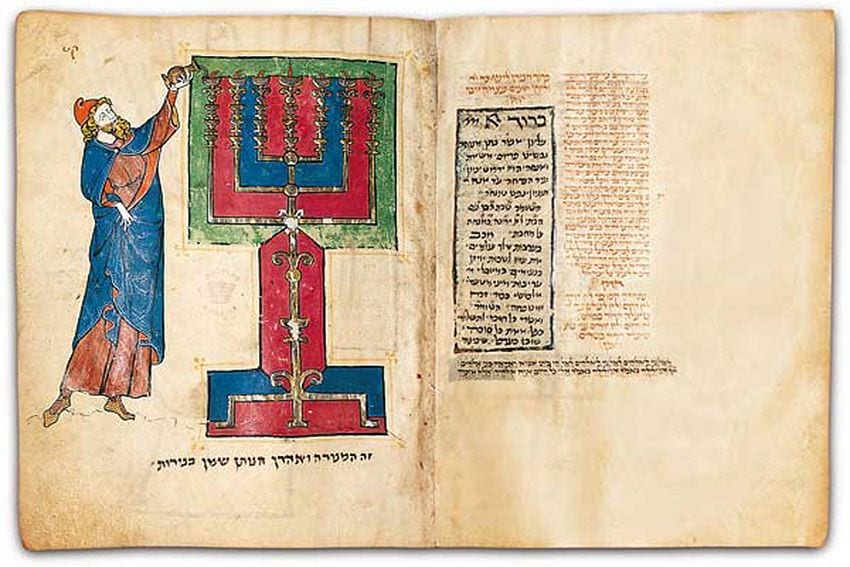
Chapter twenty-four begins with tabernacle matters, including the light and the bread. In many cults, food was placed out for the deity to avoid being treated similarly; to avoid this, it was placed outside the holy of holies, and the priests were to consume it the following Sabbath. Frankincense is a resin and might be transparent in appearance, but it’s to be burned as a token for the bread offering. Next, we switch to a narrative where two men are in a dispute, and one uses the Lord’s name in vain. Apparently, the one who did so has an Egyptian father and an Israelite mother. If you notice in verse eleven, “Of the Lord” is italicized, which means it’s implied and not actually in the text. The scribal community that preserved the text might have found it difficult to actually place YHVH in the text since the usage is one of vilification. The names that follow read, “His mother’s name was Retribution, the daughter of Law-suit, of the tribe of Judgment.” Perhaps because God orders capital punishment, He doesn’t wish for this to be seen as giving license to just take life on every whim (cf. Exod. 21:23–25).
Chapter twenty-five begins by reminding us that all of this is occurring at Mount Sinai, which is situated from Exodus 19 onward. The end of this chapter coincides with God seemingly announcing himself as their king, and in the ancient world, when a king began his reign, he often freed slaves. At this point, Israel is officially a free people, but a vassal to God. By verse ten, they were to proclaim “liberty” throughout the land. The actual term means “release,” which refers to a moratorium on debts and indeture. God promises to give Israel such a harvest that they can Sabbath on the year of Jubilee (25:21). Land that was used as collateral is obliged to be sold back to the original owner or the nearest kinsman. An idiom is used in verse thirty-five: “falls into poverty” is literally “his hand buckle under you.” Hand is another way of referring to a person’s power, so economic collapse may be in mind. God reminds them that they aren’t to treat one another as slaves, because they are all “slaves” of God (25:42) and are not to be treated as they were in Egypt. While there was a Sabbath year every seven years, a Jubilee was every fifty years. A person would celebrate at least one Jubilee in their lifetime.
 A Minister's Study