Ritual Purity (Lev. 11-15)

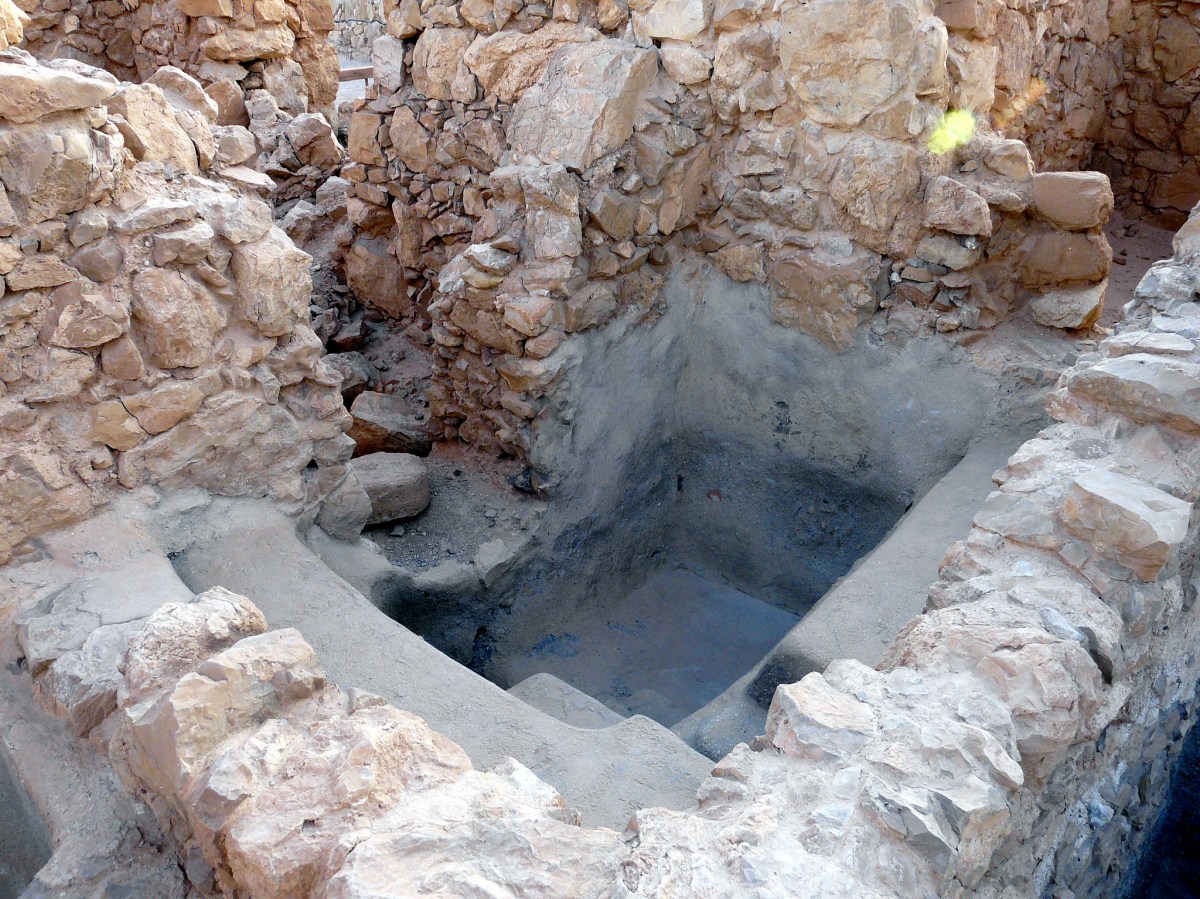
Moses explains ways that make one unclean and how to remedy that. He begins with land animals. Though the term is translated “earth” in verse two, what follows makes it clear that he is referring to land animals. Much of what we read about dietary practices appears in Deuteronomy 14. These two sections differ beginning in verse thirty-one. Before we get ahead of ourselves, we’ll note that after land animals, he turns to those in the water, followed by those of the air, amphibians, reptiles, and insects. The prohibition of pork among the Israelites is somewhat unique to them. Archaeological evidence shows a smaller number of pork bones dating to the second millennium BC in the Eastern part of Canaan. This proves that the taboo was observed at least that early. In other parts of Canaan, pork bones are plentiful. Later, Isaiah would associate the consumption of pork with idolatry (Is. 66:17). These dietary laws make a statement about Israel within the created order. They separate themselves from everyone else by this. Connected to impurity is death (11:24). Since this isn’t the state in which God envisioned humanity, to contact such renders a person unclean. Concluding chapter eleven is a call to holiness. The term translated “to distinguish” in 11:47 is the term used in the creation account (Gen. 1:6–7). Also, the phrase, “according to its kind in this chapter is also used in the creation account. In the hierarchy of creation, Israelites were to divide themselves between the unclean and the clean. 

The notion that the blood of childbirth was impure was widespread in antiquity. The Hittites and Greeks held the same belief. The loss of blood was associated with death. All in all, she is prohibited from sacred things and places for forty days. This number is doubled if she bears a daughter. There’s no rationale as to why that is. A better rendering of the offering she should bring should be “offense” and not “sin” (12:6). Moving on, leprosy is addressed in chapter thirteen in broad terms and not very specifically. The phrase “leprous sore” in 13:3 is, in more modern translations, rendered as a “skin blanch.” That’s to say a loss of pigmentation. Once more, there’s an association with death. The quarantining of a leprous person, or anyone unclean, was for medicinal purposes in the case of transmission. It also set apart death from life; uncleanness from cleanness. 

Notice at the beginning of chapter fourteen that the leper has been put out of the camp (14:3). The life of a leper once declared as such was isolating in many ways. On the one hand, in the previous chapter, the leper was to cover their mouth and shout that they were unclean if another person came near them. Additionally, they were ostracized from society. This is another theme of exile: exile from Eden, the scapegoat sent into the desert, exile from the Promised Land, etc. Anytime you read about living water, it refers to running water, such as a river or stream. This water carried the blood, and, hence, impurity, away from the camp. The living bird sent to the open country mirrors the scapegoat in taking away the transgressions from the camp. The reason leprosy is associated with guilt is likely because it was thought of as a punishment for some transgression (cf. Num. 12:10–15; 2 Chron. 26:16–21). Once again, we see blood and oil used together in cleansing (14:17). 

Chapter fifteen is primarily concerned with bodily discharges of various types. This can also be conveyed through secondary contact, as noted in verses four and nine. Once more in verse fifteen, an offense offering should be thought of rather than a sin offering. The contaminated person isn’t sinning by having this, but he is unclean because of it. While these instructions are primarily for Levites and priests, the whole point is to ensure they don’t enter the sacred space of the tabernacle in a way that would invite God’s wrath against them. This also extends to the average Israelite, who brings various sacrifices at the prescribed times. 

Priestly Requirements (Lev. 8-10)

For the first time in the book, Leviticus is written in narrative form. Chapter eight begins and ends with the phrase, “So Moses did as the LORD commanded him” (vv. 4, 36). The installation ceremony of the priests picks up in Exodus 29. Reading that chapter in Exodus reminded me of the coronation of King Charles. An elaborate set of procedures follows, during which the priests are formally purified and sanctified for the ministry. Midway through the seventh verse, the Hebrew transitions from the plural “him,” referring to Aaron’s sons, to the singular, focusing on Aaron. What are the Urim and Thummim? Many possibilities have been considered, but the traditional interpretation associates the terms with “light” and “perfection.” Interestingly, Urim begins with the first letter of the Hebrew alphabet, and Thummim starts with the last letter. They appeared to have been used as a binary response to a question posed: yes/no, guilty/innocent. 

Since the men had bathed, anointing oil was a way of entering a festive state, as when, after mourning, David rose, bathed, and anointed himself (2 Sam. 12:20). The specific spices and oil used are detailed in Exodus 30:22–25. Other ancient Near Eastern parallels suggest anointing with oil was a way to ward off bad spirits or evil forces. In this case, the anointing elevates the men and instruments of the tabernacle from the common to the divine. Following the anointing oil is the blood of sacrifice. It may be best to think of the former as consecrational and the latter as a “detergent” that rids it of impurities. It’s been suggested that the ear corresponds to obedience, while the hand and toe are emblems of human agency. 

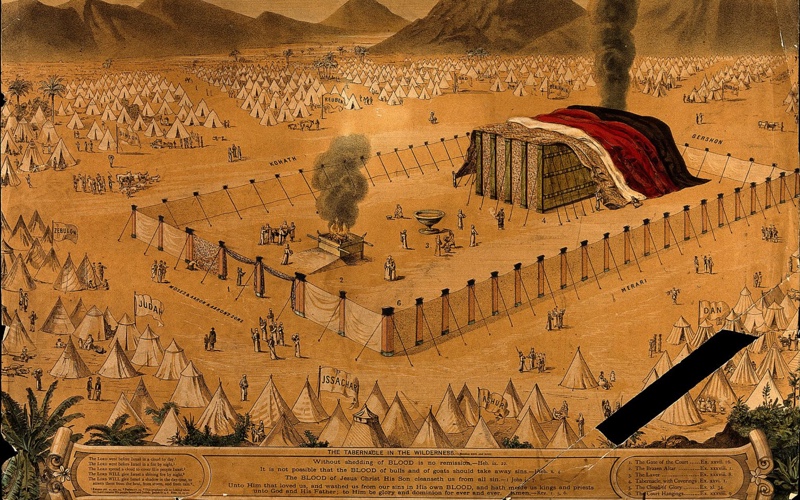
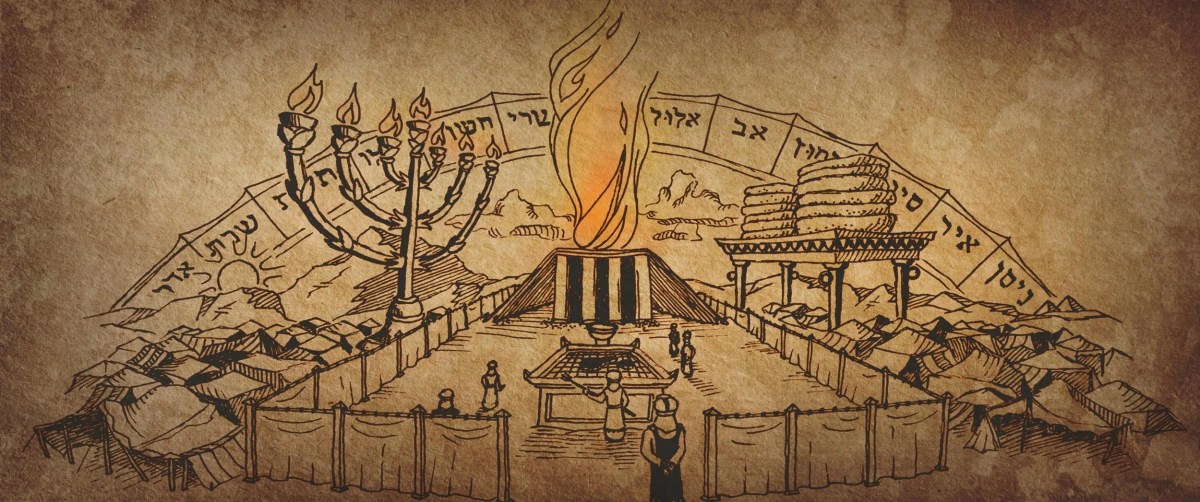
After their period of consecration, the priests are now ready to prepare the tabernacle for God’s presence. Thus far, His glory has filled the tabernacle, but it’s being prepared to be regarded as akin to Mount Sinai. Each has three levels: 

Sinai Tabernacle

Summit (only Moses) Holy of Holies

Partyway up (elders) Sanctuary

Bottom (people) Court

Towards the end, Aaron raises his hand and blesses the people, likely invoking the tripartite blessing recorded in Numbers 6:24–26. God, then, reveals himself through fire, consuming the sacrifice and showing divine acceptance. This same fire, we will see, will be used lethally. 

Though we’ve already read about Nadab (Generous) and Abihu (He is my father), there’s more to consider in this story. Typically, they would have filled fire pans with glowing coals and not an actual fire. They introduce an alien fire, so the fire of God consumes them. The word translated as “strange” fire can also be translated as “alien” and “unfit.” Whatever this fire is and where it came from, it wasn’t consecrated for entrance into the precinct. In verse two, the exact phrase we read in 9:24 appears. God forbade ordinary mourning over what occurred, but it seems that an allowance is made at the end of the chapter. Aaron is allowed not to partake in the offering of the offense, fasting being a common practice during mourning. 

The Various Sacrifices and Their Administration (Lev. 1-7)

Leviticus chapters 1–7 are about the various sacrifices that are offered to cover one’s sins. It’s a constant reminder of both God’s grace and justice. He wants to forgive, but punishment must be meted out. The animals that die take the place of the sinner, and this has been the case since the fall. When Adam and Eve sinned, they made garments for themselves from fig leaves (Gen. 3:7). The term there, translated as “coverings,” literally means “loincloths.” Later in that chapter, God made coats of skin (Gen. 3:21). A sacrifice was necessary to “cover” humanity’s sins. Hence, this practice in the tabernacle is a continuation of the first covering of sin. 

Exodus concludes with Moses’ inability to enter the tabernacle because of God’s glory. Leviticus begins with God calling Moses from the tabernacle. The first chapter details the burnt offering, which was the offering of a whole animal. If a person were affluent enough, they would offer a bull. If not, a goat; the most humble offering was turtledoves and pigeons. After Jesus was circumcised, Mary and Joseph presented the most humble offering they could (Luke 2:24), indicating her lowly station in life. In chapter two, grain offerings are detailed. Even if a person did not have livestock, they were still allowed to present a sacrifice. The term translated as “grain offering” has the primary meaning of “a tributary payment,” suggesting that the offerer was a vassal of God. They were to be presented with salt (Lev. 2:13). On the one hand, salt made food palatable (Job 6:6). Still, it was also a sign of the perpetuity of a covenant (Num. 18:19). This may have been what Jesus had in mind when he called his disciples “the salt of the earth” (Matt. 5:13). 

The peace offering (Lev. 3) is a way to surrender to God since sin puts a person in a state of hostility to God (Rom. 5:10–11). By the fourth chapter, a new category of sacrifices begins, with the first being the sin offering. This was offered to expunge the effects of an inadvertent sin, also called the sin of omission.  This sacrifice is communal and also individual (Lev. 4:13, 22, 27). The trespass offerings of chapter five move beyond unintentional to intentional. Confession accompanies this offering (Lev. 5:5). After this, we return to unintentional (Lev. 5:14, 17) sins towards holy relics. This is a restitutional offering. It also extends to other people and returns to intentions (Lev. 6). Next, the Lord gives the various laws regarding the respective sacrifices and how they are to be carried out by the priests. One stipulation is that no blood or fat is to be consumed (Lev. 7:22–27; cf. Acts 15:20). 

How to Read Leviticus Without Getting Discouraged

Many Christians plan to read their Bibles through in a year. Typically, they begin at the beginning, and by the time they arrive at the latter part of Exodus, it becomes cumbersome. Then, once you get to Leviticus, you might find yourself a tad discouraged. Here’s another way to look at Leviticus.

A mother had instructed her son not to play in a particular part of the woods behind their house because it was occupied by a family of skunks. One day, however, the son decided to inspect this area to learn more about skunks, since his curiosity was too intense to resist. At first glance, they seemed like cats, but with specific coloring. He moved in to see if he could hold one, but the younger ones moved away as the father stood his ground. As skunks often will do to warn, the father walked on his two front feet, putting the rest of his body in the air, as if he were walking on his hands. The little boy thought the skunk was doing a trick, so he moved closer, and then the father lifted his tail, took aim, and sprayed the boy with the noxious odor to repel him. 

The boy ran frantically home, coughing and choking over the stench. As he cried out for his mother, she came to the front porch, and as her beloved son approached, she caught a whiff of the skunk and knew what had happened. She commanded the boy to stop because she couldn’t tolerate the odor. She didn’t stop loving her son, but he wouldn’t come into the house smelling like that. So what did the mother do? She didn’t hate her son. She didn’t reject her son. She wanted to help him. She prepared one of their troughs with a solution made of laundry detergent, peroxide, and baking soda. She placed her son in the trough and scrubbed him till the smell was gone. Then, he was able to come into the house, sit in his mother’s lap, and be comforted. When we think about sin and its effect, it’s similar to this story. We have become tainted by sin and its odorous effect, so we can’t come into God’s presence. However, God doesn’t look at us with hatred and malice, but with compassion and grace. He prepares a solution for us so that our sins may be removed and we can come into His presence once more.

When God chose His special people, Israel, He wished to dwell among them. However, for Israel to live in God’s presence, God provided remedies by which He could dwell in their midst, and they could approach Him. This is what we read about in the book of Leviticus. What’s important to remember is the ending of Exodus, however, because it gives sense to the first verse of Leviticus. 

Then the cloud covered the tabernacle of meeting, and the glory of the LORD filled the tabernacle. And Moses was not able to enter the tabernacle of meeting, because the cloud rested above it, and the glory of the LORD filled the tabernacle. Whenever the cloud was taken up from above the tabernacle, the children of Israel would go onward in all their journeys. But if the cloud was not taken up, then they did not journey till the day that it was taken up. For the cloud of the LORD was above the tabernacle by day, and fire was over it by night, in the sight of all the house of Israel, throughout all their journeys. (Exod. 40:34–38)

The glory—kavod literally means “weightiness”—of God is best thought of as a mantle of light enveloping God, and the cloud gave off the luminosity by day and appeared as fire by night.¹ When Moses first saw the Lord’s presence in the burning bush, he hid his face because he was afraid to look upon God (Exod. 3:6). Later, however, Moses’ faith in God had grown exponentially to the point that he wanted to see the glory of God. Still, he couldn’t see anything but the “goodness,” because seeing God’s face would have killed Moses (Exod. 33:18–23). Even then, God protected Moses from seeing Him. 

After Moses communed with Yahweh, he came from Mt. Sinai with his face shining (Exod. 34:29–35). There’s a great lesson from this passage: The fear of Israel upon seeing Moses’ face parallels that of their fear of drawing near to God. Similarly, because Moses would cover his face with a veil when among Israel, this demonstrates that the holy of holies had to be partitioned off and enveloped in layers, yet accessible to the people.² Now, when we arrive at Leviticus, the question arises: “How can a people stained with sin live among the holiness of which they are afraid?” For the priests of Israel and the rituals prescribed in Leviticus, God provides in His mercy and grace the ways that He can be among a sinful people, and they dwell in His holy presence. It’s best to think of God’s holiness as the sun, which in its unadulterated form is powerful, and anything mortal that gets near it will burn up. The sun doesn’t hate such things but consumes them. 

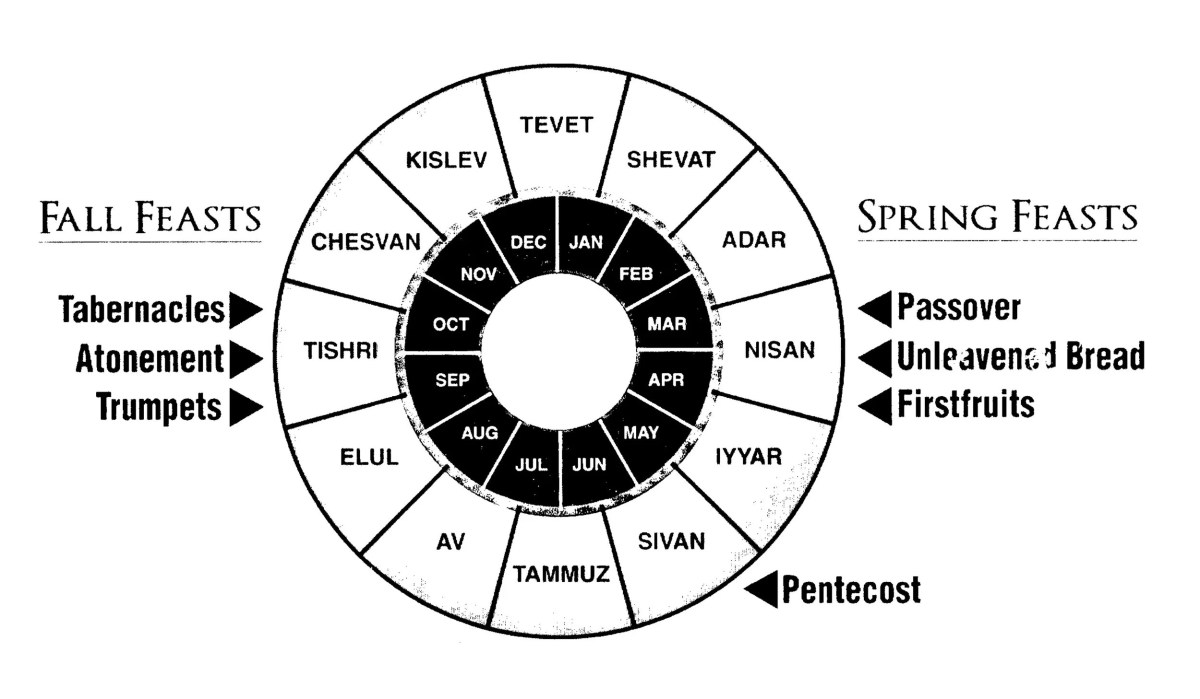
To outline Leviticus, we must identify its three major components: Sacrifices (Lev. 1–7, 23–37), Priests (Lev. 8–10, 21–22), and Purity (Lev. 11–15, 18–20). The sacrifices are ways to say “thank you” (i.e., grain and fellowship offerings) or “I’m sorry” (burnt, sin, and guilt offerings). Some of these occur on holy days when festivals were held. These were times of celebration to retell Israel’s history and explain why God chose them. Mediating these sacrifices were individual representatives who advocated for the people, called “priests.” These servants worked so closely to God’s presence that they were chosen to represent God to the people and the people to God. Such people were ordained and had to live by higher standards, similar to those of our pastors. Finally, the purity laws concerned cleanliness and uncleanliness. Cleanliness or purity is a state in which one can be in God’s presence, whereas the opposite is that of uncleanliness. Some of these concerned sexual relationships, social justice, and interpersonal relationships. These categories summarize the second-greatest command: to love your neighbor as yourself. Summing up the greatest commandment to love God with our whole being, we find that it includes dietary laws, skin diseases, dead bodies, and bodily fluids. Many of the latter three concerned life and death: one was sacred, and the others resulted from sin. Going before God in an impure state was inappropriate. 

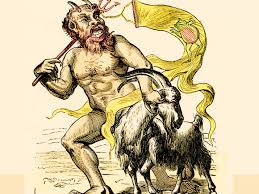
Tucked in the middle of the book is the Day of Atonement. On this day, the entire nation had sinned, perhaps unnoticed and unknown. The high priest would atone for the whole country by taking two goats and slaying one whose blood was brought to God’s presence to atone for the sins. God has said that the blood of a creature was life, so the life of the goat was to take the place of Israel and the penalty of their sin. The other goat was presented to the priest, who would lay his hand upon its head, confess the sins of the nation, and send the goat out into the wilderness, carrying the sins of the country away from them into the barren land. By this goat, God graciously removed Israel’s sins. 

Christ became not only our high priest but did so while being tempted yet remaining pure (Heb. 4:14–16). As the high priest, not only offered the perfect offering but was Himself the offering so that He could go into the true holy of holies to minister for us (Heb. 9:11–14). What we learn from Leviticus only prepares us for the cross. Jesus Christ is now how we may live in the presence of the holy God. 


¹ Robert Alter, The Five Books of Moses: A Translation with a Commentary (New York: W. W. Norton & Company, 2004), 535.

² Ibid., 513. 
Intro to 1 Peter

Writing from Rome (which he calls “Babylon” in 5:13), along with John, Mark, Peter addresses a network of churches that comprises modern-day Turkey. Early church writers made explicit citations of 1 Peter as early as the 90s AD, through to the latter part of the second century, which attests to the authority of the letter as well as its apostolicity. How the gospel came to be in this area isn’t altogether clear, but we know that Jewish believers from some of these areas were present on Pentecost (Acts 2:8–11). Additionally, Emperor Claudius (AD 41–54) established Roman colonies in these regions.

One central question is who the audience was: Jewish, Gentile, or both. The descriptor of “pilgrims of the Dispersion” was typically how Jewish exiles from Judea were addressed (cf. James 1:1). There are also further descriptors such as “Sarah’s children” (1 Peter 3:6), “God’s elect” (1 Peter 1:1, 2, 4, 9) and those called to holiness (1 Peter 1:15–16). They are also contrasted with Gentiles (1 Peter 2:12; 4:3), but by this time, all Christians might have been considered as one with Jewish believers, and the Gentiles were non-Christians. However, we also know that Peter was an apostle to the circumcised (Gal. 2:9), and readers from Eusebius in the fourth century to John Calvin agree that the primary audience is Jewish Christians. Still, some descriptors indicate pagans were among the audience (1 Peter 1:14, 18; 2:9–10, 25; 4:3), but prophetic language sometimes regarded apostate Israelites as pagans. We can assume there’s a mixture and that this letter would not have been sectarian or racially distinguishing between believers in Jesus (cf. Rom. 8:29–30).

The entirety of the letter addresses their suffering, which was likely caused by social scorn, shaming, slander, and stigma. They were likely viewed as social deviants and may have faced verbal and physical pressure to return to the norm. Given that Christianity grew out of Judaism, we can look to history to see how Jews were viewed to get a picture of how these Christians were regarded. Rome banished Jews on some occasions. There was a time when Tiberius was emperor, and again during Claudius’ reign. Claudius viewed them with animosity from the beginning of his reign. When Christianity was young, Jews were expelled from Rome. In Christianity’s earliest decades, it bore no outward distinction from Judaism as perceived by the Romans. The Jews were expelled at the instigation of “Chrestus,” according to Suetonius. 

When Diodorus wrote about Antiochus Epiphanes subduing the Jews, he referred to their customs as “wicked.” Cicero also viewed the Jews as enemies because of their behavior when they assembled. They showed no regard for the interests or laws of the Republic, and that won them no favor with Rome. Because they wanted to keep Judea pure from Roman occupation and rule, they resisted Rome. Their actions were rebellious and drew attention to the Jewish religion as the source of their unruliness and eventual disdain by the Romans. Horace believed that they were manipulative and coercive. He viewed them as always proselytizing and forcing others to join their religion. Because they proselytized, many were Jews by conversion rather than birth.  Furthermore, they believed in silly superstitions and were weaker because of their Sabbath keeping. Juvenal viewed their Sabbath keeping as idleness. Their customs were “base and abominable,” and they were the worst villains among all other peoples. As a race, they were believed to have been a curse to others, and Moses, their lawmaker, was detested. While many Jews upheld practices that distinguished them from other people, those who observed them wrote about the Jews’ hypocrisy in doing some of the very things that they seemed opposed to otherwise. If early Christians were treated anything like Jews, we get but a glimpse of it in this letter. Peter urges them to identify with Christ’s suffering (1 Peter 4:12–16) and await eternal glory (1 Peter 1:7; 2:11; 4:13; 5:4, 10–11). 


Works Referenced

 Acts 18:2; Suet. Claud. 25.4.

 Diodorus, Bibl. Hist. 34.1.3.

 Cicero, Flacc. 28.66–69.

 Horace, Sat. 1.4.142–3; cf. Matt. 23:15.

 Acts 2:10; 13:43. Cf. Juvenal, Sat. 14.102–03. A Gentile could become Jewish by circumcision, immersion, and a sacrifice (Keritot 9a; cf. Pesahim 8.8; Exod. 24:8).However, Gentile conversion was not always welcomed and in some cases was even rejected.

Juvenal, Sat. 1.5.100. To the Roman mind, anything other than what had been appointed at the founding of Rome was “vile and alien” (Livy 39.15.3). See also Juvenal, Sat. 15.1–13.

 Juvenal, Sat. 14.96, 105–06.

 Tacitus, Hist. 5.5.

 Quintilian, Inst. 3.7.21.

A Reversal of Fortunes (Esther 5-7)

After three days of fasting, Esther presents herself to the king. Unlike Mordecai, she wears her royal robes. The royal palace of Susa has been excavated, and the audience hall was over 350 feet square and divided into several chambers. Whatever separated them for thirty days, the king looks favorably upon her. Banquets figure into this story a lot. It began with a banquet that evolved into a second one, where the king grew upset with his queen. Esther’s banquet is already prepared in anticipation of a positive answer, and this will lead to a second banquet where the king’s ire turns to his right-hand man, Haman. The Greeks observed that the Persians made most of their important decisions while drunk, and when they drank wine, Ahasuerus asked what Esther requested. 

Haman is touched to be included, but his delight turns to rage when Mordecai refuses to stand when he walks by. Haman goes so far as to state his extensive wealth, sons, and the king’s esteem as prizes he possesses. However, the one thing that means the most to him is what Mordecai won’t give—homage. When is it enough? So what if that one guy doesn’t do what you want him to do? You even stated all you have, so take the wins and move on. Psychologists would say that Haman is a narcopath. “A ‘narcopath’ is a term sometimes used to describe individuals who display a combination of narcissistic and sociopathic traits, characterized by grandiosity, lack of empathy, a need for admiration, and manipulative, antisocial behavior,” according to Google’s AI overview. 

As the story progresses, the king’s sleepless night works to Mordecai’s favor. Haman has spikes prepared to impale him. Meanwhile, the king reads the annals and he hears what Mordecai had done and wishes to reward him, so since Haman was on his way to ask this of the king, he is selected to give the king’s honors to Mordecai. Because he’s so self-absorbed, he thinks the king is talking about Haman when he asks what shall be done for whom the king wishes to honor. Haman’s plan, which he believed to be for himself, is charged with implementing it on the man he hates. 

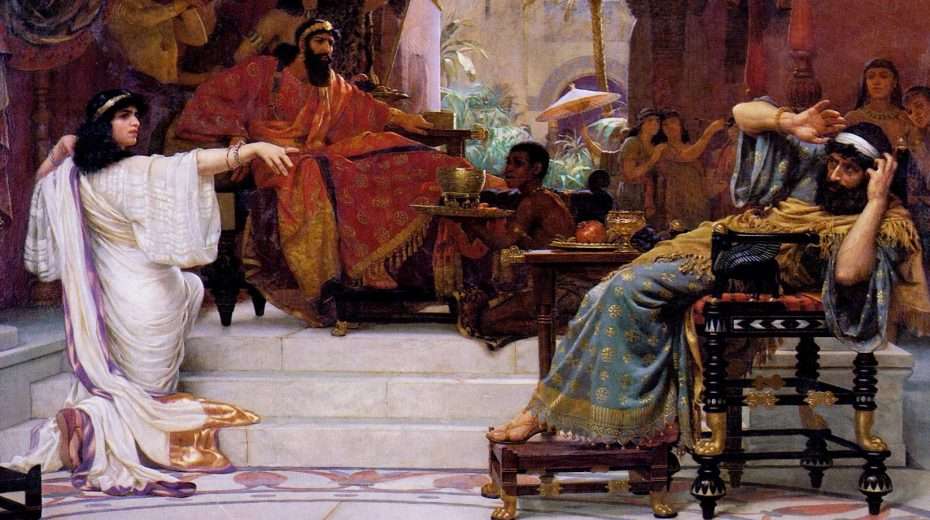
At the second banquet, the king asks her request, and Esther finally discloses that she is Jewish. As an alternative to being slaughtered, she uses the price Haman offered against him by saying that they could have been sold into slavery. After all, they were conquered by the Babylonians, who then fell to the Persians. Slaves were often composed of conquered people, and Haman has already referred to them as rebellious (Esth. 3:8). Haman either falls on the couch or the queen. Whatever it was, his actions were seen as an assault on the queen. Assyrian law prohibited coming closer than seven paces of the king’s harem, so something like this may have been in mind. Before the Japanese surrendered in WWII, it was prohibited for anyone to walk on the Emperor’s shadow. To try to lie with the queen, which he is accused of, is to lay claim to the throne too. Ahasueras feels betrayed by his most trusted minister. Neither knew of Esther’s ethnicity, but the king expected that Haman should have. 

For Such a Time as This (Esther 4)

Now that news of the impending slaughter has made its way around, Mordecai displays grief in a standard way in antiquity. Sackloth is a rough, coarse material that was uncomfortable to wear. Grief was often expressed in dramatic ways, such as wearing this garment, rolling in ashes, or placing ashes on the head. Mordecai cries bitterly while Jews throughout the empire add fasting. Though prayer to God isn’t outright mentioned, we might assume that it accompanies fasting. Because Persian monarchs were somewhat self-serving, bringing grief to them is prohibited (cf. Neh. 2:2), so Esther sends proper garments so Mordecai can pass through the king’s gate. Yet, he refuses. 

Mordecai’s refusal of appropriate attire brings in an intermediary to go between the adoptive father and daughter. How Mordecai came to learn of the plot has been debated. It was sent throughout the entire empire. Still, one theory suggests that he was a scribe for the palace and translating this in Aramaic gave him firsthand exposure (cf. Esther 8:9–10). Eunuchs weren’t just errand boys for the palace. Many of them were highly educated, so Hathach may have needed to read the edict to a presumably illiterate Esther. 

Knowledge of court practice was widespread. Mordecai likely knew this, and Esther knew that if she went before the king presumptuously, it could end with her death. Her hesitation to do so may indicate that she was no longer in the king’s favor and that by doing so, she was gambling a 50/50 chance. Furthermore, if she does nothing, her head will be on the chopping block. Mordecai expresses his faith when he says that deliverance will arise from elsewhere. He’s most likely acquainted with the promises God made to Abraham, and God will not allow his chosen people to be blotted out from the earth. Mordecai and Esther demonstrate a measure of faith. He believes in God’s promises, and she resigns herself to the possibility of death. At least she can take the shot and try to stop what is inevitable. To further add to this, she asks her countrymen to host a three-day fast in preparation for her actions. 

There are two main lessons from this chapter: 1) speak faith to your problems, and 2) never underestimate your ability to make a change. To the first point, Mordecai believed in God’s promises to Abraham, although this isn’t mentioned in the story, but he was confident that deliverance would come for the Jews. Did he wail and bemoan the state of affairs? Absolutely, but he still spoke faith to his problems. Abraham, likewise, spoke faith to his situation. When God asked him to take Isaac and sacrifice him on Mount Moriah, Abraham told his servants, “The boy and I will go over there; we will worship, and then we will come back to you” (Gen. 22:5). He didn’t know how things would play out, but he trusted God. Even in the face of sacrificing the promised son through whom many would be blessed, he spoke faith in his situation. When Daniel’s three friends were threatened with the fiery furnace, the king asked, “Who is the god that will deliver you out of my hands” (Dan. 3:15). Their reply is an epic example of speaking faith to one’s circumstances. 

O Nebuchadnezzar, we have no need to present a defense to you in this matter. 17 If our God whom we serve is able to deliver us from the furnace of blazing fire and out of your hand, O king, let him deliver us. 18 But if not, be it known to you, O king, that we will not serve your gods and we will not worship the golden statue that you have set up. (Dan. 3:16–18). 

Adding to this, we can also always take our problems to God. “Cast all your anxiety on him, because he cares for you” (1 Peter 5:7). Speaking faith to your situation, accompanied by prayer, is living by faith, and faith is the victory that overcomes the world (1 John 5:4)

To the second point, Esther initially didn’t believe she could be the difference between annihilation and survival. There are many stories throughout Scripture where one person made a difference. The Ethiopian Eunuch had Phillip; Nineveh had Jonah. Even Peter had Andrew. Andrew is often forgotten because Peter eclipsed him, but Andrew brought his brother to Jesus. Never sell yourself short. We may never know when and how God will use us. 

Before Hitler, There Was Haman (Esther 3)

What’s interesting about chapter three is its beginning phrase, “After these things.” What things? After Mordecai disclosed the plot to assassinate King Ahasuerus, Haman was promoted. We aren’t told why, but his introduction is key to understanding what follows. Being a descendant of Agag, king of the Amalekites, tells us about the animosity that is to come. King Saul was to have killed all the Amalekites, but he spared Agag only for Samuel to finish the deed (1 Sam. 15). Earlier, Mordecai’s lineage ties him directly to King Saul (Esth. 2:5), so this is like a rematch of Saul and Agag through their descendants. A knowledge of Scripture tells us who the victor will be, because God had said that he would see to it that the Amalekites would be blotted out (Deut. 25:17–18). 

While everyone is drooling over Haman’s exaltation, Mordecai does nothing of the sort. As far back as Late Antiquity, the reason given for his refusal is religious. He won’t kneel to flesh and blood. One wonders if there weren’t also political or personal motives involved. Mordecai told those who inquired that he was a Jew, which has led to the conclusion that his refusal was on religious grounds. Persian religion at the time was based on the belief in a god of light, Ahura Mazda, and a god of darkness, Angra Mainyu, who were constantly at odds with each other. It’s called Zoroastrianism, named after the prophet Zarathushtra, dating to the second millennium BC. Key to this religion is the ideal of thinking good thoughts, speaking good words, and doing good deeds. This is important because it’s precisely a story about good and evil.  

By the time of these events, Esther would have been queen for five years. The month of Nisan is April, and the month of Nadar is March, so for a whole year, this decree will be issued and the Jews will have this timeframe to contemplate the date of their deaths. When Ahasuerus gives Haman his ring, he has essentially given him carte blanche to do as he pleases. He now has royal power with which to act. The king and Haman drink, the city of Susa is confounded, and the Jews are terrified. 

Racism is something taught; it’s not something we are born with. Haman undoubtedly heard from childhood how he is a descendant of a king; a king whom the Jews put to death and whose lineage they tried to destroy. Now, he has grounds on which to finish the work of his forebearers who wanted to obliterate the Jews when they left Egypt. He’s in the prime position to make it happen, and Mordecai and the “rules” of the Jews give him his justification to persuade the king to allow it. 

In Scripture, we observe Jesus behaving kindly towards people that his own race hated—the Samaritans. He tells the parable of the Good Samaritan, he speaks with the Samaritan woman at the well, and he restrains his disciples when they want him to rain hellfire and brimstone on a Samaritan village. Even the book of Romans is a book about racial reconciliation. The Jews were expelled from Rome for several years. When the Caesar who issued such an edict died, another took his place and allowed them to return. They saw their Gentile brothers and sisters leading the church in their absence, and they wanted to run things since they had returned. It turns into a battle between races and their different traditions. Paul wrote to relieve that tension. To the Galatians, he wrote that there is neither Jew nor Greek, so when you read the New Testament, the issue of racial bigotry is something even the church dealt with. 

At every turn in Scripture, especially the New Testament, there is an appeal to end racial bigotry. The Jews called non-Jews Gentiles. The Romans and Greeks called those who were not of their own race “barbarians.” Every group believes itself superior to others. Why speak about racism? Aren’t we Christians supposed to be beyond that? We should, and I hope we are, but we also have to keep in mind that though we may not have incurred racism, some of our brethren have. 

My longtime mentor, Sellers Crain, told me a disturbing story about his early days in ministry. He was preaching at a congregation in Louisiana when he noticed that most of the men were missing on a particular Sunday near the beginning of the services. He’d seen them arrive, but they were now absent. He began looking for them when he saw that most of them were outside around a car. He went out to see what was happening and noticed that many of the men had surrounded a car containing a family. What made this particularly notable was that the family wasn’t white, but black. After hearing some of the chatter among the congregation’s men, he disbursed the crowd, telling them that he’d handle it. When the frightened father rolled down his window, Sellers had to say to them, much to his chagrin, that the men wouldn’t allow the family to join them in worship. He informed them that there was a congregation of black saints. The father thanked him, and then they drove off. Sellers told me how much this bothered him and how it almost led him to quit the ministry. He learned that many of those men were members of the Ku Klux Klan and that their actions were motivated by racial bigotry, these having been the days of the Civil Rights Movement. 

Sometimes there are things we do that we may not think are racist, but to others they may be. Then again, some people can be so hyper-sensitive that you don’t know what’s acceptable and what’s not. For example, among my tribal family, we often refer to ourselves as Indians. That’s the nomenclature used for a long time to describe native peoples. Even many tribal elders that I know use that term to speak of our people. Yet, others find that term offensive. It can be hard to know what to do, so on both sides, I believe it’s necessary to extend grace. Growing up, I’ve often been asked what I am. I don’t take offense to it, but others do. I see it as an opportunity to talk about my Choctaw family and ancestors. I’ve been asked about mascots and Halloween costumes. Again, a variety of opinions exist. There’s only one time that I’ve ever felt angered by what someone said. It was a much older white man who, when he learned that I was going to give a talk about Native American History, asked what they ever contributed. It was the way he asked it, but he later came and apologized, so I gave him the grace I would have wanted if I realized that I might have upset someone. 

A New Queen Emerges (Esther 2)

Between Esther I and II, Xerxes unsuccessfully attempted to subdue Greece. With his tail tucked between his legs, he has returned to Persia, and the loss has overshadowed his wrathful feeling born from Vashti. Yet, he returns a king with no queen to greet him. As with Chapter I, advisers urge the king on what to do. Xerxes appears to be a passive king, led by his advisers. A beauty contest will be held to decide who will be the next queen, and she’ll be quartered in the king’s harem. It may seem odd that he wouldn’t take a Persian queen, but it isn’t without precedent—Artaxerxes I and Darius II had Babylonian queens. 

“Mordecai” and “Esther” are Babylonian names; the former is a play on Marduk, and the latter is from Ishtar. Mordecai’s father’s name is Hebrew, so this only shows how much exiled Jews assimilated. This isn’t a statement on their fidelity to God because Daniel and his compatriots were given pagan-based names as well. They may have had Hebrew names used within their Jewish community (Hadassah means “myrtle”). Mordecai’s lineage traces back to Israel’s first king. The term translated as “son” can mean descendant. The author shows us that these two characters belong to a prominent Benjamite family. Mordecai adopted his first cousin, some suggesting he was in his thirties and she was in her late teens. In verse seven, Esther is described precisely how Joseph was (cf. Gen. 39:6). Many similarities exist between Esther and Joseph in the story. For example, their stories are rags-to-riches. They are both attractive Hebrews and find favor with courtiers; they also have archenemies to overcome and reach the inner palace circles. 

The “cosmetics” the women underwent were to make them as unblemished and attractive as possible. Spending a night with the king has its own implications that need not be discussed. Suffice it to say, this was trial by bedding. However, because of who she was and how she was, finding favor with all she encountered won her a king. As the story goes, we’re not told why the two eunuchs became enraged, but their plot is foiled when Mordecai informs the queen of their intentions. These men weren’t “hanged” as we would envision a noose. They were impaled and displayed for the public. 

Esther reminds me of the passage from 1 Peter, “Rather, let your adornment be the inner self with the lasting beauty of a gentle and quiet spirit, which is very precious in God’s sight” (3:4). God’s providence is witnessed in this passage: “The King’s heart is in the hand of the LORD, like the rivers of water; He turns it wherever He wishes” (Prov. 21:1). Even though the Persian king doesn’t worship God, it still doesn’t remove him from God’s soverignty. God gave his own people into the hands of the Assyrians, the Babylonians, and the Persians. Even those not necessarily aligned with God can still be used by him. That’s the whole point of Habakkuk—God would use the Babylonians’ swiftness and conquering to humble his people. Yet, because of the Babylonians’ actions, God used the Persians to overcome them. Cyrus the Great was tolerant of other religions and allowed the Jews to return to the Promised Land to rebuild.

After a Long Party

Esther belongs to the court tale genre. In this genre, a drama occurs within the royal court, and a hero foils the plot of their enemy to receive royal favors later. It is debated whether to read it historically, like Kings and Chronicles. Yet, the writer was familiar with Persian customs. Another type of story that fits this genre is the Tale of Ahiqar. Esther is used as an etiological explanation of the birth of Purim. On this holiday, they exchange gifts of food and drink, donate to the poor, eat a celebratory meal, and recite the scroll of Esther along with the appropriate liturgical prayers. Some scholars believe the story was invented to justify the holiday of what amounts to a party. Yet, court tales are usually based on historical events and people. Esther is somewhat unique in that the story is secular because the book contains no references to God or anything particularly religious. However, one can certainly see the providence of God throughout the story. 

His Persian name was Khashayar, which means “ruler over heroes,” but his name in Hebrew is what we see in Esther. To the Greeks, he was Xerxes, and he ruled from 486–465 BC. He reigned from India (Pakistan) to Nubia (northern Sudan and southern Egypt) and gave a banquet in the third year of his reign. This lavish banquet lasts for half a year, suggesting that little business is getting done. After this period, he gives Susa a one-week banquet. The details of the fineries are present to convey the austerity of the event. 

Simultaneously, Queen Vashti threw a banquet for women. The king and his guests are in the courtyard (v. 5), while the women are in the palace. “Vashti” is believed to derive from Persian and meant something like “the best” or “the beloved,” so it wasn’t a proper name so much as a title. Herodotus wrote about the Persians and named Amestris the queen, but what’s problematic is that she was queen before and after his attempted conquest of Greece. This conquest occurs between chapters one and two in the story of Esther, and Esther becomes queen in chapter two. “Amestris” derives from Persian and means “strong woman,” which may have been the title that Herodotus gave the queen. The hunt seems futile since we aren’t necessarily dealing with proper names. Plus, Queen Vashti may have remained his wife and just exiled (cf. verse 19) because we know that Darius I had more than one wife.  

According to the Persepolis Fortification Tablets, royal wives often acted independently from their husbands. Jewish Midrash (interpretation) suggests that the king wanted his queen to appear naked before his guests, something usually required of concubines rather than queens. On the one hand, he wanted her to wear the crown, denoting her high status, but on the other, he wanted to parade her, thus denigrating that status. Her refusal must serve as an example because her actions, if they are made known, threaten the patriarchy of Persia. 

How much is dignity worth? It is cheaper, but it depends on who you ask and what the subject is. The modesty and dignity with which Vashti acted conveyed that she was worth more than just some eye piece. She wasn’t an object, but a person deserving dignity, not to be paraded before a bunch of drunk men to be ogled. Moms and dads should tell this story to their daughters and then contrast it with Herodias’ daughter, who, when presented by her mother, must have danced provocatively for Herod to offer up to half of his kingdom. The Jewish girl dances seductively verses the heathen Persian who revelaed her dignity.

A Crisis of Faith that Birthed a Movement

John Wesley was an Anglican priest who traveled to Georgia to evangelize the natives. While en route, the ship encountered a storm that threatened the lives of all souls aboard. Also aboard the vessel were Moravians. This church has its history in Bohemia and Moravia, the present-day Czech Republic (Czechia). In the mid-ninth century, two Greek Orthodox missionaries took the gospel to the area. They also translated Scripture into the people’s language. Still, in the centuries that followed, this area gradually fell under the ecclesiastical jurisdiction of Rome, leading some of the people to protest. John Hus, an admirer of John Wycliffe, led the charge a century before Martin Luther’s reformation. The Moravians were also going to Georgia at the behest of General Oglethorpe’s philanthropic endeavor. As the storm raged, Wesley became increasingly worried about himself. Meanwhile, the Moravians sang hymns throughout the storm, impressing Wesley. Given their calm and worshipful demeanor through the storm, Wesley was convinced that his faith wasn’t as strong as he believed and began to have a crisis of faith. 

When John was at university, he joined a group his brother Charles and some friends founded. They covenanted to lead a holy and sober life, to take communion once per week, to be faithful in private devotions, to visit prisons regularly, and to spend time together each afternoon to study the Bible. John was the only ordained minister in the group, so he often took the lead. Outsiders mocked them as a “holy club” and “methodists.” The young priest doubts his faith in Georgia but keeps doing the work. He returned to England feeling adrift, so he contacted the Moravians, and Peter Boehler became his counselor. Boehler urged him to keep preaching the faith until he had it and to continue preaching once he had it. One night, he was with a group where Luther’s preface to Romans was being read. The reader spoke about the change that God works in the heart through faith in Jesus, and Wesley writes, “I felt my heart strangely warmed. I felt I did trust in Christ, Christ alone for salvation: And an assurance was given me, that he had taken away my sins, even mine, and saved me from the law of sin and death.” The notion of having a “feeling” or warmness of heart is something that is seen at the Cane Ridge Meeting in  1801. In early America, and in the major denominations, one told of their “experience” and were then baptized and accepted as members. This is something that Alexander Campbell would later argue was unbiblical in conversion.

A fellow preacher of Wesley’s, George Whitefield, began preaching in a fiery manner. When he asked Wesley to fill in for him when he went to America, Wesley wasn’t as fiery a preacher as Whitefield. During his preaching, he noticed people moaning and weeping aloud. Others collapsed in anguish. Wesley was more suited to a solemn atmosphere, but he decided that such displays were a struggle between Satan and the Holy Spirit. Wesley was Arminian and not Calvinistic. Whitefield was the latter, so they parted ways, and Wesley remained an Anglican priest, holding meetings outside the worship of the Church of England that became dubbed Methodist. His Methodist meetings were meant to prepare people for Anglican worship and communion. 

Wesley didn’t intend to establish another church, but his followers were organized into societies that met in private homes until they required a building. As the movement grew, they were divided into classes that had eleven members and a leader. They met weekly to read Scripture, pray, discuss religious matters, and collect funds. To be a leader, one didn’t need to have the credentials of an Anglican priest, so it allowed people to serve who otherwise felt unequipped in Anglicanism. However, a few Anglican priests joined over time. Lay preachers became familiar and were seen as God’s answer to the movement’s need for preachers. They didn’t replace clergy and couldn’t offer communion. Wesley held periodic meetings among the priests who had joined and the lay leaders, and this became the Annual Conference, where each was appointed to serve a circuit for three years. English law was changed to allow non-Anglican services and buildings, but they had to be registered. By doing so, it meant that they weren’t Anglican. Wesley reluctantly did so, taking the first legal step of creating a separate church. In the same way that Luther didn’t want to establish a new church but was forced to, so was Wesley.  

After the Revolutionary War, Wesley wanted representatives in the United States, so he appointed Thomas Coke as superintendent—using the word translated as “bishop” for the role. He later sent Francis Asbury, a driving force in spreading Methodism westward into the American frontier. American Methodists became their church because they didn’t feel the need to follow Wesley, so the American church became the Methodist Episcopal Church. Coke and Asbury began calling themselves bishops, contrary to Wesley’s use of “superintendent.” This group merged with the Evangelical United Brethren Church in 1968 to form the United Methodist Church. The Evangelical United Brethren Church rose around the same time as the Methodist Church did in the United States. It was primarily made up of Germans who immigrated to the colonies. Its two heads were Philip William Otterbein (German–Reformed) and Martin Boehm (Mennonite), so two other denominations had united to form the Evangelical United Brethren Church. 

In recent years, the United Methodist Church has split primarily over LGBTQ+ rights. Whether or not to ordain gay clergy and perform same-sex marriages has caused a divide, with many churches buying out of the Methodist Conference. Since 2019, over 7,000 congregations have left the church. That’s about a quarter of all Methodist churches. The debate had been ongoing for a decade as to operating with “inclusion” as a part of their culture while homosexuality had not been congruent with their teachings. Some have remained Methodist but are now Global Methodists, adhering more to the teachings of John Wesley. Others have simply remained autonomous congregations, operating as they see fit.

Not Far Enough for John Smyth

Many didn’t believe the church went far enough when England became Protestant. Those who read Scripture and applied it rather stringently were called Puritans. While some Puritans argued against episcopacy, others saw it as applicable but not divinely ordered. They argued for elders in each congregation; among those who argued for this, some believed congregations should be independent, and they were called Presbyterians. Baptists arose among the independents at the behest of an Anglican priest, John Smyth. Because of their views, they were persecuted by Mary Tudor, which led to their exile in Amsterdam. 

While in Amsterdam, Smyth studied Scripture and determined that infant baptism was invalid, so he took a bucket and ladle and poured water over his head and that of his followers. The early custom of the Baptists wasn’t immersion but pouring over a believer’s head. Returning to England, they established the first Baptist Church in 1612. Two schools of thought arose between Baptists—many agreed with John Calvin’s doctrine of predestination. Others followed the belief of Jacobus Arminius, who rejected predestination and advocated that God had limited control concerning man’s freedom and response. These were called Arminians and were known as General Baptists. The other group was referred to as “Particular Baptists.” 

Today, there are a variety of Baptist Churches. 

  1. Independent Baptists are autonomous as opposed to Southern Baptists, who are primarily governed by the decisions of the Southern Baptist Convention. Those that aren’t independent send a percentage of their funds to a general fund overseen by the convention or association to which it belongs. The convention determines the financial and spiritual priorities of the congregations under their umbrella. 
  2. Primitive Baptists are largely Calvinist and can somewhat resemble Pentecostals. They trust the Spirit to move in their worship, which can take a person anywhere. There is a Pentecostal Free Will Baptist church that believes in free will. Then again, there are Free Will Baptist Churches, too. 
  3. Seven-Day Baptists hold the Sabbath as sacred and binding. This type of Baptist Church was first established in America in Newport, Rhode Island, in 1671. 
  4. Missionary Baptist Churches focus on evangelism and helping the local community. 
  5. Baptist Churches that are called “First Baptist Church” are to suggest that they were the first in the town or community. 
  6. There are more than 65 Baptist denominations, but the majority belong to just five. 

Many churches have eliminated denominational titles because they indicate division and the bad press associated with things that have occurred. One of the hallmarks of many evangelical groups, with which Baptists are often associated, is the sinner’s prayer. In 2012, David Platt, a Baptist minister, criticized the sinner’s prayer as unbiblical and superstitious. 

Thomas Kidd informs that Anglo-American Puritans and evangelicals used the phrase “receive Christ into your heart” in the seventeenth and eighteenth centuries. The phrase became more formalized during the nineteenth-century missionary movement and was a helpful way to explain that a person needed to make the personal decision to follow Jesus. This phrase’s commonality rose in the 1970s. Kidd also notes that George Whitefield published a hymn called “A Sinner’s Prayer.” 

God of my salvation, hear, and help me believe:

Simply would I now draw near, thy blessings to receive.

Full of guilt, alas I am, but to thy wounds for refuge flee; 

Friend of sinners, spotless lamb, they blood was shed for me.

One thing they believe that’s a significant divergence from us is that you can be saved before baptism. Also, they don’t partake in the Lord’s Supper weekly and use instruments. On this last point, this development is only 200 years old. Even some of their number opposed instruments.

“I would just as soon pray with machinery as to sing with machinery.” —Charles Spurgeon (Baptist) on Psalm 42

“Staunch old Baptists in former times would have as soon tolerated the Pope of Rome in their pulpits as an organ in their galleries. And yet the instrument has gradually found its way among them and their successors in church management, with nothing like the jars and difficulties which arose of old concerning the bass viol and smaller instrument of music.” —David Benedict (Baptist Historian) “Fifty Years among the Baptists”

Preceding Baptists, Mennonites, and Quakers was a group referred to as Anabaptists. As far back as the fifth century, when infant baptism was made the standard, as seen in the fifth Council of Carthage (ca. AD 401), dissidents who would be baptized as adults after being so as infants were called such. Their congregations grew and did well during the Roman Empire despite Catholicism persecuting them. Many were called Novatianists (third-century), Donatists (fourth-century), Albigenses, and Waldenses. Baptists often consider themselves inheritors of this history.