Jesus’ View of the Law and Murder (Matt. 5:17-26)

Rumors had undoubtedly circulated about Jesus’ view on the Law and Prophets—two of the three divisions of the Hebrew Scriptures; the last is the Psalms. The Law entails the first five books of the Bible. We usually only think of Isaiah, Jeremiah, and the like regarding the prophets. However, Joshua, Judges, the books of Samuel, and the Kings are considered former prophets in Jewish circles. He spoke of it with great reverence since Jesus and his disciples were living under the law. The “jot” is the Hebrew yod, and the tittle is the extension of the dalet when compared with the resh or vav. Any minor alteration in the law could have changed the meaning, so scribes were meticulous to preserve the text. No matter how insignificant someone believes it is, every part is meaningful. We can learn much from Jesus’ regard for the law, which should also inform how we view Scripture. We can also look at his call to righteousness in one of two ways: denigrating the scribes and Pharisees or as a high bar. There is an element of the former, but the latter seems to be more accurate. 

In Jesus’ commentary on the law, he says, “You have heard it said,” and then follows up with, “But I say to you.” We see this six times in the remainder of chapter five. The first commandment he addresses is murder. There’s a difference between murder, killing, manslaughter, and justice. Murder is premeditated with malicious intent. Even the commandment in Hebrew reads, “You shall do no murder.” If I were to strike a pedestrian with my truck because they ran in front of me and they died, I would not have murdered them. However, if I see this person and target them, then that’s murder. Were I negligible in hitting them, say because I was inebriated, I could be charged with manslaughter. When the state executes a criminal, it’s supposed to be in the name of justice, and murder was a capital offense (cf. Num. 35:16–18). The murderer being put to death is justice and not another murder or killing. What’s interesting, though, is how God protects Cain after he murdered Abel and Moses after he killed the Egyptian. 

Words matter, and “murder” is the appropriate term in both Greek and Hebrew. Yet, Jesus takes it farther than murder. He builds a hedge around the commandment, much like rabbis in his time. He begins with anger and progresses to insults—something that could be a legal offense.  Depending on your translation, you may have the wording as having anger “without a cause.” Most translations, if they don’t include the phrase, have some sort of note ascribing it to some ancient manuscripts. The earliest manuscript of Matthew 5:22 is dated between AD 125–50 and is designated as the Barcelona papyrus (P67). This fragment doesn’t contain the phrase “without a cause.” Two other manuscripts contain it—Coptic and Old Syriac (third–fourth centuries). Its appearance or disappearance doesn’t affect the overall meaning of our faith. Jesus teaches us to rid our lives of anger if it’s excluded. If it does appear, we later read how to handle someone we may be angry with in the following verses (cf. Matt. 18:15–17). 

A person becomes angry with another, then begins to insult them, and they call them the worst thing imaginable in that culture (cf. Eph. 4:29–32). The progression builds up to murder, which is why Jesus begins with anger. Rather than getting that far, Jesus urges reconciliation before worship, possibly alluding to Cain and Abel. Jews taught that you had to seek peace with your neighbors before reconciliation with God (Prov. 6:1–5). Today, however, most Christians give this no mind. If you’re offended, you just go somewhere else. Sometimes, people may not even know that you feel wronged. Meanwhile, you carry the weight of the hurt, expecting the offender to lift it when they might be clueless. In his context, Jesus urged reconciliation, and Paul urged suffering wrongdoing rather than seeking retribution (cf. 1 Cor. 6:1–6). Please remember that the context is within the community of faith (church), as indicated by the term “ brother.”

The Magna Carta of Christianity

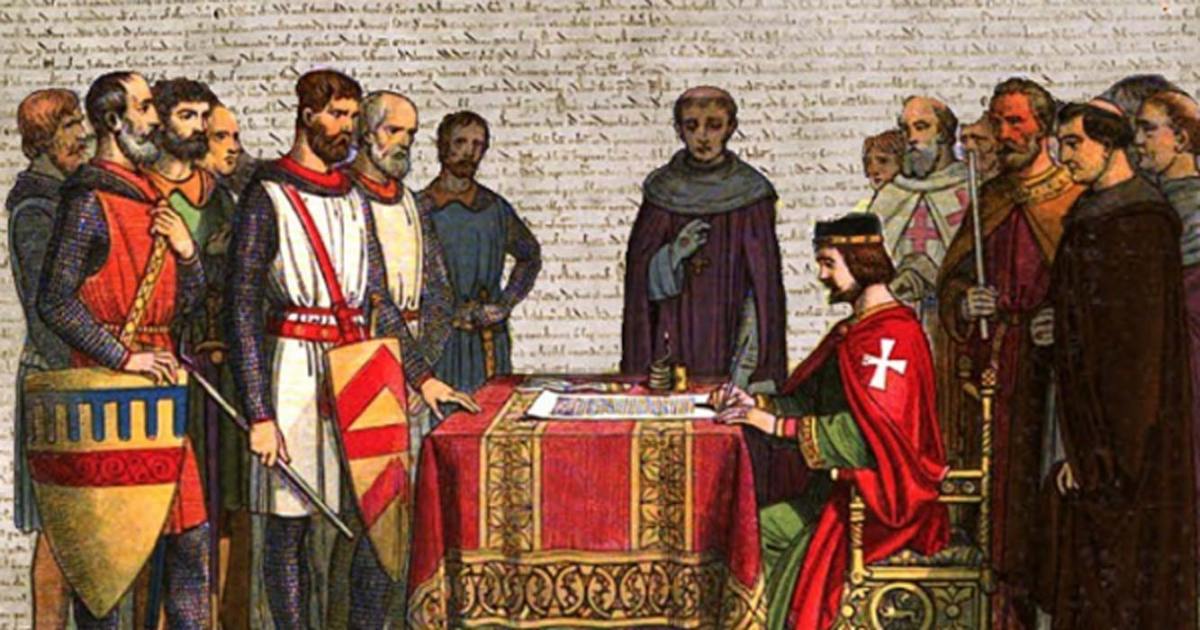
In the year 1215, a very important document was issued. This document was the first to put into writing that the king and his government were not above the law, so it placed limitations on royal authority by establishing law as a power in itself. I’m talking about the Magna Carta. The pioneer law inspired legislation in the West from there on out. The Sermon on the Mount is the Christian version of the Magna Carta in that it sets forth the heart of God and the nature of his kingdom. Where misunderstandings existed, Jesus clarified. Where obscurities puzzled, Jesus explained. 

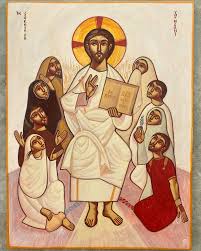
When we arrive at Matthew 5, we must recall how Jesus’ fame had spread through Syria, Galilee, and Judea at the end of the previous chapter. They undoubtedly follow when he ascends the mountain, but they may be more concerned with being fed or healed. Yet, Jesus is speaking to his disciples. What’s unsure is whether Matthew has in mind all twelve or just the ones he’s called thus far: Peter and Andrew, James and John. Jesus speaks to them, but anyone who overhears is welcome to listen. As Moses ascended Sinai to receive the Law from God, so God ascended a mountain to deliver his Sermon on the Mount. There’s a new lawgiver in town, and it’s God in the flesh. 

He inaugurates his sermon by pronouncing blessings. “Beatitude” comes from the Latin Bible, where the word beati is in the place of “blessed.” It denotes “blessed,” “happy,” and even “rich,” with the connotation that they are divine in nature. Many Jewish prayers begin with the Hebrew version, baruch, as in, “Blessed are you, Lord our God.” Examples abound in the Hebrew Scriptures (Jer. 17:7–8; Ps. 118:26). The situations in which Jesus pronounced this blessing seem like the most unlikely candidates for it. This is the nature of God’s kingdom—it turns the world right side up. The wisdom of God is wiser than the wisdom of the world, so we will have to overhaul our thinking to think as God does. 

“Poor in spirit” has always intrigued me. It doesn’t mean weak in faith. According to David Bentley Hart, the word describes a beggar who seems to be cowering. These folks lack pride and are beneficiaries of the help others offer. They will even pay it forward and help others in need. I believe they recognize their dependence on God and live with that realization in acting. Because this is in the present tense, it’s not something in the future but the present. The kingdom of heaven is theirs now, not in some distant time. In the next one, bereavement could describe not only those mourning loss but the state of women and children who were often destitute and impoverished if no male was present. Their comfort could come in the manner of material help as well as emotional support. Mourning shouldn’t be minimized, however. Trite sayings and platitudes aren’t helpful. To mourn means that you had someone in your life that you truly loved, whose absence now leaves a void. While a dreadful feeling, comfort is promised. 

You may have heard the saying, “Meekness is not weakness, but strength under control.” It’s a nice saying with some truth. This beatitude resembles Psalm 37:11, and the same word is used regarding Jesus in Matthew 11:29 and 21:5. There’s no weakness but strength under control. Jesus never lorded his power over his disciples. He served and led them by serving them (cf. Phil. 2:6–11). Environmentalists love the play on inheriting the earth and tying it to treating the world well. I’m not sure Jesus meant that, but caring for the planet is still good. I believe Jesus’ intention concerns the new heaven and earth (cf. 2 Peter 3:13; Rev. 21:1). Some usually take the next beatitude to mean Bible study or knowledge. After all, the will of God in Scripture is righteous and leads us to such, but that’s an internal reading. It’s more of a state of things—of justice. There needn’t be a qualifier placed on the word “justice” (i.e., environmental, gender, etc.). We should desire it on the personal, societal, and global levels. We see so many injustices, so our hunger and thirst for such are met in God’s kingdom.

The next one is misleading. From an initial impression, it means that a forgiving person is blessed and they will be forgiven. However, the term translated as merciful denotes sympathy felt towards another, leading to action. This would be like seeing an elderly person struggling to open a door, so you open it for them. We call it common courtesy, which can be in little or big things. When I envision someone that’s pure in heart, several people come to mind. They were good people who wanted only good and didn’t wrap themselves with worldliness. God was at the forefront of their very being. 

The peacemaker beatitude has been popularized and applied to law enforcement, but the idea is more about one who isn’t a tattler or busybody. We all can do things to stir up trouble, but as peacemakers, we don’t offer to do so. In the first century, a group called the Zealots were a revolutionary group that wanted to restore the kingdom of Israel using violence. They aimed to depose the Roman oppressors. Their influence penetrated all Jewish society (cf. John 6:15; 18:10–11), but this wasn’t what Jesus wanted (cf. John 18:36). This was not the kingdom of God. 

The beatitudes are closed out by blessings pronounced on those who will suffer for righteousness’ sake (1 Peter 4:14–16). “Revile” is an antiquated term. It’s better to think of “insult,” as we understand it. Physical harm, ostracizing (cf. Luke 6:22), verbal abuse, and false accusations may occur. If it’s the result of being a Christian, Jesus says we are blessed. 

Ancient Interpretations (Acts 8:16)

In Acts, Luke uses a similar phrase for different meanings. Given the context, it’s up to the reader to discern what he means by what he says. Let’s lay the groundwork. In Acts 2:38, we’re told that when one repents and is baptized, they receive forgiveness of sins and the Holy Spirit. This is stated with a promise to those present, those who come after them, and all who are far off, as many as the Lord calls to Himself by preaching the gospel. We conclude that everyone who repents and is baptized, obeying God, receives forgiveness and, more pointedly, the gift of the Holy Spirit. Some folks disagree as to what the gift of the Holy Spirit is. Still, I interpret it as the believer being given the Holy Spirit himself. If you disagree, that’s a discussion we can have another time since that isn’t the focus of this article.

As we read through Acts, we come to Acts 8, where Philip is preaching to the Samaritans. We read that after Philip preached and worked wonders, many people, men and women, believed the preaching and were baptized (Acts 8:12). We read a couple verses later that Peter and John are sent to Samaria to pray “for them that they might receive the Holy Spirit” (Acts 8:15–16). Have we misunderstood our earlier interpretation? Many brethren interpret as I do as a double entendre (a word or phrase open to two interpretations). In Acts 2:38, we don’t see Christians working signs and wonders. Only the apostles could work signs and wonders (Acts 2:43; 4:33; 5:12). Even in Acts 8:18, the laying on of apostolic hands conferred the ability to work signs and wonders. What are we to make of these two interpretations?

 Let’s ask an ancient Christian by the name of John Chrysostom. He flourished around the end of the fourth century and was Bishop of Constantinople. While we may have many disagreements about how church was done in his time, we must credit him for being a great expositor of Scripture. That second name, Chrysostom, wasn’t a surname but an honorarium given to him by many people. It means “Golden-mouthed” in Greek because John was a gifted orator who captivated audiences with his eloquent speaking style. He preached a series of homilies in the book of Acts, and when he comes to Acts 8:16, here’s what he wrote: “How was it then that they did not receive the Spirit? They had received the Spirit of remission of sins but not the Spirit of the signs.… To show that this was the case and that it was the Spirit of signs that they had not received, notice how Simon, once he saw the result, came and asked for this.” It would seem that John agrees with our conclusion, and he did centuries before we opened the Word.

Ancient Interpretations (Romans 10:9–13)

When studying a passage, I enjoy reading commentaries, word studies, and other research materials. Yet, I’ve learned to also consult Christians who lived closer to the time of Jesus than the scholars and commentators who give us great work. Neither the early church leaders nor modern scholars are always right, but it doesn’t mean they didn’t get anything right.

Some good neighbors instruct a person to be saved using Romans 10:9–13, and they even use this passage and say, “Invite Jesus into your heart,” or, “Pray the sinner’s prayer.” Allow me to say that I don’t question a person’s sincerity in their beliefs. As the late Antonin Scalia once said, “I attack ideas. I don’t attack people. Some very good people have some very bad ideas.” Neither the sinner’s prayer nor asking Jesus into your heart is in the Bible. This notion can be traced back to Billy Graham popularizing it in his crusades.

Historian Thomas Kidd traces it back to Anglo-American Puritans in the seventeenth and eighteenth centuries. The Puritan devotional writer John Flavel spoke of those who heard the gospel but would “receive not Christ into their hearts.” Thomas Boston, a Scottish Calvinist, encouraged Christians to take communion to receive “Christ into their hearts.” Benjamin Colman wrote in the early eighteenth century that Christians should “receive Christ into their hearts and hold him forth in their lives.” The phraseology became more and more formalized as time passed.

How should this passage be interpreted? Let’s ask some ancient Christians. While many have commentaries on this passage, I want to introduce you to Augustine. Augustine lived from the middle of the fourth century into the fifth century. He was a rather worldly fellow until he heard the preaching of Ambrose of Milan. Ambrose communicated the gospel in a way that appealed to Augustine because the sinner was also a philosopher and very intelligent. Most of the preachers he heard preached so simply that it turned him away, but Ambrose helped him. Later on, Augustine would become the bishop of Hippo (now Algeria). Western civilization owes a lot to Augustine. He lived to see the fall of the Roman Empire, and his writings have shaped much of Western civilization.

In his writing entitled The Christian Life, Augustine writes, “This condition is fulfilled at the time of baptism when faith and profession of faith are all that is demanded for one to be baptized.” Just as we do today, we ask for their confession before baptizing someone. They confess that they believe that Jesus is the Son of God. We also see it in verses such as Acts 2:21, 9:14, 22:16, and 1 Corinthians 1:2 in one form or another.

The Holy Spirit Told Me

Some Christians will say, “The Holy Spirit told me.” I never doubt a person’s sincerity, but I don’t quite know what to make of this. I have a lot of questions. For example, how did He tell you? What did He say? What do you mean that he told you? Was it a dream? An email? Help me understand this. 

If you read it in Scripture, fair enough, I can understand that. I recommend you see a counselor if you’re hearing voices. Others have listened to voices in their heads, sometimes leading to awful things (e.g., drinking the Kool-Aid, Waco). Sometimes, you and I intuit or suspect a specific path or action should be followed. I urge caution about attributing something that might have arisen in our minds to the Holy Spirit. Along with this is often the statement that “God called me to do x, y, or z.” The only semblance of a divine calling is the call all Christians receive through gospel preaching (cf. 1 Peter 2:9–10; 1 Cor. 1:9; 2 Thess. 2:13–14). 

We have the indwelling of the Holy Spirit as promised by God (Acts 2:37–39). By the way, please refer to Him as Him and not as “it.” That’s how He’s referred to in Scripture. What, precisely, does He do for us?

  • He comforts us (Acts 9:31). 
  • He pours out the love of God (Rom. 5:5).
  • He helps with our prayers (Rom. 8:26–27). 
  • He causes hope to abound (Rom. 15:13). 
  • He transforms us (2 Cor. 3:18). 
  • He produces fruit (Gal. 5:22–23). 
  • He strengthens us (Eph. 3:16). 

As God’s children, His Holy Spirit can lead us, but only if we so choose (Rom. 8:12–14). When we live according to the Holy Spirit’s teachings, we are led by Him. These teachings are attested to in Scripture since he is the Divine Author. Being led by the Spirit depends primarily upon surrendering to Him (cf. Gal. 5:16, 18, 25). 

Aside from Scripture, I’m unsure how He might lead a person in our time. I don’t presume that He does now as he did in the apostolic era. There are non-micaculous things he does for us, as mentioned above. I haven’t the knowledge to explain how He does these things, but it’s in Scripture, and I’m content to accept what He has told us—without understanding all the ins and outs. He was given to us as a pledge (2 Cor. 1:21–22; 5:5) to be redeemed when Jesus returns. He seals us to show we belong to God (Eph. 1:13–14; 4:30). Going beyond what Scripture says is in many people’s sentiments. Though they are well-meaning, I would need clarification on what they mean by this type of talk. There are times when coincidences occur. We sometimes say, “That’s a God thing.” Could it have been the Holy Spirit? There’s the possibility, but it could also be providence. I’m just cautious about attributing something to the Holy Spirit without certainty that it was Him.

If people through whom the Holy Spirit directly acted can misuse His gifts, we’re not better off. Take the Corinthians Church. Paul commanded that an interpreter be present for those who spoke in tongues so that the church might be edified (1 Cor. 14:10–14). Moreover, tongues were a sign for unbelievers, not believers (1 Cor. 14:20–23). Is this how we see the alleged use of tongues today? No. Instead, those who claim to speak in tongues today behave as the Corinthians Church whom Paul rebuked. Then, he limits the number of the tongue speakers for the sake of order (1 Cor. 14:27–28). He wraps a bow around this by reminding them that the spirits of the prophets are subject to the prophets (1 Cor. 14:32–33), so any accusation that they cannot exercise control when the Spirit is working is something Paul would not have accepted. 

The”Church” Did Not Create the Bible?

The most significant difference between Orthodox/Catholics and us is the place Scripture and the church hold. After conversing with several priests and members of those traditions, they often say that the church created the Bible. Therefore, only the church (e.g., clergy) can correctly interpret it and have authority beyond it. Our position isn’t that they created the Bible but recognized what God had inspired and held as such throughout the existence of the church and Israel. 

They already recognized certain writings as Scripture (2 Peter 3:15–16). Paul quoted Luke 10:7 in 1 Timothy 5:18, thus attributing to Luke’s gospel as Scripture. Unanimity was taught so that what was taught in one church was taught in all (1 Cor 4:17; 7:17; 16:1), and New Testament writings were circulated (Col. 4:16; 1 Thess. 5:27; 1 Peter 1:1; Rev. 1:4). Even New Testament writings are cited in early Christian letters. 

Didache (AD 50–60) refers to the Lord’s Prayer as it appears in Matthew. The letter 1 Clement was written near AD 95, and he alludes to the writings of Paul as Scripture and Matthew, Luke, Acts, James, and 1 Peter. In AD 110, Ignatius alludes to Matthew, Luke, and John. Polycarp in AD 110 calls Ephesians Scripture. He also references Romans, 1 Corinthians, Galatians, Philippians, 2 Thessalonians, and 1 & 2 Timothy; he quotes Matthew, Mark, and Luke. The point is that from the first century until the Bible was officially canonized, early Christians quoted from books we call Scripture as though they were divinely inspired and authoritative. 

In the second century, Melito of Sardis wrote about the Hebrew Scriptures and the books regarded as divine. 

Accordingly when I went to the East and reached the place where these things were preached and done, I learned accurately the books of the Old Testament, and I send them to you as written below. These are their names: Of Moses five, Genesis, Exodus, Numbers, Leviticus, Deuteronomy; Joshua the son of Nun, Judges, Ruth, four of Kingdoms, two of Chronicles, the Psalms of David, Solomon’s Proverbs or Wisdom, Ecclesiastes, Song of Songs, Job; of the Prophets: Isaiah, Jeremiah, the Twelve [minor prophets] in one book, Daniel, Ezekiel, Esdras.

Eusebius Eccl. Hist. 4.26.14

Other lists predated Melito’s (e.g., Josephus, Against Apion [AD 94]; Bryennios List [AD 100–150]). 

What precipitated the New Testament was the proposal of a canon that rejected many of the already regarded books. In AD 144, Marcion listed the gospel of Luke and ten of Paul’s epistles, omitting the rest of the New and Old Testaments. A response came in AD 180 in what’s known as the Muratorian Canon. It contained twenty-two of our twenty-seven New Testament books. This was also when Melito gave his list of the Old Testament. Athanasius’ 39th Festal Letter (AD 367) has the list of New Testament books we employ.  

One rebut you may encounter is that authority among clergy is apparent in the Jerusalem Council in Acts 15. Subsequent councils look to this example as to how the church makes determinations. Eastern Orthodoxy is often called the church of Councils because it is how they solve disputes and come to the census. There are four stages: 1) assembly (Acts 15:6), 2) testimony (Acts 15:7–12), 3) decision (Acts 15:13–21), and 4) adoption (Acts 15:22–29). The main difference between then and now is that the Holy Spirit inspired those men, and they even invoked the Spirit’s activity among Cornelius to arrive at their conclusion. Moreover, when they use the word “church,” they have the clergy in mind. The church doesn’t consist solely of her ministers. 

The Frequency With Which We Partake of the Lord’s Supper (i.e., Communion, Eucharist)

One unique feature of Christ’s Church compared to many other fellowships is the weekly observance of the Lord’s Supper. Many others take it daily (Catholic Church), while some observe it quarterly or on “holidays” (e.g., Easter, Christmas). Nevertheless, the weekly observance is observable when looking at Scripture and early church history. The book of James is likely the earliest written letter of the New Testament (AD 45–48), but 1 Corinthians, written in AD 55, contains the earliest description of a worship service (1 Cor. 11–16). From that passage, we can draw out what they did by how Paul rebukes them for not doing it correctly. 

In 1 Cor. 11:17–18, Two phrases stick out in this passage: 1) “when you come together” in verse seventeen, and 2) “when you come together as a church” in verse eighteen. The phrases “coming together” (1 Corinthians 11:20) and “same place” are most often to be understood as the worship assembly unless the immediate context determines otherwise. We see a variant of these phrases in 1 Corinthians 14:23—“If, therefore, the whole church comes together …” A rather famous passage used of Christian worship in this respect is Hebrews 10:25, “Not neglecting to meet together …” 1 Cor. 11:20 explained the purpose of their coming together—the Lord’s Supper. Who partook? The church, or Christians (1 Cor. 11:22; cf. 12:13). Paul spoke of Christians, not visitors or outsiders. His entire discourse in chapter 12 was regarding the body, the church. Prophecy and the speaking of tongues that he spent so much time on would have been their equivalent of our modern notion of preaching since they were revelatory (1 Cor. 13:1–2, 8–9; 14:1–5). Prayer and singing are next mentioned. Each of these was followed by a congregational “Amen” (1 Cor. 14:14–16; cf. v. 26). At the portion of the worship where praying, singing, and preaching occurred, we read of visitors being present in the assembly (1 Cor. 14:23–24).

We note from 1 Cor. 14:33–35 that women were to have been silent in teaching/preaching since Paul was coming off the heels of speaking about preaching (1 Cor. 14:27–32). This may reflect his earlier mentioned women praying and prophesying (1 Cor. 11:5). Some people say this was a command only for the Corinthians. However, Paul told the Corinthians other things he told all the other churches (1 Cor. 4:17; 7:17; 14:33; 16:1). Paul takes a momentary detour and talks at length about the resurrection in 1 Cor. 15. However, he twice notes that the things he speaks of were “according to the Scriptures,” which suggests that the Scriptures (likely the OT) were read during the assembly as well (1 Cor. 15:3–4). Finally, in 1 Cor. 16:1–3, he mentions a contribution for the relief of those in Jerusalem that was to have been collected “on the first day of the week.” Some versions insert the term “every,” but it’s not present in the Greek, though Paul might have meant it. Everything he mentioned from 1 Cor. 11:17–18 are the “acts of worship.” There was the Lord’s Supper, preaching, praying, singing, Scripture reading, and a collection. We mention the five acts of worship, but there are six here when you account for Scripture reading. This was done, according to 1 Cor. 16:2, “on the first day of the week.”

Another passage regarding the weekly partaking of the Lord’s Supper is in Acts 20:7–12. This passage implies that they broke bread on the first day of the week or Sunday. The Sabbath was the last day of the week, the seventh day of the week. Along with this supper was the proclamation of the word. Luke writes as if his audience is aware of the custom, so he doesn’t go into detail but mentions what they did. 

Even in Christian history, we see a weekly observance. In a writing that was likely written around the same time as 1 Corinthians or thereabouts, we read, “Having earlier confessed your sins so that your sacrifice may be pure, come together each Lord’s day of the Lord, break bread, and give thanks.” (Didache 14). Often referred to as “breaking bread,” the Lord’s Supper was under discussion here since the author(s) mentioned it only a few verses earlier.  

Even 100 years later, Justin Martyr wrote to the Emperor a defense of Christianity called his 1 Apology, in which he describes the weekly Christian worship meeting. 

Having ended the prayers, we salute one another with a kiss. There is then brought to the president of the brethren bread and a cup of wine mixed with water; and he taking them, gives praise and glory to the Father of the universe, through the name of the Son and of the Holy Ghost, and offers thanks at considerable length for our being counted worthy to receive these things at His hands. And when he has concluded the prayers and thanksgivings, all the people present express their assent by saying Amen. This word Amen answers in the Hebrew language to γένοιτο [so be it]. And when the president has given thanks, and all the people have expressed their assent, those who are called by us deacons give to each of those present to partake of the bread and wine mixed with water over which the thanksgiving was pronounced, and to those who are absent they carry away a portion. And this food is called among us Εὐχαριστία [the Eucharist], of which no one is allowed to partake but the man who believes that the things which we teach are true, and who has been washed with the washing that is for the remission of sins, and unto regeneration, and who is so living as Christ has enjoined … And on the day called Sunday, all who live in cities or in the country gather together to one place, and the memoirs of the apostles or the writings of the prophets are read, as long as time permits; then, when the reader has ceased, the president verbally instructs, and exhorts to the imitation of these good things. Then we all rise together and pray, and, as we before said, when our prayer is ended, bread and wine and water are brought, and the president in like manner offers prayers and thanksgivings, according to his ability, and the people assent, saying Amen; and there is a distribution to each, and a participation of that over which thanks have been given, and to those who are absent a portion is sent by the deacons. And they who are well to do, and willing, give what each thinks fit; and what is collected is deposited with the president, who succours the orphans and widows and those who, through sickness or any other cause, are in want, and those who are in bonds and the strangers sojourning among us, and in a word takes care of all who are in need. But Sunday is the day on which we all hold our common assembly, because it is the first day. on which God, having wrought a change in the darkness and matter, made the world; and Jesus Christ our Saviour on the same day rose from the dead.

1 Apology 64-66

By the fourth century, it was observed daily. The medieval church required penance before taking it, so many believers only took it annually, the absolute minimum permitted by the clergy. This was right before the Reformation. “The Lord’s Table should have been spread at least once a week for the assembly of Christians, and the promises declared in it should feed us spiritually” (Calvin, Inst., 4.17.46; c. 1536). The powers-that-be in Geneva, where Calvin reformed, were unwilling for the Reformation to go this far, but they permitted it to be taken four times a year. This is why many Protestant churches observe it as infrequently as they do, while the ancient Christians observe it weekly.

Now, infrequency will not make it more meaningful as much as weekly partaking makes it less significant. God has given the supper its meaning, and nothing can change that. Moreover, why not only give once a quarter or have the preacher deliver a sermon only infrequently? If someone finds it too familiar, that’s a heart problem, not the observation. We partake in the manner of our forebearers because they, having the apostles of Jesus, were so instructed.

The One Question Members of Churches of Christ Are Asked

“Y’all don’t believe in music, do you?” “You’re the ones that don’t use music, right?” “Why doesn’t your church use instruments?” Let me add the following caveat: my earliest years were spent in the Baptist Church. If you remember Ray Stevens and his song “The Mississippi Squirrel Revival,” the video was shot in the little Baptist Church I attended with my grandfather. New Hope Baptist Church in Hermitage, TN. Then, the church had a pianist and choir. As they grew, a full band, the choir, soloists, etc. My wife grew up Roman Catholic, and they also had their instruments. The first time I went to a church of Christ, I asked, “Where’s the choir supposed to stand?”

The short answer to why we don’t praise God with instruments hinges on identity. We aim to be as close to how the church was in the New Testament as we can observe. Scripturally and historically, the early church never used instruments in their worship. The Temple cult had instrumentalists and singers until its demolition by the Romans in AD 70. Also the pagan cults used them as well. The early church wanted to do as much as possible to distance themselves from both Judaism and paganism, though they more resembled the former rather than the latter. And by that, I mean the early church meetings were similar to synagogue meetings in many ways. Many scholars assert that the synagogue was the precursor to the church in organization, liturgy, etc.

They asserted, however, that the sum and substance of their fault or error had been that they were accustomed to meet on a fixed day before dawn and sing responsively a hymn to Christ as to a god, and to bind themselves by oath, not to some crime, but not to commit fraud, theft, or adultery, not falsify their trust, nor to refuse to return a trust when called upon to do so. When this was over, it was their custom to depart and to assemble again to partake of food–but ordinary and innocent food. 

Pliny, Letters 10.96-97 (AD 111-113)

The first question one tends to have is if using them is sinful or not. I don’t think in those terms. That’s like asking, “What’s the least amount I have to do or that I can get away with?” Again, for me, it’s about identity. I want to be as they were in the first century. If only I had some apostles and prophets around …

“Acapella” has been defined since the twentieth century as “unaccompanied vocal music.” Still, the etymology of the term itself is of Italian derivation and means “in the manner of the chapel [church]” or “according to the chapel” and was used in older church music (pre–1600) written for unaccompanied voices. Therefore, if the very term we use for singing without instruments means “according to the chapel” or “church,” then the word defines the music style used by the church. 

For the first decade of Christianity, the only Christians were Jewish. They often met in either houses or synagogues (James 2:2), so the service would naturally resemble what occurred in a synagogue. Prayers, the law, and the prophets were read. An interpreter would translate what was read in Hebrew to those who didn’t understand it. The prayers were chanted or intoned. There were no hymns sung, unlike at the Temple. Yet, that changed, and in the assembly, Christians sang (1 Cor. 14:15; Eph. 5:18–19; Col. 3:16–17; Heb. 13:15; James 5:13). Ambrose of Milan, so I’ve read, introduced instruments in the West in the fourth century but was met with opposition. The organ was introduced in the West in the mid-eighth century, but instruments were widely used in the West by the tenth century. The East never adopted them (i.e., the Orthodox Church). The commonality of instruments in denominations only goes back 150 years, give or take. So, I might ask, “Why does your church use them?”

Many people don’t know that respected teachers in their denominations opposed them. Their main opposition was because it was “Catholic” to use them. Read what they had to say.

  • The instrument in worship is an ensign of Baal. (Martin Luther [Catholic, then founder of the Lutheran Church]) 
  • Musical instruments in celebrating the praises of God would be no more suitable than the burning of incense, the lighting of lamps and the restoration of other shadows of law. The Papists, therefore, have foolishly borrowed this, as well as many other things, from the Jews.  Men who are fond of outward pomp may delight in that noise; but the simplicity which God recommends to us by the apostle is far more pleasing to him. (John Calvin [Puritans, Presbyterians, and earlier Baptists follow his theology] commenting on Psalm 33:2) 
  • I am an old man, and an old minister; and I here declare that I never knew them [instruments] productive of any good in the worship of God; and have reason to believe they were productive of much evil. Music, as a science, I esteem and admire: but instruments of music in the house of God I abominate and abhor. (Adam Clarke [Methodist] commenting on Amos 6:5) 
  • I have no objection to instruments of music in our chapels, provided they are neither HEARD nor SEEN. (John Wesley, as quoted by Adam Clarke in Amos 6:5) 
  • I would just as soon pray with machinery as to sing with machinery. (Charles Spurgeon [Baptist]  commenting on Psalm 42) 
  • Staunch old Baptists in former times would have as soon tolerated the Pope of Rome in their pulpits as an organ in their galleries. And yet the instrument has gradually found its way among them and their successors in church management, with nothing like the jars and difficulties which arose of old concerning the bass viol and smaller instrument of music. (David Benedict, in his book Fifty Years Among the Baptists
  • More important than explicit opposition to instruments is the simple fact that they are not used in the patristic period [A.D. 100-450]. (James W. McKinnon [Catholic] wrote this in his dissertation “The Church Fathers and Musical Instruments”)

Represented are Lutherans, Presbyterians, Wesleyans (Methodists and Church of Nazarene), Baptists, and Catholics—all of whom did not esteem instruments in Christian worship.

Once more, I point out the short answer: we don’t use instruments in worship because the early church didn’t either. We simply don’t use them because we seek to be as much like them as possible. Some people believe it adds to worship. We might disagree, but worshipping God shouldn’t be like a concert. If you look at passages depicting heaven (cf. Isaiah 6; Revelation 4-5), the hosts always praise God with their voices. I guess you could say we use instruments, but only the ones God created.

What I Understand About Hamas and Israel

“For all have sinned and come short of the glory of God,” so wrote Paul to the Romans. My views on this war aren’t meant to absolve anyone of wrongdoing at any point in history.

Israel as a state has only existed since 1948. Yet, before then, Jews and Arabs lived in the region. The late prime minister of Israel, Golda Meir, said she had Arab and Israeli passports. There was no Palestine, she said. That notwithstanding, Palestinian supporters have contrived the existence of an Israeli state as colonialism. The British and American governments indeed had a hand in establishing this state, but they eventually became self-governing, no longer vassals of either. Being a Choctaw and knowing that my ancestors were driven from land they occupied for millennia, I sympathize with the Israelites because they occupied that land as far back as 1300 BCE. There was the exile to Babylon, but the Roman siege really dealt a blow to Israel. Still, Jews have lived in the area for a long time, so to have a state is something I can appreciate. My people became a self-governing body just a few years before Israel, so if Mississippians tried to fight us off the land, you might see how that would be regarded.

Hamas is a terrorist group. They’re not liberators, freedom fighters, or a militant group. They are classified as terrorists by the United States, Canada, the EU, and others. They are funded by Iran and Syria. They will not stop until Jews are killed, and Israel no longer exists. Israel hasn’t occupied Gaza since 2005, but they have supplied it with water and power until this aggression. Also, the Palestinians voted for this body to govern them. Their headquarters is in the basement of a hospital. They hide caches of weapons in mosques and near schools. They hide behind civilians, even children when facing members of the IDF. They have posted numerous videos of them beheading Israelites, including women, children, and elders. They have posted videos of them desecrating the bodies of dead Israelis. They have posted videos of them raping women, some of them very young, and some may be minors. Many of the people who support them are people Hamas would kill.

Israel is a democracy, the only functioning one in Arabia. Tel Aviv has a large and concentrated group of LGBT people who are not closeted. Do you think Hamas would tolerate that? Israel was on the cusp of making peace with Saudia Arabia, which would have tipped the scales away from the favor of Iran. Concern about classified information leaks from Trump’s presidency has been suggested as an impetus for this attack. Biden had unfrozen 6 billion to Iran, which many have said funded this attack, as well as funded Palestine. Biden’s actions were an undoing of Trump’s policies.

On top of this, Hezbollah has fired rockets as of today, and Israel has responded by bombing the south of Lebanon. Much like the invasion of Israel by the Egyptians and Syrians fifty years ago, Israel is now facing a war on two fronts. Yet, the Israeli Air Force, arguably the most dangerous in the region, has entered the fray. While Israel isn’t targeting civilians, some will perish in this war. Hamas, however, has targeted civilians in various ways. And they’ve been keen to share their exploits on social media. Beware, if you have a weak stomach or nerves, don’t look up these videos. It’s brutal and only shows how barbarous these terrorists are. Meanwhile, Israeli reservists from all over the world are returning to their homeland to defend it.

Shalom Israel. Shalom Gibbor Chayil.

When You See Jerusalem Surrounded By Armies …

Last night, my wife and I watched the movie Golda starring Helen Mirren. This film tells the story of the Egyptians and Syrians’ invasion of Israel in 1973. Just fifty years later, Hamas attacked Israel. Whenever something geo-political occurs with Israel, “end times” messages rise from the ashes like a resurrected Phoenix. These messages usually have three components: end times talk, antichrist talk, and events in Revelation.

First, we have lived in the last days since Pentecost (Acts 2:17; cf. Heb. 1:1–2; James 5:3; 1 Peter 1:20). It didn’t suddenly happen because of what’s occurring in Israel. Why not point to the invasion fifty years ago if that were the case? Second, beware of how one interprets Matthew 24, Revelation, Daniel, and other passages. Let’s start with Matthew 24.

Critical to understanding this passage is what Jesus said at the end of Matthew 23:36 and 24:34. Back up to Matthew 24:1–2; “But when you see Jerusalem surrounded by armies, then know that its desolation is near” (Luke 21:20). Jerusalem was destroyed, and the temple was leveled in AD 70 by the Roman general Titus. Still, some held out and would not fall until AD 74 at Masada, when they committed suicide rather than suffer capture. Unlike before, the signs of such would be warfare (vv. 6–8). We must pause and look to Acts 5:36–37 and 21:38. The Zealots led the Jewish revolt that destroyed Jerusalem (which began in AD 66). The famines and pestilences are the results of warfare (v. 7) but also the results of earthquakes. Agabus foretold a famine in Jerusalem (Acts 11:27–30 [AD 54]). Earthquakes during Nero’s reign throughout Asia (Suetonius, Nero, §48). John Gill cites The Life of Apollonius and Orosius as recording earthquakes in Crete and various cities of Asia Minor. We must note that Jesus said that at these things, “the end is not yet” (v. 6). Verse three speaks of the end of the age and not the world. The Greek word aiōn means age or time. They were not asking about the end of the world but the end of the present state of things—the Jewish state (cf. v. 14).

Those persecuted are chronicled throughout the Bible and extra-Biblical sources, but we know that Stephen and James met their deaths while Paul was beaten, imprisoned, and tried. Those false prophets were noted: Simon Magus, those who taught another gospel (Galatians), Hymenaeus and Philetus (2 Tim. 2:17–18), and John wrote of false spirits going throughout the world (1 John 4:1). Romans 1:8; 10:18; & Colossians 1:23 said the message had been proclaimed worldwide. The abomination (Dan. 9:27; 12:11) is the Roman presence within the temple. Josephus records: “The Romans … brought their ensigns to the temple, and set them over against its eastern gate; and there did they offer sacrifices to them” (Wars, 6.6.1; cf. Luke 21:20). If this was referencing the second coming:

  1.  Fleeing to the mountains would do no good (v. 16; cf. 2 Peter 3:10–14).
  2.  There would be no need to fear for the Christian (v. 19–20; cf. 1 Thess. 4:13ff).
  3.  Housetops aren’t utilized today as they were then (v. 17).
  4.  Notice verse 34.

In verses 27-31, Jesus uses the term immediately, but before saying, “This generation shall not pass, till all these things are fulfilled.” Verse 27—when we read about the coming of the Lord, we must understand that “coming” isn’t always talking about His second coming. In Matthew 16:28, Jesus said that some standing before Him wouldn’t taste death until they saw Him coming into His kingdom. Sometimes, the usage dealt with a specific period or particular trial. The language of verse 29 is akin to Isaiah 13:10. In this passage, Isaiah describes the fall of Babylon in figurative terms. Jesus must have intended its meaning to be the same. These elements typically represented authorities and dignitaries in the Jewish mind (cf. Gen. 37:9ff). This could speak of the Jewish authorities (e.g., High Priest, Priests, and members of the Sanhedrin). This imagery proposes that Christ is coming. The Lord’s coming must represent His coming punishment on Jerusalem and not His second coming. For His coming with the clouds, see Daniel 7:13–14, which is about His ascension to the right hand of God.

One term that excites the mind is “antichrist.” You can find it along with interesting terms such as the mark of the beast, armageddon, rapture, and the thousand-year reign. The history of interpreting antichrist outside the Bible goes as far back as a disciple of John named Polycarp, who wrote, “For everyone who does not confess that Jesus Christ has come in the flesh is antichrist” (Phil. 7), which is essentially what John himself wrote (1 John 2:18). Antichrist was thought to be the Roman Empire throughout history. Popes of the crusade era said the Turks were the antichrist. The reformers believed the pope was the antichrist (Isaac Newton too). Puritans said Cromwell was the antichrist. Napoleon, Hitler, Mussolini, Stalin, etc. Yet, in 1 John, there’s the mention of antichrists (plural). He also speaks of them as a present reality in his time, not as something to come in the near or distant future.

Most Evangelical commentators tend to assert that Revelation was written with three periods of time in mind: 1) things John saw in chapter one, 2) those that were in chapters two and three, and 3) those that would take place afterward, beginning with chapters four or six. Charles Ryrie—in his study, Bible notes—advocates the former while John MacArthur—in his Bible handbook—advocates the latter. What some Evangelicals argue for is that chapters six through twenty-two are end-time (eschatological) material that hinges upon a thousand-year reign. However, internal terminology would refute this claim.

  • “The time is near” (1:3; 22:10; cf. Matt. 3:2; 4:17)
  • These things “must soon take place” (22:6)
  • Jesus said he was “coming soon” (22:12, 20; cf. 1:1)

The terms in English and Greek speak to a swift course of action and certainly not one that would be delayed over two millennia. Granted: the judgment scene in chapter twenty appears to be the true end-time material that may be exempt from the interpretation. However, at what point does the contextual divide speak to the original audience and all thereafter come somewhere in chapter twenty and onward unless one holds to a more symbolic interpretation of the final three chapters? A case for understanding the time frame in which John’s original audience may have understood this prophecy is found when comparing his work to other prophetic literature.

Daniel was told to seal up his vision because it referred to many days from his time (Dan. 8:26). He was also told that the book was to remain sealed “until the time of the end” (12:4). As time went on knowledge would increase as to the culmination of these prophecies. He was urged to go his way because the words of his prophecy were “sealed till the time of the end” (12:9). Studying history along with Daniel’s prophecy reveals that it was not for another four hundred years that those kingdoms came which he had been told of (cf. Dan. 2). Therefore, Daniel would not live to see the fulfillment of the prophecies; hence his being instructed to seal the book. So, the sealing of a prophecy book looked ahead to a distant period.

When John wrote Revelation, the angel told him not to seal the words of his book (Rev. 22:10). Why? Because “the time [was] at hand.” If Daniel’s prophecy saw fulfillment some four hundred years later, and he was told to seal the book, would not John’s prophecy have been fulfilled long before the same time since he was told not to seal his book?

Rather than trying to discern the times because of what’s happening in Israel, let’s pray for Israel and Palestine. Let’s pray that God judges Hamas and all associated with this terrorism. My prayer is that peace may reign, but if it isn’t, that evildoers meet their end.

Why “Worship” Is Too Broad

I was conversing with someone at church who relayed the statement another made about worshipping in their car while the radio played on the Christian station. After they told me what was said, I replied, “I think the term ‘worship’ is too broad. There are three Greek terms translated as ‘worship’ in the New Testament, and they each denote something different that our word ‘worship’–which has become a catch-all term for anything we consider to be worship.”

The first thing we need is a real revolution in our relation to language ….  It simply no longer occurs to us that everything that we have all known for so long, and all too well, could be otherwise—that these grammatical forms have not dissected and regulated language as such since eternity like an absolute, that instead, they grew out of a very definite interpretation of the Greek [language].

Martin Heidegger

Andrew McGowan addresses this in his book, Ancient Christian Worship. The form for a wedding pronouncement as far back as 1549 entailed these words when the groom placed the ring on his bride: “With this ring I thee wed; this gold and silver I thee give; with my body I thee worship; and withal my worldly goods I thee endow.” Certainly, we’re not talking about the sort of worship one gives to God! McGowan observes that at that time, the sharing of wealth was worship.

Here are the terms we see in the New Testament.

  • Proskyneses—This term spoke to a person’s posture before another more worthy than they. We “bow” our heads for prayer when, decades ago, men would kneel. In some congregations, people stand during the reading of the Bible. In denominations, some will prostrate themselves at certain times. Our posture is reflective of our attitude. Some argue that we don’t have to have any particular posture but should be the posture of one’s mind and heart. However, our physical posture sometimes moves our mind and heart to be in sync. When Peter entered, Cornelius met him and fell down at his feet and worshiped [proskunesen] him. But Peter lifted him up, saying, “Stand up; I too am a man.” (Acts 10:25–26 ESV)
  • Latreia—This term was used regarding cultic forms of worship and the accompanying tasks. Anna, the prophetess, worshiped [latreuousa] “with fasting and prayer” (Luke 2:37). In Hebrews, the term is used in this particular vein as well when referring to the worship in the Temple and Tabernacle (Hebrews 8:5; 9:9; 10:2; 13:10).
  • Leitourgeo—“liturgy” is simply a transliteration of the Greek word used in the Bible several times. In Luke 1:23, it’s translated as “service” to describe Zechariah’s priestly service in the temple. It’s also used in sacrificial, worshipful contexts as “offering” (Philippians 2:17) and “worship” (Hebrews 9:21). We see it explicitly in Acts 13:2.

We have taken several terms and boiled it down to one word, “worship.” However, first-century Christians understood that it included one’s physical posture, a particular task or act performed, and a ritualistic nature to what was done. In some ways, we use the term correctly, but we may also use it as a catchall for what we believe is worship. The issue may not be resolved so easily, because even Augustine of Hippo encountered the same problem.

To make offerings and sacrifice, and to consecrate our possessions and ourselves . . . is the worship [cultus] that is due to the divinity . . . and since no Latin term sufficiently exact to express this in a single word occurs to me, I shall avail myself, where needed, of Greek. Latreia, whenever it occurs in Scripture, is rendered by the word “service” [servitus]. But that service that is due to humans, referring to which the apostle writes that servants must be subject to their own masters, tends to be referred to by another word in Greek, whereas the service that is paid to God alone by worship [cultus], is always, or almost always, called latreia in the usage of those who wrote down the divine oracles for us. So if we only used the word “worship,” it would not seem to be due exclusively to God; for we also speak of “worship” of humans, whom we celebrate with honors, whether in memory or in the present.

City of God 10.1.2

Leviticus 19:28 and Tattoos

The picture is of an eighty century Sudanese Christian woman whose mummy shows that she had a tattoo.

For disclosure, I have five tattoos. I didn’t get them before I was a preacher, but only in the last few years. No, I’m not having a mid-life crisis. I always wanted tattoos, but my dad told me to wait until I was older so I wouldn’t get something I would regret. I don’t regret any of them. On my left arm are three: the chi/rho symbol flanked on each side with alpha/omega. This was the symbol used by Emperor Constantine’s soldiers on their shields. Just beneath that one, the second is Deuteronomy 6:4 in Hebrew because that was the first verse I memorized while taking Hebrew classes. Under that is in Roman Numerals the date that I met my wife. I suppose you might say that my left arm is the arm of antiquity. On my right arm are two. The first is the seal of my tribe, the Mississippi Band of Choctaws. Under that is a tribal symbol that tells the story of our people.

I know some fellow Christians are opposed to tattoos, and they invoke Leviticus 19:28, which reads, “You shall not make any gashes in your flesh for the dead or tattoo any marks upon you: I am the Lord” (NRSV). Robert Alter offers this note, “The polyvalent Hebrew noun nefesh often means ‘person,’ but in some contexts it refers to a dead person or corpse, and the implication of mourning here points to that meaning” (The Five Books of Moses, p. 630). My SBL study Bible simply says, “Pagan mourning rites.” Marking oneself as a sign of mourning was meant to convey a heightened expression of sorrow (Jer. 16:6; 41:5).

Dr. David Bernat observes that the noun translated as “tattoo” only appears here in all the Hebrew Scriptures. Its root, moreover, indicates writing of some kind but is unspecified. Abraham ibn Ezra (c. 1089-1167) interpreted with the connection to mourning, as have others I’ve mentioned above. Agreeing with this position was Moshe Isaac Ashkenazy (c. 1821-1898). His theological explanation was:

The reason for tattooing was to remember the beloved dead, and they would carve the person’s name or picture on their hand or arm with a needle…so they would be before them always…and this is a bad practice, since it denies the survival of the soul after dead…since according to our faith, after a short time, we will see the other person again after death, we should not try so hard to have keepsakes, and those who are particular about this, to the point that they cause pain to their own flesh with this harsh act, show that they are not confident that they will see their departed loved ones again, and if so, they are deniers of the immortality of the soul.

Here’s the thing: I could provide more rabbis and scholars who hold this view. Nevertheless, as a Christian, the law is no longer something by which I am bound in Jesus. I am justified by faith in him and not the keeping of the law. Furthermore, Christians who invoke this passage, if they are to remain logically consistent, must observe everything contained in Leviticus. Also, in keeping with the premise, what about plastic surgery or any other modifications one makes to the body?

In early Christianity, tattoos were degrading and reserved for criminals and outlaws by Roman Law. It was a form of public punishment, like wearing the scarlett letter. Some early Christians claimed that their tattoos appeared as a miraculous experience that referred to the wounds of Christ or the early martyrs (e.g., Macrina). The Montanist sect took Revelation 7:3 literally and would tattoo “slaves of God” on their foreheads. Coptic Christians have tattooed themselves as far back as the eighth century. Apparently, they branded crosses on their foreheads, temples, and writsts. After the Muslim conquest of Palestine and Israel, Christians were tattooed by the state with a cross on their inner right wrist. Pilgrims who go to the Holy Land often commemorate their experiences with a tattoo of a cross on their inner wrist. History also attests to medieval Christians receiving tattoos upon making pilgrimages to the Holy Land. In fairness, some of the Church Fathers were of the opinion that they should be prohibited, so there isn’t a uniform view throughout early Christianity and even into late antiquity.

If anything, I would view it as a matter of Christian liberty. If you don’t want them, don’t get them. If you get them, make sure it isn’t something that would be offensive to God. I know some will invoke “the body is a temple” passage, and that’s fine. But tell me you eat healthy and that you never played a sport that affects your joints and wellbeing. If we’re to interpret the passage in that vain, I’m sure I could use it against anyone throwing it at me. Let’s just leave it to personal choice and reserve judgment for things that really matter.