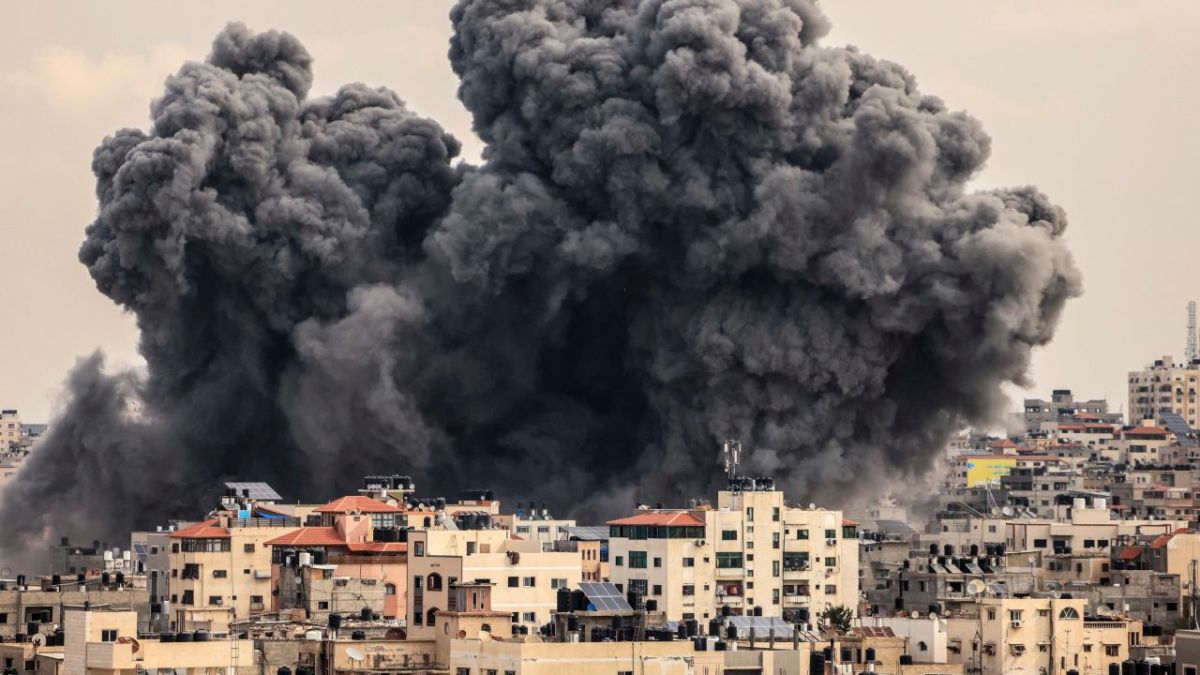
Last night, my wife and I watched the movie Golda starring Helen Mirren. This film tells the story of the Egyptians and Syrians’ invasion of Israel in 1973. Just fifty years later, Hamas attacked Israel. Whenever something geo-political occurs with Israel, “end times” messages rise from the ashes like a resurrected Phoenix. These messages usually have three components: end times talk, antichrist talk, and events in Revelation.
First, we have lived in the last days since Pentecost (Acts 2:17; cf. Heb. 1:1–2; James 5:3; 1 Peter 1:20). It didn’t suddenly happen because of what’s occurring in Israel. Why not point to the invasion fifty years ago if that were the case? Second, beware of how one interprets Matthew 24, Revelation, Daniel, and other passages. Let’s start with Matthew 24.
Critical to understanding this passage is what Jesus said at the end of Matthew 23:36 and 24:34. Back up to Matthew 24:1–2; “But when you see Jerusalem surrounded by armies, then know that its desolation is near” (Luke 21:20). Jerusalem was destroyed, and the temple was leveled in AD 70 by the Roman general Titus. Still, some held out and would not fall until AD 74 at Masada, when they committed suicide rather than suffer capture. Unlike before, the signs of such would be warfare (vv. 6–8). We must pause and look to Acts 5:36–37 and 21:38. The Zealots led the Jewish revolt that destroyed Jerusalem (which began in AD 66). The famines and pestilences are the results of warfare (v. 7) but also the results of earthquakes. Agabus foretold a famine in Jerusalem (Acts 11:27–30 [AD 54]). Earthquakes during Nero’s reign throughout Asia (Suetonius, Nero, §48). John Gill cites The Life of Apollonius and Orosius as recording earthquakes in Crete and various cities of Asia Minor. We must note that Jesus said that at these things, “the end is not yet” (v. 6). Verse three speaks of the end of the age and not the world. The Greek word aiōn means age or time. They were not asking about the end of the world but the end of the present state of things—the Jewish state (cf. v. 14).
Those persecuted are chronicled throughout the Bible and extra-Biblical sources, but we know that Stephen and James met their deaths while Paul was beaten, imprisoned, and tried. Those false prophets were noted: Simon Magus, those who taught another gospel (Galatians), Hymenaeus and Philetus (2 Tim. 2:17–18), and John wrote of false spirits going throughout the world (1 John 4:1). Romans 1:8; 10:18; & Colossians 1:23 said the message had been proclaimed worldwide. The abomination (Dan. 9:27; 12:11) is the Roman presence within the temple. Josephus records: “The Romans … brought their ensigns to the temple, and set them over against its eastern gate; and there did they offer sacrifices to them” (Wars, 6.6.1; cf. Luke 21:20). If this was referencing the second coming:
- Fleeing to the mountains would do no good (v. 16; cf. 2 Peter 3:10–14).
- There would be no need to fear for the Christian (v. 19–20; cf. 1 Thess. 4:13ff).
- Housetops aren’t utilized today as they were then (v. 17).
- Notice verse 34.
In verses 27-31, Jesus uses the term immediately, but before saying, “This generation shall not pass, till all these things are fulfilled.” Verse 27—when we read about the coming of the Lord, we must understand that “coming” isn’t always talking about His second coming. In Matthew 16:28, Jesus said that some standing before Him wouldn’t taste death until they saw Him coming into His kingdom. Sometimes, the usage dealt with a specific period or particular trial. The language of verse 29 is akin to Isaiah 13:10. In this passage, Isaiah describes the fall of Babylon in figurative terms. Jesus must have intended its meaning to be the same. These elements typically represented authorities and dignitaries in the Jewish mind (cf. Gen. 37:9ff). This could speak of the Jewish authorities (e.g., High Priest, Priests, and members of the Sanhedrin). This imagery proposes that Christ is coming. The Lord’s coming must represent His coming punishment on Jerusalem and not His second coming. For His coming with the clouds, see Daniel 7:13–14, which is about His ascension to the right hand of God.
One term that excites the mind is “antichrist.” You can find it along with interesting terms such as the mark of the beast, armageddon, rapture, and the thousand-year reign. The history of interpreting antichrist outside the Bible goes as far back as a disciple of John named Polycarp, who wrote, “For everyone who does not confess that Jesus Christ has come in the flesh is antichrist” (Phil. 7), which is essentially what John himself wrote (1 John 2:18). Antichrist was thought to be the Roman Empire throughout history. Popes of the crusade era said the Turks were the antichrist. The reformers believed the pope was the antichrist (Isaac Newton too). Puritans said Cromwell was the antichrist. Napoleon, Hitler, Mussolini, Stalin, etc. Yet, in 1 John, there’s the mention of antichrists (plural). He also speaks of them as a present reality in his time, not as something to come in the near or distant future.
Most Evangelical commentators tend to assert that Revelation was written with three periods of time in mind: 1) things John saw in chapter one, 2) those that were in chapters two and three, and 3) those that would take place afterward, beginning with chapters four or six. Charles Ryrie—in his study, Bible notes—advocates the former while John MacArthur—in his Bible handbook—advocates the latter. What some Evangelicals argue for is that chapters six through twenty-two are end-time (eschatological) material that hinges upon a thousand-year reign. However, internal terminology would refute this claim.
- “The time is near” (1:3; 22:10; cf. Matt. 3:2; 4:17)
- These things “must soon take place” (22:6)
- Jesus said he was “coming soon” (22:12, 20; cf. 1:1)
The terms in English and Greek speak to a swift course of action and certainly not one that would be delayed over two millennia. Granted: the judgment scene in chapter twenty appears to be the true end-time material that may be exempt from the interpretation. However, at what point does the contextual divide speak to the original audience and all thereafter come somewhere in chapter twenty and onward unless one holds to a more symbolic interpretation of the final three chapters? A case for understanding the time frame in which John’s original audience may have understood this prophecy is found when comparing his work to other prophetic literature.
Daniel was told to seal up his vision because it referred to many days from his time (Dan. 8:26). He was also told that the book was to remain sealed “until the time of the end” (12:4). As time went on knowledge would increase as to the culmination of these prophecies. He was urged to go his way because the words of his prophecy were “sealed till the time of the end” (12:9). Studying history along with Daniel’s prophecy reveals that it was not for another four hundred years that those kingdoms came which he had been told of (cf. Dan. 2). Therefore, Daniel would not live to see the fulfillment of the prophecies; hence his being instructed to seal the book. So, the sealing of a prophecy book looked ahead to a distant period.
When John wrote Revelation, the angel told him not to seal the words of his book (Rev. 22:10). Why? Because “the time [was] at hand.” If Daniel’s prophecy saw fulfillment some four hundred years later, and he was told to seal the book, would not John’s prophecy have been fulfilled long before the same time since he was told not to seal his book?
Rather than trying to discern the times because of what’s happening in Israel, let’s pray for Israel and Palestine. Let’s pray that God judges Hamas and all associated with this terrorism. My prayer is that peace may reign, but if it isn’t, that evildoers meet their end.







 A Minister's Study