Does Luke’s Research Nullify Inspiration?

The past few years have been ripe with disinformation, misinformation, alternative facts, etc. Facebook has become a catalyst for spreading such, with algorithms set to pop up what suits one’s fancy. We have no certainty about what is trustworthy anymore, but truth-seekers can sift through the material—identifying both the true and false. Using our preferred sources is easy because they validate our preconceptions, but we should use caution because they may blind us in the process.

When Luke wrote his good news account (see Luke 1:1–4), he wrote against the backdrop of other circulating versions. He carefully investigated the matter, knew eyewitnesses, and drafted an orderly arrangement to straighten the record. Since he indicates research, does that nullify inspiration given by the Holy Spirit? I don’t believe so. Since research was an element of this writing, who is anyone to say that the Holy Spirit didn’t tell Luke to consult with certain people or documents? After all, Luke emphasizes the work of the Holy Spirit (Luke 1:15, 35, 41, 67), and that could have included talking with certain people. Remember, God directed Saul of Tarsus to Ananias, who then told him the gospel when God could have told it to him (see Acts 9:6).

Luke followed things closely and used various sources, one of whom might have been Mary, the mother of Christ. The first two chapters contain information she would have known (Luke 2:19, 51). Peter (cf. Luke 6:14) and Mark might have also been a source for Luke, given the call for Mark—Peter’s companion—in 2 Timothy 4:11 and his presence in Colossians 4:10 and Philemon 24 with Luke.  As Paul’s travel companion, Luke would have undoubtedly received information from him. Paul quoted from Luke 10:7 in 1 Timothy 5:17–18 and referred to his gospel (Rom. 2:16; 16:25; 2 Tim. 2:8).

Luke noted that “many” had tried to write narratives (Luke 1:1), so he wrote in response to inadequate or false gospels. His own, however, was from “eyewitnesses and ministers of the word” (Luke 1:2)—neither of which he was as far as we know. The other accounts contributed to confusion rather than clarity. Luke wanted to give an orderly arrangement (Luke 1:3). His meaning of “orderly” differs from what we might initially think. He doesn’t give a chronological but a topical account. His arrangement differs from Matthew’s and Mark’s but contains some of the same material, though placed in a different order. 

Living in the Kingdom (Matt. 7:6-29)

People today treat their dogs better than humans. I have three dogs, two of which live outside and one inside. I love them but would never grill a steak or pork chop for them. If anything, they might get the leftovers. Jesus’ phrase “what is holy” could refer to meat because it necessitated a banquet whenever an animal was sacrificed. Eating what had been sacrificed to God was considered holy, and to give it to dogs was unthinkable. Also, no one would throw pearls to pigs because they don’t understand their value. Therefore, the gospel, represented as what’s holy and pearls, shouldn’t be wasted on those who scorn them. We want to share the good news, but some people don’t like it. Don’t waste it on them. If anything, pray for them to be receptive, but you can lead a horse to water. 

There are several ways to interpret the ask, seek, and knock passage. The first is relative to prayer, and the second to the kingdom of God as the church. When you look at Acts, the latter is understood in the context by some and see how all resources are pooled together so that no one is lacking. This interpretation focuses on verses 9–11 regarding basic needs and that God, through his church, provides for the saints. It’s not a flawed interpretation, but prayer is truer to the context given Matthew’s usage of “ask” concerning it(cf. Matt. 18:19; 21:22) and Jesus’ focus on prayer in the sermon (Matt. 5:44; 6:5–13). Compared to God, who is the absolute good (Matt. 19:17), parents, regardless of how loving they are of their children, are evil. If evil parents can give good gifts to their children, how much more will God? This doesn’t mean that every prayer we pray is answered “yes.” God gives us good things, and not everything we ask for is 1) a necessity (“bread” and “fish”) and 2) good. 

The golden rule was meant to guide the interpretation of the Law (7:12). It parallels similar statements from other civilizations. 

Watch yourself, my son, in everything you do, and discipline yourself in all your conduct. And what you hate, do not do to anyone. (Tobit 4:14–15; second century BC)

Let us show our generosity in the same manner that we would wish to have it bestowed on us. (Seneca, De Beneficiis 2.1.1; contemporary of Jesus)

What is hateful to you, do not do to your neighbor. That is the whole Torah. The rest is commentary. Go and learn! (Hillel, b. Sabb. 31a; 70 BC–AD 10)

Do not do unto others what you would not want others to do unto you. (Confucius, Analects 15.23)

Anything that might seem like we should treat another in a certain way must be turned on ourselves and asked whether or not we’d wish to be treated that way. 

Verses 13–14’s two ways have parallels in other passages (Deut. 30:15; Ps. 1:1–2). The false prophets of whom Jesus speaks (7:15–20) must be set in the backdrop of how he said we should regard our enemies. In the decades following Jesus, prophets arose, leading revolts against the occupying Romans. Theudas (AD 44–46) led a band of people massacred by a squadron, the head of Theudas being paraded through Jerusalem. During Felix’s reign (AD 52–60), an Egyptian led several thousand people to the Mount of Olives, where he promised to command the city walls to fall and subsequently be installed as Israel’s king. Hundreds were killed, and hundreds were imprisoned, the Egyptian man having escaped. They could tell who the false prophets were by their fruits—if contrary to what Jesus taught them (non-violence), they were known to be untrue. 

Once more, he emphasizes proper action over confession (7:21–23). The false prophets would be known by their fruits. His disciples were to let their light shine through their good works (5:16). He wanted their righteousness to exceed that of the Pharisees and scribes (5:20). At every turn, Jesus wanted his disciples to show, by their actions, fidelity to God. They’re not to make a show of it for others but to quietly serve God, trusting in him. Their house will stand if they heed his instructions (7:24–27). The response to Jesus’ teaching as having authority stems from his teaching coming directly from himself. Pharisees and rabbis would have cited the collective wisdom of the rabbis, the Law, or other Jewish writings. Jesus alludes to them but speaks with authority and settles the matter. He taught, unlike any other teacher who lived, not citing different sources. 

Judge Not! (Oh, really?)

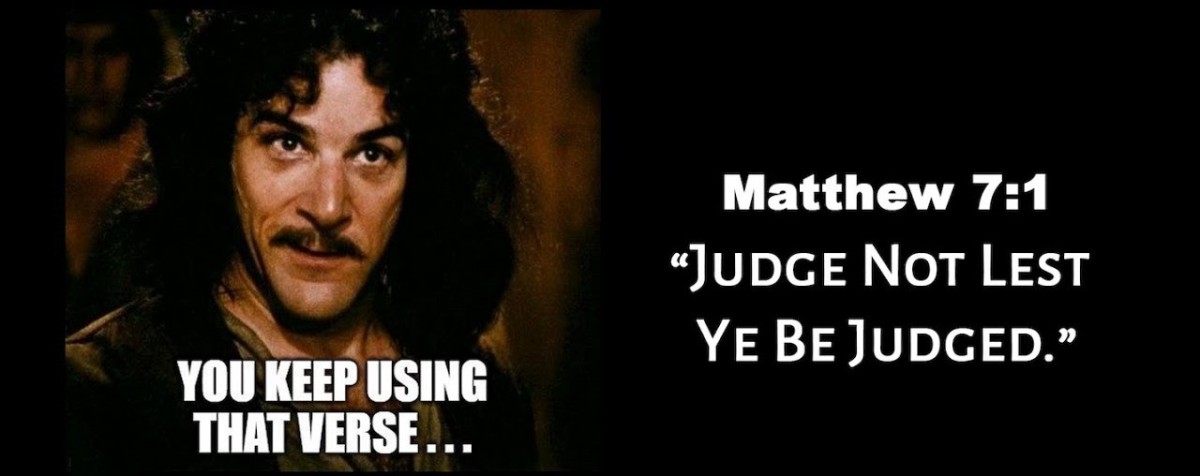
Everyone and their mother knows this verse (Matt. 7:1), and they use it—often inappropriately. Yet, there’s more to this passage than telling people not to judge. For example, just a few verses later, Jesus warns against false teachers. To dub a person a false teacher, you have to be willing to judge what they teach and how they live (Matt. 7:15–20). When a teacher grades an assignment, they are making a judgment. To call one thing good and another thing terrible is ultimately making a judgment. How did Jesus mean this? First, the term translated as “judge” denotes a habit of sharp, unjust criticism. The Greek term is krinete, from which our English word, “critic,” comes. We’re not talking about judging in the sense that we may think of it, but criticism. Notice what follows: how we judge is how we will be considered (7:2). This critical person sees only the fault in others but none in themselves (7:3–5; cf. Rom. 14:4, 10, 13).

We’re to judge righteously (John 7:24). Unrighteous judgment is according to appearance. Righteous judgment, however, is with grace, mercy, and God’s will as the standard. There’s always what we see and reality. Sometimes the two are the same, but sometimes they’re not. When we look for the worst, that’s what we’ll find every time. This was what the Pharisees did—look to find fault. They are the ones who are judged harshly and not with righteousness. In matters of righteousness, we’re to judge our brethren and not outsiders (1 Cor. 5:12). Judgment here isn’t a condemnation but discernment. When a Christian doesn’t bear the fruits of the Spirit but works of the flesh, we must address the issue. When you read the thought uninterrupted, it flows into the next chapter, which denounces lawsuits among brethren. This matter is one of discipline (cf. Deut. 17:6–7; Matt. 18:15–20).

A few standards of judgment would be good to avoid. The first would be judging someone by the worst thing they’ve ever done. This can be difficult because Jeffrey Dahmer did some pretty horrible things. Yet, you may not know that before he died, he became our brother, obeying the gospel while in jail thanks to Oklahoma minister Curt Booth and Wisconsin minister Roy Ratcliff. F.B. Meyer once said that when we see a brother or sister in sin, there are two things we do not know. First, we do not know how hard he or she tried not to sin, and second, we do not see the power of the forces that assailed him or her. We also do not understand what we would have done in the same circumstances. It can be challenging for some to fathom that a person like Dahmer could now be in heaven after all he did, but we cannot negate how powerful Jesus’ death was in comparison. If it isn’t powerful enough to wash away those sins, then it isn’t capable of anything. 

Another standard of judgment is imposing modern morals on the past. Slavery is agreed to be abhorrent. Yet, it has existed since the dawn of time, or pretty close to it. It still exists, believe it or not. The latest Global Estimates of Modern Slavery from Walk Free estimates that 49.6 million people live in slavery, either through forced labor or marriage. A quarter of those are children. North Korea has the highest percentage of slaves, and Africa and the Middle East have countries with considerably high numbers of slaves. Slavery didn’t begin with the trans-Atlantic slave trade. Yet, you don’t see activists caring much for these slaves, only those of the past. However, had we lived in that time and had the means, would we have had slaves? Would we have been slaves? We must remember that an evolving interpretation of Scripture led to its abolition in England and the United States. 

Our time would be better spent attending to our own blind spots (Matt. 7:3–5). How can we be a light to the world when we occupy our time with the judgment of others as if it were a spiritual gift given by the Holy Spirit? For some of us, being judgmental comes easy. It’s an all-too-tempted way to operate. Yet, how we judge is the same way we shall be judged. If we are harsh, we will receive harsh judgment. If we are gracious, we can receive God’s grace in judgment.  

Treasures in Heaven (Matt. 6:19-34)

Who hasn’t worried? We all do it, and sometimes with good reason. Worrying is not a sin, as some might persuade us to believe. There is, however, a component of faith that is absent when we worry because we have forgotten the sovereignty of God over all things. Yet, before worrying, fasting and prayer are things you’ll note in the sermon that were observed in the church a lot (cf. Acts 10:30; 13:1–3; 14:23). Psychologists teach such methods as meditation, mindfulness, breathing, and so on. These are grounding techniques when, in a moment of anxiety, someone centers themselves to face whatever worries them. Sometimes, we live in a lane so long that it becomes home, but neuroplasticity suggests that our brain is equipped to rewire itself. Praying the Our Father reminds us that God is outside time and space and greater than us and our worries. Plus, when we pray for his will to be done on earth as in heaven, we must submit to his will, whatever it may be. When we place our worries in the context of prayer and fasting, we give ourselves to God and entrust him in the process. 

We have contrasted riches and necessities. The two are different. If we are fortunate enough to amass wealth, Jesus says, it should be in heaven, where it cannot be destroyed or diluted in value. We are acquisitive by nature. It’s easier to accumulate things than to give them. In high school, I returned home one day—the first to leave and return home—to find the door ajar. I knew I had closed it all the way, but I went in to discover the house ransacked and robbed. My great-grandfather’s 12 gauge shotgun was gone. He used it when he was young, so I prized that possession. That robbery taught me then and there that placing meaning in things is meaningless. The relationship we had and the love we shared were more valuable than the shotgun. It was sentimental, and that’s why the loss hurt so much. However, that taught me not to lay up treasures on earth because thieves break in and steal. 

No matter how much you have, it’s never enough (Eccl. 5:10; cf. 1 Tim. 6:10). No one can serve two masters. No one can serve God and mammon. That word is Aramaic; some translations render it “riches” or “wealth.” The root of the term means “trust” or “reliance.” We cannot trust or rely on stuff against God. This point is no better illustrated than in the parable of the rich fool (Luke 12:13–21). This man did what Jesus warns against here—he “stored” up treasures for himself. The very word Matthew uses as “lay up” (Matt. 6:19–20) appears at the end of this parable (Luke 12:21). Cyril of Alexander (ca. AD 412–444) described being rich toward God as having one’s “hand … open to the needs of the poor, comforting the sorrows of those in poverty according to his means and the utmost of his power. He gathers in storehouses that are above and lays up treasures in heaven” (Luke, Homily 89). Another example of trusting in riches is illustrated differently than the rich young ruler (Matt. 19:16–22).

The relationship of the eye to the soul has been a staple of philosophy for centuries. When I used to live in Central Kentucky, there was an Amish man people went to because he was an iridologist. He could look into your eyes and tell you if you’ve had your gallbladder removed or diagnose other issues you may have. In antiquity, people believed your eyes projected light, hence the eye/lamp connection. We now know that the eye’s receptors convert light into electrical signals that our brains interpret. We’ve heard phrases such as the all-seeing eye, the evil eye, and the stink eye. What is it that we will set our gaze upon? That determines whether it is good or bad. 

Saying not to worry is easier sometimes than actually doing it. If we fast, we won’t worry about food and drink. If we pray, we give our worries to God (cf. Phil. 4:6–7). Paul knew what it was to suffer from want, so he replaced his worry with contentedness (Phil. 4:12–13). In the community of Jesus, we share our bread and drink. We look out for one another to ensure everyone isn’t lacking (Matt. 25:34–45). Plus, when we look at nature, we see that everything is provided for nature, so why wouldn’t we have faith that God will provide for us? Unlike nature, we sow and reap but can learn a lot from it. So, strive for God’s kingdom, and all else falls into place. Years ago, a college student was preparing for a nursing degree, and she was a cheerleader and belonged to a sorority. She hadn’t been at church, so my wife and I met her for lunch, and I told her that if she prioritized God, her worries and pressures would be resolved. It’s human nature to sacrifice Bible study, worship, and fellowship to ensure things are handled. However, when we prioritize them, we are saying to God that he is more important, and we trust that all we have to face is something he will tend to. 

The Lord’s Prayer (Matt. 6:9-13)

We must remember that when Jesus spoke about prayer, he urged that it be private and not as a show-off. He also adds that we shouldn’t presume that wordy prayers avail more than simple, concise prayers. In this context, Jesus gives his disciples a prayer to pray, something rabbis often gave their followers. Unlike our prayers today, there were and are liturgical prayers. These are prayers worded verbatim and not extemporaneously as we tend to do today. In synagogues, the shema is prayed on the Sabbath. This is the first word of Deuteronomy 6:4, “Here!” Jewish prayers are often named after the first word or words. The mi shebarach (“May the one who blessed”) has become increasingly common in synagogue meetings. The Lord’s Prayer would have been prayed verbatim. While modern Christians say it’s a model prayer to base our prayers on, the disciples would have repeated precisely these words. 

Prayer is not a way to get God’s attention—we already have it. It is a way to express our feelings honestly and without reservation. Whether worry, anger, thanksgiving, or celebration, the Psalms reflect the various emotions expressed, from despair to joy, from repentance to gladness. Sometimes, the psalmist praises God above all that is, and at other times, lays blame at God’s feet. Prayer can strengthen our relationship with God just as any form of communication enhances a relationship. Muslims pray five times a day; Jews pray three times a day. Christians, however, have little to no discipline about prayer unless you’re in a specific branch that emphasizes it. 

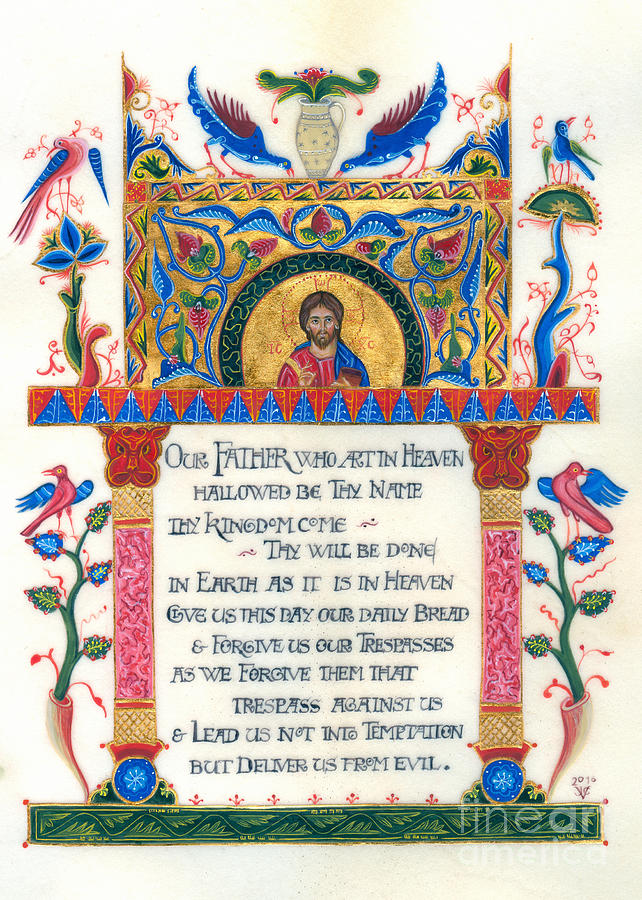
There are three versions of this prayer—Matthew’s, Luke’s (11:2–4), and one in Didache (ca. 50–60). In Luke’s version, the disciples ask Jesus to teach them how to pray. Didache is very similar to Matthew, with a few differences. 

Our Father, who art in Heaven, hallowed be thy Name, thy Kingdom come, thy will be done, as in Heaven so also upon earth; give us today our daily bread, and forgive us our debt as we forgive our debtors, and lead us not into trial, but deliver us from the Evil One, for thine is the power and the glory for ever. Pray thus three times a day. (8:2–3)

The doxology at the end of Matthew’s version is a later addition. Interestingly, the earliest Greek and Latin manuscripts do not contain it. Even early church fathers knew of the shorter version. It makes you wonder why the doxology was added and kept in Matthew’s final version. Even a version of Luke contained, “May Your Holy Spirit come upon us and purify us,” instead of “Your kingdom come.” This is attested to by Marcion’s version of Luke (ca. 85–160); Gregory of Nyssa also wrote about this version. Several amulets have been found in Egypt on which the Lord’s Prayer was inscribed, so we see this prayer as transmitted through time. 

Many Jewish prayers address God with formality, “Blessed be the Name of the LORD our G-d,” though not exclusively (cf. Mal. 2:10). Here, however, Jesus makes it intimate, addressing God as our father, denoting paternal love, protection, and provision. God alone is one’s father (Matt. 23:9). Saying that God was in heaven, the text says “heavens,” speaks about his ability to transcend the physical world. Jews at the time believed in three heavens (2 Cor. 12:2). The third commandment of the Torah was to not use the Lord’s name in vain (Exod. 20:7), and the wording in Exodus means to take a vow or oath in God’s name, as well as in casual conversation. 

When Jesus prays for God’s kingdom to come, many say we should omit this portion of the prayer because the kingdom is already spoken of as something in the present tense (cf. Luke 9:27; 1 Cor. 15:23–25; Col. 1:13; Rev. 1:9). In this sense, I would agree; however, the kingdom has come in that God’s rule is on earth through the church. Yet, the fullness of his kingdom is to be realized after the judgment. Christians live in God’s kingdom, but there are still things on the earth, such as death, that occur that aren’t a part of God’s kingdom. 

When we follow God’s will as we know it on earth, we may also see it done in heaven. We can learn this from the Scriptures that have been preserved for us. Jesus used those Scriptures to combat the devil in the wilderness. He also said he didn’t come to destroy the law and prophets but to fulfill them. The wording about daily bread isn’t as truthful to the text as many English translations give it. In Greek, “daily” isn’t expressed, but giving us tomorrow’s bread today is more accurate to the language. On the one hand, it envisions the messianic banquet (cf. Matt. 8:11). On the other, it reminds us that Jesus is our bread of life (John 6:35, 48, 51). 

Sin is often regarded as a debt (cf. Matt 18:21–35; Luke 7:40–43). We accrue debts through our sins. These debts are too outstanding for our repayment, but the merciful God will forgive us our debts as we forgive our debtors. If we practice canceling debts rather than calling in repayment, we will have our debts canceled (Matt. 6:14–15). When we think about temptation, we think of something that entices us to sin. The term translated as “temptation” refers to outward tests of all kinds. You could render the term “trials” or “ordeal.” These can lead to temptations, but they are not in and of themselves (cf. Prov. 30:7–9). Jesus’ hunger in the wilderness could have turned to sin had he succumbed to Satan’s temptation to turn stones into bread. Judas was not delivered from the evil one, mainly because he did not seek God’s will. Because of this, he opened himself to Satan (cf. Luke 22:3; John 13:27). Just as Satan tempted Jesus through his trial, he can use our ordeals to tempt us, giving that we become weak or despairing in them. 

Praised by God, Not By Men (Matt. 6:1-18)

Jesus wants his disciples not to be show-offs. A balance must be struck between personal piety, the salt of the earth, and letting our light shine (Matt. 5:13–16). When we compare these, it all boils down to intention. To be the salt of the earth isn’t to show off but to be a blessing. Just as salt has taste and color affects whatever it touches when used. It can preserve, melt, season, and other such things. By being what we are, we are meant to be a blessing by being that salt. Just as there are various uses for salt, so there is for light. Many of us remember that plants require light to grow. Solar panels harness direct sunlight’s power, which can be stored in batteries. My house has several solar paneled motion lights and string lights. The string lights illuminate every night around our deck, and whenever the dog or someone walks by the motionlights, it illuminates. It’s very dark in the country, and these lights are helpful and cheaper than running electricity everywhere. You may have heard that darkness is the absence of light. When God ordered the cosmos, he commanded light as the first act of creation (Gen. 1:3).  When the final, heavenly Jerusalem appears, there will be no more night (Rev. 22:5). We’re told to let our light shine so that our good works are seen, and we glorify our heavenly Father. Where’s the balance?

Jesus mentions almsgiving, prayer, and fasting as three areas of piety. He stresses that we do things to be rewarded by our Father and not people (Matt. 6:3–4, 6, 18). So, here are the two areas of tension that will be resolved by noting the intention. Here’s an example that helps me: let’s say you’re out to eat at a restaurant. When your food comes, you and your family bow your heads and offer a prayer. You’re not doing it for attention but to give thanks. That’s letting your light shine because, let’s say, an elderly couple walks by and commends you for that, saying it’s nice to see a young family give thanks without shame. Your light has shone, but you have done it not for praise but out of personal devotion and commitment to God. On the other hand, if you prayed so loud that everyone around you was forced to notice, that’s not good, and the showing off is of concern here. In closing chapter five, Jesus said to be perfect as our Father is, so the instructions that came before and follow that statement show us how to do that. Our word, translated as “perfect,” doesn’t mean “without fault.” I advocate that it should be translated as “complete.” At least, that’s how we’d understand it today.  

The conclusion of intention is shown in each example. In almsgiving, don’t blow the trumpet (Matt. 6:2). In prayer, it’s to be seen by men (Matt. 6:5). With fasting, it’s appearing to men (Matt. 6:16). This is the motivation of the hypocrites. They want to be seen. However, as this chapter closes, we seek God’s kingdom and righteousness first (Matt. 6:33). The law made caring for the poor a central command (Deut. 15:11). What’s interesting is that the term translated “almsgiving” is tzadik. The word for righteousness is tzedakah, which shows the relationship between the two. Doing it for public recognition should not be our motivation. What we give isn’t so much a matter as well, but how we give (cf. Mark 12:41–44). 

Similar sentiments could be said of prayer. This doesn’t rebuke corporate prayer because that’s commanded (1 Tim. 2:1–3) and observed in the early church (Acts 12:5, 12). The emphasis should be on God and not the one praying. Sometimes, people use prayers as sermon times. They give a little sermon for those listening more so than addressing God himself. So, Jesus identifies the praying person who wants to be seen; then, he points out the one who uses vain repetitions. 

The Gemara asks: And one who prolongs his prayer; is that a virtue? … Anyone who prolongs his prayer and expects it to be answered, will ultimately come to heartache … How does he prolong his prayer? By increasing his supplication. (B. Ber. 55a)

A professor once corrected me in a paper by telling me to stop bloviating. I looked the word up because I didn’t know what it meant. Essentially, use fewer words rather than extra unnecessary words. Don’t say in fifty words what can be said in ten. This is why the disciples ask Jesus to teach them how to pray. Rabbis often gave their disciples prayers to pray verbatim. In the early church, the Lord’s Prayer was to be prayed thrice daily (Didache 8.2–3). The Psalms are also a good blueprint. Fasting is also to be private. This religious devotion was associated with mourning, repentance, discipline, or waiting upon the Lord. 

Oaths, Retaliation, and Love (Matt. 5:33–48)

Regarding oaths, Jesus doesn’t quote any specific passage but summarizes the concept of taking an oath, specifically invoking God’s name (Exod. 20:7; Lev. 19:12; Num. 30:3–15; Lev. 24:19–20). Dire consequences could result from invoking God’s name in an oath. They were required occasionally, however (Exod. 22:10–13; Num. 5:16–22). By the time of Jesus, Jews avoided using God’s name lest it be in vain, so they would swear by sacred things (cf. Philo, Special Laws 2.1.5; Nedarim 1.3–4). Jews believed one was obligated if he swore by the temple’s gold or the altar’s offering but not by the temple or altar themselves (Matt. 23:16–22). You weren’t required to keep an oath if you swore by heaven or earth, but if you used any variation of God’s name, you were required to fulfill your oath (Shebuoth 4.13). Because they used loopholes in fulfilling their vows, they were hypocrites and deceitful, profaning God’s name. Just answer truthfully (cf. 2 Cor. 1:17–24; James 5:12). Jesus’ attitude was shared by the Essenes. 

They are eminent for fidelity, and are ministers of peace; whatsoever they say also is firmer than an oath; but swearing is avoided by them, and they esteem it worse than perjury; for they say, that he who cannot be believed without [swearing by] God, is already condemned. (Josephus, Wars 2.8.6)

This isn’t a prohibition against oaths per se because Jesus answered the High Priest while under oath (Matt. 26:63–64). 

The eye for an eye concept appears in three places and spells out different ways compensation may be made for damage to a person’s body (Exod. 21:23–25; Lev. 24:19–20; Deut. 19:21). This concept wasn’t unique to Judaism. Similar ideas appear in Roman Law and the Babylonian Code of Hammurabi, but the Torah concept treated everyone equally and not according to social class. It was meant to limit vengeance. We don’t see a trace of this being carried out because, more often than not, financial compensation was provided for the injury. Jesus gives us the commands not as to how to respond to physical harm but to public humiliation. His examples are the slap (cf. 2 Cor. 11:20), lawsuit, and conscription. Not escalating matters is to shame the attacker and maintain one’s honor. Usually, the response to a slap would be to either cower or hit back. Hitting back escalates, and cowering relinquishes a person’s dignity. Standing firmly, offering the other cheek, is a way to control the situation. With the lawsuit, a person can avoid the court, which would result in arrest, or they could accept the verdict, which might entail suffering (cf. Exod. 22:26–27). The injustice of the whole situation is revealed by giving the tunic with the cloak. Roman law compelled a person to obey for a mile (cf. Matt. 27:32). To refuse meant a beating. To comply is humiliation, so going beyond what was compelled by law is intended to humiliate the one who has conscripted a person. 

The first part of verse 43 derives from Leviticus 19:18. The Torah doesn’t say to hate your enemies, but in the Dead Sea Scrolls, we read, “He is to teach them to love everything [or everyone]. He chose and to hate everything [or everyone] he rejected” (1QS 1:3–4). There are other Old Testament passages mitigating how one feels about their enemies. When an enemy falls, we’re not to gloat (Prov. 24:17); otherwise, God will be displeased (Prov. 24:18; cf. 25:21–22). When Judah was exiled, they were supposed to pray for their city (Jer. 29:7). Paul iterates doing good to enemies is bound to frustrate them (Rom. 12:20). Praying for them not only is for their benefit but ours as well. It orients our minds towards them how it should be rather than allowing bitterness to take root. To be like our heavenly father is to love those who are unlovable. It’s to go above and beyond what is customarily anticipated or endorsed. To fall short of this is to carry the same deformity as our enemies. 

Lust and Divorce (Matt. 5:27-32)

This specific topic is a hot-button issue. Divorce is widespread, and divorced people tend to be ostracized in the church. I am a child of divorced parents. Both of my parents remarried and have since divorced. Both sets of my grandparents were divorced. Growing up in that environment doesn’t inspire much hope in marriage, but when we look to God, he gives us the proper view. I am one person and can only do what I can do. My wife also wants to live for Jesus, which helps our marriage. If either of us became selfish, it could end in divorce. 

I have empathy for divorced people because they tend to be viewed one way by the church, but what a lot of people may not know is how hard some have fought to preserve their marriages. Through no fault, they could only do their part and not their spouse’s part. There are some scenarios that Jesus doesn’t address—desertion, physical and mental abuse, toxicity in marriage (substance abuse), and some others. My rule is that you must leave if you are in a home where you live in fear. My mother suffered domestic abuse, and the bravest thing she did was to go. Many women stay for reasons most of us won’t understand, some to their peril. We should support such people, especially those who hold our beliefs about this topic. Some will not leave because of what Scripture says on this topic because they feel they will be sinning, and I have had to remind several women that Jesus commands the husband to love his wife as Christ loves the church. Many husbands fail to do this when they are careless or abusive in any specific way. 

According to Forbes, half of all first marriages end in divorce. Second and third marriages fail at a higher rate. The average length of a marriage is eight years. When I do premarital counseling, I encourage couples to agree on four things: 1) religion (I would discourage a Christian marrying a Muslim, atheist, etc. We’re not to be unequally yolked), 2) money, 3) children (do you want to have them; how many do you want; how will you raise/discipline them?), and 4) inlaws (setting boundaries). Marriages will have their ups and downs, but when we are married, we say, “I do,” not, “I’ll try.” 

Jesus builds a hedge against adultery, saying that if you look at a woman with lust, you’ve already committed adultery. The term gyne is used here, and it is not a term that can be translated as “maiden” (kore) or “virgin” (parthenos). The woman in question may have been another man’s wife, so to look at another man’s wife with lust is adultery. Were it the other two, it may not be adultery unless the man looking upon her was married. In that case, it would be fornication. Both are sinful, but it’s essential to be as precise in the context as possible. The law prescribed that both offenders were to be put to death (Lev. 20:10), reminding us of the woman caught in adultery (despite the man not being brought forth). I couldn’t find evidence of this capital punishment being carried out. 

Amy-Jill Levine wrote that a Jewish man could have sexual relations with a divorcee, prostitute, or another unmarried and unengaged woman. At the same time, he was married, and it wasn’t considered adultery, which I find odd. The command is one-sided here and likely so due to the makeup of society at the time. Women are as capable of doing what the man here does. “Lust” could be translated as “covet” or “desire.” Israel was guilty of adultery by her eyes in lusting after idols (Ezek. 6:9). The rest of what he says in verses twenty-nine and thirty are standard rabbinic hyperbole. He isn’t commanding bodily mutilation but emphasizing that whatever is the cause of the temptation is what should be eliminated from the person’s life lest they are cast into hell. In our time, it may be social media, rendezvous with someone of the opposite sex, etc. A lot of people criticized Mike Pence because he doesn’t meet with women alone, something called the Billy Graham rule, but he does that to protect himself and his marriage because people talk.  

Jesus begins his discussion on divorce by referring to Deuteronomy 24:1–4. Our phrase “some uncleanness” in Hebrew is vague. At its root, it means “nakedness,” “genitals,” or “indecent.” Some suggest this has to do with barrenness. Others say that it has to do with infidelity. Robert Alter points out that the same idiom appears in Deuteronomy 23:14 (v. 15 in his text) and denotes prohibited sexual nakedness. The jury remains out of what was meant, but when we turn back to Matthew, Jesus says a man may divorce his wife for “sexual immorality” and not “adultery.” We have two different words for the two used a few verses earlier. Sexual immorality derives from the word that gives us the English word “pornography.” This term is broad and encompasses adultery, harlotry, incest, idolatry, and fornication (which can include premarital sex). In Deuteronomy, the summary was that if a husband divorced his wife and she married again, he could not take her back because another man had defiled her. Here, however, whoever marries this divorced woman commits adultery. Jesus restricts the meaning they had. 

On another occasion, Jesus is tested on this topic in Matthew 19. Once more, Deuteronomy 24 begins the conversation. There were two prevalent schools of thought at that time. The House of Shammai was pretty conservative in that a person could only divorce for adultery (Gittin 9:10). The House of Hillel takes a no-fault position, which means for any reason. Jesus appeals to God’s intent on creation by making one man and one woman. Their joining together isn’t meant to be separated. God hates divorce (Mal. 2:16), but we have to remember that God divorced Israel (Jer. 3:7–8), so he has a vested interest in the topic. He explains why they were given the exception when they pressed the topic. This teaching is so conservative that his disciples ponder celibacy.

There’s one last text worth looking at that some call the Pauline exception in 1 Corinthians 7:10–16. In context, some had converted while their spouse remained unconverted to faith in Jesus. In this case, they were to live with one another peaceably. Still, some use a phrase to justify divorce and remarriage: “A brother or a sister is not under bondage in such cases” (v. 15). They suggest that this permits the believer who’s been deserted to marry again. I can’t see Paul contradicting Jesus, and I don’t believe that’s what he means. The whole context is him urging Christians to remain or reconcile with their unbelieving spouse, but if the unbeliever departs, the believer isn’t obligated to stay with them. 

Jesus’ View of the Law and Murder (Matt. 5:17-26)

Rumors had undoubtedly circulated about Jesus’ view on the Law and Prophets—two of the three divisions of the Hebrew Scriptures; the last is the Psalms. The Law entails the first five books of the Bible. We usually only think of Isaiah, Jeremiah, and the like regarding the prophets. However, Joshua, Judges, the books of Samuel, and the Kings are considered former prophets in Jewish circles. He spoke of it with great reverence since Jesus and his disciples were living under the law. The “jot” is the Hebrew yod, and the tittle is the extension of the dalet when compared with the resh or vav. Any minor alteration in the law could have changed the meaning, so scribes were meticulous to preserve the text. No matter how insignificant someone believes it is, every part is meaningful. We can learn much from Jesus’ regard for the law, which should also inform how we view Scripture. We can also look at his call to righteousness in one of two ways: denigrating the scribes and Pharisees or as a high bar. There is an element of the former, but the latter seems to be more accurate. 

In Jesus’ commentary on the law, he says, “You have heard it said,” and then follows up with, “But I say to you.” We see this six times in the remainder of chapter five. The first commandment he addresses is murder. There’s a difference between murder, killing, manslaughter, and justice. Murder is premeditated with malicious intent. Even the commandment in Hebrew reads, “You shall do no murder.” If I were to strike a pedestrian with my truck because they ran in front of me and they died, I would not have murdered them. However, if I see this person and target them, then that’s murder. Were I negligible in hitting them, say because I was inebriated, I could be charged with manslaughter. When the state executes a criminal, it’s supposed to be in the name of justice, and murder was a capital offense (cf. Num. 35:16–18). The murderer being put to death is justice and not another murder or killing. What’s interesting, though, is how God protects Cain after he murdered Abel and Moses after he killed the Egyptian. 

Words matter, and “murder” is the appropriate term in both Greek and Hebrew. Yet, Jesus takes it farther than murder. He builds a hedge around the commandment, much like rabbis in his time. He begins with anger and progresses to insults—something that could be a legal offense.  Depending on your translation, you may have the wording as having anger “without a cause.” Most translations, if they don’t include the phrase, have some sort of note ascribing it to some ancient manuscripts. The earliest manuscript of Matthew 5:22 is dated between AD 125–50 and is designated as the Barcelona papyrus (P67). This fragment doesn’t contain the phrase “without a cause.” Two other manuscripts contain it—Coptic and Old Syriac (third–fourth centuries). Its appearance or disappearance doesn’t affect the overall meaning of our faith. Jesus teaches us to rid our lives of anger if it’s excluded. If it does appear, we later read how to handle someone we may be angry with in the following verses (cf. Matt. 18:15–17). 

A person becomes angry with another, then begins to insult them, and they call them the worst thing imaginable in that culture (cf. Eph. 4:29–32). The progression builds up to murder, which is why Jesus begins with anger. Rather than getting that far, Jesus urges reconciliation before worship, possibly alluding to Cain and Abel. Jews taught that you had to seek peace with your neighbors before reconciliation with God (Prov. 6:1–5). Today, however, most Christians give this no mind. If you’re offended, you just go somewhere else. Sometimes, people may not even know that you feel wronged. Meanwhile, you carry the weight of the hurt, expecting the offender to lift it when they might be clueless. In his context, Jesus urged reconciliation, and Paul urged suffering wrongdoing rather than seeking retribution (cf. 1 Cor. 6:1–6). Please remember that the context is within the community of faith (church), as indicated by the term “ brother.”

The Magna Carta of Christianity

In the year 1215, a very important document was issued. This document was the first to put into writing that the king and his government were not above the law, so it placed limitations on royal authority by establishing law as a power in itself. I’m talking about the Magna Carta. The pioneer law inspired legislation in the West from there on out. The Sermon on the Mount is the Christian version of the Magna Carta in that it sets forth the heart of God and the nature of his kingdom. Where misunderstandings existed, Jesus clarified. Where obscurities puzzled, Jesus explained. 

When we arrive at Matthew 5, we must recall how Jesus’ fame had spread through Syria, Galilee, and Judea at the end of the previous chapter. They undoubtedly follow when he ascends the mountain, but they may be more concerned with being fed or healed. Yet, Jesus is speaking to his disciples. What’s unsure is whether Matthew has in mind all twelve or just the ones he’s called thus far: Peter and Andrew, James and John. Jesus speaks to them, but anyone who overhears is welcome to listen. As Moses ascended Sinai to receive the Law from God, so God ascended a mountain to deliver his Sermon on the Mount. There’s a new lawgiver in town, and it’s God in the flesh. 

He inaugurates his sermon by pronouncing blessings. “Beatitude” comes from the Latin Bible, where the word beati is in the place of “blessed.” It denotes “blessed,” “happy,” and even “rich,” with the connotation that they are divine in nature. Many Jewish prayers begin with the Hebrew version, baruch, as in, “Blessed are you, Lord our God.” Examples abound in the Hebrew Scriptures (Jer. 17:7–8; Ps. 118:26). The situations in which Jesus pronounced this blessing seem like the most unlikely candidates for it. This is the nature of God’s kingdom—it turns the world right side up. The wisdom of God is wiser than the wisdom of the world, so we will have to overhaul our thinking to think as God does. 

“Poor in spirit” has always intrigued me. It doesn’t mean weak in faith. According to David Bentley Hart, the word describes a beggar who seems to be cowering. These folks lack pride and are beneficiaries of the help others offer. They will even pay it forward and help others in need. I believe they recognize their dependence on God and live with that realization in acting. Because this is in the present tense, it’s not something in the future but the present. The kingdom of heaven is theirs now, not in some distant time. In the next one, bereavement could describe not only those mourning loss but the state of women and children who were often destitute and impoverished if no male was present. Their comfort could come in the manner of material help as well as emotional support. Mourning shouldn’t be minimized, however. Trite sayings and platitudes aren’t helpful. To mourn means that you had someone in your life that you truly loved, whose absence now leaves a void. While a dreadful feeling, comfort is promised. 

You may have heard the saying, “Meekness is not weakness, but strength under control.” It’s a nice saying with some truth. This beatitude resembles Psalm 37:11, and the same word is used regarding Jesus in Matthew 11:29 and 21:5. There’s no weakness but strength under control. Jesus never lorded his power over his disciples. He served and led them by serving them (cf. Phil. 2:6–11). Environmentalists love the play on inheriting the earth and tying it to treating the world well. I’m not sure Jesus meant that, but caring for the planet is still good. I believe Jesus’ intention concerns the new heaven and earth (cf. 2 Peter 3:13; Rev. 21:1). Some usually take the next beatitude to mean Bible study or knowledge. After all, the will of God in Scripture is righteous and leads us to such, but that’s an internal reading. It’s more of a state of things—of justice. There needn’t be a qualifier placed on the word “justice” (i.e., environmental, gender, etc.). We should desire it on the personal, societal, and global levels. We see so many injustices, so our hunger and thirst for such are met in God’s kingdom.

The next one is misleading. From an initial impression, it means that a forgiving person is blessed and they will be forgiven. However, the term translated as merciful denotes sympathy felt towards another, leading to action. This would be like seeing an elderly person struggling to open a door, so you open it for them. We call it common courtesy, which can be in little or big things. When I envision someone that’s pure in heart, several people come to mind. They were good people who wanted only good and didn’t wrap themselves with worldliness. God was at the forefront of their very being. 

The peacemaker beatitude has been popularized and applied to law enforcement, but the idea is more about one who isn’t a tattler or busybody. We all can do things to stir up trouble, but as peacemakers, we don’t offer to do so. In the first century, a group called the Zealots were a revolutionary group that wanted to restore the kingdom of Israel using violence. They aimed to depose the Roman oppressors. Their influence penetrated all Jewish society (cf. John 6:15; 18:10–11), but this wasn’t what Jesus wanted (cf. John 18:36). This was not the kingdom of God. 

The beatitudes are closed out by blessings pronounced on those who will suffer for righteousness’ sake (1 Peter 4:14–16). “Revile” is an antiquated term. It’s better to think of “insult,” as we understand it. Physical harm, ostracizing (cf. Luke 6:22), verbal abuse, and false accusations may occur. If it’s the result of being a Christian, Jesus says we are blessed. 

From Prison

Matthew 11:2–30; Luke 7:18–35

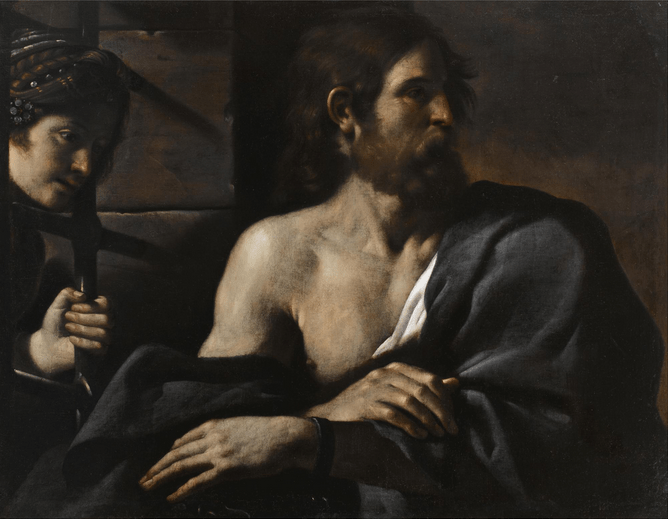
John the Baptist is next depicted as imprisoned, and the reason given is detailed in Mark 6:17–20. As a man who preached the message of repentance, John the Baptist was sure to know the law and point it out. Perhaps John’s resolution stemmed from his sense of duty as a prophet (Ezek. 3:18–19). John was right to warn Herod. The law prescribed that a man not marry his living brother’s wife (Lev. 18:16; 20:21), and both Herod’s wife and Herodias’ husband were still living when they married (Antiq. 18.5.4 [136]). Jesus would later preach that if one married another after divorcing for any reason other than infidelity, they were an adulterer (Matt. 19:9). This relationship was adulterous. John pointed that out to his disparagement.

The result of John pointing out that Herod and Herodias were sinning was imprisonment. While in prison, John heard about the works of Christ and sent his disciples to Him. However, his inquiry was odd given that John had previously acknowledged Christ as Messiah: “Behold, the Lamb of God, who takes away the sins of the world” (John 1:29; cf. 1:32; 3:30). John’s inquiry may have been legitimate for several reasons: it may have been for the benefit of his disciples. They chose to remain with John after the revelation of Jesus being the Messiah (John 3:26). John may have wanted to continue to point to Christ while decreasing himself (John 3:30). Secondly, the expectation of Jesus doing the works John said He would perform may have created impatience within John. Perhaps John wanted to know when Jesus would fulfill the prophecy he had proclaimed (Matt. 3:7–12). A final possibility may rest within John’s humanity. The Baptist may have wanted to confirm what he already knew. Given the pressure of imprisonment on John, it is possible that he had a moment of weakness.

John’s scriptural knowledge was so excellent that Christ used scripture to answer John. When in prison, the Baptist sent his disciples to ask Jesus who he was. When Jesus answered John (Luke 7:22), he quoted Isaiah’s prophecies about the coming age of the Messiah and those things that would accompany His coming (Isaiah 29:18–19; 35:4–6). To John, Jesus’ usage of this passage would have communicated what John expected from the Messiah. 

When the disciples of John left, Jesus addressed the crowd. “A reed shaken in the wind” speaks of John’s character in one of two ways: 1) Israel is described as a reed easily uprooted (1 Kings 14:15), and John was undeterred in his commitment to God’s mission, or 2) King Herod’s insignia on coins of his minting was a reed so that John couldn’t be bought. Either interpretation fits John’s character because he was a true prophet, not a straw man.

Luke further shows the typology of John being likened to Elijah (cf. Luke 1:17) when he quotes from Exodus 23:20 and Malachi 3:1. The latter passage is linked with Malachi 4:5, where Elijah is identified as the messenger. These passages, along with Isaiah 40:3, are commonly identified with John the Baptist though he denied that he was Elijah incarnate (John 1:21–23).

Those who rejected his baptism and message were those who Jesus likened to brats. They didn’t initiate the game so they won’t play. Those who play and abstain are bad, while those who play and partake are bad too. Moreover, the imagery is akin to a marriage, and this imagery has been used of Christ being the bridegroom (Luke 5:33–35). Either way, those who rejected John and Christ could not be satisfied because of their lack of wisdom. 

Next, Jesus denounces the places where he performed some of his miracles (Matt. 11:20–30).  He does this by comparing them to cities that suffered wrath at the hands of God in a time past. These evil cities, whose stories were infamous to the Israelites, were Tyre and Sidon—who worshiped Baal and were notorious for their immortality and corruption—and Sodom, which was destroyed for their wickedness. Had these evil cities seen what Jesus had done, they would have repented, unlike the cities that saw the good works of Christ and did not. The point is this: those cities that didn’t repent were cozy with sin and not burdened by it in the least. Twice in Jeremiah, the prophet says that God’s people didn’t know how to blush (Jer. 6:15; 8:12). Every one of us has somehow become desensitized to sin. When was the last time someone used curse words that did not bother me? Was I one of the hypocrites who quit watching a television show because of homosexual relationships while the same show otherwise was about fornication and adultery (e.g., Grey’s Anatomy)? Maybe those aren’t the sins we’re desensitized to, but we all likely have some that just don’t bother us, and they may be some in our lives.

Jesus’ invitation, then, follows a prayer. After rebuking the cities, He doesn’t stew or fixate on them but prays. Then, He explains the prayer to those present, inviting them to come: The invitation is to the one who labors under the heavy burden of manufactured religious traditions spurred by the law. No one can measure up no matter how hard they try. The invitation is to the one who labors under the heavy burden of their sins. Sin is exhausting because we then think we must use our resources to please God. 

A Centurion’s Faith and a Widow’s Son

Matthew 8:5–13; Luke 7:1–17

A centurion commanded 100 soldiers, but centurions fought alongside their men, unlike other commanding officers. Perhaps, for this reason, they enjoyed a specific bond with those they commanded. The structure of the Roman military was: legions (6,000 soldiers), cohorts (600 soldiers), and centuries (100 soldiers).  The centurion disciplined, recruited, and enforced orders among his men. They were often referred to as the “backbones” of the Roman army.

Soldiers weren’t stationed in Galilee until AD 44 (cf. Tacitus Annals 4.5). However, Herod Antipas could levy soldiers from outside his region since Capernaum was a garrison city and an import customs post. That this centurion is mentioned as having built their synagogue is contextual of a centurion’s pay, not to mention employing his troops as laborers.

This particular centurion loved the Jewish nation, so he was worthy of Christ to help in the eyes of the elders. The centurion loved the Jewish nation so much that he was aware of Jewish customs as they pertained to Jewish/Gentile relations. He was respectful not to breach the law and entertain a Jewish rabbi (cf. Acts 10:28; 11:12). Instead of Jesus’ presence, the centurion knew that as he commanded his soldiers, so too could Christ simply command the illness to be healed, and it would.

Some have suggested, based on Matthew’s account, that the “slave” (doulos) of Luke’s account should be interpreted in light of Matthew’s “servant” (pais) and that the term translated in Matthew was used in antiquity as the passive partner of a same-sex relationship. However, every other time Matthew uses this term, it’s translated as “servant” (12:18; 14:2), “child” (17:18; 21:15), or “young boy” (2:16). He wouldn’t have meant it as a homosexual relationship on this one occasion when he used it a certain way in all others. So the term Matthew used was indeed used of the passive partner of a same-sex relationship, but that was in classical Greek, whereas he wrote in koine Greek. For proponents of homosexuality, this would be a reasonable interpretation, but we take Luke’s later writing as an interpretation of Matthew’s. Therefore, Luke’s use of a word that indicates a servant or enslaved person is his interpretation of what Matthew wrote.

The following story very closely resembles Elijah’s raising of the widow’s son in Zarephath (1 Kings 17:17–24): 

●       Both were widows

●       Both had lost their only son

●       Both sons were touched by men of God

●       Both sons were revived

●       Both sons were delivered to their mothers

●       Both resulted in exclaiming to the healers the powers of God

However, there are also some notable differences. The son of Luke’s account is being carried to his burial. The process of taking the dead to their burial is thus described: 

The corpse was…taken on a bier carried by “shoulders” in bare feet so that they would not trip. The shoulders had the right to trample over sown fields….The “shoulders” changed frequently, so as to give as many as possible the chance to share in the honour of carrying the dead. The conventional number of stops (or “stations”) was seven, and the burial places had a field to which the mourners would direct their procession. 

The strong point of Christ’s compassion likely came because he knew the destitution of a widow with no sons to care for her (cf. Jer. 6:26; Amos 8:10; Zech. 12:10). Therefore, as Ephrem the Syrian put it, “The Virgin’s son met the widow’s son” (Diatessaron 6.23).

Widows were considered to be under the special care of the Lord (Deut. 10:18; Ps. 68:5; 146:9; Prov. 15:25), and care for them on the part of others was regarded as distinguishing of pure religion (Job 31:16; James 1:27). To exploit a widow was reprehensible to God (cf. Exod. 22:22; Deut. 24:17). Later in the New Testament, Paul wrote about the qualifications for widows which included their being provided for by their families (1 Tim. 5:4), but if they had no families, the church would be their portion and care (1 Tim. 5:16; cf. Acts 6:1ff).

That this widow had no one to care for her was a sad state. Gregory of Nyssa said that Luke had given us, in his portrayal of this widow, “the sum of misery in a few words” (quoted in Aquinas, Catena Aurea 3.1.238). To erase her misery was Christ and his compassion for her lot. Once Jesus touched the dead body, he would have been considered unclean according to Jewish law (Num. 6:6, 11; 9:6–13.), but for him who had the power over death, he reversed the authority of uncleanness.