How to Read Leviticus Without Getting Discouraged

Many Christians plan to read their Bibles through in a year. Typically, they begin at the beginning, and by the time they arrive at the latter part of Exodus, it becomes cumbersome. Then, once you get to Leviticus, you might find yourself a tad discouraged. Here’s another way to look at Leviticus.

A mother had instructed her son not to play in a particular part of the woods behind their house because it was occupied by a family of skunks. One day, however, the son decided to inspect this area to learn more about skunks, since his curiosity was too intense to resist. At first glance, they seemed like cats, but with specific coloring. He moved in to see if he could hold one, but the younger ones moved away as the father stood his ground. As skunks often will do to warn, the father walked on his two front feet, putting the rest of his body in the air, as if he were walking on his hands. The little boy thought the skunk was doing a trick, so he moved closer, and then the father lifted his tail, took aim, and sprayed the boy with the noxious odor to repel him. 

The boy ran frantically home, coughing and choking over the stench. As he cried out for his mother, she came to the front porch, and as her beloved son approached, she caught a whiff of the skunk and knew what had happened. She commanded the boy to stop because she couldn’t tolerate the odor. She didn’t stop loving her son, but he wouldn’t come into the house smelling like that. So what did the mother do? She didn’t hate her son. She didn’t reject her son. She wanted to help him. She prepared one of their troughs with a solution made of laundry detergent, peroxide, and baking soda. She placed her son in the trough and scrubbed him till the smell was gone. Then, he was able to come into the house, sit in his mother’s lap, and be comforted. When we think about sin and its effect, it’s similar to this story. We have become tainted by sin and its odorous effect, so we can’t come into God’s presence. However, God doesn’t look at us with hatred and malice, but with compassion and grace. He prepares a solution for us so that our sins may be removed and we can come into His presence once more.

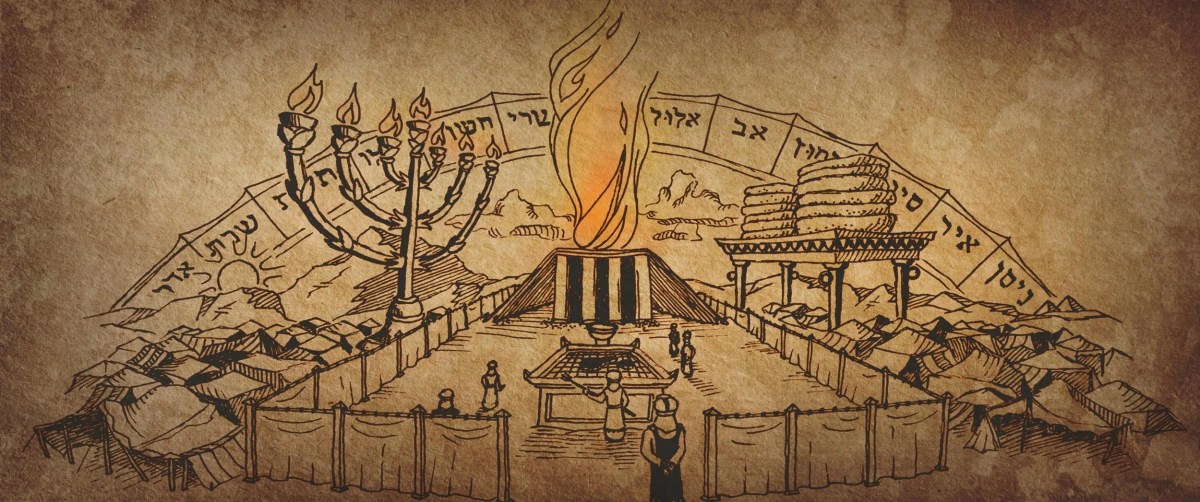
When God chose His special people, Israel, He wished to dwell among them. However, for Israel to live in God’s presence, God provided remedies by which He could dwell in their midst, and they could approach Him. This is what we read about in the book of Leviticus. What’s important to remember is the ending of Exodus, however, because it gives sense to the first verse of Leviticus. 

Then the cloud covered the tabernacle of meeting, and the glory of the LORD filled the tabernacle. And Moses was not able to enter the tabernacle of meeting, because the cloud rested above it, and the glory of the LORD filled the tabernacle. Whenever the cloud was taken up from above the tabernacle, the children of Israel would go onward in all their journeys. But if the cloud was not taken up, then they did not journey till the day that it was taken up. For the cloud of the LORD was above the tabernacle by day, and fire was over it by night, in the sight of all the house of Israel, throughout all their journeys. (Exod. 40:34–38)

The glory—kavod literally means “weightiness”—of God is best thought of as a mantle of light enveloping God, and the cloud gave off the luminosity by day and appeared as fire by night.¹ When Moses first saw the Lord’s presence in the burning bush, he hid his face because he was afraid to look upon God (Exod. 3:6). Later, however, Moses’ faith in God had grown exponentially to the point that he wanted to see the glory of God. Still, he couldn’t see anything but the “goodness,” because seeing God’s face would have killed Moses (Exod. 33:18–23). Even then, God protected Moses from seeing Him. 

After Moses communed with Yahweh, he came from Mt. Sinai with his face shining (Exod. 34:29–35). There’s a great lesson from this passage: The fear of Israel upon seeing Moses’ face parallels that of their fear of drawing near to God. Similarly, because Moses would cover his face with a veil when among Israel, this demonstrates that the holy of holies had to be partitioned off and enveloped in layers, yet accessible to the people.² Now, when we arrive at Leviticus, the question arises: “How can a people stained with sin live among the holiness of which they are afraid?” For the priests of Israel and the rituals prescribed in Leviticus, God provides in His mercy and grace the ways that He can be among a sinful people, and they dwell in His holy presence. It’s best to think of God’s holiness as the sun, which in its unadulterated form is powerful, and anything mortal that gets near it will burn up. The sun doesn’t hate such things but consumes them. 

To outline Leviticus, we must identify its three major components: Sacrifices (Lev. 1–7, 23–37), Priests (Lev. 8–10, 21–22), and Purity (Lev. 11–15, 18–20). The sacrifices are ways to say “thank you” (i.e., grain and fellowship offerings) or “I’m sorry” (burnt, sin, and guilt offerings). Some of these occur on holy days when festivals were held. These were times of celebration to retell Israel’s history and explain why God chose them. Mediating these sacrifices were individual representatives who advocated for the people, called “priests.” These servants worked so closely to God’s presence that they were chosen to represent God to the people and the people to God. Such people were ordained and had to live by higher standards, similar to those of our pastors. Finally, the purity laws concerned cleanliness and uncleanliness. Cleanliness or purity is a state in which one can be in God’s presence, whereas the opposite is that of uncleanliness. Some of these concerned sexual relationships, social justice, and interpersonal relationships. These categories summarize the second-greatest command: to love your neighbor as yourself. Summing up the greatest commandment to love God with our whole being, we find that it includes dietary laws, skin diseases, dead bodies, and bodily fluids. Many of the latter three concerned life and death: one was sacred, and the others resulted from sin. Going before God in an impure state was inappropriate. 

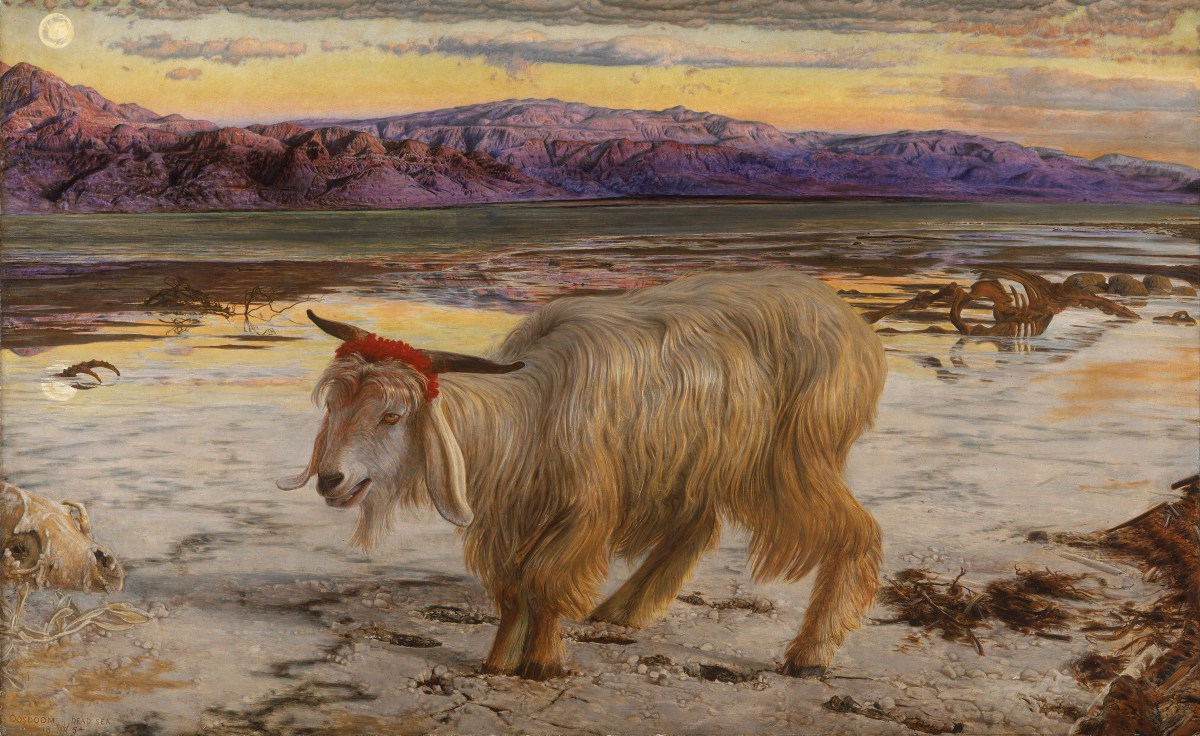
Tucked in the middle of the book is the Day of Atonement. On this day, the entire nation had sinned, perhaps unnoticed and unknown. The high priest would atone for the whole country by taking two goats and slaying one whose blood was brought to God’s presence to atone for the sins. God has said that the blood of a creature was life, so the life of the goat was to take the place of Israel and the penalty of their sin. The other goat was presented to the priest, who would lay his hand upon its head, confess the sins of the nation, and send the goat out into the wilderness, carrying the sins of the country away from them into the barren land. By this goat, God graciously removed Israel’s sins. 

Christ became not only our high priest but did so while being tempted yet remaining pure (Heb. 4:14–16). As the high priest, not only offered the perfect offering but was Himself the offering so that He could go into the true holy of holies to minister for us (Heb. 9:11–14). What we learn from Leviticus only prepares us for the cross. Jesus Christ is now how we may live in the presence of the holy God. 


¹ Robert Alter, The Five Books of Moses: A Translation with a Commentary (New York: W. W. Norton & Company, 2004), 535.

² Ibid., 513. 

Intro to 1 Peter

Writing from Rome (which he calls “Babylon” in 5:13), along with John, Mark, Peter addresses a network of churches that comprises modern-day Turkey. Early church writers made explicit citations of 1 Peter as early as the 90s AD, through to the latter part of the second century, which attests to the authority of the letter as well as its apostolicity. How the gospel came to be in this area isn’t altogether clear, but we know that Jewish believers from some of these areas were present on Pentecost (Acts 2:8–11). Additionally, Emperor Claudius (AD 41–54) established Roman colonies in these regions.

One central question is who the audience was: Jewish, Gentile, or both. The descriptor of “pilgrims of the Dispersion” was typically how Jewish exiles from Judea were addressed (cf. James 1:1). There are also further descriptors such as “Sarah’s children” (1 Peter 3:6), “God’s elect” (1 Peter 1:1, 2, 4, 9) and those called to holiness (1 Peter 1:15–16). They are also contrasted with Gentiles (1 Peter 2:12; 4:3), but by this time, all Christians might have been considered as one with Jewish believers, and the Gentiles were non-Christians. However, we also know that Peter was an apostle to the circumcised (Gal. 2:9), and readers from Eusebius in the fourth century to John Calvin agree that the primary audience is Jewish Christians. Still, some descriptors indicate pagans were among the audience (1 Peter 1:14, 18; 2:9–10, 25; 4:3), but prophetic language sometimes regarded apostate Israelites as pagans. We can assume there’s a mixture and that this letter would not have been sectarian or racially distinguishing between believers in Jesus (cf. Rom. 8:29–30).

The entirety of the letter addresses their suffering, which was likely caused by social scorn, shaming, slander, and stigma. They were likely viewed as social deviants and may have faced verbal and physical pressure to return to the norm. Given that Christianity grew out of Judaism, we can look to history to see how Jews were viewed to get a picture of how these Christians were regarded. Rome banished Jews on some occasions. There was a time when Tiberius was emperor, and again during Claudius’ reign. Claudius viewed them with animosity from the beginning of his reign. When Christianity was young, Jews were expelled from Rome. In Christianity’s earliest decades, it bore no outward distinction from Judaism as perceived by the Romans. The Jews were expelled at the instigation of “Chrestus,” according to Suetonius. 

When Diodorus wrote about Antiochus Epiphanes subduing the Jews, he referred to their customs as “wicked.” Cicero also viewed the Jews as enemies because of their behavior when they assembled. They showed no regard for the interests or laws of the Republic, and that won them no favor with Rome. Because they wanted to keep Judea pure from Roman occupation and rule, they resisted Rome. Their actions were rebellious and drew attention to the Jewish religion as the source of their unruliness and eventual disdain by the Romans. Horace believed that they were manipulative and coercive. He viewed them as always proselytizing and forcing others to join their religion. Because they proselytized, many were Jews by conversion rather than birth.  Furthermore, they believed in silly superstitions and were weaker because of their Sabbath keeping. Juvenal viewed their Sabbath keeping as idleness. Their customs were “base and abominable,” and they were the worst villains among all other peoples. As a race, they were believed to have been a curse to others, and Moses, their lawmaker, was detested. While many Jews upheld practices that distinguished them from other people, those who observed them wrote about the Jews’ hypocrisy in doing some of the very things that they seemed opposed to otherwise. If early Christians were treated anything like Jews, we get but a glimpse of it in this letter. Peter urges them to identify with Christ’s suffering (1 Peter 4:12–16) and await eternal glory (1 Peter 1:7; 2:11; 4:13; 5:4, 10–11). 


Works Referenced

 Acts 18:2; Suet. Claud. 25.4.

 Diodorus, Bibl. Hist. 34.1.3.

 Cicero, Flacc. 28.66–69.

 Horace, Sat. 1.4.142–3; cf. Matt. 23:15.

 Acts 2:10; 13:43. Cf. Juvenal, Sat. 14.102–03. A Gentile could become Jewish by circumcision, immersion, and a sacrifice (Keritot 9a; cf. Pesahim 8.8; Exod. 24:8).However, Gentile conversion was not always welcomed and in some cases was even rejected.

Juvenal, Sat. 1.5.100. To the Roman mind, anything other than what had been appointed at the founding of Rome was “vile and alien” (Livy 39.15.3). See also Juvenal, Sat. 15.1–13.

 Juvenal, Sat. 14.96, 105–06.

 Tacitus, Hist. 5.5.

 Quintilian, Inst. 3.7.21.

A Reversal of Fortunes (Esther 5-7)

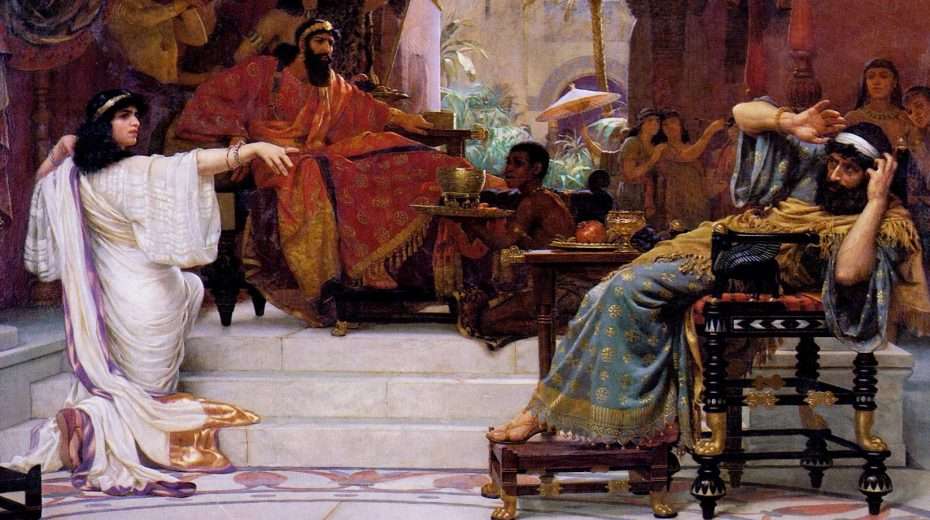
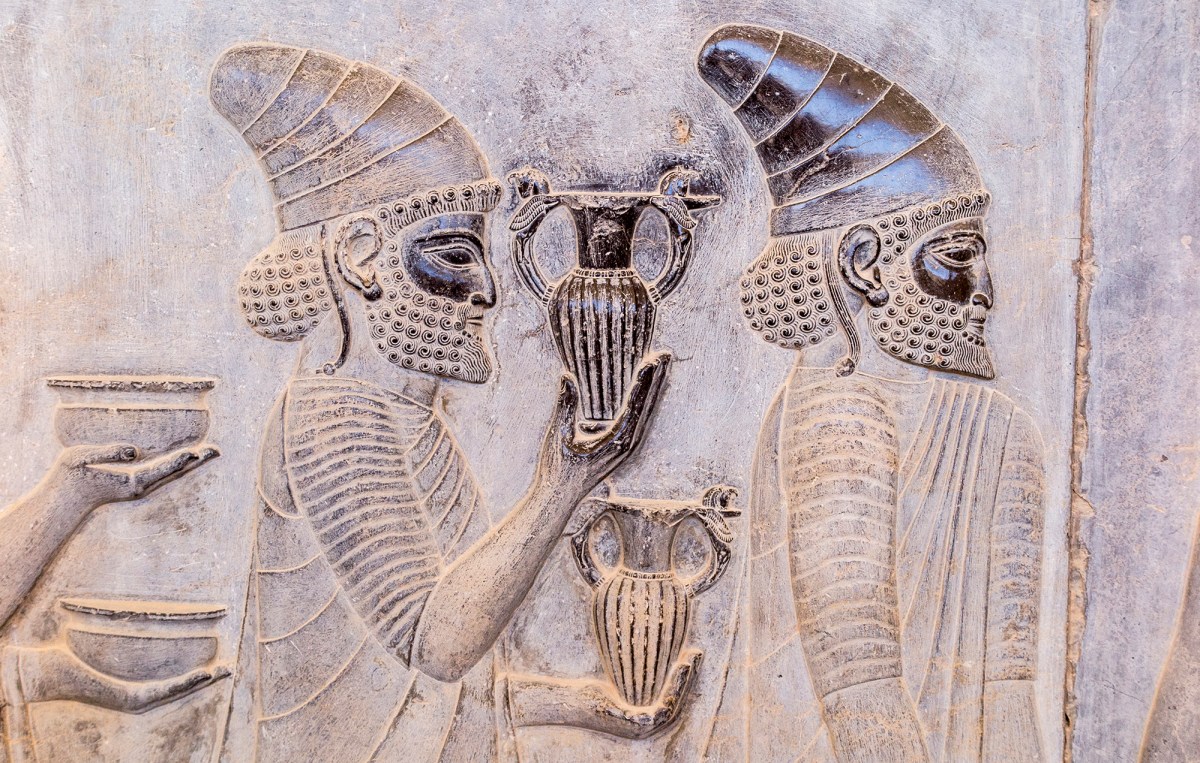
After three days of fasting, Esther presents herself to the king. Unlike Mordecai, she wears her royal robes. The royal palace of Susa has been excavated, and the audience hall was over 350 feet square and divided into several chambers. Whatever separated them for thirty days, the king looks favorably upon her. Banquets figure into this story a lot. It began with a banquet that evolved into a second one, where the king grew upset with his queen. Esther’s banquet is already prepared in anticipation of a positive answer, and this will lead to a second banquet where the king’s ire turns to his right-hand man, Haman. The Greeks observed that the Persians made most of their important decisions while drunk, and when they drank wine, Ahasuerus asked what Esther requested. 

Haman is touched to be included, but his delight turns to rage when Mordecai refuses to stand when he walks by. Haman goes so far as to state his extensive wealth, sons, and the king’s esteem as prizes he possesses. However, the one thing that means the most to him is what Mordecai won’t give—homage. When is it enough? So what if that one guy doesn’t do what you want him to do? You even stated all you have, so take the wins and move on. Psychologists would say that Haman is a narcopath. “A ‘narcopath’ is a term sometimes used to describe individuals who display a combination of narcissistic and sociopathic traits, characterized by grandiosity, lack of empathy, a need for admiration, and manipulative, antisocial behavior,” according to Google’s AI overview. 

As the story progresses, the king’s sleepless night works to Mordecai’s favor. Haman has spikes prepared to impale him. Meanwhile, the king reads the annals and he hears what Mordecai had done and wishes to reward him, so since Haman was on his way to ask this of the king, he is selected to give the king’s honors to Mordecai. Because he’s so self-absorbed, he thinks the king is talking about Haman when he asks what shall be done for whom the king wishes to honor. Haman’s plan, which he believed to be for himself, is charged with implementing it on the man he hates. 

At the second banquet, the king asks her request, and Esther finally discloses that she is Jewish. As an alternative to being slaughtered, she uses the price Haman offered against him by saying that they could have been sold into slavery. After all, they were conquered by the Babylonians, who then fell to the Persians. Slaves were often composed of conquered people, and Haman has already referred to them as rebellious (Esth. 3:8). Haman either falls on the couch or the queen. Whatever it was, his actions were seen as an assault on the queen. Assyrian law prohibited coming closer than seven paces of the king’s harem, so something like this may have been in mind. Before the Japanese surrendered in WWII, it was prohibited for anyone to walk on the Emperor’s shadow. To try to lie with the queen, which he is accused of, is to lay claim to the throne too. Ahasueras feels betrayed by his most trusted minister. Neither knew of Esther’s ethnicity, but the king expected that Haman should have. 

For Such a Time as This (Esther 4)

Now that news of the impending slaughter has made its way around, Mordecai displays grief in a standard way in antiquity. Sackloth is a rough, coarse material that was uncomfortable to wear. Grief was often expressed in dramatic ways, such as wearing this garment, rolling in ashes, or placing ashes on the head. Mordecai cries bitterly while Jews throughout the empire add fasting. Though prayer to God isn’t outright mentioned, we might assume that it accompanies fasting. Because Persian monarchs were somewhat self-serving, bringing grief to them is prohibited (cf. Neh. 2:2), so Esther sends proper garments so Mordecai can pass through the king’s gate. Yet, he refuses. 

Mordecai’s refusal of appropriate attire brings in an intermediary to go between the adoptive father and daughter. How Mordecai came to learn of the plot has been debated. It was sent throughout the entire empire. Still, one theory suggests that he was a scribe for the palace and translating this in Aramaic gave him firsthand exposure (cf. Esther 8:9–10). Eunuchs weren’t just errand boys for the palace. Many of them were highly educated, so Hathach may have needed to read the edict to a presumably illiterate Esther. 

Knowledge of court practice was widespread. Mordecai likely knew this, and Esther knew that if she went before the king presumptuously, it could end with her death. Her hesitation to do so may indicate that she was no longer in the king’s favor and that by doing so, she was gambling a 50/50 chance. Furthermore, if she does nothing, her head will be on the chopping block. Mordecai expresses his faith when he says that deliverance will arise from elsewhere. He’s most likely acquainted with the promises God made to Abraham, and God will not allow his chosen people to be blotted out from the earth. Mordecai and Esther demonstrate a measure of faith. He believes in God’s promises, and she resigns herself to the possibility of death. At least she can take the shot and try to stop what is inevitable. To further add to this, she asks her countrymen to host a three-day fast in preparation for her actions. 

There are two main lessons from this chapter: 1) speak faith to your problems, and 2) never underestimate your ability to make a change. To the first point, Mordecai believed in God’s promises to Abraham, although this isn’t mentioned in the story, but he was confident that deliverance would come for the Jews. Did he wail and bemoan the state of affairs? Absolutely, but he still spoke faith to his problems. Abraham, likewise, spoke faith to his situation. When God asked him to take Isaac and sacrifice him on Mount Moriah, Abraham told his servants, “The boy and I will go over there; we will worship, and then we will come back to you” (Gen. 22:5). He didn’t know how things would play out, but he trusted God. Even in the face of sacrificing the promised son through whom many would be blessed, he spoke faith in his situation. When Daniel’s three friends were threatened with the fiery furnace, the king asked, “Who is the god that will deliver you out of my hands” (Dan. 3:15). Their reply is an epic example of speaking faith to one’s circumstances. 

O Nebuchadnezzar, we have no need to present a defense to you in this matter. 17 If our God whom we serve is able to deliver us from the furnace of blazing fire and out of your hand, O king, let him deliver us. 18 But if not, be it known to you, O king, that we will not serve your gods and we will not worship the golden statue that you have set up. (Dan. 3:16–18). 

Adding to this, we can also always take our problems to God. “Cast all your anxiety on him, because he cares for you” (1 Peter 5:7). Speaking faith to your situation, accompanied by prayer, is living by faith, and faith is the victory that overcomes the world (1 John 5:4)

To the second point, Esther initially didn’t believe she could be the difference between annihilation and survival. There are many stories throughout Scripture where one person made a difference. The Ethiopian Eunuch had Phillip; Nineveh had Jonah. Even Peter had Andrew. Andrew is often forgotten because Peter eclipsed him, but Andrew brought his brother to Jesus. Never sell yourself short. We may never know when and how God will use us. 

Before Hitler, There Was Haman (Esther 3)

What’s interesting about chapter three is its beginning phrase, “After these things.” What things? After Mordecai disclosed the plot to assassinate King Ahasuerus, Haman was promoted. We aren’t told why, but his introduction is key to understanding what follows. Being a descendant of Agag, king of the Amalekites, tells us about the animosity that is to come. King Saul was to have killed all the Amalekites, but he spared Agag only for Samuel to finish the deed (1 Sam. 15). Earlier, Mordecai’s lineage ties him directly to King Saul (Esth. 2:5), so this is like a rematch of Saul and Agag through their descendants. A knowledge of Scripture tells us who the victor will be, because God had said that he would see to it that the Amalekites would be blotted out (Deut. 25:17–18). 

While everyone is drooling over Haman’s exaltation, Mordecai does nothing of the sort. As far back as Late Antiquity, the reason given for his refusal is religious. He won’t kneel to flesh and blood. One wonders if there weren’t also political or personal motives involved. Mordecai told those who inquired that he was a Jew, which has led to the conclusion that his refusal was on religious grounds. Persian religion at the time was based on the belief in a god of light, Ahura Mazda, and a god of darkness, Angra Mainyu, who were constantly at odds with each other. It’s called Zoroastrianism, named after the prophet Zarathushtra, dating to the second millennium BC. Key to this religion is the ideal of thinking good thoughts, speaking good words, and doing good deeds. This is important because it’s precisely a story about good and evil.  

By the time of these events, Esther would have been queen for five years. The month of Nisan is April, and the month of Nadar is March, so for a whole year, this decree will be issued and the Jews will have this timeframe to contemplate the date of their deaths. When Ahasuerus gives Haman his ring, he has essentially given him carte blanche to do as he pleases. He now has royal power with which to act. The king and Haman drink, the city of Susa is confounded, and the Jews are terrified. 

Racism is something taught; it’s not something we are born with. Haman undoubtedly heard from childhood how he is a descendant of a king; a king whom the Jews put to death and whose lineage they tried to destroy. Now, he has grounds on which to finish the work of his forebearers who wanted to obliterate the Jews when they left Egypt. He’s in the prime position to make it happen, and Mordecai and the “rules” of the Jews give him his justification to persuade the king to allow it. 

In Scripture, we observe Jesus behaving kindly towards people that his own race hated—the Samaritans. He tells the parable of the Good Samaritan, he speaks with the Samaritan woman at the well, and he restrains his disciples when they want him to rain hellfire and brimstone on a Samaritan village. Even the book of Romans is a book about racial reconciliation. The Jews were expelled from Rome for several years. When the Caesar who issued such an edict died, another took his place and allowed them to return. They saw their Gentile brothers and sisters leading the church in their absence, and they wanted to run things since they had returned. It turns into a battle between races and their different traditions. Paul wrote to relieve that tension. To the Galatians, he wrote that there is neither Jew nor Greek, so when you read the New Testament, the issue of racial bigotry is something even the church dealt with. 

At every turn in Scripture, especially the New Testament, there is an appeal to end racial bigotry. The Jews called non-Jews Gentiles. The Romans and Greeks called those who were not of their own race “barbarians.” Every group believes itself superior to others. Why speak about racism? Aren’t we Christians supposed to be beyond that? We should, and I hope we are, but we also have to keep in mind that though we may not have incurred racism, some of our brethren have. 

My longtime mentor, Sellers Crain, told me a disturbing story about his early days in ministry. He was preaching at a congregation in Louisiana when he noticed that most of the men were missing on a particular Sunday near the beginning of the services. He’d seen them arrive, but they were now absent. He began looking for them when he saw that most of them were outside around a car. He went out to see what was happening and noticed that many of the men had surrounded a car containing a family. What made this particularly notable was that the family wasn’t white, but black. After hearing some of the chatter among the congregation’s men, he disbursed the crowd, telling them that he’d handle it. When the frightened father rolled down his window, Sellers had to say to them, much to his chagrin, that the men wouldn’t allow the family to join them in worship. He informed them that there was a congregation of black saints. The father thanked him, and then they drove off. Sellers told me how much this bothered him and how it almost led him to quit the ministry. He learned that many of those men were members of the Ku Klux Klan and that their actions were motivated by racial bigotry, these having been the days of the Civil Rights Movement. 

Sometimes there are things we do that we may not think are racist, but to others they may be. Then again, some people can be so hyper-sensitive that you don’t know what’s acceptable and what’s not. For example, among my tribal family, we often refer to ourselves as Indians. That’s the nomenclature used for a long time to describe native peoples. Even many tribal elders that I know use that term to speak of our people. Yet, others find that term offensive. It can be hard to know what to do, so on both sides, I believe it’s necessary to extend grace. Growing up, I’ve often been asked what I am. I don’t take offense to it, but others do. I see it as an opportunity to talk about my Choctaw family and ancestors. I’ve been asked about mascots and Halloween costumes. Again, a variety of opinions exist. There’s only one time that I’ve ever felt angered by what someone said. It was a much older white man who, when he learned that I was going to give a talk about Native American History, asked what they ever contributed. It was the way he asked it, but he later came and apologized, so I gave him the grace I would have wanted if I realized that I might have upset someone. 

A New Queen Emerges (Esther 2)

Between Esther I and II, Xerxes unsuccessfully attempted to subdue Greece. With his tail tucked between his legs, he has returned to Persia, and the loss has overshadowed his wrathful feeling born from Vashti. Yet, he returns a king with no queen to greet him. As with Chapter I, advisers urge the king on what to do. Xerxes appears to be a passive king, led by his advisers. A beauty contest will be held to decide who will be the next queen, and she’ll be quartered in the king’s harem. It may seem odd that he wouldn’t take a Persian queen, but it isn’t without precedent—Artaxerxes I and Darius II had Babylonian queens. 

“Mordecai” and “Esther” are Babylonian names; the former is a play on Marduk, and the latter is from Ishtar. Mordecai’s father’s name is Hebrew, so this only shows how much exiled Jews assimilated. This isn’t a statement on their fidelity to God because Daniel and his compatriots were given pagan-based names as well. They may have had Hebrew names used within their Jewish community (Hadassah means “myrtle”). Mordecai’s lineage traces back to Israel’s first king. The term translated as “son” can mean descendant. The author shows us that these two characters belong to a prominent Benjamite family. Mordecai adopted his first cousin, some suggesting he was in his thirties and she was in her late teens. In verse seven, Esther is described precisely how Joseph was (cf. Gen. 39:6). Many similarities exist between Esther and Joseph in the story. For example, their stories are rags-to-riches. They are both attractive Hebrews and find favor with courtiers; they also have archenemies to overcome and reach the inner palace circles. 

The “cosmetics” the women underwent were to make them as unblemished and attractive as possible. Spending a night with the king has its own implications that need not be discussed. Suffice it to say, this was trial by bedding. However, because of who she was and how she was, finding favor with all she encountered won her a king. As the story goes, we’re not told why the two eunuchs became enraged, but their plot is foiled when Mordecai informs the queen of their intentions. These men weren’t “hanged” as we would envision a noose. They were impaled and displayed for the public. 

Esther reminds me of the passage from 1 Peter, “Rather, let your adornment be the inner self with the lasting beauty of a gentle and quiet spirit, which is very precious in God’s sight” (3:4). God’s providence is witnessed in this passage: “The King’s heart is in the hand of the LORD, like the rivers of water; He turns it wherever He wishes” (Prov. 21:1). Even though the Persian king doesn’t worship God, it still doesn’t remove him from God’s soverignty. God gave his own people into the hands of the Assyrians, the Babylonians, and the Persians. Even those not necessarily aligned with God can still be used by him. That’s the whole point of Habakkuk—God would use the Babylonians’ swiftness and conquering to humble his people. Yet, because of the Babylonians’ actions, God used the Persians to overcome them. Cyrus the Great was tolerant of other religions and allowed the Jews to return to the Promised Land to rebuild.

After a Long Party

Esther belongs to the court tale genre. In this genre, a drama occurs within the royal court, and a hero foils the plot of their enemy to receive royal favors later. It is debated whether to read it historically, like Kings and Chronicles. Yet, the writer was familiar with Persian customs. Another type of story that fits this genre is the Tale of Ahiqar. Esther is used as an etiological explanation of the birth of Purim. On this holiday, they exchange gifts of food and drink, donate to the poor, eat a celebratory meal, and recite the scroll of Esther along with the appropriate liturgical prayers. Some scholars believe the story was invented to justify the holiday of what amounts to a party. Yet, court tales are usually based on historical events and people. Esther is somewhat unique in that the story is secular because the book contains no references to God or anything particularly religious. However, one can certainly see the providence of God throughout the story. 

His Persian name was Khashayar, which means “ruler over heroes,” but his name in Hebrew is what we see in Esther. To the Greeks, he was Xerxes, and he ruled from 486–465 BC. He reigned from India (Pakistan) to Nubia (northern Sudan and southern Egypt) and gave a banquet in the third year of his reign. This lavish banquet lasts for half a year, suggesting that little business is getting done. After this period, he gives Susa a one-week banquet. The details of the fineries are present to convey the austerity of the event. 

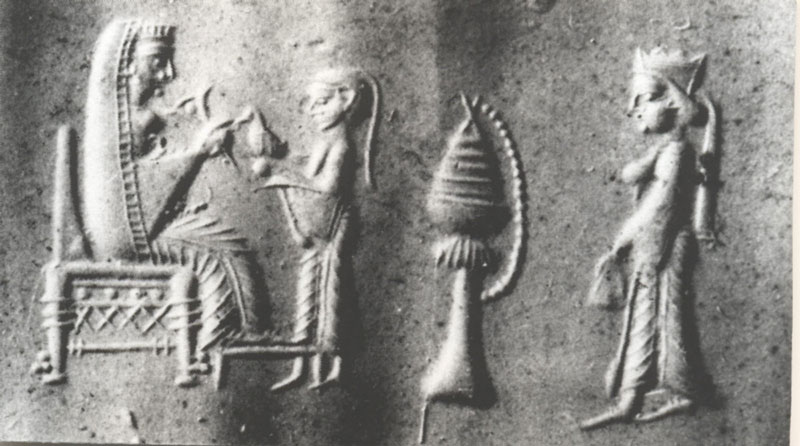
Simultaneously, Queen Vashti threw a banquet for women. The king and his guests are in the courtyard (v. 5), while the women are in the palace. “Vashti” is believed to derive from Persian and meant something like “the best” or “the beloved,” so it wasn’t a proper name so much as a title. Herodotus wrote about the Persians and named Amestris the queen, but what’s problematic is that she was queen before and after his attempted conquest of Greece. This conquest occurs between chapters one and two in the story of Esther, and Esther becomes queen in chapter two. “Amestris” derives from Persian and means “strong woman,” which may have been the title that Herodotus gave the queen. The hunt seems futile since we aren’t necessarily dealing with proper names. Plus, Queen Vashti may have remained his wife and just exiled (cf. verse 19) because we know that Darius I had more than one wife.  

According to the Persepolis Fortification Tablets, royal wives often acted independently from their husbands. Jewish Midrash (interpretation) suggests that the king wanted his queen to appear naked before his guests, something usually required of concubines rather than queens. On the one hand, he wanted her to wear the crown, denoting her high status, but on the other, he wanted to parade her, thus denigrating that status. Her refusal must serve as an example because her actions, if they are made known, threaten the patriarchy of Persia. 

How much is dignity worth? It is cheaper, but it depends on who you ask and what the subject is. The modesty and dignity with which Vashti acted conveyed that she was worth more than just some eye piece. She wasn’t an object, but a person deserving dignity, not to be paraded before a bunch of drunk men to be ogled. Moms and dads should tell this story to their daughters and then contrast it with Herodias’ daughter, who, when presented by her mother, must have danced provocatively for Herod to offer up to half of his kingdom. The Jewish girl dances seductively verses the heathen Persian who revelaed her dignity.

Azazel (Scapegoat): Goat, Demon, Place, or National Deity?

The High Priest was to perform certain rituals for himself and Israel on the Day of Atonement, but one fascinating is the scapegoat, one of two goats chosen by lots upon whom the High Priest would recite all the sins of Israel and then send it out into the wilderness. This is how many English translations render this term, but in Hebrew, it’s “Azazel” (Lev. 16:8–10), a name likely meaning something along the lines of “El is strong” or “the rage of El.” “El” is a name often used for God in the Hebrew Scriptures, but El was also the chief Canaanite deity. That’s not to say that the two are the same. They share a name; that’s all. The Canaanite El was associated with the epithet “bull” (cf. Num. 23:22; 24:8). It makes you wonder about that golden calf Aaron made to appease Israel (cf. Gen. 35:2; Josh 24:14–15; 2 Kings 23:24)! In Canaanite mythology, Baal is El’s son, for a point of reference. 

There’s uncertainty about whether Azazel is a goat, demon, place, or deity (of a neighboring mythology). One interpretation is that the scapegoat is sent into the wilderness because the desert is associated with the chaos before God gave order to creation. One goat is given to God, and the other to Azazel. In Hebrew, the phrasing is that the goat is given to Azazel. Aaron does this for himself and Israel (Lev. 16:21). This goat to be sent to Azazel is, first, presented to God, showing the latter’s superior status (Lev. 16:7). God receives the other goat as a sacrifice, whereas no sacrifice is given to Azazel. God resides in his tabernacle/temple, and Azazel is in the desert. The two aren’t on equal footing. 

I found it interesting how the Septuagint translates this corresponding term: “the one who eliminates” or “the one who wards off evil.” In Greek literature, the phrase hoi ampopompaioi typically denoted divine agents. In 1 Enoch, he is said to teach humans to make instruments of war, jewelry, and cosmetics, leading to war and fornication (8:1–2). The angel Raphael is said to have banished him to the desert, where the scapegoat goes (1 Enoch 10:4–8). In some versions of Enoch, the sins carried by the scapegoat are written upon him. Philo refers to Azazel as “the banished creature” and “the scapegoat” (Her. 179). 

Later, in the second century AD, in Midrash Avkir, Azazel is identified as Azael. Other texts say more about him. For example, the Apocolypse of Abraham says he is the devil (31:5). The Talmud refers to it as “Azazel—the land” (b. Yoma 67b). In the same passage, the goat is supposed to be pushed off a jagged, rocky cliff; Azazel is said by another rabbi to be connected to two wicked angels, Uzza and Azael, who were believed to have been a part of the story in Genesis 6:1–4. 

To complicate matters further, some early Christian amulets and jewelry depicted him as a figure who could protect them by having the power to avert evil. Who or what Azazel is remains unsolved. It is a versatile creature that takes on many forms at different times. This is one instance where a “clear reading of Scripture” isn’t always all that clear. We have relied on translators to do the best for us, but since the Septuagint, “scapegoat” seems to have been the preferred translation, thus overlooking a critical aspect in the context. 

Living in the Kingdom (Matt. 7:6-29)

People today treat their dogs better than humans. I have three dogs, two of which live outside and one inside. I love them but would never grill a steak or pork chop for them. If anything, they might get the leftovers. Jesus’ phrase “what is holy” could refer to meat because it necessitated a banquet whenever an animal was sacrificed. Eating what had been sacrificed to God was considered holy, and to give it to dogs was unthinkable. Also, no one would throw pearls to pigs because they don’t understand their value. Therefore, the gospel, represented as what’s holy and pearls, shouldn’t be wasted on those who scorn them. We want to share the good news, but some people don’t like it. Don’t waste it on them. If anything, pray for them to be receptive, but you can lead a horse to water. 

There are several ways to interpret the ask, seek, and knock passage. The first is relative to prayer, and the second to the kingdom of God as the church. When you look at Acts, the latter is understood in the context by some and see how all resources are pooled together so that no one is lacking. This interpretation focuses on verses 9–11 regarding basic needs and that God, through his church, provides for the saints. It’s not a flawed interpretation, but prayer is truer to the context given Matthew’s usage of “ask” concerning it(cf. Matt. 18:19; 21:22) and Jesus’ focus on prayer in the sermon (Matt. 5:44; 6:5–13). Compared to God, who is the absolute good (Matt. 19:17), parents, regardless of how loving they are of their children, are evil. If evil parents can give good gifts to their children, how much more will God? This doesn’t mean that every prayer we pray is answered “yes.” God gives us good things, and not everything we ask for is 1) a necessity (“bread” and “fish”) and 2) good. 

The golden rule was meant to guide the interpretation of the Law (7:12). It parallels similar statements from other civilizations. 

Watch yourself, my son, in everything you do, and discipline yourself in all your conduct. And what you hate, do not do to anyone. (Tobit 4:14–15; second century BC)

Let us show our generosity in the same manner that we would wish to have it bestowed on us. (Seneca, De Beneficiis 2.1.1; contemporary of Jesus)

What is hateful to you, do not do to your neighbor. That is the whole Torah. The rest is commentary. Go and learn! (Hillel, b. Sabb. 31a; 70 BC–AD 10)

Do not do unto others what you would not want others to do unto you. (Confucius, Analects 15.23)

Anything that might seem like we should treat another in a certain way must be turned on ourselves and asked whether or not we’d wish to be treated that way. 

Verses 13–14’s two ways have parallels in other passages (Deut. 30:15; Ps. 1:1–2). The false prophets of whom Jesus speaks (7:15–20) must be set in the backdrop of how he said we should regard our enemies. In the decades following Jesus, prophets arose, leading revolts against the occupying Romans. Theudas (AD 44–46) led a band of people massacred by a squadron, the head of Theudas being paraded through Jerusalem. During Felix’s reign (AD 52–60), an Egyptian led several thousand people to the Mount of Olives, where he promised to command the city walls to fall and subsequently be installed as Israel’s king. Hundreds were killed, and hundreds were imprisoned, the Egyptian man having escaped. They could tell who the false prophets were by their fruits—if contrary to what Jesus taught them (non-violence), they were known to be untrue. 

Once more, he emphasizes proper action over confession (7:21–23). The false prophets would be known by their fruits. His disciples were to let their light shine through their good works (5:16). He wanted their righteousness to exceed that of the Pharisees and scribes (5:20). At every turn, Jesus wanted his disciples to show, by their actions, fidelity to God. They’re not to make a show of it for others but to quietly serve God, trusting in him. Their house will stand if they heed his instructions (7:24–27). The response to Jesus’ teaching as having authority stems from his teaching coming directly from himself. Pharisees and rabbis would have cited the collective wisdom of the rabbis, the Law, or other Jewish writings. Jesus alludes to them but speaks with authority and settles the matter. He taught, unlike any other teacher who lived, not citing different sources. 

Judge Not! (Oh, really?)

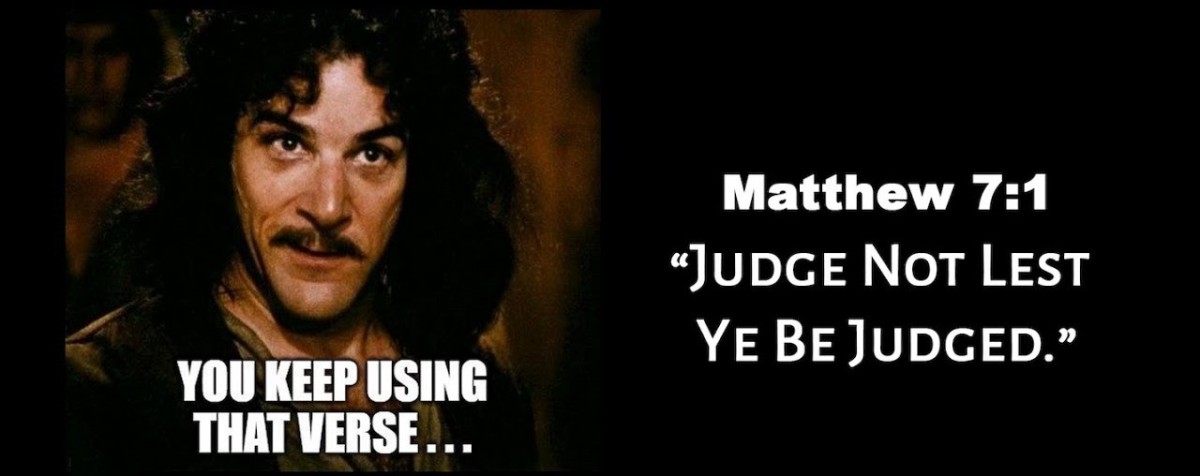
Everyone and their mother knows this verse (Matt. 7:1), and they use it—often inappropriately. Yet, there’s more to this passage than telling people not to judge. For example, just a few verses later, Jesus warns against false teachers. To dub a person a false teacher, you have to be willing to judge what they teach and how they live (Matt. 7:15–20). When a teacher grades an assignment, they are making a judgment. To call one thing good and another thing terrible is ultimately making a judgment. How did Jesus mean this? First, the term translated as “judge” denotes a habit of sharp, unjust criticism. The Greek term is krinete, from which our English word, “critic,” comes. We’re not talking about judging in the sense that we may think of it, but criticism. Notice what follows: how we judge is how we will be considered (7:2). This critical person sees only the fault in others but none in themselves (7:3–5; cf. Rom. 14:4, 10, 13).

We’re to judge righteously (John 7:24). Unrighteous judgment is according to appearance. Righteous judgment, however, is with grace, mercy, and God’s will as the standard. There’s always what we see and reality. Sometimes the two are the same, but sometimes they’re not. When we look for the worst, that’s what we’ll find every time. This was what the Pharisees did—look to find fault. They are the ones who are judged harshly and not with righteousness. In matters of righteousness, we’re to judge our brethren and not outsiders (1 Cor. 5:12). Judgment here isn’t a condemnation but discernment. When a Christian doesn’t bear the fruits of the Spirit but works of the flesh, we must address the issue. When you read the thought uninterrupted, it flows into the next chapter, which denounces lawsuits among brethren. This matter is one of discipline (cf. Deut. 17:6–7; Matt. 18:15–20).

A few standards of judgment would be good to avoid. The first would be judging someone by the worst thing they’ve ever done. This can be difficult because Jeffrey Dahmer did some pretty horrible things. Yet, you may not know that before he died, he became our brother, obeying the gospel while in jail thanks to Oklahoma minister Curt Booth and Wisconsin minister Roy Ratcliff. F.B. Meyer once said that when we see a brother or sister in sin, there are two things we do not know. First, we do not know how hard he or she tried not to sin, and second, we do not see the power of the forces that assailed him or her. We also do not understand what we would have done in the same circumstances. It can be challenging for some to fathom that a person like Dahmer could now be in heaven after all he did, but we cannot negate how powerful Jesus’ death was in comparison. If it isn’t powerful enough to wash away those sins, then it isn’t capable of anything. 

Another standard of judgment is imposing modern morals on the past. Slavery is agreed to be abhorrent. Yet, it has existed since the dawn of time, or pretty close to it. It still exists, believe it or not. The latest Global Estimates of Modern Slavery from Walk Free estimates that 49.6 million people live in slavery, either through forced labor or marriage. A quarter of those are children. North Korea has the highest percentage of slaves, and Africa and the Middle East have countries with considerably high numbers of slaves. Slavery didn’t begin with the trans-Atlantic slave trade. Yet, you don’t see activists caring much for these slaves, only those of the past. However, had we lived in that time and had the means, would we have had slaves? Would we have been slaves? We must remember that an evolving interpretation of Scripture led to its abolition in England and the United States. 

Our time would be better spent attending to our own blind spots (Matt. 7:3–5). How can we be a light to the world when we occupy our time with the judgment of others as if it were a spiritual gift given by the Holy Spirit? For some of us, being judgmental comes easy. It’s an all-too-tempted way to operate. Yet, how we judge is the same way we shall be judged. If we are harsh, we will receive harsh judgment. If we are gracious, we can receive God’s grace in judgment.  

Treasures in Heaven (Matt. 6:19-34)

Who hasn’t worried? We all do it, and sometimes with good reason. Worrying is not a sin, as some might persuade us to believe. There is, however, a component of faith that is absent when we worry because we have forgotten the sovereignty of God over all things. Yet, before worrying, fasting and prayer are things you’ll note in the sermon that were observed in the church a lot (cf. Acts 10:30; 13:1–3; 14:23). Psychologists teach such methods as meditation, mindfulness, breathing, and so on. These are grounding techniques when, in a moment of anxiety, someone centers themselves to face whatever worries them. Sometimes, we live in a lane so long that it becomes home, but neuroplasticity suggests that our brain is equipped to rewire itself. Praying the Our Father reminds us that God is outside time and space and greater than us and our worries. Plus, when we pray for his will to be done on earth as in heaven, we must submit to his will, whatever it may be. When we place our worries in the context of prayer and fasting, we give ourselves to God and entrust him in the process. 

We have contrasted riches and necessities. The two are different. If we are fortunate enough to amass wealth, Jesus says, it should be in heaven, where it cannot be destroyed or diluted in value. We are acquisitive by nature. It’s easier to accumulate things than to give them. In high school, I returned home one day—the first to leave and return home—to find the door ajar. I knew I had closed it all the way, but I went in to discover the house ransacked and robbed. My great-grandfather’s 12 gauge shotgun was gone. He used it when he was young, so I prized that possession. That robbery taught me then and there that placing meaning in things is meaningless. The relationship we had and the love we shared were more valuable than the shotgun. It was sentimental, and that’s why the loss hurt so much. However, that taught me not to lay up treasures on earth because thieves break in and steal. 

No matter how much you have, it’s never enough (Eccl. 5:10; cf. 1 Tim. 6:10). No one can serve two masters. No one can serve God and mammon. That word is Aramaic; some translations render it “riches” or “wealth.” The root of the term means “trust” or “reliance.” We cannot trust or rely on stuff against God. This point is no better illustrated than in the parable of the rich fool (Luke 12:13–21). This man did what Jesus warns against here—he “stored” up treasures for himself. The very word Matthew uses as “lay up” (Matt. 6:19–20) appears at the end of this parable (Luke 12:21). Cyril of Alexander (ca. AD 412–444) described being rich toward God as having one’s “hand … open to the needs of the poor, comforting the sorrows of those in poverty according to his means and the utmost of his power. He gathers in storehouses that are above and lays up treasures in heaven” (Luke, Homily 89). Another example of trusting in riches is illustrated differently than the rich young ruler (Matt. 19:16–22).

The relationship of the eye to the soul has been a staple of philosophy for centuries. When I used to live in Central Kentucky, there was an Amish man people went to because he was an iridologist. He could look into your eyes and tell you if you’ve had your gallbladder removed or diagnose other issues you may have. In antiquity, people believed your eyes projected light, hence the eye/lamp connection. We now know that the eye’s receptors convert light into electrical signals that our brains interpret. We’ve heard phrases such as the all-seeing eye, the evil eye, and the stink eye. What is it that we will set our gaze upon? That determines whether it is good or bad. 

Saying not to worry is easier sometimes than actually doing it. If we fast, we won’t worry about food and drink. If we pray, we give our worries to God (cf. Phil. 4:6–7). Paul knew what it was to suffer from want, so he replaced his worry with contentedness (Phil. 4:12–13). In the community of Jesus, we share our bread and drink. We look out for one another to ensure everyone isn’t lacking (Matt. 25:34–45). Plus, when we look at nature, we see that everything is provided for nature, so why wouldn’t we have faith that God will provide for us? Unlike nature, we sow and reap but can learn a lot from it. So, strive for God’s kingdom, and all else falls into place. Years ago, a college student was preparing for a nursing degree, and she was a cheerleader and belonged to a sorority. She hadn’t been at church, so my wife and I met her for lunch, and I told her that if she prioritized God, her worries and pressures would be resolved. It’s human nature to sacrifice Bible study, worship, and fellowship to ensure things are handled. However, when we prioritize them, we are saying to God that he is more important, and we trust that all we have to face is something he will tend to. 

The Lord’s Prayer (Matt. 6:9-13)

We must remember that when Jesus spoke about prayer, he urged that it be private and not as a show-off. He also adds that we shouldn’t presume that wordy prayers avail more than simple, concise prayers. In this context, Jesus gives his disciples a prayer to pray, something rabbis often gave their followers. Unlike our prayers today, there were and are liturgical prayers. These are prayers worded verbatim and not extemporaneously as we tend to do today. In synagogues, the shema is prayed on the Sabbath. This is the first word of Deuteronomy 6:4, “Here!” Jewish prayers are often named after the first word or words. The mi shebarach (“May the one who blessed”) has become increasingly common in synagogue meetings. The Lord’s Prayer would have been prayed verbatim. While modern Christians say it’s a model prayer to base our prayers on, the disciples would have repeated precisely these words. 

Prayer is not a way to get God’s attention—we already have it. It is a way to express our feelings honestly and without reservation. Whether worry, anger, thanksgiving, or celebration, the Psalms reflect the various emotions expressed, from despair to joy, from repentance to gladness. Sometimes, the psalmist praises God above all that is, and at other times, lays blame at God’s feet. Prayer can strengthen our relationship with God just as any form of communication enhances a relationship. Muslims pray five times a day; Jews pray three times a day. Christians, however, have little to no discipline about prayer unless you’re in a specific branch that emphasizes it. 

There are three versions of this prayer—Matthew’s, Luke’s (11:2–4), and one in Didache (ca. 50–60). In Luke’s version, the disciples ask Jesus to teach them how to pray. Didache is very similar to Matthew, with a few differences. 

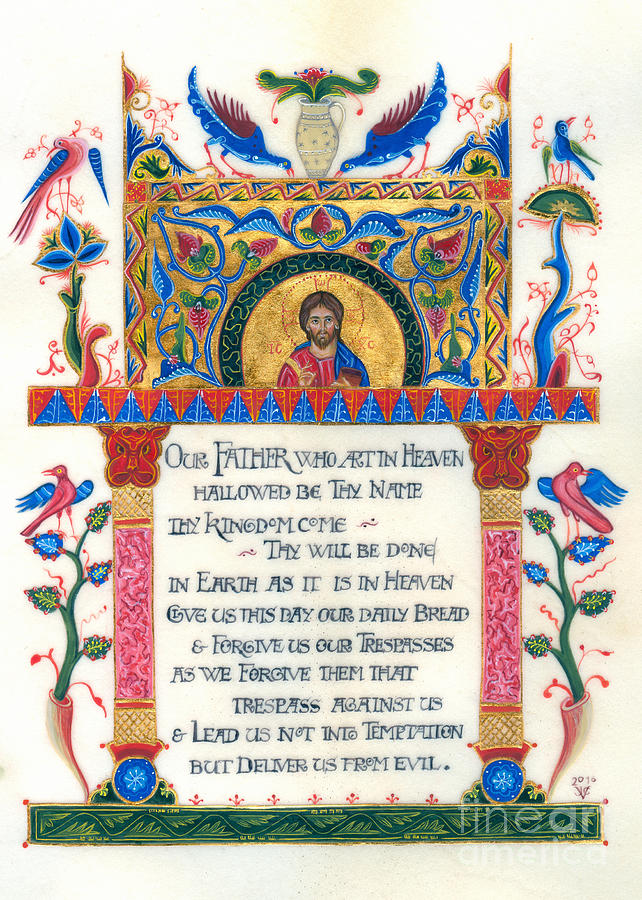
Our Father, who art in Heaven, hallowed be thy Name, thy Kingdom come, thy will be done, as in Heaven so also upon earth; give us today our daily bread, and forgive us our debt as we forgive our debtors, and lead us not into trial, but deliver us from the Evil One, for thine is the power and the glory for ever. Pray thus three times a day. (8:2–3)

The doxology at the end of Matthew’s version is a later addition. Interestingly, the earliest Greek and Latin manuscripts do not contain it. Even early church fathers knew of the shorter version. It makes you wonder why the doxology was added and kept in Matthew’s final version. Even a version of Luke contained, “May Your Holy Spirit come upon us and purify us,” instead of “Your kingdom come.” This is attested to by Marcion’s version of Luke (ca. 85–160); Gregory of Nyssa also wrote about this version. Several amulets have been found in Egypt on which the Lord’s Prayer was inscribed, so we see this prayer as transmitted through time. 

Many Jewish prayers address God with formality, “Blessed be the Name of the LORD our G-d,” though not exclusively (cf. Mal. 2:10). Here, however, Jesus makes it intimate, addressing God as our father, denoting paternal love, protection, and provision. God alone is one’s father (Matt. 23:9). Saying that God was in heaven, the text says “heavens,” speaks about his ability to transcend the physical world. Jews at the time believed in three heavens (2 Cor. 12:2). The third commandment of the Torah was to not use the Lord’s name in vain (Exod. 20:7), and the wording in Exodus means to take a vow or oath in God’s name, as well as in casual conversation. 

When Jesus prays for God’s kingdom to come, many say we should omit this portion of the prayer because the kingdom is already spoken of as something in the present tense (cf. Luke 9:27; 1 Cor. 15:23–25; Col. 1:13; Rev. 1:9). In this sense, I would agree; however, the kingdom has come in that God’s rule is on earth through the church. Yet, the fullness of his kingdom is to be realized after the judgment. Christians live in God’s kingdom, but there are still things on the earth, such as death, that occur that aren’t a part of God’s kingdom. 

When we follow God’s will as we know it on earth, we may also see it done in heaven. We can learn this from the Scriptures that have been preserved for us. Jesus used those Scriptures to combat the devil in the wilderness. He also said he didn’t come to destroy the law and prophets but to fulfill them. The wording about daily bread isn’t as truthful to the text as many English translations give it. In Greek, “daily” isn’t expressed, but giving us tomorrow’s bread today is more accurate to the language. On the one hand, it envisions the messianic banquet (cf. Matt. 8:11). On the other, it reminds us that Jesus is our bread of life (John 6:35, 48, 51). 

Sin is often regarded as a debt (cf. Matt 18:21–35; Luke 7:40–43). We accrue debts through our sins. These debts are too outstanding for our repayment, but the merciful God will forgive us our debts as we forgive our debtors. If we practice canceling debts rather than calling in repayment, we will have our debts canceled (Matt. 6:14–15). When we think about temptation, we think of something that entices us to sin. The term translated as “temptation” refers to outward tests of all kinds. You could render the term “trials” or “ordeal.” These can lead to temptations, but they are not in and of themselves (cf. Prov. 30:7–9). Jesus’ hunger in the wilderness could have turned to sin had he succumbed to Satan’s temptation to turn stones into bread. Judas was not delivered from the evil one, mainly because he did not seek God’s will. Because of this, he opened himself to Satan (cf. Luke 22:3; John 13:27). Just as Satan tempted Jesus through his trial, he can use our ordeals to tempt us, giving that we become weak or despairing in them.