How to Read Leviticus Without Getting Discouraged

Many Christians plan to read their Bibles through in a year. Typically, they begin at the beginning, and by the time they arrive at the latter part of Exodus, it becomes cumbersome. Then, once you get to Leviticus, you might find yourself a tad discouraged. Here’s another way to look at Leviticus.

A mother had instructed her son not to play in a particular part of the woods behind their house because it was occupied by a family of skunks. One day, however, the son decided to inspect this area to learn more about skunks, since his curiosity was too intense to resist. At first glance, they seemed like cats, but with specific coloring. He moved in to see if he could hold one, but the younger ones moved away as the father stood his ground. As skunks often will do to warn, the father walked on his two front feet, putting the rest of his body in the air, as if he were walking on his hands. The little boy thought the skunk was doing a trick, so he moved closer, and then the father lifted his tail, took aim, and sprayed the boy with the noxious odor to repel him. 

The boy ran frantically home, coughing and choking over the stench. As he cried out for his mother, she came to the front porch, and as her beloved son approached, she caught a whiff of the skunk and knew what had happened. She commanded the boy to stop because she couldn’t tolerate the odor. She didn’t stop loving her son, but he wouldn’t come into the house smelling like that. So what did the mother do? She didn’t hate her son. She didn’t reject her son. She wanted to help him. She prepared one of their troughs with a solution made of laundry detergent, peroxide, and baking soda. She placed her son in the trough and scrubbed him till the smell was gone. Then, he was able to come into the house, sit in his mother’s lap, and be comforted. When we think about sin and its effect, it’s similar to this story. We have become tainted by sin and its odorous effect, so we can’t come into God’s presence. However, God doesn’t look at us with hatred and malice, but with compassion and grace. He prepares a solution for us so that our sins may be removed and we can come into His presence once more.

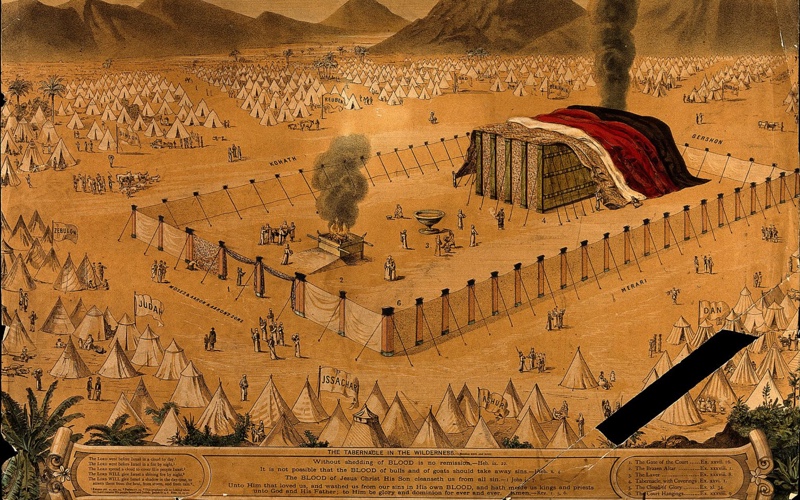
When God chose His special people, Israel, He wished to dwell among them. However, for Israel to live in God’s presence, God provided remedies by which He could dwell in their midst, and they could approach Him. This is what we read about in the book of Leviticus. What’s important to remember is the ending of Exodus, however, because it gives sense to the first verse of Leviticus. 

Then the cloud covered the tabernacle of meeting, and the glory of the LORD filled the tabernacle. And Moses was not able to enter the tabernacle of meeting, because the cloud rested above it, and the glory of the LORD filled the tabernacle. Whenever the cloud was taken up from above the tabernacle, the children of Israel would go onward in all their journeys. But if the cloud was not taken up, then they did not journey till the day that it was taken up. For the cloud of the LORD was above the tabernacle by day, and fire was over it by night, in the sight of all the house of Israel, throughout all their journeys. (Exod. 40:34–38)

The glory—kavod literally means “weightiness”—of God is best thought of as a mantle of light enveloping God, and the cloud gave off the luminosity by day and appeared as fire by night.¹ When Moses first saw the Lord’s presence in the burning bush, he hid his face because he was afraid to look upon God (Exod. 3:6). Later, however, Moses’ faith in God had grown exponentially to the point that he wanted to see the glory of God. Still, he couldn’t see anything but the “goodness,” because seeing God’s face would have killed Moses (Exod. 33:18–23). Even then, God protected Moses from seeing Him. 

After Moses communed with Yahweh, he came from Mt. Sinai with his face shining (Exod. 34:29–35). There’s a great lesson from this passage: The fear of Israel upon seeing Moses’ face parallels that of their fear of drawing near to God. Similarly, because Moses would cover his face with a veil when among Israel, this demonstrates that the holy of holies had to be partitioned off and enveloped in layers, yet accessible to the people.² Now, when we arrive at Leviticus, the question arises: “How can a people stained with sin live among the holiness of which they are afraid?” For the priests of Israel and the rituals prescribed in Leviticus, God provides in His mercy and grace the ways that He can be among a sinful people, and they dwell in His holy presence. It’s best to think of God’s holiness as the sun, which in its unadulterated form is powerful, and anything mortal that gets near it will burn up. The sun doesn’t hate such things but consumes them. 

To outline Leviticus, we must identify its three major components: Sacrifices (Lev. 1–7, 23–37), Priests (Lev. 8–10, 21–22), and Purity (Lev. 11–15, 18–20). The sacrifices are ways to say “thank you” (i.e., grain and fellowship offerings) or “I’m sorry” (burnt, sin, and guilt offerings). Some of these occur on holy days when festivals were held. These were times of celebration to retell Israel’s history and explain why God chose them. Mediating these sacrifices were individual representatives who advocated for the people, called “priests.” These servants worked so closely to God’s presence that they were chosen to represent God to the people and the people to God. Such people were ordained and had to live by higher standards, similar to those of our pastors. Finally, the purity laws concerned cleanliness and uncleanliness. Cleanliness or purity is a state in which one can be in God’s presence, whereas the opposite is that of uncleanliness. Some of these concerned sexual relationships, social justice, and interpersonal relationships. These categories summarize the second-greatest command: to love your neighbor as yourself. Summing up the greatest commandment to love God with our whole being, we find that it includes dietary laws, skin diseases, dead bodies, and bodily fluids. Many of the latter three concerned life and death: one was sacred, and the others resulted from sin. Going before God in an impure state was inappropriate. 

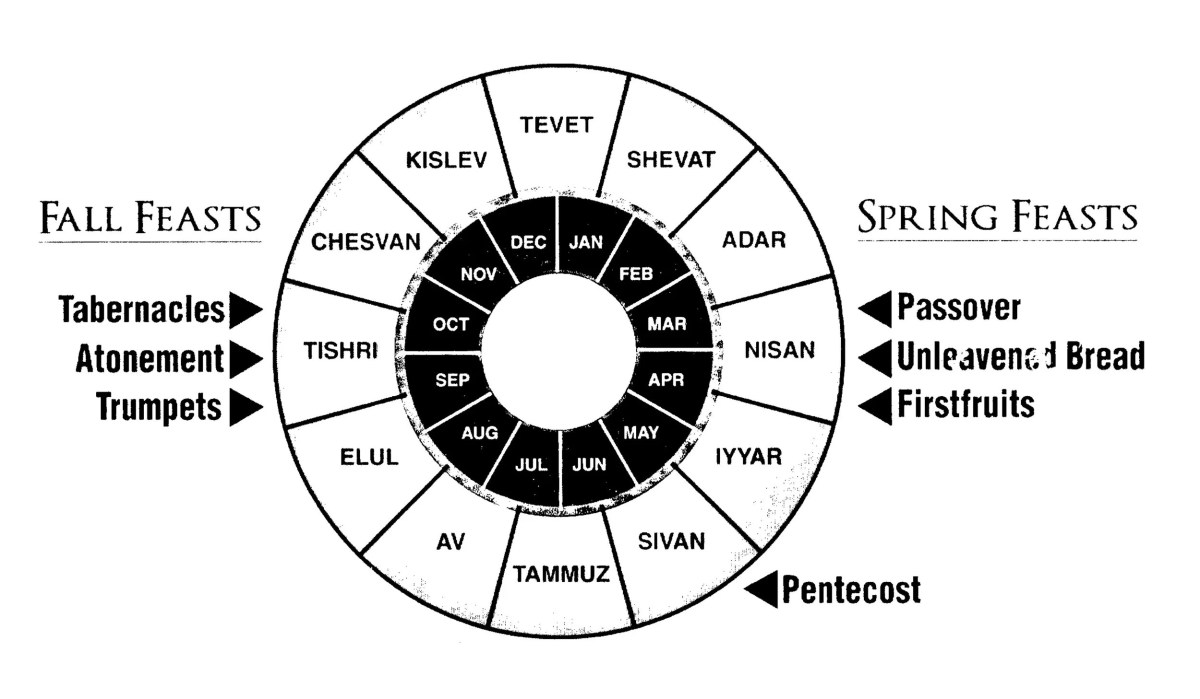
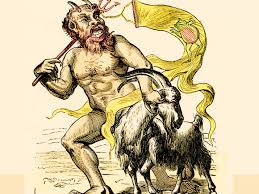
Tucked in the middle of the book is the Day of Atonement. On this day, the entire nation had sinned, perhaps unnoticed and unknown. The high priest would atone for the whole country by taking two goats and slaying one whose blood was brought to God’s presence to atone for the sins. God has said that the blood of a creature was life, so the life of the goat was to take the place of Israel and the penalty of their sin. The other goat was presented to the priest, who would lay his hand upon its head, confess the sins of the nation, and send the goat out into the wilderness, carrying the sins of the country away from them into the barren land. By this goat, God graciously removed Israel’s sins. 

Christ became not only our high priest but did so while being tempted yet remaining pure (Heb. 4:14–16). As the high priest, not only offered the perfect offering but was Himself the offering so that He could go into the true holy of holies to minister for us (Heb. 9:11–14). What we learn from Leviticus only prepares us for the cross. Jesus Christ is now how we may live in the presence of the holy God. 


¹ Robert Alter, The Five Books of Moses: A Translation with a Commentary (New York: W. W. Norton & Company, 2004), 535.

² Ibid., 513. 
Intro to 1 Peter

Writing from Rome (which he calls “Babylon” in 5:13), along with John, Mark, Peter addresses a network of churches that comprises modern-day Turkey. Early church writers made explicit citations of 1 Peter as early as the 90s AD, through to the latter part of the second century, which attests to the authority of the letter as well as its apostolicity. How the gospel came to be in this area isn’t altogether clear, but we know that Jewish believers from some of these areas were present on Pentecost (Acts 2:8–11). Additionally, Emperor Claudius (AD 41–54) established Roman colonies in these regions.

One central question is who the audience was: Jewish, Gentile, or both. The descriptor of “pilgrims of the Dispersion” was typically how Jewish exiles from Judea were addressed (cf. James 1:1). There are also further descriptors such as “Sarah’s children” (1 Peter 3:6), “God’s elect” (1 Peter 1:1, 2, 4, 9) and those called to holiness (1 Peter 1:15–16). They are also contrasted with Gentiles (1 Peter 2:12; 4:3), but by this time, all Christians might have been considered as one with Jewish believers, and the Gentiles were non-Christians. However, we also know that Peter was an apostle to the circumcised (Gal. 2:9), and readers from Eusebius in the fourth century to John Calvin agree that the primary audience is Jewish Christians. Still, some descriptors indicate pagans were among the audience (1 Peter 1:14, 18; 2:9–10, 25; 4:3), but prophetic language sometimes regarded apostate Israelites as pagans. We can assume there’s a mixture and that this letter would not have been sectarian or racially distinguishing between believers in Jesus (cf. Rom. 8:29–30).

The entirety of the letter addresses their suffering, which was likely caused by social scorn, shaming, slander, and stigma. They were likely viewed as social deviants and may have faced verbal and physical pressure to return to the norm. Given that Christianity grew out of Judaism, we can look to history to see how Jews were viewed to get a picture of how these Christians were regarded. Rome banished Jews on some occasions. There was a time when Tiberius was emperor, and again during Claudius’ reign. Claudius viewed them with animosity from the beginning of his reign. When Christianity was young, Jews were expelled from Rome. In Christianity’s earliest decades, it bore no outward distinction from Judaism as perceived by the Romans. The Jews were expelled at the instigation of “Chrestus,” according to Suetonius. 

When Diodorus wrote about Antiochus Epiphanes subduing the Jews, he referred to their customs as “wicked.” Cicero also viewed the Jews as enemies because of their behavior when they assembled. They showed no regard for the interests or laws of the Republic, and that won them no favor with Rome. Because they wanted to keep Judea pure from Roman occupation and rule, they resisted Rome. Their actions were rebellious and drew attention to the Jewish religion as the source of their unruliness and eventual disdain by the Romans. Horace believed that they were manipulative and coercive. He viewed them as always proselytizing and forcing others to join their religion. Because they proselytized, many were Jews by conversion rather than birth.  Furthermore, they believed in silly superstitions and were weaker because of their Sabbath keeping. Juvenal viewed their Sabbath keeping as idleness. Their customs were “base and abominable,” and they were the worst villains among all other peoples. As a race, they were believed to have been a curse to others, and Moses, their lawmaker, was detested. While many Jews upheld practices that distinguished them from other people, those who observed them wrote about the Jews’ hypocrisy in doing some of the very things that they seemed opposed to otherwise. If early Christians were treated anything like Jews, we get but a glimpse of it in this letter. Peter urges them to identify with Christ’s suffering (1 Peter 4:12–16) and await eternal glory (1 Peter 1:7; 2:11; 4:13; 5:4, 10–11). 


Works Referenced

 Acts 18:2; Suet. Claud. 25.4.

 Diodorus, Bibl. Hist. 34.1.3.

 Cicero, Flacc. 28.66–69.

 Horace, Sat. 1.4.142–3; cf. Matt. 23:15.

 Acts 2:10; 13:43. Cf. Juvenal, Sat. 14.102–03. A Gentile could become Jewish by circumcision, immersion, and a sacrifice (Keritot 9a; cf. Pesahim 8.8; Exod. 24:8).However, Gentile conversion was not always welcomed and in some cases was even rejected.

Juvenal, Sat. 1.5.100. To the Roman mind, anything other than what had been appointed at the founding of Rome was “vile and alien” (Livy 39.15.3). See also Juvenal, Sat. 15.1–13.

 Juvenal, Sat. 14.96, 105–06.

 Tacitus, Hist. 5.5.

 Quintilian, Inst. 3.7.21.

What is “Sound Doctrine?” 

The term “doctrine” derives from Latin and is related to the word “doctor,” which means “teacher.” When we think of doctors today, we think of medical practitioners, but in the Roman Empire, doctors were instructors in a specific field. Therefore, “doctrine” means “teaching.” The Greek term is also fitting for this translation. Christian doctrine derives from commandments focused on “love from a pure heart, a good conscience, and from sincere faith” (1 Tim. 1:5). Paul uses “sound doctrine” (1 Tim. 1:10) to describe how the law ought to be used, and it’s connected to one’s behavior. In Titus 2:1, Paul wrote, “But as for you, speak the things which are proper for sound doctrine.” The term “sound” also refers to those who are physically well instead of sick (Luke 5:31; 7:10; 3 John 2). When the prodigal son returned, he was received safe and “sound” (Luke 15:27). All other usages refer to doctrine, not physical health. Still, there’s a lesson herein: those who are physically healthy are sound, or well, so it may reasonably follow that those who are spiritually healthy are sound too.

Many people denounce doctrine as too divisive. It can be, but it ought not to be. Some people exclaim, “I just want Jesus, don’t give me doctrine.” The fault in that statement is that we cannot separate the truths of Jesus from the Person of Jesus, so without sound doctrine, we have no Jesus. John contended with this in his day, “By this you will know the Spirit of God: Every spirit that confesses that Jesus Christ has come in the flesh is of God, and every spirit that does not confess that Jesus Christ has come in the flesh is not of God. And this is the spirit of the Antichrist, which you have heard was coming, and is now already in the world” (1 John 4:2–3). The way some are today might have said, “Just give me Jesus. I don’t want doctrine,” but for John, it mattered whether or not Jesus appeared in the flesh as a matter of orthodoxy. We tend to dismiss such issues because they seem so minor. There are times when matters are minor, but there are also times when they aren’t. Paul was concerned with sound doctrine, too, and this was what Timothy was to teach and uphold. 

Those who lead sinful lives did not order their lives according to “sound doctrine” (1 Tim. 1:8–11; 6:1–5; 2 Tim. 4:3–5; Titus 2:1–10). When one reads all of these passages, we’re struck by how when sound doctrine is mentioned, behavior should follow. We can see here that those behaviors do not accord with sound doctrine, and anyone claiming to represent God is to call things what God calls them and exhort others to order their lives around sound doctrine. Sadly, many fear calling specific actions, lifestyles, or choices sinful, so we dilute orthodoxy to avoid hurting feelings. We can and should be able to call sin what it is and simultaneously be compassionate and loving towards sinners, among whom we are also counted. Sound doctrine, therefore, is spiritual health. When one is healthy, one manifests that in one’s actions. The spiritually healthy person formed by sound doctrine does the things that please God.

How do we get doctrine? Commandments, prohibitions, and examples are a few ways. When God commands something through one of his chosen prophets or mediums, we must do what is commanded. If he prohibits something the same way, we should not do what’s forbidden. If we note patterns of behavior that are commendable, we can mimic the action and know we are not doing wrong. The problem comes when we bind something that God has not bound.

Though Scripture is inspired, interpretation is not. We conclude when we take a topic and study it as a whole. Some conclusions are rather logical and can be taken at face value, but if an interpretation is questioned, there ought to be answers to justify it, or adjustments should be made. For example, “Abstain from every form of evil” (1 Thess. 5:22). In churches of Christ, I have observed some who have employed this passage to prohibit dancing. A reading of 1 Thessalonians would not have that in mind, but there is a way to use it. When Herodias danced before Herod, we might conclude that it was rather provocative (Mark 6:22). After all, he wanted to offer her anything. In this case, dancing can be viewed as sinful. We can’t say that all dancing is terrible. The older son in the parable of the prodigal son came near the house and “heard music and dancing” (Luke 15:25). This story is about rejoicing over a lost son returning to salvation, and they were dancing as a matter of celebration. 

No human is the arbiter of determining what is doctrine and shouldn’t be. One interpretation among some in churches of Christ is that the Holy Spirit indwells the believer by proxy–through the Word of God. Since some of us know more Scripture than others, do we have more of the Spirit? When you look at interpretations from the first few centuries, this conclusion hasn’t been reached as far as I have read. It’s hard for me to believe that doctrine because the earliest Christians had a different take. That doesn’t mean they’re always right, but it also doesn’t mean they’re wrong.

I believe it’s best for us to give grace to one another and assume the best. Just because I arrive at a different conclusion than you doesn’t mean I’m malicious. Some Christians read the creation account literally. I happen to take parts of it literally while considering how I understand that an ancient Near Eastern audience would have understood it. Still, I hold no ill will if someone reads it literally. We both love Jesus and want to serve God.


Does Luke’s Research Nullify Inspiration?

The past few years have been ripe with disinformation, misinformation, alternative facts, etc. Facebook has become a catalyst for spreading such, with algorithms set to pop up what suits one’s fancy. We have no certainty about what is trustworthy anymore, but truth-seekers can sift through the material—identifying both the true and false. Using our preferred sources is easy because they validate our preconceptions, but we should use caution because they may blind us in the process.

When Luke wrote his good news account (see Luke 1:1–4), he wrote against the backdrop of other circulating versions. He carefully investigated the matter, knew eyewitnesses, and drafted an orderly arrangement to straighten the record. Since he indicates research, does that nullify inspiration given by the Holy Spirit? I don’t believe so. Since research was an element of this writing, who is anyone to say that the Holy Spirit didn’t tell Luke to consult with certain people or documents? After all, Luke emphasizes the work of the Holy Spirit (Luke 1:15, 35, 41, 67), and that could have included talking with certain people. Remember, God directed Saul of Tarsus to Ananias, who then told him the gospel when God could have told it to him (see Acts 9:6).

Luke followed things closely and used various sources, one of whom might have been Mary, the mother of Christ. The first two chapters contain information she would have known (Luke 2:19, 51). Peter (cf. Luke 6:14) and Mark might have also been a source for Luke, given the call for Mark—Peter’s companion—in 2 Timothy 4:11 and his presence in Colossians 4:10 and Philemon 24 with Luke.  As Paul’s travel companion, Luke would have undoubtedly received information from him. Paul quoted from Luke 10:7 in 1 Timothy 5:17–18 and referred to his gospel (Rom. 2:16; 16:25; 2 Tim. 2:8).

Luke noted that “many” had tried to write narratives (Luke 1:1), so he wrote in response to inadequate or false gospels. His own, however, was from “eyewitnesses and ministers of the word” (Luke 1:2)—neither of which he was as far as we know. The other accounts contributed to confusion rather than clarity. Luke wanted to give an orderly arrangement (Luke 1:3). His meaning of “orderly” differs from what we might initially think. He doesn’t give a chronological but a topical account. His arrangement differs from Matthew’s and Mark’s but contains some of the same material, though placed in a different order. 

Living in the Kingdom (Matt. 7:6-29)

People today treat their dogs better than humans. I have three dogs, two of which live outside and one inside. I love them but would never grill a steak or pork chop for them. If anything, they might get the leftovers. Jesus’ phrase “what is holy” could refer to meat because it necessitated a banquet whenever an animal was sacrificed. Eating what had been sacrificed to God was considered holy, and to give it to dogs was unthinkable. Also, no one would throw pearls to pigs because they don’t understand their value. Therefore, the gospel, represented as what’s holy and pearls, shouldn’t be wasted on those who scorn them. We want to share the good news, but some people don’t like it. Don’t waste it on them. If anything, pray for them to be receptive, but you can lead a horse to water. 

There are several ways to interpret the ask, seek, and knock passage. The first is relative to prayer, and the second to the kingdom of God as the church. When you look at Acts, the latter is understood in the context by some and see how all resources are pooled together so that no one is lacking. This interpretation focuses on verses 9–11 regarding basic needs and that God, through his church, provides for the saints. It’s not a flawed interpretation, but prayer is truer to the context given Matthew’s usage of “ask” concerning it(cf. Matt. 18:19; 21:22) and Jesus’ focus on prayer in the sermon (Matt. 5:44; 6:5–13). Compared to God, who is the absolute good (Matt. 19:17), parents, regardless of how loving they are of their children, are evil. If evil parents can give good gifts to their children, how much more will God? This doesn’t mean that every prayer we pray is answered “yes.” God gives us good things, and not everything we ask for is 1) a necessity (“bread” and “fish”) and 2) good. 

The golden rule was meant to guide the interpretation of the Law (7:12). It parallels similar statements from other civilizations. 

Watch yourself, my son, in everything you do, and discipline yourself in all your conduct. And what you hate, do not do to anyone. (Tobit 4:14–15; second century BC)

Let us show our generosity in the same manner that we would wish to have it bestowed on us. (Seneca, De Beneficiis 2.1.1; contemporary of Jesus)

What is hateful to you, do not do to your neighbor. That is the whole Torah. The rest is commentary. Go and learn! (Hillel, b. Sabb. 31a; 70 BC–AD 10)

Do not do unto others what you would not want others to do unto you. (Confucius, Analects 15.23)

Anything that might seem like we should treat another in a certain way must be turned on ourselves and asked whether or not we’d wish to be treated that way. 

Verses 13–14’s two ways have parallels in other passages (Deut. 30:15; Ps. 1:1–2). The false prophets of whom Jesus speaks (7:15–20) must be set in the backdrop of how he said we should regard our enemies. In the decades following Jesus, prophets arose, leading revolts against the occupying Romans. Theudas (AD 44–46) led a band of people massacred by a squadron, the head of Theudas being paraded through Jerusalem. During Felix’s reign (AD 52–60), an Egyptian led several thousand people to the Mount of Olives, where he promised to command the city walls to fall and subsequently be installed as Israel’s king. Hundreds were killed, and hundreds were imprisoned, the Egyptian man having escaped. They could tell who the false prophets were by their fruits—if contrary to what Jesus taught them (non-violence), they were known to be untrue. 

Once more, he emphasizes proper action over confession (7:21–23). The false prophets would be known by their fruits. His disciples were to let their light shine through their good works (5:16). He wanted their righteousness to exceed that of the Pharisees and scribes (5:20). At every turn, Jesus wanted his disciples to show, by their actions, fidelity to God. They’re not to make a show of it for others but to quietly serve God, trusting in him. Their house will stand if they heed his instructions (7:24–27). The response to Jesus’ teaching as having authority stems from his teaching coming directly from himself. Pharisees and rabbis would have cited the collective wisdom of the rabbis, the Law, or other Jewish writings. Jesus alludes to them but speaks with authority and settles the matter. He taught, unlike any other teacher who lived, not citing different sources. 

Treasures in Heaven (Matt. 6:19-34)

Who hasn’t worried? We all do it, and sometimes with good reason. Worrying is not a sin, as some might persuade us to believe. There is, however, a component of faith that is absent when we worry because we have forgotten the sovereignty of God over all things. Yet, before worrying, fasting and prayer are things you’ll note in the sermon that were observed in the church a lot (cf. Acts 10:30; 13:1–3; 14:23). Psychologists teach such methods as meditation, mindfulness, breathing, and so on. These are grounding techniques when, in a moment of anxiety, someone centers themselves to face whatever worries them. Sometimes, we live in a lane so long that it becomes home, but neuroplasticity suggests that our brain is equipped to rewire itself. Praying the Our Father reminds us that God is outside time and space and greater than us and our worries. Plus, when we pray for his will to be done on earth as in heaven, we must submit to his will, whatever it may be. When we place our worries in the context of prayer and fasting, we give ourselves to God and entrust him in the process. 

We have contrasted riches and necessities. The two are different. If we are fortunate enough to amass wealth, Jesus says, it should be in heaven, where it cannot be destroyed or diluted in value. We are acquisitive by nature. It’s easier to accumulate things than to give them. In high school, I returned home one day—the first to leave and return home—to find the door ajar. I knew I had closed it all the way, but I went in to discover the house ransacked and robbed. My great-grandfather’s 12 gauge shotgun was gone. He used it when he was young, so I prized that possession. That robbery taught me then and there that placing meaning in things is meaningless. The relationship we had and the love we shared were more valuable than the shotgun. It was sentimental, and that’s why the loss hurt so much. However, that taught me not to lay up treasures on earth because thieves break in and steal. 

No matter how much you have, it’s never enough (Eccl. 5:10; cf. 1 Tim. 6:10). No one can serve two masters. No one can serve God and mammon. That word is Aramaic; some translations render it “riches” or “wealth.” The root of the term means “trust” or “reliance.” We cannot trust or rely on stuff against God. This point is no better illustrated than in the parable of the rich fool (Luke 12:13–21). This man did what Jesus warns against here—he “stored” up treasures for himself. The very word Matthew uses as “lay up” (Matt. 6:19–20) appears at the end of this parable (Luke 12:21). Cyril of Alexander (ca. AD 412–444) described being rich toward God as having one’s “hand … open to the needs of the poor, comforting the sorrows of those in poverty according to his means and the utmost of his power. He gathers in storehouses that are above and lays up treasures in heaven” (Luke, Homily 89). Another example of trusting in riches is illustrated differently than the rich young ruler (Matt. 19:16–22).

The relationship of the eye to the soul has been a staple of philosophy for centuries. When I used to live in Central Kentucky, there was an Amish man people went to because he was an iridologist. He could look into your eyes and tell you if you’ve had your gallbladder removed or diagnose other issues you may have. In antiquity, people believed your eyes projected light, hence the eye/lamp connection. We now know that the eye’s receptors convert light into electrical signals that our brains interpret. We’ve heard phrases such as the all-seeing eye, the evil eye, and the stink eye. What is it that we will set our gaze upon? That determines whether it is good or bad. 

Saying not to worry is easier sometimes than actually doing it. If we fast, we won’t worry about food and drink. If we pray, we give our worries to God (cf. Phil. 4:6–7). Paul knew what it was to suffer from want, so he replaced his worry with contentedness (Phil. 4:12–13). In the community of Jesus, we share our bread and drink. We look out for one another to ensure everyone isn’t lacking (Matt. 25:34–45). Plus, when we look at nature, we see that everything is provided for nature, so why wouldn’t we have faith that God will provide for us? Unlike nature, we sow and reap but can learn a lot from it. So, strive for God’s kingdom, and all else falls into place. Years ago, a college student was preparing for a nursing degree, and she was a cheerleader and belonged to a sorority. She hadn’t been at church, so my wife and I met her for lunch, and I told her that if she prioritized God, her worries and pressures would be resolved. It’s human nature to sacrifice Bible study, worship, and fellowship to ensure things are handled. However, when we prioritize them, we are saying to God that he is more important, and we trust that all we have to face is something he will tend to. 

The Lord’s Prayer (Matt. 6:9-13)

We must remember that when Jesus spoke about prayer, he urged that it be private and not as a show-off. He also adds that we shouldn’t presume that wordy prayers avail more than simple, concise prayers. In this context, Jesus gives his disciples a prayer to pray, something rabbis often gave their followers. Unlike our prayers today, there were and are liturgical prayers. These are prayers worded verbatim and not extemporaneously as we tend to do today. In synagogues, the shema is prayed on the Sabbath. This is the first word of Deuteronomy 6:4, “Here!” Jewish prayers are often named after the first word or words. The mi shebarach (“May the one who blessed”) has become increasingly common in synagogue meetings. The Lord’s Prayer would have been prayed verbatim. While modern Christians say it’s a model prayer to base our prayers on, the disciples would have repeated precisely these words. 

Prayer is not a way to get God’s attention—we already have it. It is a way to express our feelings honestly and without reservation. Whether worry, anger, thanksgiving, or celebration, the Psalms reflect the various emotions expressed, from despair to joy, from repentance to gladness. Sometimes, the psalmist praises God above all that is, and at other times, lays blame at God’s feet. Prayer can strengthen our relationship with God just as any form of communication enhances a relationship. Muslims pray five times a day; Jews pray three times a day. Christians, however, have little to no discipline about prayer unless you’re in a specific branch that emphasizes it. 

There are three versions of this prayer—Matthew’s, Luke’s (11:2–4), and one in Didache (ca. 50–60). In Luke’s version, the disciples ask Jesus to teach them how to pray. Didache is very similar to Matthew, with a few differences. 

Our Father, who art in Heaven, hallowed be thy Name, thy Kingdom come, thy will be done, as in Heaven so also upon earth; give us today our daily bread, and forgive us our debt as we forgive our debtors, and lead us not into trial, but deliver us from the Evil One, for thine is the power and the glory for ever. Pray thus three times a day. (8:2–3)

The doxology at the end of Matthew’s version is a later addition. Interestingly, the earliest Greek and Latin manuscripts do not contain it. Even early church fathers knew of the shorter version. It makes you wonder why the doxology was added and kept in Matthew’s final version. Even a version of Luke contained, “May Your Holy Spirit come upon us and purify us,” instead of “Your kingdom come.” This is attested to by Marcion’s version of Luke (ca. 85–160); Gregory of Nyssa also wrote about this version. Several amulets have been found in Egypt on which the Lord’s Prayer was inscribed, so we see this prayer as transmitted through time. 

Many Jewish prayers address God with formality, “Blessed be the Name of the LORD our G-d,” though not exclusively (cf. Mal. 2:10). Here, however, Jesus makes it intimate, addressing God as our father, denoting paternal love, protection, and provision. God alone is one’s father (Matt. 23:9). Saying that God was in heaven, the text says “heavens,” speaks about his ability to transcend the physical world. Jews at the time believed in three heavens (2 Cor. 12:2). The third commandment of the Torah was to not use the Lord’s name in vain (Exod. 20:7), and the wording in Exodus means to take a vow or oath in God’s name, as well as in casual conversation. 

When Jesus prays for God’s kingdom to come, many say we should omit this portion of the prayer because the kingdom is already spoken of as something in the present tense (cf. Luke 9:27; 1 Cor. 15:23–25; Col. 1:13; Rev. 1:9). In this sense, I would agree; however, the kingdom has come in that God’s rule is on earth through the church. Yet, the fullness of his kingdom is to be realized after the judgment. Christians live in God’s kingdom, but there are still things on the earth, such as death, that occur that aren’t a part of God’s kingdom. 

When we follow God’s will as we know it on earth, we may also see it done in heaven. We can learn this from the Scriptures that have been preserved for us. Jesus used those Scriptures to combat the devil in the wilderness. He also said he didn’t come to destroy the law and prophets but to fulfill them. The wording about daily bread isn’t as truthful to the text as many English translations give it. In Greek, “daily” isn’t expressed, but giving us tomorrow’s bread today is more accurate to the language. On the one hand, it envisions the messianic banquet (cf. Matt. 8:11). On the other, it reminds us that Jesus is our bread of life (John 6:35, 48, 51). 

Sin is often regarded as a debt (cf. Matt 18:21–35; Luke 7:40–43). We accrue debts through our sins. These debts are too outstanding for our repayment, but the merciful God will forgive us our debts as we forgive our debtors. If we practice canceling debts rather than calling in repayment, we will have our debts canceled (Matt. 6:14–15). When we think about temptation, we think of something that entices us to sin. The term translated as “temptation” refers to outward tests of all kinds. You could render the term “trials” or “ordeal.” These can lead to temptations, but they are not in and of themselves (cf. Prov. 30:7–9). Jesus’ hunger in the wilderness could have turned to sin had he succumbed to Satan’s temptation to turn stones into bread. Judas was not delivered from the evil one, mainly because he did not seek God’s will. Because of this, he opened himself to Satan (cf. Luke 22:3; John 13:27). Just as Satan tempted Jesus through his trial, he can use our ordeals to tempt us, giving that we become weak or despairing in them. 

Oaths, Retaliation, and Love (Matt. 5:33–48)

Regarding oaths, Jesus doesn’t quote any specific passage but summarizes the concept of taking an oath, specifically invoking God’s name (Exod. 20:7; Lev. 19:12; Num. 30:3–15; Lev. 24:19–20). Dire consequences could result from invoking God’s name in an oath. They were required occasionally, however (Exod. 22:10–13; Num. 5:16–22). By the time of Jesus, Jews avoided using God’s name lest it be in vain, so they would swear by sacred things (cf. Philo, Special Laws 2.1.5; Nedarim 1.3–4). Jews believed one was obligated if he swore by the temple’s gold or the altar’s offering but not by the temple or altar themselves (Matt. 23:16–22). You weren’t required to keep an oath if you swore by heaven or earth, but if you used any variation of God’s name, you were required to fulfill your oath (Shebuoth 4.13). Because they used loopholes in fulfilling their vows, they were hypocrites and deceitful, profaning God’s name. Just answer truthfully (cf. 2 Cor. 1:17–24; James 5:12). Jesus’ attitude was shared by the Essenes. 

They are eminent for fidelity, and are ministers of peace; whatsoever they say also is firmer than an oath; but swearing is avoided by them, and they esteem it worse than perjury; for they say, that he who cannot be believed without [swearing by] God, is already condemned. (Josephus, Wars 2.8.6)

This isn’t a prohibition against oaths per se because Jesus answered the High Priest while under oath (Matt. 26:63–64). 

The eye for an eye concept appears in three places and spells out different ways compensation may be made for damage to a person’s body (Exod. 21:23–25; Lev. 24:19–20; Deut. 19:21). This concept wasn’t unique to Judaism. Similar ideas appear in Roman Law and the Babylonian Code of Hammurabi, but the Torah concept treated everyone equally and not according to social class. It was meant to limit vengeance. We don’t see a trace of this being carried out because, more often than not, financial compensation was provided for the injury. Jesus gives us the commands not as to how to respond to physical harm but to public humiliation. His examples are the slap (cf. 2 Cor. 11:20), lawsuit, and conscription. Not escalating matters is to shame the attacker and maintain one’s honor. Usually, the response to a slap would be to either cower or hit back. Hitting back escalates, and cowering relinquishes a person’s dignity. Standing firmly, offering the other cheek, is a way to control the situation. With the lawsuit, a person can avoid the court, which would result in arrest, or they could accept the verdict, which might entail suffering (cf. Exod. 22:26–27). The injustice of the whole situation is revealed by giving the tunic with the cloak. Roman law compelled a person to obey for a mile (cf. Matt. 27:32). To refuse meant a beating. To comply is humiliation, so going beyond what was compelled by law is intended to humiliate the one who has conscripted a person. 

The first part of verse 43 derives from Leviticus 19:18. The Torah doesn’t say to hate your enemies, but in the Dead Sea Scrolls, we read, “He is to teach them to love everything [or everyone]. He chose and to hate everything [or everyone] he rejected” (1QS 1:3–4). There are other Old Testament passages mitigating how one feels about their enemies. When an enemy falls, we’re not to gloat (Prov. 24:17); otherwise, God will be displeased (Prov. 24:18; cf. 25:21–22). When Judah was exiled, they were supposed to pray for their city (Jer. 29:7). Paul iterates doing good to enemies is bound to frustrate them (Rom. 12:20). Praying for them not only is for their benefit but ours as well. It orients our minds towards them how it should be rather than allowing bitterness to take root. To be like our heavenly father is to love those who are unlovable. It’s to go above and beyond what is customarily anticipated or endorsed. To fall short of this is to carry the same deformity as our enemies. 

Jesus’ View of the Law and Murder (Matt. 5:17-26)

Rumors had undoubtedly circulated about Jesus’ view on the Law and Prophets—two of the three divisions of the Hebrew Scriptures; the last is the Psalms. The Law entails the first five books of the Bible. We usually only think of Isaiah, Jeremiah, and the like regarding the prophets. However, Joshua, Judges, the books of Samuel, and the Kings are considered former prophets in Jewish circles. He spoke of it with great reverence since Jesus and his disciples were living under the law. The “jot” is the Hebrew yod, and the tittle is the extension of the dalet when compared with the resh or vav. Any minor alteration in the law could have changed the meaning, so scribes were meticulous to preserve the text. No matter how insignificant someone believes it is, every part is meaningful. We can learn much from Jesus’ regard for the law, which should also inform how we view Scripture. We can also look at his call to righteousness in one of two ways: denigrating the scribes and Pharisees or as a high bar. There is an element of the former, but the latter seems to be more accurate. 

In Jesus’ commentary on the law, he says, “You have heard it said,” and then follows up with, “But I say to you.” We see this six times in the remainder of chapter five. The first commandment he addresses is murder. There’s a difference between murder, killing, manslaughter, and justice. Murder is premeditated with malicious intent. Even the commandment in Hebrew reads, “You shall do no murder.” If I were to strike a pedestrian with my truck because they ran in front of me and they died, I would not have murdered them. However, if I see this person and target them, then that’s murder. Were I negligible in hitting them, say because I was inebriated, I could be charged with manslaughter. When the state executes a criminal, it’s supposed to be in the name of justice, and murder was a capital offense (cf. Num. 35:16–18). The murderer being put to death is justice and not another murder or killing. What’s interesting, though, is how God protects Cain after he murdered Abel and Moses after he killed the Egyptian. 

Words matter, and “murder” is the appropriate term in both Greek and Hebrew. Yet, Jesus takes it farther than murder. He builds a hedge around the commandment, much like rabbis in his time. He begins with anger and progresses to insults—something that could be a legal offense.  Depending on your translation, you may have the wording as having anger “without a cause.” Most translations, if they don’t include the phrase, have some sort of note ascribing it to some ancient manuscripts. The earliest manuscript of Matthew 5:22 is dated between AD 125–50 and is designated as the Barcelona papyrus (P67). This fragment doesn’t contain the phrase “without a cause.” Two other manuscripts contain it—Coptic and Old Syriac (third–fourth centuries). Its appearance or disappearance doesn’t affect the overall meaning of our faith. Jesus teaches us to rid our lives of anger if it’s excluded. If it does appear, we later read how to handle someone we may be angry with in the following verses (cf. Matt. 18:15–17). 

A person becomes angry with another, then begins to insult them, and they call them the worst thing imaginable in that culture (cf. Eph. 4:29–32). The progression builds up to murder, which is why Jesus begins with anger. Rather than getting that far, Jesus urges reconciliation before worship, possibly alluding to Cain and Abel. Jews taught that you had to seek peace with your neighbors before reconciliation with God (Prov. 6:1–5). Today, however, most Christians give this no mind. If you’re offended, you just go somewhere else. Sometimes, people may not even know that you feel wronged. Meanwhile, you carry the weight of the hurt, expecting the offender to lift it when they might be clueless. In his context, Jesus urged reconciliation, and Paul urged suffering wrongdoing rather than seeking retribution (cf. 1 Cor. 6:1–6). Please remember that the context is within the community of faith (church), as indicated by the term “ brother.”

The Holy Spirit Told Me

Some Christians will say, “The Holy Spirit told me.” I never doubt a person’s sincerity, but I don’t quite know what to make of this. I have a lot of questions. For example, how did He tell you? What did He say? What do you mean that he told you? Was it a dream? An email? Help me understand this. 

If you read it in Scripture, fair enough, I can understand that. I recommend you see a counselor if you’re hearing voices. Others have listened to voices in their heads, sometimes leading to awful things (e.g., drinking the Kool-Aid, Waco). Sometimes, you and I intuit or suspect a specific path or action should be followed. I urge caution about attributing something that might have arisen in our minds to the Holy Spirit. Along with this is often the statement that “God called me to do x, y, or z.” The only semblance of a divine calling is the call all Christians receive through gospel preaching (cf. 1 Peter 2:9–10; 1 Cor. 1:9; 2 Thess. 2:13–14). 

We have the indwelling of the Holy Spirit as promised by God (Acts 2:37–39). By the way, please refer to Him as Him and not as “it.” That’s how He’s referred to in Scripture. What, precisely, does He do for us?

  • He comforts us (Acts 9:31). 
  • He pours out the love of God (Rom. 5:5).
  • He helps with our prayers (Rom. 8:26–27). 
  • He causes hope to abound (Rom. 15:13). 
  • He transforms us (2 Cor. 3:18). 
  • He produces fruit (Gal. 5:22–23). 
  • He strengthens us (Eph. 3:16). 

As God’s children, His Holy Spirit can lead us, but only if we so choose (Rom. 8:12–14). When we live according to the Holy Spirit’s teachings, we are led by Him. These teachings are attested to in Scripture since he is the Divine Author. Being led by the Spirit depends primarily upon surrendering to Him (cf. Gal. 5:16, 18, 25). 

Aside from Scripture, I’m unsure how He might lead a person in our time. I don’t presume that He does now as he did in the apostolic era. There are non-micaculous things he does for us, as mentioned above. I haven’t the knowledge to explain how He does these things, but it’s in Scripture, and I’m content to accept what He has told us—without understanding all the ins and outs. He was given to us as a pledge (2 Cor. 1:21–22; 5:5) to be redeemed when Jesus returns. He seals us to show we belong to God (Eph. 1:13–14; 4:30). Going beyond what Scripture says is in many people’s sentiments. Though they are well-meaning, I would need clarification on what they mean by this type of talk. There are times when coincidences occur. We sometimes say, “That’s a God thing.” Could it have been the Holy Spirit? There’s the possibility, but it could also be providence. I’m just cautious about attributing something to the Holy Spirit without certainty that it was Him.

If people through whom the Holy Spirit directly acted can misuse His gifts, we’re not better off. Take the Corinthians Church. Paul commanded that an interpreter be present for those who spoke in tongues so that the church might be edified (1 Cor. 14:10–14). Moreover, tongues were a sign for unbelievers, not believers (1 Cor. 14:20–23). Is this how we see the alleged use of tongues today? No. Instead, those who claim to speak in tongues today behave as the Corinthians Church whom Paul rebuked. Then, he limits the number of the tongue speakers for the sake of order (1 Cor. 14:27–28). He wraps a bow around this by reminding them that the spirits of the prophets are subject to the prophets (1 Cor. 14:32–33), so any accusation that they cannot exercise control when the Spirit is working is something Paul would not have accepted.