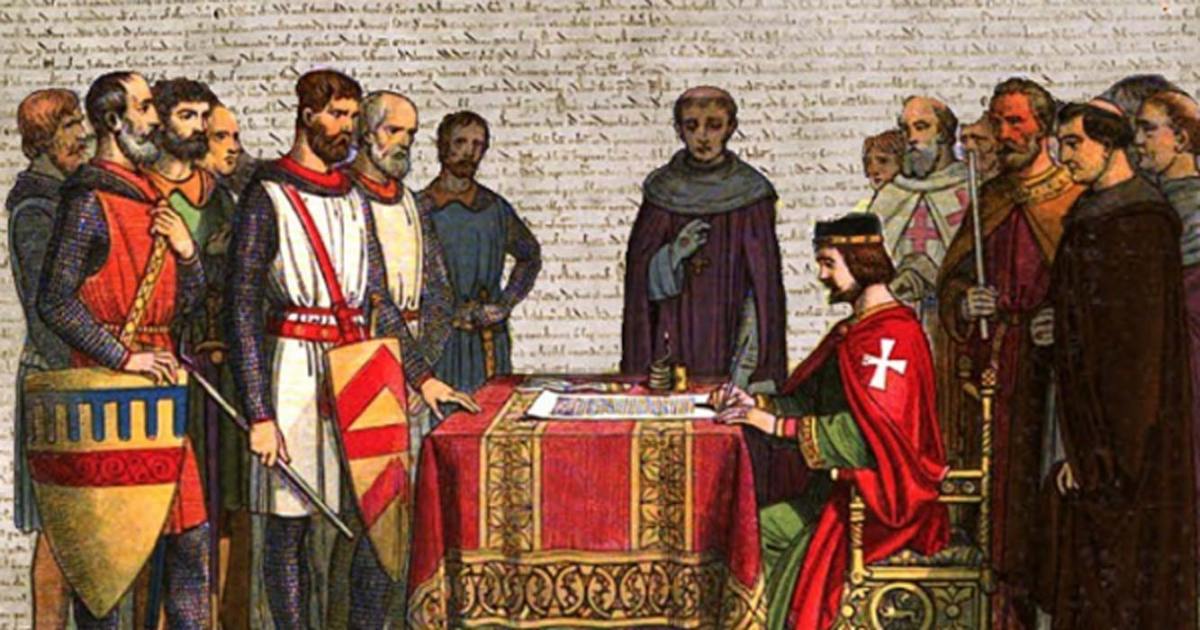
In the year 1215, a very important document was issued. This document was the first to put into writing that the king and his government were not above the law, so it placed limitations on royal authority by establishing law as a power in itself. I’m talking about the Magna Carta. The pioneer law inspired legislation in the West from there on out. The Sermon on the Mount is the Christian version of the Magna Carta in that it sets forth the heart of God and the nature of his kingdom. Where misunderstandings existed, Jesus clarified. Where obscurities puzzled, Jesus explained.
When we arrive at Matthew 5, we must recall how Jesus’ fame had spread through Syria, Galilee, and Judea at the end of the previous chapter. They undoubtedly follow when he ascends the mountain, but they may be more concerned with being fed or healed. Yet, Jesus is speaking to his disciples. What’s unsure is whether Matthew has in mind all twelve or just the ones he’s called thus far: Peter and Andrew, James and John. Jesus speaks to them, but anyone who overhears is welcome to listen. As Moses ascended Sinai to receive the Law from God, so God ascended a mountain to deliver his Sermon on the Mount. There’s a new lawgiver in town, and it’s God in the flesh.
He inaugurates his sermon by pronouncing blessings. “Beatitude” comes from the Latin Bible, where the word beati is in the place of “blessed.” It denotes “blessed,” “happy,” and even “rich,” with the connotation that they are divine in nature. Many Jewish prayers begin with the Hebrew version, baruch, as in, “Blessed are you, Lord our God.” Examples abound in the Hebrew Scriptures (Jer. 17:7–8; Ps. 118:26). The situations in which Jesus pronounced this blessing seem like the most unlikely candidates for it. This is the nature of God’s kingdom—it turns the world right side up. The wisdom of God is wiser than the wisdom of the world, so we will have to overhaul our thinking to think as God does.
“Poor in spirit” has always intrigued me. It doesn’t mean weak in faith. According to David Bentley Hart, the word describes a beggar who seems to be cowering. These folks lack pride and are beneficiaries of the help others offer. They will even pay it forward and help others in need. I believe they recognize their dependence on God and live with that realization in acting. Because this is in the present tense, it’s not something in the future but the present. The kingdom of heaven is theirs now, not in some distant time. In the next one, bereavement could describe not only those mourning loss but the state of women and children who were often destitute and impoverished if no male was present. Their comfort could come in the manner of material help as well as emotional support. Mourning shouldn’t be minimized, however. Trite sayings and platitudes aren’t helpful. To mourn means that you had someone in your life that you truly loved, whose absence now leaves a void. While a dreadful feeling, comfort is promised.
You may have heard the saying, “Meekness is not weakness, but strength under control.” It’s a nice saying with some truth. This beatitude resembles Psalm 37:11, and the same word is used regarding Jesus in Matthew 11:29 and 21:5. There’s no weakness but strength under control. Jesus never lorded his power over his disciples. He served and led them by serving them (cf. Phil. 2:6–11). Environmentalists love the play on inheriting the earth and tying it to treating the world well. I’m not sure Jesus meant that, but caring for the planet is still good. I believe Jesus’ intention concerns the new heaven and earth (cf. 2 Peter 3:13; Rev. 21:1). Some usually take the next beatitude to mean Bible study or knowledge. After all, the will of God in Scripture is righteous and leads us to such, but that’s an internal reading. It’s more of a state of things—of justice. There needn’t be a qualifier placed on the word “justice” (i.e., environmental, gender, etc.). We should desire it on the personal, societal, and global levels. We see so many injustices, so our hunger and thirst for such are met in God’s kingdom.
The next one is misleading. From an initial impression, it means that a forgiving person is blessed and they will be forgiven. However, the term translated as merciful denotes sympathy felt towards another, leading to action. This would be like seeing an elderly person struggling to open a door, so you open it for them. We call it common courtesy, which can be in little or big things. When I envision someone that’s pure in heart, several people come to mind. They were good people who wanted only good and didn’t wrap themselves with worldliness. God was at the forefront of their very being.
The peacemaker beatitude has been popularized and applied to law enforcement, but the idea is more about one who isn’t a tattler or busybody. We all can do things to stir up trouble, but as peacemakers, we don’t offer to do so. In the first century, a group called the Zealots were a revolutionary group that wanted to restore the kingdom of Israel using violence. They aimed to depose the Roman oppressors. Their influence penetrated all Jewish society (cf. John 6:15; 18:10–11), but this wasn’t what Jesus wanted (cf. John 18:36). This was not the kingdom of God.
The beatitudes are closed out by blessings pronounced on those who will suffer for righteousness’ sake (1 Peter 4:14–16). “Revile” is an antiquated term. It’s better to think of “insult,” as we understand it. Physical harm, ostracizing (cf. Luke 6:22), verbal abuse, and false accusations may occur. If it’s the result of being a Christian, Jesus says we are blessed.


 A Minister's Study