Living in the Kingdom (Matt. 7:6-29)

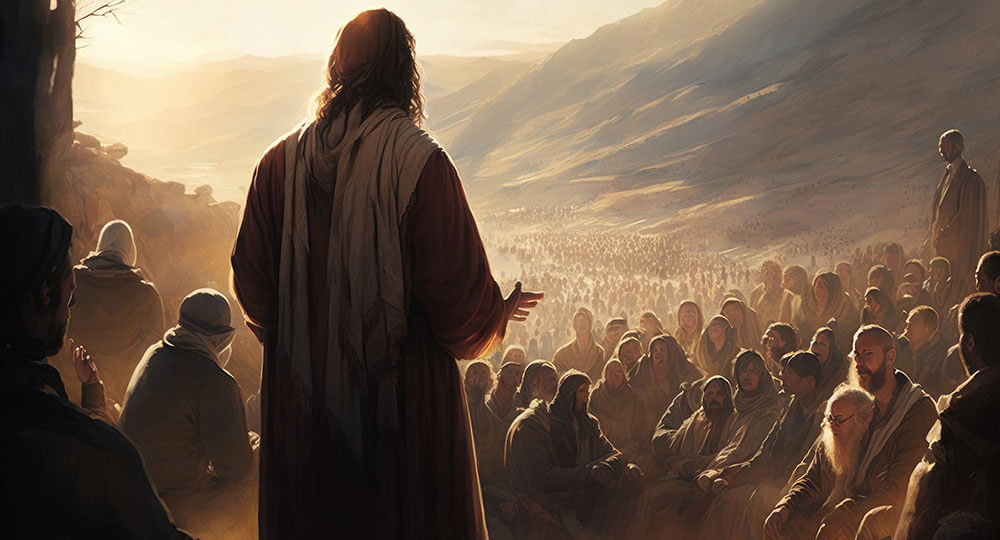
People today treat their dogs better than humans. I have three dogs, two of which live outside and one inside. I love them but would never grill a steak or pork chop for them. If anything, they might get the leftovers. Jesus’ phrase “what is holy” could refer to meat because it necessitated a banquet whenever an animal was sacrificed. Eating what had been sacrificed to God was considered holy, and to give it to dogs was unthinkable. Also, no one would throw pearls to pigs because they don’t understand their value. Therefore, the gospel, represented as what’s holy and pearls, shouldn’t be wasted on those who scorn them. We want to share the good news, but some people don’t like it. Don’t waste it on them. If anything, pray for them to be receptive, but you can lead a horse to water. 

There are several ways to interpret the ask, seek, and knock passage. The first is relative to prayer, and the second to the kingdom of God as the church. When you look at Acts, the latter is understood in the context by some and see how all resources are pooled together so that no one is lacking. This interpretation focuses on verses 9–11 regarding basic needs and that God, through his church, provides for the saints. It’s not a flawed interpretation, but prayer is truer to the context given Matthew’s usage of “ask” concerning it(cf. Matt. 18:19; 21:22) and Jesus’ focus on prayer in the sermon (Matt. 5:44; 6:5–13). Compared to God, who is the absolute good (Matt. 19:17), parents, regardless of how loving they are of their children, are evil. If evil parents can give good gifts to their children, how much more will God? This doesn’t mean that every prayer we pray is answered “yes.” God gives us good things, and not everything we ask for is 1) a necessity (“bread” and “fish”) and 2) good. 

The golden rule was meant to guide the interpretation of the Law (7:12). It parallels similar statements from other civilizations. 

Watch yourself, my son, in everything you do, and discipline yourself in all your conduct. And what you hate, do not do to anyone. (Tobit 4:14–15; second century BC)

Let us show our generosity in the same manner that we would wish to have it bestowed on us. (Seneca, De Beneficiis 2.1.1; contemporary of Jesus)

What is hateful to you, do not do to your neighbor. That is the whole Torah. The rest is commentary. Go and learn! (Hillel, b. Sabb. 31a; 70 BC–AD 10)

Do not do unto others what you would not want others to do unto you. (Confucius, Analects 15.23)

Anything that might seem like we should treat another in a certain way must be turned on ourselves and asked whether or not we’d wish to be treated that way. 

Verses 13–14’s two ways have parallels in other passages (Deut. 30:15; Ps. 1:1–2). The false prophets of whom Jesus speaks (7:15–20) must be set in the backdrop of how he said we should regard our enemies. In the decades following Jesus, prophets arose, leading revolts against the occupying Romans. Theudas (AD 44–46) led a band of people massacred by a squadron, the head of Theudas being paraded through Jerusalem. During Felix’s reign (AD 52–60), an Egyptian led several thousand people to the Mount of Olives, where he promised to command the city walls to fall and subsequently be installed as Israel’s king. Hundreds were killed, and hundreds were imprisoned, the Egyptian man having escaped. They could tell who the false prophets were by their fruits—if contrary to what Jesus taught them (non-violence), they were known to be untrue. 

Once more, he emphasizes proper action over confession (7:21–23). The false prophets would be known by their fruits. His disciples were to let their light shine through their good works (5:16). He wanted their righteousness to exceed that of the Pharisees and scribes (5:20). At every turn, Jesus wanted his disciples to show, by their actions, fidelity to God. They’re not to make a show of it for others but to quietly serve God, trusting in him. Their house will stand if they heed his instructions (7:24–27). The response to Jesus’ teaching as having authority stems from his teaching coming directly from himself. Pharisees and rabbis would have cited the collective wisdom of the rabbis, the Law, or other Jewish writings. Jesus alludes to them but speaks with authority and settles the matter. He taught, unlike any other teacher who lived, not citing different sources. 
The Lord’s Prayer (Matt. 6:9-13)

We must remember that when Jesus spoke about prayer, he urged that it be private and not as a show-off. He also adds that we shouldn’t presume that wordy prayers avail more than simple, concise prayers. In this context, Jesus gives his disciples a prayer to pray, something rabbis often gave their followers. Unlike our prayers today, there were and are liturgical prayers. These are prayers worded verbatim and not extemporaneously as we tend to do today. In synagogues, the shema is prayed on the Sabbath. This is the first word of Deuteronomy 6:4, “Here!” Jewish prayers are often named after the first word or words. The mi shebarach (“May the one who blessed”) has become increasingly common in synagogue meetings. The Lord’s Prayer would have been prayed verbatim. While modern Christians say it’s a model prayer to base our prayers on, the disciples would have repeated precisely these words. 

Prayer is not a way to get God’s attention—we already have it. It is a way to express our feelings honestly and without reservation. Whether worry, anger, thanksgiving, or celebration, the Psalms reflect the various emotions expressed, from despair to joy, from repentance to gladness. Sometimes, the psalmist praises God above all that is, and at other times, lays blame at God’s feet. Prayer can strengthen our relationship with God just as any form of communication enhances a relationship. Muslims pray five times a day; Jews pray three times a day. Christians, however, have little to no discipline about prayer unless you’re in a specific branch that emphasizes it. 

There are three versions of this prayer—Matthew’s, Luke’s (11:2–4), and one in Didache (ca. 50–60). In Luke’s version, the disciples ask Jesus to teach them how to pray. Didache is very similar to Matthew, with a few differences. 

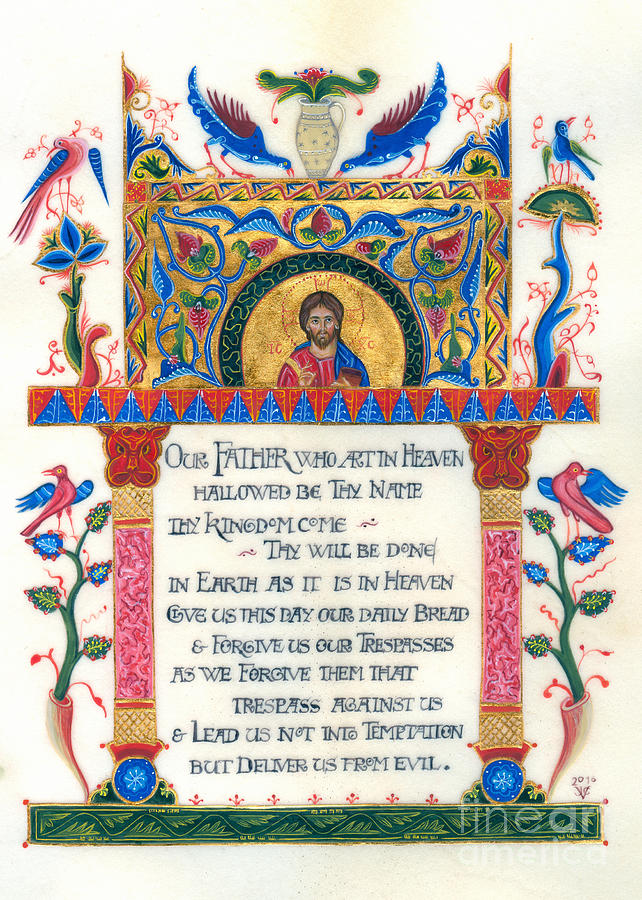
Our Father, who art in Heaven, hallowed be thy Name, thy Kingdom come, thy will be done, as in Heaven so also upon earth; give us today our daily bread, and forgive us our debt as we forgive our debtors, and lead us not into trial, but deliver us from the Evil One, for thine is the power and the glory for ever. Pray thus three times a day. (8:2–3)

The doxology at the end of Matthew’s version is a later addition. Interestingly, the earliest Greek and Latin manuscripts do not contain it. Even early church fathers knew of the shorter version. It makes you wonder why the doxology was added and kept in Matthew’s final version. Even a version of Luke contained, “May Your Holy Spirit come upon us and purify us,” instead of “Your kingdom come.” This is attested to by Marcion’s version of Luke (ca. 85–160); Gregory of Nyssa also wrote about this version. Several amulets have been found in Egypt on which the Lord’s Prayer was inscribed, so we see this prayer as transmitted through time. 

Many Jewish prayers address God with formality, “Blessed be the Name of the LORD our G-d,” though not exclusively (cf. Mal. 2:10). Here, however, Jesus makes it intimate, addressing God as our father, denoting paternal love, protection, and provision. God alone is one’s father (Matt. 23:9). Saying that God was in heaven, the text says “heavens,” speaks about his ability to transcend the physical world. Jews at the time believed in three heavens (2 Cor. 12:2). The third commandment of the Torah was to not use the Lord’s name in vain (Exod. 20:7), and the wording in Exodus means to take a vow or oath in God’s name, as well as in casual conversation. 

When Jesus prays for God’s kingdom to come, many say we should omit this portion of the prayer because the kingdom is already spoken of as something in the present tense (cf. Luke 9:27; 1 Cor. 15:23–25; Col. 1:13; Rev. 1:9). In this sense, I would agree; however, the kingdom has come in that God’s rule is on earth through the church. Yet, the fullness of his kingdom is to be realized after the judgment. Christians live in God’s kingdom, but there are still things on the earth, such as death, that occur that aren’t a part of God’s kingdom. 

When we follow God’s will as we know it on earth, we may also see it done in heaven. We can learn this from the Scriptures that have been preserved for us. Jesus used those Scriptures to combat the devil in the wilderness. He also said he didn’t come to destroy the law and prophets but to fulfill them. The wording about daily bread isn’t as truthful to the text as many English translations give it. In Greek, “daily” isn’t expressed, but giving us tomorrow’s bread today is more accurate to the language. On the one hand, it envisions the messianic banquet (cf. Matt. 8:11). On the other, it reminds us that Jesus is our bread of life (John 6:35, 48, 51). 

Sin is often regarded as a debt (cf. Matt 18:21–35; Luke 7:40–43). We accrue debts through our sins. These debts are too outstanding for our repayment, but the merciful God will forgive us our debts as we forgive our debtors. If we practice canceling debts rather than calling in repayment, we will have our debts canceled (Matt. 6:14–15). When we think about temptation, we think of something that entices us to sin. The term translated as “temptation” refers to outward tests of all kinds. You could render the term “trials” or “ordeal.” These can lead to temptations, but they are not in and of themselves (cf. Prov. 30:7–9). Jesus’ hunger in the wilderness could have turned to sin had he succumbed to Satan’s temptation to turn stones into bread. Judas was not delivered from the evil one, mainly because he did not seek God’s will. Because of this, he opened himself to Satan (cf. Luke 22:3; John 13:27). Just as Satan tempted Jesus through his trial, he can use our ordeals to tempt us, giving that we become weak or despairing in them. 

Praised by God, Not By Men (Matt. 6:1-18)

Jesus wants his disciples not to be show-offs. A balance must be struck between personal piety, the salt of the earth, and letting our light shine (Matt. 5:13–16). When we compare these, it all boils down to intention. To be the salt of the earth isn’t to show off but to be a blessing. Just as salt has taste and color affects whatever it touches when used. It can preserve, melt, season, and other such things. By being what we are, we are meant to be a blessing by being that salt. Just as there are various uses for salt, so there is for light. Many of us remember that plants require light to grow. Solar panels harness direct sunlight’s power, which can be stored in batteries. My house has several solar paneled motion lights and string lights. The string lights illuminate every night around our deck, and whenever the dog or someone walks by the motionlights, it illuminates. It’s very dark in the country, and these lights are helpful and cheaper than running electricity everywhere. You may have heard that darkness is the absence of light. When God ordered the cosmos, he commanded light as the first act of creation (Gen. 1:3).  When the final, heavenly Jerusalem appears, there will be no more night (Rev. 22:5). We’re told to let our light shine so that our good works are seen, and we glorify our heavenly Father. Where’s the balance?

Jesus mentions almsgiving, prayer, and fasting as three areas of piety. He stresses that we do things to be rewarded by our Father and not people (Matt. 6:3–4, 6, 18). So, here are the two areas of tension that will be resolved by noting the intention. Here’s an example that helps me: let’s say you’re out to eat at a restaurant. When your food comes, you and your family bow your heads and offer a prayer. You’re not doing it for attention but to give thanks. That’s letting your light shine because, let’s say, an elderly couple walks by and commends you for that, saying it’s nice to see a young family give thanks without shame. Your light has shone, but you have done it not for praise but out of personal devotion and commitment to God. On the other hand, if you prayed so loud that everyone around you was forced to notice, that’s not good, and the showing off is of concern here. In closing chapter five, Jesus said to be perfect as our Father is, so the instructions that came before and follow that statement show us how to do that. Our word, translated as “perfect,” doesn’t mean “without fault.” I advocate that it should be translated as “complete.” At least, that’s how we’d understand it today.  

The conclusion of intention is shown in each example. In almsgiving, don’t blow the trumpet (Matt. 6:2). In prayer, it’s to be seen by men (Matt. 6:5). With fasting, it’s appearing to men (Matt. 6:16). This is the motivation of the hypocrites. They want to be seen. However, as this chapter closes, we seek God’s kingdom and righteousness first (Matt. 6:33). The law made caring for the poor a central command (Deut. 15:11). What’s interesting is that the term translated “almsgiving” is tzadik. The word for righteousness is tzedakah, which shows the relationship between the two. Doing it for public recognition should not be our motivation. What we give isn’t so much a matter as well, but how we give (cf. Mark 12:41–44). 

Similar sentiments could be said of prayer. This doesn’t rebuke corporate prayer because that’s commanded (1 Tim. 2:1–3) and observed in the early church (Acts 12:5, 12). The emphasis should be on God and not the one praying. Sometimes, people use prayers as sermon times. They give a little sermon for those listening more so than addressing God himself. So, Jesus identifies the praying person who wants to be seen; then, he points out the one who uses vain repetitions. 

The Gemara asks: And one who prolongs his prayer; is that a virtue? … Anyone who prolongs his prayer and expects it to be answered, will ultimately come to heartache … How does he prolong his prayer? By increasing his supplication. (B. Ber. 55a)

A professor once corrected me in a paper by telling me to stop bloviating. I looked the word up because I didn’t know what it meant. Essentially, use fewer words rather than extra unnecessary words. Don’t say in fifty words what can be said in ten. This is why the disciples ask Jesus to teach them how to pray. Rabbis often gave their disciples prayers to pray verbatim. In the early church, the Lord’s Prayer was to be prayed thrice daily (Didache 8.2–3). The Psalms are also a good blueprint. Fasting is also to be private. This religious devotion was associated with mourning, repentance, discipline, or waiting upon the Lord. 

The Holy Spirit Told Me

Some Christians will say, “The Holy Spirit told me.” I never doubt a person’s sincerity, but I don’t quite know what to make of this. I have a lot of questions. For example, how did He tell you? What did He say? What do you mean that he told you? Was it a dream? An email? Help me understand this. 

If you read it in Scripture, fair enough, I can understand that. I recommend you see a counselor if you’re hearing voices. Others have listened to voices in their heads, sometimes leading to awful things (e.g., drinking the Kool-Aid, Waco). Sometimes, you and I intuit or suspect a specific path or action should be followed. I urge caution about attributing something that might have arisen in our minds to the Holy Spirit. Along with this is often the statement that “God called me to do x, y, or z.” The only semblance of a divine calling is the call all Christians receive through gospel preaching (cf. 1 Peter 2:9–10; 1 Cor. 1:9; 2 Thess. 2:13–14). 

We have the indwelling of the Holy Spirit as promised by God (Acts 2:37–39). By the way, please refer to Him as Him and not as “it.” That’s how He’s referred to in Scripture. What, precisely, does He do for us?

  • He comforts us (Acts 9:31). 
  • He pours out the love of God (Rom. 5:5).
  • He helps with our prayers (Rom. 8:26–27). 
  • He causes hope to abound (Rom. 15:13). 
  • He transforms us (2 Cor. 3:18). 
  • He produces fruit (Gal. 5:22–23). 
  • He strengthens us (Eph. 3:16). 

As God’s children, His Holy Spirit can lead us, but only if we so choose (Rom. 8:12–14). When we live according to the Holy Spirit’s teachings, we are led by Him. These teachings are attested to in Scripture since he is the Divine Author. Being led by the Spirit depends primarily upon surrendering to Him (cf. Gal. 5:16, 18, 25). 

Aside from Scripture, I’m unsure how He might lead a person in our time. I don’t presume that He does now as he did in the apostolic era. There are non-micaculous things he does for us, as mentioned above. I haven’t the knowledge to explain how He does these things, but it’s in Scripture, and I’m content to accept what He has told us—without understanding all the ins and outs. He was given to us as a pledge (2 Cor. 1:21–22; 5:5) to be redeemed when Jesus returns. He seals us to show we belong to God (Eph. 1:13–14; 4:30). Going beyond what Scripture says is in many people’s sentiments. Though they are well-meaning, I would need clarification on what they mean by this type of talk. There are times when coincidences occur. We sometimes say, “That’s a God thing.” Could it have been the Holy Spirit? There’s the possibility, but it could also be providence. I’m just cautious about attributing something to the Holy Spirit without certainty that it was Him.

If people through whom the Holy Spirit directly acted can misuse His gifts, we’re not better off. Take the Corinthians Church. Paul commanded that an interpreter be present for those who spoke in tongues so that the church might be edified (1 Cor. 14:10–14). Moreover, tongues were a sign for unbelievers, not believers (1 Cor. 14:20–23). Is this how we see the alleged use of tongues today? No. Instead, those who claim to speak in tongues today behave as the Corinthians Church whom Paul rebuked. Then, he limits the number of the tongue speakers for the sake of order (1 Cor. 14:27–28). He wraps a bow around this by reminding them that the spirits of the prophets are subject to the prophets (1 Cor. 14:32–33), so any accusation that they cannot exercise control when the Spirit is working is something Paul would not have accepted.