Some Developments in Early Christianity (and later)

Catholicism and Orthodoxy were the same for centuries, claiming to be the original church. A split came in the Great Schism in 1054. They share seven ecumenical councils and adhere to the decisions that are derived from them (kind of). However, the Roman Catholic church changed the Nicene Creed (AD 325) to add filioque (“the son”), which upended the doctrine of the Trinity. What changed was that the creed said the Holy Spirit came from God the Father, but by adding the filioque, it read that the Holy Spirit came from the Father and Son, thus making the Spirit subjective to both and lessening his standing in the Trinity. Orthodoxy does not acknowledge this change that was added in the Middle Ages (AD 589).  

Roman Catholicism also added doctrines through the pope’s primacy: purgatory, immaculate conception, stigmata, and praying the rosary, among others. They differ on original sin. Catholicism teaches that every person born is tainted with the guilt of the sin of Adam. This is why they “baptize infants.” Actually, they sprinkle them. “Baptize” means to immerse, which they don’t do. There’s a Greek term for sprinkling seen in Hebrews concerning the blood of bulls and goats (Heb. 9:19-21). That term is rhantizo. Orthodoxy views original sin as having the proclivity to sin because we are all born in the flesh. Still, newborns are innocents who will someday act upon that proclivity and invite sin into their lives. They immerse infants for around forty days of life. 

Ignatius of Antioch was the first to mention the catholic church (Smyrneans 8; ca. AD 107), and he did so as a call to unity around the congregational bishop who was to protect the church from heresy. The usage of “orthodox” was prevalent by the fourth century to distinguish those of the apostolic tradition from heretics. Here are changes that occurred that varied from apostolic teaching:

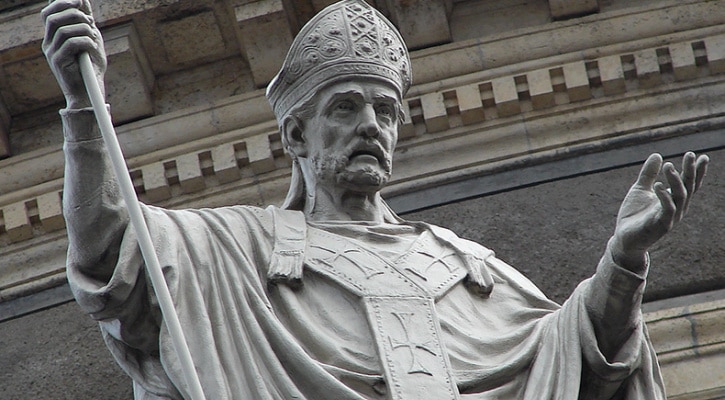
  • In the early second century, the local congregation’s leadership went from elders, deacons, and ministers (1 Tim. 3) to one elder being chosen as bishop among his fellow elders. Jerome later regarded this change as a “result of tradition, and not by the fact of a particular institution by the Lord” (Comm. Titus 1.7; cf. Did. 15.1; 1 Clement 42.4; Poly., Phil. 5-6; Shep. Herm. vis. 8.3). This bishop was over the elders, deacons, and congregation. At times, you couldn’t take the Lord’s Supper unless the bishop was present to preside over it unless he appointed a proxy in his absence from among the elders. More and more became tied to the bishop, so he performed baptisms exclusively (see Ignatius, Mag. 2; Trall. 2; Smyrn. 8).
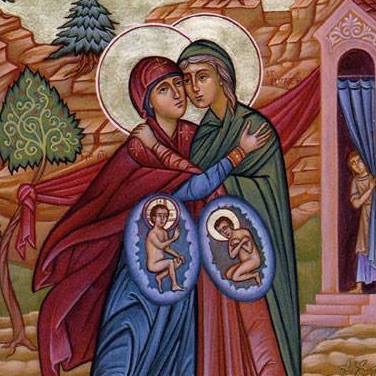
  • The Protoevangelium of James is a second-century apocryphal Christian text, considered to be an “infancy gospel,” that narrates the birth and early life of Mary, the mother of Jesus. It includes details not found in the canonical New Testament, most notably the idea of her perpetual virginity; it is believed to have been written sometime around the mid-2nd century. This is the earliest evidence of special attention given to Mary, which would give rise to the practice of venerating her. 
  • By the third century, Cyprian of Carthage (ca. AD 200–258) wrote about baptizing infants as a passing matter (Epistle 58; cf. Acts 8:12, 36–37; 16:29–33), which suggests the practice was entirely common by his time. Discussions of the matter appear as early as Irenaeus (ca. AD 120/140–200/203; Contra Haer. 2.22.4) and Tertullian (ca. AD 200; On Baptism 18). 
  • In the latter third century, veneration of martyrs on the anniversary of their deaths became common. For Origen (ca. 185–254), explicitly, veneration stood with Jesus and not in competition with him (1 Tim. 2:5; cf. Lev. 19:31; Is. 8:19; Eccl. 9:5–6). In the fourth century, they were regarded as sancti, from which “saints” arose. 
  • The Council of Elvira imposed celibacy on clergy (canon 33; ca. AD 300–310), contrary to 1 Timothy 4:3. 
  • By AD 428, Pope Celestine rebuked bishops for not wearing distinguishing attire, which means clerical garbs arose sometime before then (cf. Matt. 23:5). 
  • Owing to their view of original sin, they celebrated Mary’s immaculate conception as early as the fifth century. This doctrine teaches that she was conceived without original sin so that she could bear Jesus. The doctrine was officially defined in 1854.
  • The term “mass” appears around AD 604. It derives from the Latin term missa, meaning “to go.” It was pronounced at the end of worship and is closely associated with “mission.” 
  • In AD 595, the Patriarch of Constantinople, John the Faster, assumed the title “Ecumenical Patriarch.” Gregory the Great, or Pope Gregory I, wrote to the emperor, begging him not to acknowledge it. Emperor Maurice accepted it. A few years later, Emperor Maurice was slain by a usurper—Phocas. Pope Gregory sent letters of praise to the new emperor. However, in AD 606, Phocas transferred the title “Universal Bishop” to Boniface III, the bishop of Rome, thus establishing the modern-day Catholic Church of Rome.
  • The doctrine of transubstantiation, elaborated by Scholastic theologians from the 13th to the 15th century, was incorporated into the documents of the Council of Trent (1545–63). This doctrine taught that when the priest blessed the bread and wine, it became the literal body and blood of Jesus. 
  • Papal infallibility was established in 1870. 

Perhaps the most significant difference between us is our views on Scripture. They contend that the church created the canon, thus exercising authority with and greater than Scripture. To them, the church is the proper interpreter of Scripture. I believe writings were already acknowledged as Scripture in the New Testament (2 Peter 3:15-16). Paul quoted Luke 10:7 in 1 Timothy 5:18. We also note that unanimity was taught in all the churches (1 Cor. 4:17; 7:17; 16:1). Also, New Testament writings were circulated among the churches (cf. Col. 4:16; 1 Thess. 5:27; 1 Peter 1:1; Rev. 1:4). Here are a few other factoids:

  • Didache (AD 50–60) refers to the Lord’s Prayer as it appears in Matthew. 
  • The letter 1 Clement was written near AD 95, and he alludes to the writings of Paul as Scripture and Matthew, Luke, Acts, James, and 1 Peter. 
  • In AD 110, Ignatius alludes to Matthew, Luke, and John. 
  • Polycarp, in AD 110, called Ephesians Scripture. He also references Romans, 1 Corinthians, Galatians, Philippians, 2 Thessalonians, and 1 & 2 Timothy; he quotes Matthew, Mark, and Luke.

I wouldn’t say the church created the New Testament. I would contend that they acknowledged and compiled the books identified as Scripture since the apostolic age. This was done as a reaction to proposed canons, some of which omitted the inspired books. This may have begun with Marcion, the second-century heretic who omitted all of the Old Testament and only recognized Luke’s gospel and some of Paul’s epistles as Scripture. In addition, we have Bryennios’ List, the Muratorian canon, Melito’s canon, Origen’s commentaries, and others. Many of these agree with minor variations, but they didn’t create them so much as to recognize what was a part of the apostolic tradition.

Ancient Interpretations (Acts 8:16)

In Acts, Luke uses a similar phrase for different meanings. Given the context, it’s up to the reader to discern what he means by what he says. Let’s lay the groundwork. In Acts 2:38, we’re told that when one repents and is baptized, they receive forgiveness of sins and the Holy Spirit. This is stated with a promise to those present, those who come after them, and all who are far off, as many as the Lord calls to Himself by preaching the gospel. We conclude that everyone who repents and is baptized, obeying God, receives forgiveness and, more pointedly, the gift of the Holy Spirit. Some folks disagree as to what the gift of the Holy Spirit is. Still, I interpret it as the believer being given the Holy Spirit himself. If you disagree, that’s a discussion we can have another time since that isn’t the focus of this article.

As we read through Acts, we come to Acts 8, where Philip is preaching to the Samaritans. We read that after Philip preached and worked wonders, many people, men and women, believed the preaching and were baptized (Acts 8:12). We read a couple verses later that Peter and John are sent to Samaria to pray “for them that they might receive the Holy Spirit” (Acts 8:15–16). Have we misunderstood our earlier interpretation? Many brethren interpret as I do as a double entendre (a word or phrase open to two interpretations). In Acts 2:38, we don’t see Christians working signs and wonders. Only the apostles could work signs and wonders (Acts 2:43; 4:33; 5:12). Even in Acts 8:18, the laying on of apostolic hands conferred the ability to work signs and wonders. What are we to make of these two interpretations?

 Let’s ask an ancient Christian by the name of John Chrysostom. He flourished around the end of the fourth century and was Bishop of Constantinople. While we may have many disagreements about how church was done in his time, we must credit him for being a great expositor of Scripture. That second name, Chrysostom, wasn’t a surname but an honorarium given to him by many people. It means “Golden-mouthed” in Greek because John was a gifted orator who captivated audiences with his eloquent speaking style. He preached a series of homilies in the book of Acts, and when he comes to Acts 8:16, here’s what he wrote: “How was it then that they did not receive the Spirit? They had received the Spirit of remission of sins but not the Spirit of the signs.… To show that this was the case and that it was the Spirit of signs that they had not received, notice how Simon, once he saw the result, came and asked for this.” It would seem that John agrees with our conclusion, and he did centuries before we opened the Word.

Ancient Interpretations (Romans 10:9–13)

When studying a passage, I enjoy reading commentaries, word studies, and other research materials. Yet, I’ve learned to also consult Christians who lived closer to the time of Jesus than the scholars and commentators who give us great work. Neither the early church leaders nor modern scholars are always right, but it doesn’t mean they didn’t get anything right.

Some good neighbors instruct a person to be saved using Romans 10:9–13, and they even use this passage and say, “Invite Jesus into your heart,” or, “Pray the sinner’s prayer.” Allow me to say that I don’t question a person’s sincerity in their beliefs. As the late Antonin Scalia once said, “I attack ideas. I don’t attack people. Some very good people have some very bad ideas.” Neither the sinner’s prayer nor asking Jesus into your heart is in the Bible. This notion can be traced back to Billy Graham popularizing it in his crusades.

Historian Thomas Kidd traces it back to Anglo-American Puritans in the seventeenth and eighteenth centuries. The Puritan devotional writer John Flavel spoke of those who heard the gospel but would “receive not Christ into their hearts.” Thomas Boston, a Scottish Calvinist, encouraged Christians to take communion to receive “Christ into their hearts.” Benjamin Colman wrote in the early eighteenth century that Christians should “receive Christ into their hearts and hold him forth in their lives.” The phraseology became more and more formalized as time passed.

How should this passage be interpreted? Let’s ask some ancient Christians. While many have commentaries on this passage, I want to introduce you to Augustine. Augustine lived from the middle of the fourth century into the fifth century. He was a rather worldly fellow until he heard the preaching of Ambrose of Milan. Ambrose communicated the gospel in a way that appealed to Augustine because the sinner was also a philosopher and very intelligent. Most of the preachers he heard preached so simply that it turned him away, but Ambrose helped him. Later on, Augustine would become the bishop of Hippo (now Algeria). Western civilization owes a lot to Augustine. He lived to see the fall of the Roman Empire, and his writings have shaped much of Western civilization.

In his writing entitled The Christian Life, Augustine writes, “This condition is fulfilled at the time of baptism when faith and profession of faith are all that is demanded for one to be baptized.” Just as we do today, we ask for their confession before baptizing someone. They confess that they believe that Jesus is the Son of God. We also see it in verses such as Acts 2:21, 9:14, 22:16, and 1 Corinthians 1:2 in one form or another.

The”Church” Did Not Create the Bible?

The most significant difference between Orthodox/Catholics and us is the place Scripture and the church hold. After conversing with several priests and members of those traditions, they often say that the church created the Bible. Therefore, only the church (e.g., clergy) can correctly interpret it and have authority beyond it. Our position isn’t that they created the Bible but recognized what God had inspired and held as such throughout the existence of the church and Israel. 

They already recognized certain writings as Scripture (2 Peter 3:15–16). Paul quoted Luke 10:7 in 1 Timothy 5:18, thus attributing to Luke’s gospel as Scripture. Unanimity was taught so that what was taught in one church was taught in all (1 Cor 4:17; 7:17; 16:1), and New Testament writings were circulated (Col. 4:16; 1 Thess. 5:27; 1 Peter 1:1; Rev. 1:4). Even New Testament writings are cited in early Christian letters. 

Didache (AD 50–60) refers to the Lord’s Prayer as it appears in Matthew. The letter 1 Clement was written near AD 95, and he alludes to the writings of Paul as Scripture and Matthew, Luke, Acts, James, and 1 Peter. In AD 110, Ignatius alludes to Matthew, Luke, and John. Polycarp in AD 110 calls Ephesians Scripture. He also references Romans, 1 Corinthians, Galatians, Philippians, 2 Thessalonians, and 1 & 2 Timothy; he quotes Matthew, Mark, and Luke. The point is that from the first century until the Bible was officially canonized, early Christians quoted from books we call Scripture as though they were divinely inspired and authoritative. 

In the second century, Melito of Sardis wrote about the Hebrew Scriptures and the books regarded as divine. 

Accordingly when I went to the East and reached the place where these things were preached and done, I learned accurately the books of the Old Testament, and I send them to you as written below. These are their names: Of Moses five, Genesis, Exodus, Numbers, Leviticus, Deuteronomy; Joshua the son of Nun, Judges, Ruth, four of Kingdoms, two of Chronicles, the Psalms of David, Solomon’s Proverbs or Wisdom, Ecclesiastes, Song of Songs, Job; of the Prophets: Isaiah, Jeremiah, the Twelve [minor prophets] in one book, Daniel, Ezekiel, Esdras.

Eusebius Eccl. Hist. 4.26.14

Other lists predated Melito’s (e.g., Josephus, Against Apion [AD 94]; Bryennios List [AD 100–150]). 

What precipitated the New Testament was the proposal of a canon that rejected many of the already regarded books. In AD 144, Marcion listed the gospel of Luke and ten of Paul’s epistles, omitting the rest of the New and Old Testaments. A response came in AD 180 in what’s known as the Muratorian Canon. It contained twenty-two of our twenty-seven New Testament books. This was also when Melito gave his list of the Old Testament. Athanasius’ 39th Festal Letter (AD 367) has the list of New Testament books we employ.  

One rebut you may encounter is that authority among clergy is apparent in the Jerusalem Council in Acts 15. Subsequent councils look to this example as to how the church makes determinations. Eastern Orthodoxy is often called the church of Councils because it is how they solve disputes and come to the census. There are four stages: 1) assembly (Acts 15:6), 2) testimony (Acts 15:7–12), 3) decision (Acts 15:13–21), and 4) adoption (Acts 15:22–29). The main difference between then and now is that the Holy Spirit inspired those men, and they even invoked the Spirit’s activity among Cornelius to arrive at their conclusion. Moreover, when they use the word “church,” they have the clergy in mind. The church doesn’t consist solely of her ministers. 

The Frequency With Which We Partake of the Lord’s Supper (i.e., Communion, Eucharist)

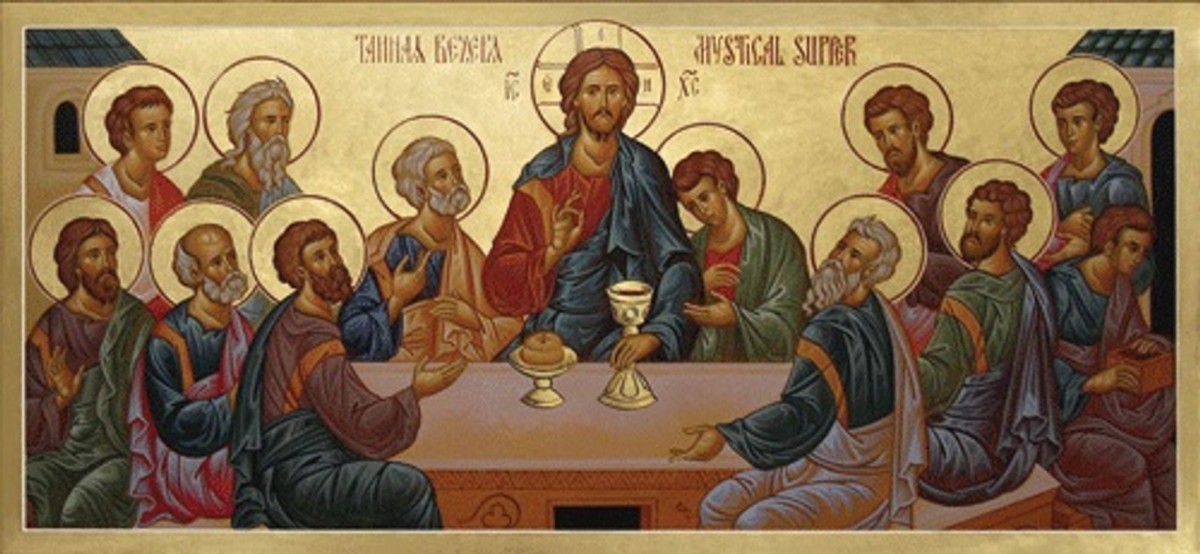
One unique feature of Christ’s Church compared to many other fellowships is the weekly observance of the Lord’s Supper. Many others take it daily (Catholic Church), while some observe it quarterly or on “holidays” (e.g., Easter, Christmas). Nevertheless, the weekly observance is observable when looking at Scripture and early church history. The book of James is likely the earliest written letter of the New Testament (AD 45–48), but 1 Corinthians, written in AD 55, contains the earliest description of a worship service (1 Cor. 11–16). From that passage, we can draw out what they did by how Paul rebukes them for not doing it correctly. 

In 1 Cor. 11:17–18, Two phrases stick out in this passage: 1) “when you come together” in verse seventeen, and 2) “when you come together as a church” in verse eighteen. The phrases “coming together” (1 Corinthians 11:20) and “same place” are most often to be understood as the worship assembly unless the immediate context determines otherwise. We see a variant of these phrases in 1 Corinthians 14:23—“If, therefore, the whole church comes together …” A rather famous passage used of Christian worship in this respect is Hebrews 10:25, “Not neglecting to meet together …” 1 Cor. 11:20 explained the purpose of their coming together—the Lord’s Supper. Who partook? The church, or Christians (1 Cor. 11:22; cf. 12:13). Paul spoke of Christians, not visitors or outsiders. His entire discourse in chapter 12 was regarding the body, the church. Prophecy and the speaking of tongues that he spent so much time on would have been their equivalent of our modern notion of preaching since they were revelatory (1 Cor. 13:1–2, 8–9; 14:1–5). Prayer and singing are next mentioned. Each of these was followed by a congregational “Amen” (1 Cor. 14:14–16; cf. v. 26). At the portion of the worship where praying, singing, and preaching occurred, we read of visitors being present in the assembly (1 Cor. 14:23–24).

We note from 1 Cor. 14:33–35 that women were to have been silent in teaching/preaching since Paul was coming off the heels of speaking about preaching (1 Cor. 14:27–32). This may reflect his earlier mentioned women praying and prophesying (1 Cor. 11:5). Some people say this was a command only for the Corinthians. However, Paul told the Corinthians other things he told all the other churches (1 Cor. 4:17; 7:17; 14:33; 16:1). Paul takes a momentary detour and talks at length about the resurrection in 1 Cor. 15. However, he twice notes that the things he speaks of were “according to the Scriptures,” which suggests that the Scriptures (likely the OT) were read during the assembly as well (1 Cor. 15:3–4). Finally, in 1 Cor. 16:1–3, he mentions a contribution for the relief of those in Jerusalem that was to have been collected “on the first day of the week.” Some versions insert the term “every,” but it’s not present in the Greek, though Paul might have meant it. Everything he mentioned from 1 Cor. 11:17–18 are the “acts of worship.” There was the Lord’s Supper, preaching, praying, singing, Scripture reading, and a collection. We mention the five acts of worship, but there are six here when you account for Scripture reading. This was done, according to 1 Cor. 16:2, “on the first day of the week.”

Another passage regarding the weekly partaking of the Lord’s Supper is in Acts 20:7–12. This passage implies that they broke bread on the first day of the week or Sunday. The Sabbath was the last day of the week, the seventh day of the week. Along with this supper was the proclamation of the word. Luke writes as if his audience is aware of the custom, so he doesn’t go into detail but mentions what they did. 

Even in Christian history, we see a weekly observance. In a writing that was likely written around the same time as 1 Corinthians or thereabouts, we read, “Having earlier confessed your sins so that your sacrifice may be pure, come together each Lord’s day of the Lord, break bread, and give thanks.” (Didache 14). Often referred to as “breaking bread,” the Lord’s Supper was under discussion here since the author(s) mentioned it only a few verses earlier.  

Even 100 years later, Justin Martyr wrote to the Emperor a defense of Christianity called his 1 Apology, in which he describes the weekly Christian worship meeting. 

Having ended the prayers, we salute one another with a kiss. There is then brought to the president of the brethren bread and a cup of wine mixed with water; and he taking them, gives praise and glory to the Father of the universe, through the name of the Son and of the Holy Ghost, and offers thanks at considerable length for our being counted worthy to receive these things at His hands. And when he has concluded the prayers and thanksgivings, all the people present express their assent by saying Amen. This word Amen answers in the Hebrew language to γένοιτο [so be it]. And when the president has given thanks, and all the people have expressed their assent, those who are called by us deacons give to each of those present to partake of the bread and wine mixed with water over which the thanksgiving was pronounced, and to those who are absent they carry away a portion. And this food is called among us Εὐχαριστία [the Eucharist], of which no one is allowed to partake but the man who believes that the things which we teach are true, and who has been washed with the washing that is for the remission of sins, and unto regeneration, and who is so living as Christ has enjoined … And on the day called Sunday, all who live in cities or in the country gather together to one place, and the memoirs of the apostles or the writings of the prophets are read, as long as time permits; then, when the reader has ceased, the president verbally instructs, and exhorts to the imitation of these good things. Then we all rise together and pray, and, as we before said, when our prayer is ended, bread and wine and water are brought, and the president in like manner offers prayers and thanksgivings, according to his ability, and the people assent, saying Amen; and there is a distribution to each, and a participation of that over which thanks have been given, and to those who are absent a portion is sent by the deacons. And they who are well to do, and willing, give what each thinks fit; and what is collected is deposited with the president, who succours the orphans and widows and those who, through sickness or any other cause, are in want, and those who are in bonds and the strangers sojourning among us, and in a word takes care of all who are in need. But Sunday is the day on which we all hold our common assembly, because it is the first day. on which God, having wrought a change in the darkness and matter, made the world; and Jesus Christ our Saviour on the same day rose from the dead.

1 Apology 64-66

By the fourth century, it was observed daily. The medieval church required penance before taking it, so many believers only took it annually, the absolute minimum permitted by the clergy. This was right before the Reformation. “The Lord’s Table should have been spread at least once a week for the assembly of Christians, and the promises declared in it should feed us spiritually” (Calvin, Inst., 4.17.46; c. 1536). The powers-that-be in Geneva, where Calvin reformed, were unwilling for the Reformation to go this far, but they permitted it to be taken four times a year. This is why many Protestant churches observe it as infrequently as they do, while the ancient Christians observe it weekly.

Now, infrequency will not make it more meaningful as much as weekly partaking makes it less significant. God has given the supper its meaning, and nothing can change that. Moreover, why not only give once a quarter or have the preacher deliver a sermon only infrequently? If someone finds it too familiar, that’s a heart problem, not the observation. We partake in the manner of our forebearers because they, having the apostles of Jesus, were so instructed.

The One Question Members of Churches of Christ Are Asked

“Y’all don’t believe in music, do you?” “You’re the ones that don’t use music, right?” “Why doesn’t your church use instruments?” Let me add the following caveat: my earliest years were spent in the Baptist Church. If you remember Ray Stevens and his song “The Mississippi Squirrel Revival,” the video was shot in the little Baptist Church I attended with my grandfather. New Hope Baptist Church in Hermitage, TN. Then, the church had a pianist and choir. As they grew, a full band, the choir, soloists, etc. My wife grew up Roman Catholic, and they also had their instruments. The first time I went to a church of Christ, I asked, “Where’s the choir supposed to stand?”

The short answer to why we don’t praise God with instruments hinges on identity. We aim to be as close to how the church was in the New Testament as we can observe. Scripturally and historically, the early church never used instruments in their worship. The Temple cult had instrumentalists and singers until its demolition by the Romans in AD 70. Also the pagan cults used them as well. The early church wanted to do as much as possible to distance themselves from both Judaism and paganism, though they more resembled the former rather than the latter. And by that, I mean the early church meetings were similar to synagogue meetings in many ways. Many scholars assert that the synagogue was the precursor to the church in organization, liturgy, etc.

They asserted, however, that the sum and substance of their fault or error had been that they were accustomed to meet on a fixed day before dawn and sing responsively a hymn to Christ as to a god, and to bind themselves by oath, not to some crime, but not to commit fraud, theft, or adultery, not falsify their trust, nor to refuse to return a trust when called upon to do so. When this was over, it was their custom to depart and to assemble again to partake of food–but ordinary and innocent food. 

Pliny, Letters 10.96-97 (AD 111-113)

The first question one tends to have is if using them is sinful or not. I don’t think in those terms. That’s like asking, “What’s the least amount I have to do or that I can get away with?” Again, for me, it’s about identity. I want to be as they were in the first century. If only I had some apostles and prophets around …

“Acapella” has been defined since the twentieth century as “unaccompanied vocal music.” Still, the etymology of the term itself is of Italian derivation and means “in the manner of the chapel [church]” or “according to the chapel” and was used in older church music (pre–1600) written for unaccompanied voices. Therefore, if the very term we use for singing without instruments means “according to the chapel” or “church,” then the word defines the music style used by the church. 

For the first decade of Christianity, the only Christians were Jewish. They often met in either houses or synagogues (James 2:2), so the service would naturally resemble what occurred in a synagogue. Prayers, the law, and the prophets were read. An interpreter would translate what was read in Hebrew to those who didn’t understand it. The prayers were chanted or intoned. There were no hymns sung, unlike at the Temple. Yet, that changed, and in the assembly, Christians sang (1 Cor. 14:15; Eph. 5:18–19; Col. 3:16–17; Heb. 13:15; James 5:13). Ambrose of Milan, so I’ve read, introduced instruments in the West in the fourth century but was met with opposition. The organ was introduced in the West in the mid-eighth century, but instruments were widely used in the West by the tenth century. The East never adopted them (i.e., the Orthodox Church). The commonality of instruments in denominations only goes back 150 years, give or take. So, I might ask, “Why does your church use them?”

Many people don’t know that respected teachers in their denominations opposed them. Their main opposition was because it was “Catholic” to use them. Read what they had to say.

  • The instrument in worship is an ensign of Baal. (Martin Luther [Catholic, then founder of the Lutheran Church]) 
  • Musical instruments in celebrating the praises of God would be no more suitable than the burning of incense, the lighting of lamps and the restoration of other shadows of law. The Papists, therefore, have foolishly borrowed this, as well as many other things, from the Jews.  Men who are fond of outward pomp may delight in that noise; but the simplicity which God recommends to us by the apostle is far more pleasing to him. (John Calvin [Puritans, Presbyterians, and earlier Baptists follow his theology] commenting on Psalm 33:2) 
  • I am an old man, and an old minister; and I here declare that I never knew them [instruments] productive of any good in the worship of God; and have reason to believe they were productive of much evil. Music, as a science, I esteem and admire: but instruments of music in the house of God I abominate and abhor. (Adam Clarke [Methodist] commenting on Amos 6:5) 
  • I have no objection to instruments of music in our chapels, provided they are neither HEARD nor SEEN. (John Wesley, as quoted by Adam Clarke in Amos 6:5) 
  • I would just as soon pray with machinery as to sing with machinery. (Charles Spurgeon [Baptist]  commenting on Psalm 42) 
  • Staunch old Baptists in former times would have as soon tolerated the Pope of Rome in their pulpits as an organ in their galleries. And yet the instrument has gradually found its way among them and their successors in church management, with nothing like the jars and difficulties which arose of old concerning the bass viol and smaller instrument of music. (David Benedict, in his book Fifty Years Among the Baptists
  • More important than explicit opposition to instruments is the simple fact that they are not used in the patristic period [A.D. 100-450]. (James W. McKinnon [Catholic] wrote this in his dissertation “The Church Fathers and Musical Instruments”)

Represented are Lutherans, Presbyterians, Wesleyans (Methodists and Church of Nazarene), Baptists, and Catholics—all of whom did not esteem instruments in Christian worship.

Once more, I point out the short answer: we don’t use instruments in worship because the early church didn’t either. We simply don’t use them because we seek to be as much like them as possible. Some people believe it adds to worship. We might disagree, but worshipping God shouldn’t be like a concert. If you look at passages depicting heaven (cf. Isaiah 6; Revelation 4-5), the hosts always praise God with their voices. I guess you could say we use instruments, but only the ones God created.

Why “Worship” Is Too Broad

I was conversing with someone at church who relayed the statement another made about worshipping in their car while the radio played on the Christian station. After they told me what was said, I replied, “I think the term ‘worship’ is too broad. There are three Greek terms translated as ‘worship’ in the New Testament, and they each denote something different that our word ‘worship’–which has become a catch-all term for anything we consider to be worship.”

The first thing we need is a real revolution in our relation to language ….  It simply no longer occurs to us that everything that we have all known for so long, and all too well, could be otherwise—that these grammatical forms have not dissected and regulated language as such since eternity like an absolute, that instead, they grew out of a very definite interpretation of the Greek [language].

Martin Heidegger

Andrew McGowan addresses this in his book, Ancient Christian Worship. The form for a wedding pronouncement as far back as 1549 entailed these words when the groom placed the ring on his bride: “With this ring I thee wed; this gold and silver I thee give; with my body I thee worship; and withal my worldly goods I thee endow.” Certainly, we’re not talking about the sort of worship one gives to God! McGowan observes that at that time, the sharing of wealth was worship.

Here are the terms we see in the New Testament.

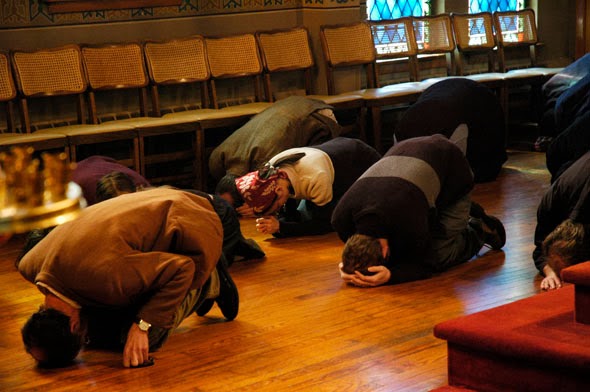
  • Proskyneses—This term spoke to a person’s posture before another more worthy than they. We “bow” our heads for prayer when, decades ago, men would kneel. In some congregations, people stand during the reading of the Bible. In denominations, some will prostrate themselves at certain times. Our posture is reflective of our attitude. Some argue that we don’t have to have any particular posture but should be the posture of one’s mind and heart. However, our physical posture sometimes moves our mind and heart to be in sync. When Peter entered, Cornelius met him and fell down at his feet and worshiped [proskunesen] him. But Peter lifted him up, saying, “Stand up; I too am a man.” (Acts 10:25–26 ESV)
  • Latreia—This term was used regarding cultic forms of worship and the accompanying tasks. Anna, the prophetess, worshiped [latreuousa] “with fasting and prayer” (Luke 2:37). In Hebrews, the term is used in this particular vein as well when referring to the worship in the Temple and Tabernacle (Hebrews 8:5; 9:9; 10:2; 13:10).
  • Leitourgeo—“liturgy” is simply a transliteration of the Greek word used in the Bible several times. In Luke 1:23, it’s translated as “service” to describe Zechariah’s priestly service in the temple. It’s also used in sacrificial, worshipful contexts as “offering” (Philippians 2:17) and “worship” (Hebrews 9:21). We see it explicitly in Acts 13:2.

We have taken several terms and boiled it down to one word, “worship.” However, first-century Christians understood that it included one’s physical posture, a particular task or act performed, and a ritualistic nature to what was done. In some ways, we use the term correctly, but we may also use it as a catchall for what we believe is worship. The issue may not be resolved so easily, because even Augustine of Hippo encountered the same problem.

To make offerings and sacrifice, and to consecrate our possessions and ourselves . . . is the worship [cultus] that is due to the divinity . . . and since no Latin term sufficiently exact to express this in a single word occurs to me, I shall avail myself, where needed, of Greek. Latreia, whenever it occurs in Scripture, is rendered by the word “service” [servitus]. But that service that is due to humans, referring to which the apostle writes that servants must be subject to their own masters, tends to be referred to by another word in Greek, whereas the service that is paid to God alone by worship [cultus], is always, or almost always, called latreia in the usage of those who wrote down the divine oracles for us. So if we only used the word “worship,” it would not seem to be due exclusively to God; for we also speak of “worship” of humans, whom we celebrate with honors, whether in memory or in the present.

City of God 10.1.2

Settling the New Testament?

The twenty-seven books that make up the New Testament appear in the 39th Festal Letter of Athanasius (c. 367)—a prominent bishop—and this is the typical starting point for many regarding their history of the canon. Because of such a detailed letter regarding the New Testament, some have concluded that the canon was a late invention considering the letter’s dating. Still, the canon emerged in the first century and is evident in the writings of the early church fathers as functional before the fourth century. Athanasius wrote this letter to end the disputes about other orthodox letters believed to be equal to apostolic writings—Shepherd of Hermas and Epistle of Barnabas. It also detailed Peter’s epistles and Revelation’s authenticity, which was questionable to some.

Earlier than his festal letter, a catalog from North Africa listed twenty-four books named the Mommsen Catalog (c. 359). Cyril of Jerusalem had earlier listed all the books except Revelation (c. 350), but the Council of Nicea is often the canon’s accepted settling point (c. 325). However, the council’s entirety wasn’t about the canon, but the divinity of Jesus, hence the Nicene creed. Because they affirmed the canon doesn’t mean they “created” it. Similarly, regional church councils acknowledged the canon but didn’t determine it. As Michael Kruger puts it, “These councils were declaring the way things had been, not the way they wanted them to be.” 

Around 250 CE, the early church theologian, Origen produced a list of the New Testament in his commentary on Joshua.

Matthew … Mark also; Luke and John each …  Even Peter … in two of his epistles; also James and Jude. In addition, John … through his epistles, and Luke, as he describes the Acts of the Apostles … in fourteen of [Paul’s] epistles. (Hom. Josh. 7:1; cf. Hom. Gen. 13.2)

This list would have included Revelation and John’s epistles; Hebrews would have counted as a letter of Paul because some in the early church believed that Paul wrote Hebrews. 

What, however, precipitated the list and the official declaration of the canon? It all began around 144 CE because of an early church heretic, Marcion. He only listed the gospel of Luke and ten of Paul’s epistles, omitting the pastorals and Hebrews. A harmony of the four gospels appeared in 170 CE by Tatian and was entitled Diatessaron. At about the same time, Melito of Sardis identified the Old Testament canon used by the Jews. The earliest response to Marcion’s list with list is the Muratorian Canon (c. 180), named after its discoverer. It contains twenty-two of our twenty-seven books, omitting James, 1 & 2 Peter, 3 John, and Hebrews. Interestingly, around the same time as the Muratorian Canon, Irenaeus was the first to refer to a New Testament (Adv. Haer. 4.15.2).  

This leads to the truth that some books we now acknowledge as inspired weren’t always regarded as such by everyone in the early church. Athanasius explained the reasoning for excluding two well-regarded writings, but a few were disputed earlier, such as 2 Peter, 2–3 John, Jude, and James. Other writings were outright rejected: Acts of Paul, Apocalypse of Peter, Gospels of Peter, Thomas, and Matthias (Eus. Eccl. Hist. 3.25). 

You Have Heard It Said, But I Say To You

Matthew 6:1–34

Jesus addresses a concept exposing faults in the Pharisees and scribes. They did things to be seen (vv. 2, 5, 16). Verse one has “piety” or “charitable deeds.” The former is from a more ancient version of Scripture. The three acts of piety are almsgiving, prayer, and fasting. A second-century BCE text highlights the relationship between the three.

Prayer with fasting is good, but better than both is almsgiving with righteousness. A little with righteousness is better than wealth with wrongdoing. It is better to give alms than to lay up gold. For almsgiving saves from death and purges away every sin. Those who give alms will enjoy a full life, but those who commit sin and do wrong are their own worst enemies. (Tobit 12:8–10)

Each deed was to have been done privately, without drawing attention to oneself so that God receives glory (vv. 3–4, 6–7, 17–18). 

Almsgiving is commanded in the law (Deut. 14:28–29; 15:11), but it’s out of service to God and one’s neighbor that it is done and not for personal acclaim. The chests in the temple that people would place alms in were shaped like trumpets (shofar). The term translated as “hypocrite” is an old word for “actor.” One who plays a part or character that isn’t who they are is a hypocrite—an actor. 

Jews prayed three times daily: 9 a.m., 3 p.m., and 6 p.m. (Ps. 55:17; cf. Dan. 6:10). The morning and evening prayers were at the same time as two of the daily sacrifices, so those living around Jerusalem would have heard the blast of the trumpets at the times of the burnt offerings (cf. 2 Chron. 29:26–30). Presumably, some would go about their day, and when the time of prayer came, they’d stop wherever they were to pray, drawing the notice of those present. The inner room Jesus speaks of here isn’t a closet per se but a storage room. The condemnation of vain repetition isn’t repetition altogether because Jesus did that (cf. Matt. 26:44). The idea here is showboating with too many words or bloviating. 

Rabbis often gave their disciples prayers to recite, so Jesus would have expected this prayer to be prayed verbatim. Outside the New Testament, Christian writing prescribes it to be prayed three times per day—presumably the times of prayer. 

And do not pray as the hypocrites, but as the Lord commanded in his Gospel, pray thus: “Our Father, who art in Heaven, hallowed be thy Name, thy Kingdom come, thy will be done, as in Heaven so also upon earth; give us today our daily bread, and forgive us our debt as we forgive our debtors, and lead us not into trial, but deliver us from the Evil One, for thine is the power and the glory for ever.” Pray thus three times a day. (Didache 8:2–3)

Many in the ancient world may have had little alternative to hunger, so to display fasting as an act of piety would have been rather insulting to those for whom hunger was common. This righteousness was often associated with mourning, repentance, and self-discipline. 

Wealth can change people. Most lottery winners go broke, and that’s after sometimes having millions of dollars. Others, however, become so changed by it that they cannot enjoy the little things. Where their treasure is, their hearts are as well (Matt. 6:21). Jesus has already warned about the eyes’ capacity to lead to sin (cf. 5:27–30), so what a person dwells on determines who they are in the inner person. If they are wealthy, they will be a slave to it. However, focusing on God and trusting in his provisions ensures their righteousness exceeds that of the scribes and Pharisees (6:34).  

Early Christian Views on the Life of Unborn Children

For Christians today, the conclusion is forgone that life is precious. Regarding most pro-life movements is the emphasis on the lives of the unborn. The struggle to obliterate the barbaric custom of aborting the unborn is as much a reality now as it was in the first century to the earliest Christians. Nevertheless, the battle wages on and Christians continue to advocate that unborn lives be regarded as worthy of the same rights and privileges as those already born.

Political rhetoric attempts to sway the conversation to the side of choice. Attempting to be sympathetic to those who make the decision to abort a life, many hold that the decision is itself agonizing and that women must be in control of their bodies and decisions about their “health.”[1] While the rhetoric often frames the conversation and vilifies those of us who are pro-life, it must be stated that this author is as pro-life for the unborn as he is for the living. I would want to appeal to those who contemplate such a decision to end a life to not do so on the grounds of our religion and the esteem that God our Father has for life.

A Theology for Life

When God created humanity, He created them in His own image (Genesis 1:26–27). Having been made in God’s image, anyone who took life was to lose their own for the reason that they destroyed the image of God: “Whoever sheds man’s blood, by man his blood shall be shed; for in the image of God He made man” (Genesis 9:6). In the ancient East, appearing in God’s image implied a “representation of identity relating to the office/role and the value connected to the image …  The image of god did the god’s work on the earth. The biblical view is similar as people are in the image of God, embodying his qualities and doing his work.”[2] Because each human bears God’s image, this is the source of human worth and personhood.

The language used of those unborn gives us a greater understanding of God’s esteem for those in the womb. These pre-born image bearers of our Father have as much worth and personhood as those outside the womb.

For You formed my inward parts;

You covered me in my mother’s womb.

I will praise You, for I am fearfully and wonderfully made;

Marvelous are Your works,

And that my soul knows very well.

My frame was not hidden from You,

When I was made in secret,

And skillfully wrought in the lowest parts of the earth.

Your eyes saw my substance, being yet unformed.

And in Your book they all were written,

The days fashioned for me,

When as yet there were none of them.

Psalm 139:13-16

This particular Psalm gives us an idea of the great care with which God acts during the gestation period of the unborn. While science gives us a technical explanation, the Psalm enlightens us with a poetical explanation of God’s workings. Therefore, we read in another Psalm that “the fruit of the womb is a reward” (Psalm 127:3). It was the fruit of Mary’s womb that Elizabeth blessed (Luke 1:42). A child is not a burden, but God’s gift.

God reveals that He knows the unborn even before they form in the womb (Jeremiah 1:4–5). Yet, while in the womb, they are regarded as living beings and the discussion about when life begins is unnecessary (cf. Luke 1:41). In the Mosaic Law, if the unborn were harmed, retribution was necessary (Exodus 21:22–25). We also see this reflected in our own laws when a pregnant woman suffers harm along with her unborn child. The treatment of such matters is as if harm were done to two people, but were the vessel to decide that the unborn were unwanted or a burden, they would need only to “chose” and the treatment of the unborn as a person is neglected for the idol of choice.

Abortion in Greco-Roman Society

Hippocrates (c. 460–375 BC) was a pioneer of medical theory as well as the oath that all physicians swore by upon beginning their practice of medicine, and still do today from my understanding. A part of the Hippocratic Oath states, “I will not give to a woman [an abortifacient].” Abortion was rather common in antiquity, but Greco-Roman society wasn’t entirely careless regarding the unborn. In some cases, abortion appears as wrong as we believe it to be today. For example, in Athens, if a man died while his wife was pregnant and she aborted the pregnancy upon his death, she was charged to have committed a crime against her husband. The legal theory was that her abortion was criminal since the unborn child could have claimed the late father’s estate, so it was more a matter of property rights than a moral statute. Fast-forwarding closer to the advent of Christ, we see that not much had changed in this regard.

Ovid’s work Amores was first published in 16 BC. In this work of poetry, Ovid mentions abortion in the early Roman Empire and the unborn child as a “burden” (Am. 2.13). However, in the next elegy, he refers to the fetus as “tender” and the destruction of it as by a “warlike method.” This particular elegy is against abortion because it robs society of her Caesars and other heroes. Furthermore, were this a common practice, Ovid suggests, there would be no humanity. He asked why women would “thrust and pierce with the instrument and give dire poisons” to unborn children, which explains how abortions were performed then (Am. 2.14). The methods of abortion were sometimes as risky for the mother as they were for the unborn baby and many women died from having attempted to terminate their pregnancy.

The Roman statesman, Cicero mentions a disdain for abortion similar to the Athenian law mentioned above. A mother had been bribed by alternative heirs to terminate her pregnancy, which she did. The mother, in turn, was condemned to death because she cheated the father of his posterity and the Republic of a potential citizen (In Defense of Cluentius 32).

The philosophical school of Stoicism held that life began once a child was born. The breathing of a person outside the womb was the moment life began. This thinking allowed abortion to be acceptable, and Seneca the Younger (c. 4 BC–AD 65), a Roman statesman and philosopher, was able to use this belief in the legal system. Seneca wrote that “unnatural progeny” were destroyed, which was likely a reference to an incestuous conception. He also wrote about drowning children that were born abnormal and weak (On Anger 1.15.2–3), but I’ll talk more about infanticide in the next chapter. The Stoic idea that unborn babies were not humans came to influence Roman law and only further justified the practice of abortion.[3]

Not all Stoics, however, consented to abortion being a good thing. Musonius Rufus (c. AD 30?–102) saw abortion as inhuman. He saw its purpose as solely of enhancing the firstborn’s inheritance more than anything, which amounted to greedy motives. The lawgivers, he contended, functioned to discern what was lawful and good for the state, as well as what was bad and detrimental to it. The lawgivers, he recalled, urged the increase of the homes as something fortunate. So fortunate was the increase of the homes “that they forbade women to suffer abortions and imposed a penalty upon those who disobeyed” (Discourse 15). His discourse on this matter is likely a referendum against the common practice of abortions in the first century.[4]

Juvenal wrote that wealthy women would not endure labor, but would dull the pain with drugs or obtain an abortion (Satire 6.593–96). He also wrote how Emperor Domitian (c. AD 81–96) impregnated his niece and then gave her abortive drugs. The niece in question, Julia, died in AD 91 as a result of the abortion (Satire 2.20–24). Here we see another example of why abortions were performed (incest). Wealthy people may not have just wanted to deal with it, so they selfishly terminated the pregnancy. However, there was another reason for terminating a pregnancy. Slave women might terminate a pregnancy to avoid bring up a child in slavery.[5] The slave women would have had to have done this in secrecy because a slave’s child was the property of her master and not her own.   

In the second century, the Greek gynecologist, obstetrician, and pediatrician, Soranus of Ephesus, wrote his work Gynecology which explains how medical knowledge at the time treated various related matters. In this work, he distinguished between an involuntary abortion—what we’d call “miscarriage”—and the willful termination of pregnancy. He also distinguished between a contraceptive and abortive. The former was to prevent conception from taking place while the latter was intended to expel the unborn from the woman’s body (Gyn. 1.59–60).

In discussing when an abortive was given, he noted that some would not give an abortive if a woman wanted to terminate the pregnancy due to adultery or because she wanted to preserve her youthful beauty—again, two reasons why abortions took place then. An abortive would be given if it were discovered that the woman’s body, according to the science then, were determined to be unable of birthing a child and thus risk the mother’s wellbeing. However, Soranus preferred contraceptives to an abortive as a preventative risk, because “it is safer to prevent conception from taking place than to destroy the fetus” (Gyn. 1.60). He then went on to list various concoctions that could be used as a contraceptive or abortifacient, but if used to terminate a pregnancy, serious side effects followed that posed significant risks (Gyn. 1.61–63). Yet, this didn’t prevent him from explicitly naming how one might terminate a pregnancy (Gyn. 1.64–65).

While more citations could be supplied to the ends of showing how common abortion was, we also noted a couple of pagans who were against it, but not for the same moral reasons early Christians stood opposed to the practice. Additionally, there were others who opposed abortion in antiquity, but Christians gave a clearer understanding of why it was wrong that distinguished them from others. It’s now to this focus that we turn.

Early Christians as Pro-Life

What we must admit is that there are no clearly stated prohibitions against abortion in the New Testament. However, early Christianity borrowed their moral understanding of various issues from Judaism, so we, first, look the Jewish historian, Josephus (c. AD 37–100). He wrote about the Jewish prohibition against abortion on the basis that it was a matter of Jewish law.

The law, moreover enjoins us to bring up all our offspring, and forbids women to cause abortion of what is begotten, or to destroy it afterward; and if any woman appears to have so done, she will be a murderer of her child, by destroying a living creature, and diminishing humankind: if anyone, therefore, proceeds to such fornication or murder, he cannot be clean.

(Against Apion 2.202)

The Ten Commandments were used by early Christians just as they were by Jews—as teachings that pertained to moral living. Notably, the sixth commandment, “You shall not murder,” was given a greater exposition in Christian thinking. When in the late first, early second century, a document known as Didache was written, attention turned to the sixth commandment and stated, “You shall not murder … you shall not engage in sorcery; you shall not abort a child or commit infanticide” (2.2). This document understood the sixth commandment as extending to the unborn. The reason I included “sorcery” as a part of this understanding is that the Greek term translated “sorcery” is the word from which we get “pharmacy.” Therefore, “sorcery” here likely included taking abortifacients—drugs that induced abortion. Our modern understanding of the sixth commandment was clearly understood as extending to the life of the unborn.

Also in keeping with the Mosaic Law, the paths of life and death (Deuteronomy 27–28) are recast as darkness and light in another early Christian writing.

But the path of darkness is crooked and full of cursing, for it is the path of eternal death and punishment, in which way are the things that destroy the soul …  Here are they who are persecutors of the good, haters of truth, lovers of lies; they who know not the reward of righteousness, who cleave not to what is good nor unto just judgment … murderers of children.

(Barnabas 20.1–2)

Christian writers believed that life began at conception. Clement of Alexandria (c. AD 160–215) inferred from Luke 1:41 when John leaped in Elizabeth’s womb that very belief (Instructor 2.10.96). Athenagoras, in the late-second-century, pointed to Christianity’s rejection of abortion as proof that Christians were moral when he wrote that the Christians “say that those women who use drugs to bring on abortion commit murder, and will have to give an account to God for the abortion” (Leg. 35).

Later church councils forbade abortion and actually levied punishments against any who murdered their unborn. The Council of Elvira (c. 4th century) reflects such beliefs.

If a woman conceives in adultery and then has an abortion, she may not commune again, even as death approaches, because she has sinned twice. (Canon 63)

A catechumen who conceives in adultery and then suffocates the child may be baptized only when death approaches. (Canon 68)

Even some of the most notable early church theologians supported this stance. Both Augustine (c. AD 354–430) and John Chrysostom (c. AD 347–407) viewed abortion as murder.

What are we to make of this information? Life is precious and worthy of being protected. Moreover, even without the testament of church history, the Scriptures give sufficient enough evidence for us to believe this once one examines the passages that speak about the life of the unborn. However, for those who desire greater proof, early Christian history is without apology in holding that life begins at conception, so the unborn ought not to be aborted. These two beliefs led to another moral issue. The problem that arose as a result of unwanted children led to the abandonment of children throughout the Roman Empire, so what did Christianity do? They practiced pure and undefiled religion and cared for the orphans.


[1] Perhaps the best source that I’ve read about pro-life principles from a philosophical and practical standpoint is by an obstetrician and former politician, Ron Paul, Abortion and Liberty (Lake Jackson, Texas: The Foundation for Rational Economics and Education, 1983). For a complete classical evaluation of abortion, I’d urge a reading of Michael J. Gorman, Abortion and the Early Church (Downers Grove: InterVarsity Press, 1982). 

[2] John H. Walton, ed., Genesis, in Zondervan Illustrated Bible Backgrounds Commentary, Vol. 1 (Grand Rapids: Zondervan, 2009), 21.

[3] Cf. Justinian, Digest 35.2.9.1.

[4] Caesar Augustus issued edicts in 18 BC and AD 9 promoting childbearing, but he did not explicitly outlaw abortion (Gorman, Abortion and the Early Church, 27). 

[5] Dio Chrysostom (c. AD 40/50–110/120), Discourses 15.8.
Gregory the Theologian on Celebrating the Birth of Christ

Contrary to the popular claim that Christmas is pagan in origin, early celebrations had little to do with pagan rituals. Instead, they began as a sincere desire to celebrate a part of the life of the Savior—His Incarnation. Disputes existed as to whether or not to count Jesus’ conception or birth as that specific day. Some believed conception was preferable to birth.

Gregory the Theologian, writing in the fourth century, suggested that Christians celebrated Christ’s birthday, then, as a way to tell the story of how God wanted to restore humanity through the life, death, burial, and resurrection of Jesus who came in the flesh. Christians, so Gregory wrote, celebrated God coming to man so that man might return to God by putting off the old person to put on the new person renewed after Christ through baptism (Oration 38.4).  

Furthermore, he encouraged that the celebration not be observed as the heathens observed their festivals.

Let us not adorn our porches, nor arrange dances, nor decorate the streets; let us not feast the eye, nor enchant the ear with music, not enervate the nostrils with perfume, or prostitute the taste, nor indulge the touch, those roads that are so prone to evil and entrances for sin.

Orations 38.5

To read Gregory’s words is to understand that any Christmas celebration was meant to exalt Jesus and distinguish Christianity from paganism through the very festival itself. Yes, some of the same things we do today would be defined as heathen by this fourth-century theologian.

The Contaminated Waters of Baptism

We’re in a room of different people, and you ask the question, “Who all has been baptized? Raise your hands, please.” Hands go up en masse. Then, as you ask these people to detail their accounts, you give a questionnaire to use for this purpose. One question may be, “How old were you when you were baptized?” Some people put a few weeks old, others nine years old, and others put they were in a specific decade. Another question is how you were baptized. There are multiple choices with a box to check beside their answer: sprinkling, pouring, and immersion. You ask what else they did at the time of their baptism, what the baptizer said as they were baptized, and on and on the questions go. Then, you ask everyone to keep their sheets with their answers, and then you open your Bible and begin studying the topic.

Baptism in the New Testament and Beyond

Since we in churches of Christ use the Bible as our guide, we look to specific passages about how the earliest Christians practiced their baptisms. We note that those who were baptized understood what they were doing and consented to such (Mark 16:16; Acts 2:41; 8:37). The only thing that would hinder a person from being baptized would be nonbelief (Acts 8:36–39). Certain people are incapable of faith through no fault of their own (e.g., mentally handicapped, infants). Alongside belief is the confession of Jesus as God’s Son (Acts 8:37; 22:16; Rom. 10:9–13). Since most people in a Bible study lack a working knowledge of Greek, we use our English Bibles and note that baptism was a burial (Rom. 6:4; Col. 2:12) and that whoever administers baptism pronounces Jesus’ words in the Great Commission for the invocation (Matt. 28:19). The result of this, therefore, is forgiveness of sins (Acts 2:38; 22:16), a renewal of one’s spiritual self (Rom. 6:3–4; Titus 3:5), sanctification (1 Cor. 6:11), and the putting on of Jesus (Gal. 3:27). Assuming the person has faith in Jesus as God’s Son and His work on the cross, the medium through which this is accomplished is baptism itself (1 Peter 3:21). The end of that process is called “salvation,” but the key to this salvation is our faith in God (Col. 2:12). Without faith, baptism is meaningless, and with faith, baptism is so meaningful because of Jesus’ work.

This was the understanding of the church in the days of the apostles, the earliest leaders of the church. However, even the second generation of Christians understood this. There was no forgiveness of sins without baptism.

Concerning the water, indeed, it is written, in reference to the Israelites, that they would never accept that baptism which leads to the remission of sins. (Epistle of Barnabas 11.1; c. 132–35)

Some teachers maintain that there is no other repentance than that which takes place, when we descended into the water and received remission of our former sins. He said to me, “That was sound doctrine which you heard; for that is really the case.” (Shepherd of Hermas 2.4.3; c. 150)  

[We] may obtain in the water the remission of sins formerly committed, [where] there is pronounced over him who chooses to be born again, and has repented of his sins, the name of God the Father and Lord of the universe. (Justin Martyr, First Apology 61; c. 153–55)

For centuries, Christianity taught that baptism washed away our sins. It wasn’t until Ulrich Zwingli (c. 1484–1531) that a view contrary to this began being taught.[1]

Contaminated Waters

 A Jewish-Christian source dating to the sixties, Didache, gave instructions for when the optimal environment was unavailable.

Now concerning baptism, baptize as follows: after you have reviewed all these things [chs. 1–6 instructions], baptize in the name of the Father and of the Son and of the Holy Spirit in running water. But if you have no running water, then baptize in some other water; and if you are not able to baptize in cold water, then do so in warm. But if you have neither, then pour water on the head three times in the name of Father and Son and Holy Spirit. (7.1–3)

Considering that this may have been composed in western Syria, where there may have been areas where water was scarce, explains the exceptions. This in no way mentions sprinkling but pouring. The thrice pouring of water may have been enough to recreate total immersion and count as sufficient for baptism. It wouldn’t be surprising that it corresponded to the thrice-invoked name of Father, Son, and Spirit.

Sprinkling is mentioned in the New Testament, mainly in Hebrews, but invariably concerning the imagery of sacrifice since the priest would sprinkle the animal’s blood upon that which was being sanctified (Heb. 9:19, 21; 11:28; 12:24). The usage also appears metaphorically (Heb. 10:22; 1 Peter 1:2). However, it’s never used about baptism. These are two separate Greek terms, but sprinkling is predominant in some traditions today despite not being so in the early church.

By the third century, some believed it more appropriate to delay baptism until one neared death. That way, they could be the purest upon dying when they met God. This led some people to wait too long to receive baptism as immersion, which the word actually means. Cyprian of Carthage (c. 250–58) defended sprinkling if one was on their sickbed. He also advocated that sprinkling and pouring were adequate measures of imparting the grace of baptism, citing Old Testament passages as justification (e.g., Ezek. 36:25–26; Num. 19:8). As long as this was done in the church, and the faith of the giver and receiver were sound, it was perfected by the Lord (Letters 69).

His view was relatively new given an occasion that arose where a man on his sickbed received this sort of “baptism.” Novation, a presbyter in the Roman church—oddly enough, one wonders how a person could become a presbyter without first becoming a Christian—was the first to receive a sickbed baptism by sprinkling. Of course, by this time, so much had changed. Only priests administered baptism, and they were to have cleansed the water beforehand so remission of sins could occur. More and more, the clergy came to define the faith rather than the rule of faith itself.

Cyprian also wrote extensively about baptizing infants in his works. He’s one of the earliest explicit sources that attest to this practice but not the earliest to mention it outright. That notoriety belongs to Tertullian, who opposed the practice (Baptism 18; c. 200). Other references have been inferred as suggesting infant baptism earlier, such as Justin Martyr (1 Apology 15.6) and Polycarp (Mart. Poly. 9.3). Nevertheless, the other references are stretches at best. By Tertullian’s time, he referred to it as something already being done “for which a practical and scriptural rationale was advanced (themselves indications of a new practice that needed justification).”[2]

On the one hand, you have infant baptism, sprinkling those on deathbeds, and various other methods of administering this one fundamental grace God imparted. The change came by way of well-meaning clergymen. Yet, in the fifth century, Augustine would refine and propose the doctrine of original sin. The custom of infant sprinkling/pouring would become the standard practice for centuries. The third century certainly had its difficulties with baptism. Still, we must decide whether to work within the confusion of the church’s leaders then or those inspired by the Holy Spirit in the New Testament. Is our baptism apostolic or traditional?


[1] Jack Warren Cottrell, “Covenant and Baptism in the Theology of Huldreich Zwingli,” (Dissertation, Princeton Theological University, 1971).

[2] Everett Ferguson, Baptism in the Early Church: History, Theology, and Liturgy in the First Five Centuries (Grand Rapids: Wm. B. Eerdmans Publishing Company, 2009), 363.