Some Developments in Early Christianity (and later)

Catholicism and Orthodoxy were the same for centuries, claiming to be the original church. A split came in the Great Schism in 1054. They share seven ecumenical councils and adhere to the decisions that are derived from them (kind of). However, the Roman Catholic church changed the Nicene Creed (AD 325) to add filioque (“the son”), which upended the doctrine of the Trinity. What changed was that the creed said the Holy Spirit came from God the Father, but by adding the filioque, it read that the Holy Spirit came from the Father and Son, thus making the Spirit subjective to both and lessening his standing in the Trinity. Orthodoxy does not acknowledge this change that was added in the Middle Ages (AD 589).  

Roman Catholicism also added doctrines through the pope’s primacy: purgatory, immaculate conception, stigmata, and praying the rosary, among others. They differ on original sin. Catholicism teaches that every person born is tainted with the guilt of the sin of Adam. This is why they “baptize infants.” Actually, they sprinkle them. “Baptize” means to immerse, which they don’t do. There’s a Greek term for sprinkling seen in Hebrews concerning the blood of bulls and goats (Heb. 9:19-21). That term is rhantizo. Orthodoxy views original sin as having the proclivity to sin because we are all born in the flesh. Still, newborns are innocents who will someday act upon that proclivity and invite sin into their lives. They immerse infants for around forty days of life. 

Ignatius of Antioch was the first to mention the catholic church (Smyrneans 8; ca. AD 107), and he did so as a call to unity around the congregational bishop who was to protect the church from heresy. The usage of “orthodox” was prevalent by the fourth century to distinguish those of the apostolic tradition from heretics. Here are changes that occurred that varied from apostolic teaching:

  • In the early second century, the local congregation’s leadership went from elders, deacons, and ministers (1 Tim. 3) to one elder being chosen as bishop among his fellow elders. Jerome later regarded this change as a “result of tradition, and not by the fact of a particular institution by the Lord” (Comm. Titus 1.7; cf. Did. 15.1; 1 Clement 42.4; Poly., Phil. 5-6; Shep. Herm. vis. 8.3). This bishop was over the elders, deacons, and congregation. At times, you couldn’t take the Lord’s Supper unless the bishop was present to preside over it unless he appointed a proxy in his absence from among the elders. More and more became tied to the bishop, so he performed baptisms exclusively (see Ignatius, Mag. 2; Trall. 2; Smyrn. 8).
  • The Protoevangelium of James is a second-century apocryphal Christian text, considered to be an “infancy gospel,” that narrates the birth and early life of Mary, the mother of Jesus. It includes details not found in the canonical New Testament, most notably the idea of her perpetual virginity; it is believed to have been written sometime around the mid-2nd century. This is the earliest evidence of special attention given to Mary, which would give rise to the practice of venerating her. 
  • By the third century, Cyprian of Carthage (ca. AD 200–258) wrote about baptizing infants as a passing matter (Epistle 58; cf. Acts 8:12, 36–37; 16:29–33), which suggests the practice was entirely common by his time. Discussions of the matter appear as early as Irenaeus (ca. AD 120/140–200/203; Contra Haer. 2.22.4) and Tertullian (ca. AD 200; On Baptism 18). 
  • In the latter third century, veneration of martyrs on the anniversary of their deaths became common. For Origen (ca. 185–254), explicitly, veneration stood with Jesus and not in competition with him (1 Tim. 2:5; cf. Lev. 19:31; Is. 8:19; Eccl. 9:5–6). In the fourth century, they were regarded as sancti, from which “saints” arose. 
  • The Council of Elvira imposed celibacy on clergy (canon 33; ca. AD 300–310), contrary to 1 Timothy 4:3. 
  • By AD 428, Pope Celestine rebuked bishops for not wearing distinguishing attire, which means clerical garbs arose sometime before then (cf. Matt. 23:5). 
  • Owing to their view of original sin, they celebrated Mary’s immaculate conception as early as the fifth century. This doctrine teaches that she was conceived without original sin so that she could bear Jesus. The doctrine was officially defined in 1854.
  • The term “mass” appears around AD 604. It derives from the Latin term missa, meaning “to go.” It was pronounced at the end of worship and is closely associated with “mission.” 
  • In AD 595, the Patriarch of Constantinople, John the Faster, assumed the title “Ecumenical Patriarch.” Gregory the Great, or Pope Gregory I, wrote to the emperor, begging him not to acknowledge it. Emperor Maurice accepted it. A few years later, Emperor Maurice was slain by a usurper—Phocas. Pope Gregory sent letters of praise to the new emperor. However, in AD 606, Phocas transferred the title “Universal Bishop” to Boniface III, the bishop of Rome, thus establishing the modern-day Catholic Church of Rome.
  • The doctrine of transubstantiation, elaborated by Scholastic theologians from the 13th to the 15th century, was incorporated into the documents of the Council of Trent (1545–63). This doctrine taught that when the priest blessed the bread and wine, it became the literal body and blood of Jesus. 
  • Papal infallibility was established in 1870. 

Perhaps the most significant difference between us is our views on Scripture. They contend that the church created the canon, thus exercising authority with and greater than Scripture. To them, the church is the proper interpreter of Scripture. I believe writings were already acknowledged as Scripture in the New Testament (2 Peter 3:15-16). Paul quoted Luke 10:7 in 1 Timothy 5:18. We also note that unanimity was taught in all the churches (1 Cor. 4:17; 7:17; 16:1). Also, New Testament writings were circulated among the churches (cf. Col. 4:16; 1 Thess. 5:27; 1 Peter 1:1; Rev. 1:4). Here are a few other factoids:

  • Didache (AD 50–60) refers to the Lord’s Prayer as it appears in Matthew. 
  • The letter 1 Clement was written near AD 95, and he alludes to the writings of Paul as Scripture and Matthew, Luke, Acts, James, and 1 Peter. 
  • In AD 110, Ignatius alludes to Matthew, Luke, and John. 
  • Polycarp, in AD 110, called Ephesians Scripture. He also references Romans, 1 Corinthians, Galatians, Philippians, 2 Thessalonians, and 1 & 2 Timothy; he quotes Matthew, Mark, and Luke.

I wouldn’t say the church created the New Testament. I would contend that they acknowledged and compiled the books identified as Scripture since the apostolic age. This was done as a reaction to proposed canons, some of which omitted the inspired books. This may have begun with Marcion, the second-century heretic who omitted all of the Old Testament and only recognized Luke’s gospel and some of Paul’s epistles as Scripture. In addition, we have Bryennios’ List, the Muratorian canon, Melito’s canon, Origen’s commentaries, and others. Many of these agree with minor variations, but they didn’t create them so much as to recognize what was a part of the apostolic tradition.

The”Church” Did Not Create the Bible?

The most significant difference between Orthodox/Catholics and us is the place Scripture and the church hold. After conversing with several priests and members of those traditions, they often say that the church created the Bible. Therefore, only the church (e.g., clergy) can correctly interpret it and have authority beyond it. Our position isn’t that they created the Bible but recognized what God had inspired and held as such throughout the existence of the church and Israel. 

They already recognized certain writings as Scripture (2 Peter 3:15–16). Paul quoted Luke 10:7 in 1 Timothy 5:18, thus attributing to Luke’s gospel as Scripture. Unanimity was taught so that what was taught in one church was taught in all (1 Cor 4:17; 7:17; 16:1), and New Testament writings were circulated (Col. 4:16; 1 Thess. 5:27; 1 Peter 1:1; Rev. 1:4). Even New Testament writings are cited in early Christian letters. 

Didache (AD 50–60) refers to the Lord’s Prayer as it appears in Matthew. The letter 1 Clement was written near AD 95, and he alludes to the writings of Paul as Scripture and Matthew, Luke, Acts, James, and 1 Peter. In AD 110, Ignatius alludes to Matthew, Luke, and John. Polycarp in AD 110 calls Ephesians Scripture. He also references Romans, 1 Corinthians, Galatians, Philippians, 2 Thessalonians, and 1 & 2 Timothy; he quotes Matthew, Mark, and Luke. The point is that from the first century until the Bible was officially canonized, early Christians quoted from books we call Scripture as though they were divinely inspired and authoritative. 

In the second century, Melito of Sardis wrote about the Hebrew Scriptures and the books regarded as divine. 

Accordingly when I went to the East and reached the place where these things were preached and done, I learned accurately the books of the Old Testament, and I send them to you as written below. These are their names: Of Moses five, Genesis, Exodus, Numbers, Leviticus, Deuteronomy; Joshua the son of Nun, Judges, Ruth, four of Kingdoms, two of Chronicles, the Psalms of David, Solomon’s Proverbs or Wisdom, Ecclesiastes, Song of Songs, Job; of the Prophets: Isaiah, Jeremiah, the Twelve [minor prophets] in one book, Daniel, Ezekiel, Esdras.

Eusebius Eccl. Hist. 4.26.14

Other lists predated Melito’s (e.g., Josephus, Against Apion [AD 94]; Bryennios List [AD 100–150]). 

What precipitated the New Testament was the proposal of a canon that rejected many of the already regarded books. In AD 144, Marcion listed the gospel of Luke and ten of Paul’s epistles, omitting the rest of the New and Old Testaments. A response came in AD 180 in what’s known as the Muratorian Canon. It contained twenty-two of our twenty-seven New Testament books. This was also when Melito gave his list of the Old Testament. Athanasius’ 39th Festal Letter (AD 367) has the list of New Testament books we employ.  

One rebut you may encounter is that authority among clergy is apparent in the Jerusalem Council in Acts 15. Subsequent councils look to this example as to how the church makes determinations. Eastern Orthodoxy is often called the church of Councils because it is how they solve disputes and come to the census. There are four stages: 1) assembly (Acts 15:6), 2) testimony (Acts 15:7–12), 3) decision (Acts 15:13–21), and 4) adoption (Acts 15:22–29). The main difference between then and now is that the Holy Spirit inspired those men, and they even invoked the Spirit’s activity among Cornelius to arrive at their conclusion. Moreover, when they use the word “church,” they have the clergy in mind. The church doesn’t consist solely of her ministers. 

Translation is Interpretation

Translators have to make judgment calls all the time. Sometimes they hit the nail on the head, and other times they don’t. Nevertheless, it’s worth noting that the job isn’t the easiest and they do their best. Let’s take one passage as an example: 1 Thessalonians 4:4

NIV: That each of you should learn to control your own body in a way that is holy and honorable. 

NASB: That each of you should know how to possess his own vessel in sanctification and honor. 

I would translate it as, “To know each one of you his own vessel how to acquire/possess in holiness and honor.” The term “vessel” was often used concerning a wife in antiquity because she received the seed of her male counterpart in sexual intercourse (cf. 1 Peter 3:7). Simply put, Paul may be giving instructions on acquiring and having a wife. Since the vessel was utilized as a receptacle, we see it elsewhere in Scripture: Paul was God’s chosen vessel (Acts 9:15), and indeed he received the Holy Spirit (Acts 9:17). Believers, too, were vessels meant for honorable use while unbelievers were for dishonorable use (Rom. 9:21; cf. 2 Tim. 2:20–21). The honorable were receptors of the Holy Spirit like Paul (Rom. 8:9–11) and mercy, while the dishonorable were receptors of wrath (9:23). Since her husband ruled the wife in ancient Rome, she was considered his possession. Therefore, the proper acquisition of a wife demands the husband avoid passion. One reason this interpretation is plausible is based on verse six, which discusses exploiting a brother or sister.

Passion was the dishonorable loss of self-control, according to the ancients. As one scholar put it, “Vices of excess bring shame upon those who commit them [1 Cor. 7:35-36; cf. 6:18].” The active form of decorum referred to a dignified appearance obtained through the control of elimination of all passions, particularly those relevant to drinking alcohol, overeating, and sex. Pleasures overindulged in were seen as filled with passion and ugly practices. What was Paul advocating? Paul likely encourages that men regard women as valued. Perhaps even Christian equality, friendship, and mutual openness. 

This was counter to the Greco-Roman view:

For this is what living with a woman as one’s wife means—to have children by her and to introduce the sons to the members of the clan and of the deme, and to betroth the daughters to husbands as one’s own. Mistresses we keep for the sake of pleasure, concubines for the daily care of our persons, but wives to bear us legitimate children and to be faithful guardians of our households. (Demosthenes 59.122; ca. 382–322 BC)

Avoid impurity to the utmost of your power before marriage, and if you indulge your passion, let it be done lawfully. But do not be offensive or censorious to those who indulge it, and do not be always bringing up your own chastity. (Epic. Ench. 33.8; ca. AD 55–135)

While it was not unusual for Roman citizens to have multiple sexual partners, homosexual encounters, and engagement with temple prostitutes, Christians stood out precisely because of their refusal to engage in these practices.

“One in mind and soul, we do not hesitate to share our earthly goods with one another. All things are common among us but our wives” (Tertullian, Apol. 39). 

 “[Christians] share their meals, but not their sexual partners” (Diogn. 5.7).  

Christians “do not commit adultery nor fornication” and “their men keep themselves from every unlawful union” (Aristides, Apol. 15).

In his defense to Octavius, Marcus Felix (c. third century) contrasts the sexual ethic of the pagan world with that of Christians:

Among the Persians, a promiscuous association between sons and mothers is allowed. Marriages with sisters are legitimate among the Egyptians and in Athens. Your records and your tragedies, which you both read and hear with pleasure, glory in incests: thus also you worship incestuous gods, who have intercourse with mothers, with daughters, with sisters. With reason, therefore, is incest frequently detected among you, and is continually permitted. Miserable men, you may even, without knowing it, rush into what is unlawful: since you scatter your lusts promiscuously, since you everywhere beget children, since you frequently expose even those who are born at home to the mercy of others, it is inevitable that you must come back to your own children, and stray to your own offspring. Thus you continue the story of incest, even although you have no consciousness of your crime. But we maintain our modesty not in appearance, but in our heart we gladly abide by the bond of a single marriage; in the desire of procreating, we know either one wife, or none at all (31).

Now, for argument’s sake, let’s say that he isn’t talking about having a wife. The other interpretation would be how one uses his or her own body in holiness and honor by avoiding fornication. Either interpretation is in keeping with Christian doctrine and morality. Yet, you see why some translations would prefer body to vessel.

A History of the English Bible

When considering the Bible in English, we have to begin in England. Christianity’s arrival in England is alleged to have occurred in the first century but is attested to by AD 200 (Tert., Adv. Judaeos 7). According to tradition, Aristobulus was sent by the Church at Tyre to Britain in AD 37. In Wales, there’s a town named after him, and Eusebius and Hippolytus attribute him as the first bishop in Britain. The first British Christian martyr was St. Alban in AD 304. Later, in AD 313, three bishops from London, York, and Lincoln (maybe?) attended a conference in Arles, France. 

The Latin Vulgate was the standard Bible since AD 400, but translations into local vernacular were emerging. English derives from the West-Germanic and Indo-European language family. Among the earliest English manuscript is the Anglo-Saxon Proto-English that dates to AD 995. As a matter of consistency, John 3:16 will be used to compare the evolution of the language. 

God lufode middan-eard swa, dat he seade his an-cennedan sunu, dat nan ne forweorde de on hine gely ac habbe dat ece lif. 

The fourteenth-century Oxford scholar John Wycliffe produced the first English manuscripts of Scripture. He opposed the established church because he believed it was contrary to Scripture, so the Bible in English for the common man to read became a goal. 

For god loued so the world; that he gaf his oon bigetun sone, that eche man that bileueth in him perish not: but haue euerlastynge liif.

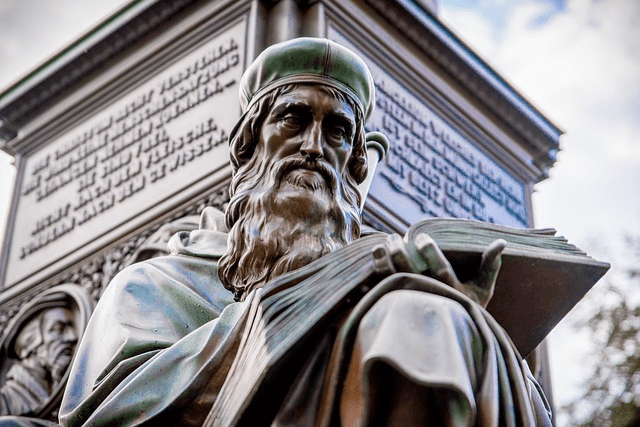
His manuscripts were produced from the Latin Bible, the only source available. Wycliffe so angered the Pope that he had his remains dug up, crushed, and scattered in the river forty-four years after he died. One of Wycliffe’s followers, John Hus, continued his mission and advocated that people should be able to read the Bible in their language and he opposed the tyranny of the Roman church. Hus was burned at the stake, and Wycliffe’s manuscripts were used as kindling for the fire. The year was 1415, and Hus’ last words were, “In 100 years, God will raise up a man whose calls for reform cannot be suppressed.” In 1517, Martin Luther nailed his famous ninety-five theses to the door at Wittenberg—an act often regarded as the spark that began the Reformation. 

Many others would follow in this endeavor, but William Tyndale was the first to print the New Testament in English. At the time, this was forbidden, so he took these to be printed in Cologne.

However, his intention was discovered, and the printing was halted while he fled. Around 1526, he had 3,000 copies produced in Worms. Tyndale was strangled and burned at the stake in October 1536. Only three copies of his Bible exist today. One of Tyndale’s disciples, Myles Coverdale, continued his work, translating the Old Testament and producing the first complete Bible in English in 1535—Coverdale Bible.  

The Great Bible was an English translation authorized by the Church of England in 1539, but a more significant English translation followed—the Geneva Bible (c. 1560). It was the first Bible to add numbered verses and chapters for quick reference—the works of Shakespeare quote from this translation. This was the standard version for over 100 years. It retained over 90% of Tyndale’s translation and was a significant source for the King James Bible (c. 1611). The Geneva Bible was the first English translation taken to America by the Puritans and Pilgrims. Nevertheless, when the King James Bible was published, they were so large that they were chained to the pulpits in every church in England. It was decades before King James surpassed the Geneva Bible. Here’s how it read when published in 1611: 

For God so loued the world, that he gaue his only begotten Sonne: that whosoeuer beleeuth in him, should not perish, but haue everlasting life.

A note of interest: the first Bible printed in America was in the native Algonquin language by John Eliot in 1663. 

Noah Webster, after whom Webster’s Dictionary is named, translated the Bible into the vernacular in 1833. Many remained loyal to the 1611 edition of the KJV and refused Webster’s version. Yet, in the 1880s, England produced the Revised Version to replace the KJV. More ancient manuscripts were discovered by this time, making a revision necessary. Until this time, the Bible had eighty books. In the 1880s, the Apocrypha was eliminated, giving us the sixty-six books we now have. Americans produced the American Standard Version in 1901 in response to the Revision Version. This was the standard version until 1971 when the New American Standard was printed. The NASB was considered the best word-for-word translation of the Bible from Hebrew and Greek into English that has ever been produced. In the same year, the first paraphrase of the Bible was created—The Living Bible. Another translation philosophy had arisen. 

A couple of years later, critics of the direct and literal translation wanted something they believed would flow better in English, so the NIV was produced. Until this time, the philosophy that guided translations was formal equivalence which aimed at matching the form and structure of the original as close as possible. The NIV translation philosophy would be dynamic equivalence, translating the ideas into contemporary language. Wherever there are poetic or archaic-sounding ideas, dynamic equivalence puts that into modern parlance for the reader’s sake. This new philosophy would make it so that a junior-high student could read and understand what the Bible was saying. 

The New King James Version was created in 1982 to update the wording for KJV loyalists. In 2002, an attempt was made to synthesize the NIV’s readability and the NASB’s precision, producing the English Standard Version—deriving from the NRSV. Next, we’ll explore some challenging passages to translate and how they’re resolved. 

The Earliest Bible Translations

The Old Testament was originally written in Hebrew, with some portions appearing in Aramiac—specifically in Daniel and Ezra. The oldest copies of the Old Testament were discovered around the Dead Sea and are referred to as the Dead Sea Scrolls—dating to the third–second centuries BC. Before this discovery in the twentieth century, the oldest copy of the Old Testament was a Masoretic Text dated to AD 1008–09 (Leningrad Codex). The original Hebrew Bible contained only consonants but between AD 500–700, Jewish scribes known as Masoretes produced copies in which they added vowels to preserve pronunciation. This is the standard authoritative text used in synagogues and by Catholics and Protestants as the source text for their Old Testament translations. 

In the third century BC, seventy (or seventy-two) Hebrew scholars translated the Old Testament into Greek. This is the earliest translation of the Hebrew Bible and is often called the Septuagint, or LXX—referring to the seventy who translated it. We don’t know what copies they translated from, but it includes second-century BC fragments of Leviticus and Deuteronomy. This is stated because the LXX has variants that differ from the Masoretic text. For example, Jeremiah 27:19–22: 

Septuagint (NETS) 19 … Even some of the remaining vessels 20 which the king of Babylon did not take when he exiled Jeconiah from Jerusalem, shall enter into Babylon, says the Lord.

Hebrew Bible (NRSV) 19 … and the rest of the vessels that are left in this city 20 which King Nebuchadnezzar of Babylon did not take away when he took into exile from Jerusalem to Babylon King Jeconiah son of Jehoiakim of Judah, and all the nobles of Judah and Jerusalem—21 thus says the Lord of hosts, the God of Israel, concerning the vessels left in the house of the Lord, in the house of the king of Judah, and in Jerusalem: 22 They shall be carried to Babylon, and there they shall stay, until the day when I give attention to them, says the Lord. Then I will bring them up and restore them to this place.

I prefer to think of these differences like how we read the Synoptic Gospels—as variations rather than contradictions. There are many between the LXX and Hebrew Bible. The Orthodox Church uses the LXX for their Old Testament since the early church used it. This translation was the basis for the Old Latin, Coptic (Egyptian), Ethiopic, Armenian, Georgian, Slavonic, and part of the Arabic translations. 

The Samaritan Pentateuch was comprised in the second century BC (approx. 122 BC). It was written in Samaritan Hebrew in contrast to Tiberian Hebrew among the Jews. Samaritans only acknowledged the Bible’s first five books, and we have variations from the Old Testament. For example, in Acts 7:4, Stephen says that Abraham left Haran for Canaan after his father died, agreeing with the Samaritan Pentateuch; the Masoretic Text claims that Abraham’s father died sixty years after he had left (Genesis 11:32). In the Septuagint and the New Testament book of Acts (7:14), Jacob had seventy-five descendants rather than the seventy found in the Hebrew Bible. A few years later, portions of Scripture were translated into Aramaic since that was the most spoken language in Palestine. It’s known as the Targum, Aramaic for “translation.” 

The New Testament was written in Koine Greek in the first century AD. In the second century, however, the Old Testament was translated into Syriac, spoken by Jews in northern Syria. This version was called the Peshitta (“simple”). Later, Syriac Christians adopted it and added a Syriac version of the New Testament. 

Mount Ebal Produces the Oldest Hebrew Inscription

Years ago, one of my professors and I casually discussed God’s providence. Because my studies centered on the canon of the Great Books of the Western World, compiled by Mortimer Adler, I often read works based on the Enlightenment and unkind to faith. As we spoke, I made a point that around the time of these critiques was when archaeology was surging. While many “scholars” criticized the Bible for, as they claimed, not being based on history, archaeologists were discovering artifacts confirming the Bible’s history.

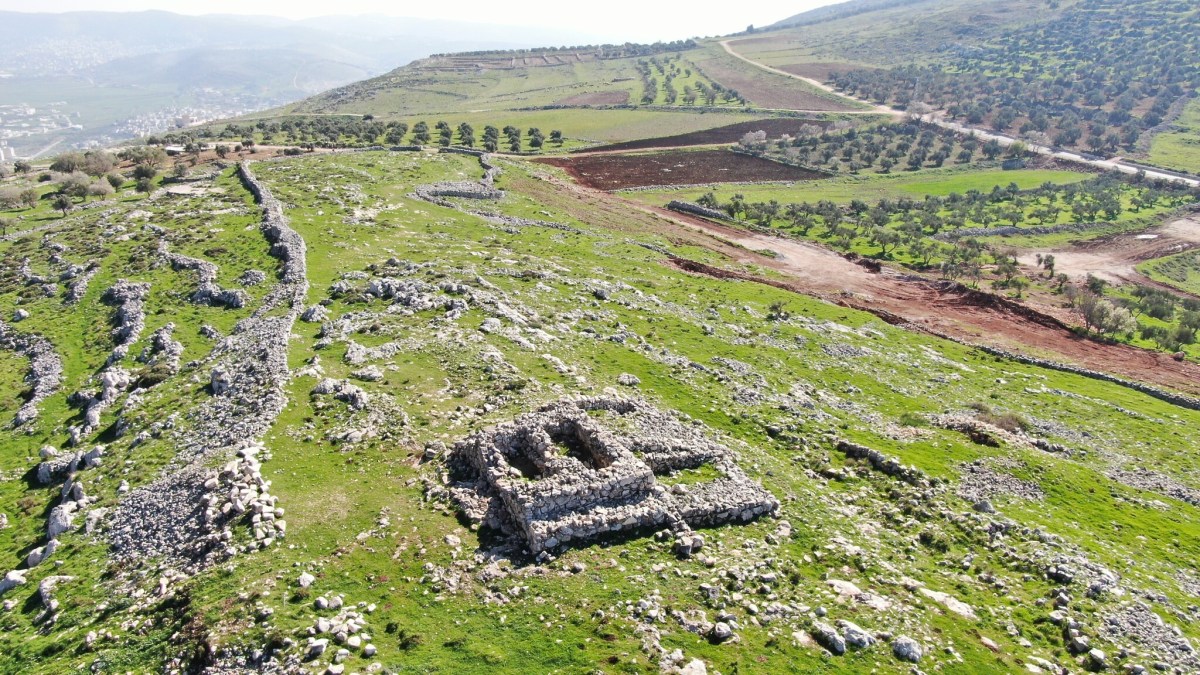
In Deuteronomy 27:15–26, Moses instructed the Levites to lead Israel from Mount Ebal with eleven curses against anyone who partakes in idolatry, dishonors their parents, or moves their neighbor’s boundary stone. In Joshua 8:30, Joshua built an altar on Mount Ebal after taking Ai, where he repeated the curses of Moses. In the 1980s, archaeologists sifted through Mount Ebal, cataloging discoveries. In 2019, discarded material thought to be irrelevant was examined further. Recently, an amulet was run through an x-ray tomographic measurement to reveal a hidden text—“You are cursed by God YHW.” The YHW is God’s name, often considered “Yahweh.”

One scholar believes the inscription dates to the 13th century BC, which was the time that Joshua and Israel settled in the land of Canaan. Others believe it is older, making this discovery the oldest Hebrew inscription. Before this discovery, the oldest Hebrew inscription dated to the late tenth century, which is the period during which Saul and David were kings.

What’s neat, at least to me, is how these discoveries confirm the biblical account and do so in the timeline established. Since some think this inscription is older than the 13th century—the timeline of Joshua—it is likely that it was during Moses’ lifetime—roughly the middle of the fifteenth century onward. While some continue to doubt the Scriptures, plenty of evidence confirms their historicity. Hopefully, we have faith enough that we don’t need this evidence to “prove” what we already believe. Instead, it is nice to see the confirmation of a divinely given, inspired Bible. 

Why Do Some Translations Have Extra Verses That Others Don’t?

Depending on your Bible translation, you will either have or lack Matthew 17:21; 18:11; 23:14; Mark 7:16; 9:44, 46; 11:26; 15:28; Luke 17:36; 23:17; John 5:3b-4; Acts 8:37; 15:34; 24:6b-8a; Rom. 16:24; 1 John 5:7b-8a. Older translations contain them, such as the King James and New King James. Newer versions, however, do not. Since the KJV and NKJV are among the oldest English translations, they are often pointed to as the standard of English translations. Yet, just because they are “older” English translations doesn’t mean they are the best.

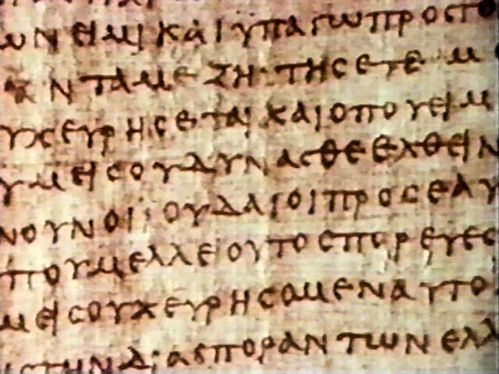
The very first Greek New Testament to be comprised was by Erasmus in 1516. He used 12th-century manuscripts of the New Testament. Remember that we’re focusing on the New Testament, translated from Greek. There was a Greek Old Testament, the Septuagint, in Jesus’ day. Nevertheless, at Erasmus’ time, the oldest manuscript was from the 10th century, but he opted for those from the twelfth century. As time passed, scholars made revisions that echoed Erasmus’ text. Most English translations through 1880 used the same Greek New Testament, called Textus Receptus (“received text”). 

By the 1700s, many more manuscripts had been discovered. Some were six to nine centuries older than what Erasmus had available. These older manuscripts lacked the passages mentioned earlier. A common belief was that a scribe may have mistaken an explanatory marginal comment for a correction and copied it into the text, which accounts for why older English translations have a few more verses. A new Greek New Testament was made and appeared in 1831. Since the manuscripts were older than Erasmus used, they omitted the sixteen passages to construct a more ancient version, reflected in many English translations today.  

Since 1611, the King James Bible has reigned as the preeminent English translation. However, because of the newer Greek New Testament, a Revised Version was commissioned in England in 1881. The Revised Version would later birth the New Revised Standard Version, which would later birth the English Standard Version. When the Revised Version appeared, there was a considerable uproar since the long-dominant KJV had set the standard. The omission of the verses was seen as blasphemous, and people cited Revelation 22:19 to those who upheld the Revised Version. Revelation 22:18 is more relevant if you want to argue the point. 

Translations that omit these added verses usually contain a footnote or marginal note explaining that they appear in later manuscripts. Modern translations do not leave these verses out per se any more than the older ones added them. They are simply the product of the information available at the time. Now that we have older information, the translations that omit them should be more commonly used.

More recent translations utilize a vast amount of sources. The standard for most English translations is the Masoretic text of the Hebrew called Biblia Hebraica Stuttgartensia; the Greek New Testament used is Novum Testamentum Graece. Translators often consult, alongside these sources, the Dead Sea Scrolls, the Septuagint (Greek Old Testament), the Samaritan Pentateuch (Law of Moses), the Syriac Peshitta (Syriac Bible), the Latin Vulgate, and other sources that may help shed light on texts that may be difficult to translate. 

Settling the New Testament?

The twenty-seven books that make up the New Testament appear in the 39th Festal Letter of Athanasius (c. 367)—a prominent bishop—and this is the typical starting point for many regarding their history of the canon. Because of such a detailed letter regarding the New Testament, some have concluded that the canon was a late invention considering the letter’s dating. Still, the canon emerged in the first century and is evident in the writings of the early church fathers as functional before the fourth century. Athanasius wrote this letter to end the disputes about other orthodox letters believed to be equal to apostolic writings—Shepherd of Hermas and Epistle of Barnabas. It also detailed Peter’s epistles and Revelation’s authenticity, which was questionable to some.

Earlier than his festal letter, a catalog from North Africa listed twenty-four books named the Mommsen Catalog (c. 359). Cyril of Jerusalem had earlier listed all the books except Revelation (c. 350), but the Council of Nicea is often the canon’s accepted settling point (c. 325). However, the council’s entirety wasn’t about the canon, but the divinity of Jesus, hence the Nicene creed. Because they affirmed the canon doesn’t mean they “created” it. Similarly, regional church councils acknowledged the canon but didn’t determine it. As Michael Kruger puts it, “These councils were declaring the way things had been, not the way they wanted them to be.” 

Around 250 CE, the early church theologian, Origen produced a list of the New Testament in his commentary on Joshua.

Matthew … Mark also; Luke and John each …  Even Peter … in two of his epistles; also James and Jude. In addition, John … through his epistles, and Luke, as he describes the Acts of the Apostles … in fourteen of [Paul’s] epistles. (Hom. Josh. 7:1; cf. Hom. Gen. 13.2)

This list would have included Revelation and John’s epistles; Hebrews would have counted as a letter of Paul because some in the early church believed that Paul wrote Hebrews. 

What, however, precipitated the list and the official declaration of the canon? It all began around 144 CE because of an early church heretic, Marcion. He only listed the gospel of Luke and ten of Paul’s epistles, omitting the pastorals and Hebrews. A harmony of the four gospels appeared in 170 CE by Tatian and was entitled Diatessaron. At about the same time, Melito of Sardis identified the Old Testament canon used by the Jews. The earliest response to Marcion’s list with list is the Muratorian Canon (c. 180), named after its discoverer. It contains twenty-two of our twenty-seven books, omitting James, 1 & 2 Peter, 3 John, and Hebrews. Interestingly, around the same time as the Muratorian Canon, Irenaeus was the first to refer to a New Testament (Adv. Haer. 4.15.2).  

This leads to the truth that some books we now acknowledge as inspired weren’t always regarded as such by everyone in the early church. Athanasius explained the reasoning for excluding two well-regarded writings, but a few were disputed earlier, such as 2 Peter, 2–3 John, Jude, and James. Other writings were outright rejected: Acts of Paul, Apocalypse of Peter, Gospels of Peter, Thomas, and Matthias (Eus. Eccl. Hist. 3.25). 

Early Hints of a New Testament

One can easily make the case that a New Testament, or a canon of the new covenant Scriptures, was expected. When we examine the Mosaic covenant, we notice in Hebrews 9:18–21 the facets making up the first covenant that appears in Exodus 24:3–8, and among them is the book (Heb. 9:19). Unlike the first covenant, no tabernacle or vessels in the New Covenant are cleansed because the church and individual Christians are God’s temple (1 Cor. 3:16; 6:19). Nevertheless, we who comprise the church and are of the Way are sprinkled with the lamb’s blood in our baptisms, and in due course, a book would necessarily emerge. Now, this perspective isn’t accepted by everyone. Some scholars contend that the New Testament could not have been foreseen and wasn’t expected. Others contend that the canon wasn’t created until the end of the second century CE, but I tend to disagree with both of those propositions. 

The earliest hint of an emerging canon appears in 2 Peter 3:16. Peter recognizes Paul’s writings as on par with Scripture. What he has in mind when referring to Paul’s letters isn’t altogether clear because Paul wrote some widely accepted letters while others were questionable. Peter assumes that his audience knows what he’s talking about, and he likely expects that they receive his letter similarly, given that he addressed himself as an apostle (2 Peter 1:1; cf. 2 Peter 3:2). Another hint at recognizing authoritative writings in the first century is 1 Timothy 5:18, which is a quotation from Luke 10:7 and Deut. 25:4. The opening phrase, “For the Scripture says,” recognizes both passages as Scripture. This initial phrase comes from Deut, while the rest is identical to Luke’s wording. Thus far, Paul’s writings and Luke’s gospel account are considered Scripture based on internal evidence from the letters. 

Another aspect worth considering is the nature of public readings in the assembly. In several New Testament letters, we observe the command to have them read publicly, which indicates that they carried authority (Col. 4:16; 1 Thess. 5:27; 2 Cor. 10:9; Rev. 1:3). We’re able to base this conclusion, in part, on how portions of the Old Testament were read in synagogue meetings (Luke 4:17–20; Acts 13:15; 15:21). Other scholars have additionally pointed out that the Greek structure of Matthew and Mark lent itself to a liturgical structure—which means that they would have been used for year-round public readings. The fact that such letters were urged to be read publicly along with Paul’s command to “devote yourself to the public reading of Scripture” (1 Tim. 4:13) may, in fact, suggest that he already believed his writings to have been such (cf. 2 Peter 3:2). 

The earliest historical source about a Christian assembly details the authority of the apostolic writings. 

And on the day called Sunday, all who live in cities or in the country gather together to one place, and the memoirs of the apostles or the writings of the prophets are read, as long as time permits; then, when the reader has ceased, the president verbally instructs, and exhorts to the imitation of these good things. (Justin Martyr, 1 Apol. 67.3)

What’s clear from history is that Scripture was not exclusively read in early church assemblies. Some popular writings that were often read in the church but were not placed among the acknowledged books were The Shepherd of Hermas (Eus., Eccl. Hist. 3.3.6; cf. Rom. 16:14) and 1 Clement (Eus., Eccl. Hist. 4.23.11). Serapion, the Antiochian bishop (190–211 CE), wrote to dispel the Gospel of Peter that had been read in Rhossus because it had led some astray (Eus., Eccl. Hist. 6.12.2). Certain epistles were well esteemed because of the author, while others were forgeries.  

Some might find the notion of reading non-canonical letters in the assembly challenging. However, these writings weren’t ultimately included in the canon because they were not universally accepted. There were three criteria for canonicity: 1) universality, 2) apostolicity, and 3) orthodoxy. If a writing fit into all three, it was accepted into the canon. However, there’s debate over another point: did the church create the canon? If so, authority primarily rests with the church—which is what Catholics and Orthodox believe, their definition of “church” here meaning the priesthood. However, while it’s true that prelates assembled to formalize the canon, they didn’t “determine” so much as “acknowledge” what had, up to that time, been regarded as Scripture. From the latter point of view, Scripture is more authoritative. This is the great divide between Protestants and Catholics/Orthodox.


See Harry Y. Gamble, The New Testament Canon: Its Making and Meaning (Philadelphia: Fortress, 1985), 12; James Barr, Holy Scripture: Canon, Authority and Criticism (Philadelphia: Westminster, 1983), 12. 

 Lee Martin McDonald, “New Testament Canon”, n.p. [cited 25 Mar 2021]. Online: http://www.bibleodyssey.org/tools/ask-a-scholar/new-testament-canon 

Michael D. Goulder, Midrash and Lection in Matthew (London: SPCK, 1974), 182–83; Phillip Carrington, The Primitive Christian Calendar: A Study in the Making of the Marcan Gospel (Cambridge: Cambridge University Press, 1952). 

Why Some Old Testaments Have More Books Than Ours

When we speak about the Old and New Testaments’ collected books, we use the word “canon.” This term is in Galatians 6:16 and appears as “rule.” When we speak about the canon of the Bible, we’re typically referring to the 66 books we have, but others have more books in their Old Testaments in other traditions. These extra books are the apocryphal books of the Old Testament (deutero-canonical to the Orthodox Church). They are considered canonical in the Roman Catholic and Eastern Orthodox churches.

The Apocrypha is a group of writings that date from 300 BCE to 100 CE. They consist of history (1 Esdras, 1 & 2 Maccabees), fiction (Tobit, Judith, and additions to Esther/Daniel), wisdom literature (Ecclesiasticus, Wisdom of Solomon, Baruch, The Prayer of Manasseh), and apocalyptic literature (2 Esdras). While they appear with Scripture, Jews didn’t consider them to be canonical. Some people argue for accepting the apocryphal books as Scripture based on their inclusion in the Greek Old Testament’s earliest codices (Septuagint, or LXX) that date to the 4th–5th centuries CE. However, they were omitted when the LXX was initially translated in the 3rd–2nd centuries BCE and Jerome refused to include them when he composed the Latin Bible in 383 CE.  

They are, however, included in the oldest manuscripts of the Bible, among which is the Codex Vaticanus. A codex is a way of saying “ancient book,” and the plural is “codices.” This book was found in the Vatican library and has almost all Old and New Testaments, plus other books therein. It dated to the middle of the fourth century and was used by Erasmus in the Renaissance to complete his Textus Receptus. In addition to the Old Testament books they have, 3 Esdras, Wisdom, Prologue to Ecclesiasticus, Ecclesiasticus, additions to Esther Judith, Tobit, Baruch, Epistle of Jeremiah, and additions to Daniel are included. 

The Codex Sinaiticus was found in 1859 by Count Tischendorf at the Monastery of St. Catherine on Mount Sinai. It dates to the later fourth century and has the entire New Testament with half of the Old Testament in Greek. It adds 1 & 4 Maccabees, Tobit, Judith, Wisdom, and Ecclesiasticus to the Old Testament. A fifth-century codex, Alexandrinus contains the Old Testament in Greek as well as the entire New Testament, but the New Testament adds the first epistle of Clement of Rome. It adds 2 & 3 Maccabees. These three oldest codices agree on the inclusion of Judith, Tobit, Wisdom, and Ecclesiasticus (a.k.a. Ben Sira). Many have equated codices with canon, but it’s not the same.     

Josephus did not include the Apocrypha in his list of books:

For we have not an innumerable multitude of books among us, disagreeing from and contradicting one another [as the Greeks have], but only twenty-two books, which contain the records of all the past times; which are justly believed to be divine; and of them five belong to Moses, which contain his laws and the traditions of the origin of mankind till his death .… but as to the time from the death of Moses till the reign of Artaxerxes, king of Persia, who reigned after Xerxes, the prophets, who were after Moses, wrote down what was done in their times in thirteen books. The remaining four books contain hymns to God, and precepts for the conduct of human life. It is true, our history hath been written since Artaxerxes [d. 425 BCE] very particularly, but hath not been esteemed of the like authority with the former by our forefathers, because there hath not been an exact succession of prophets since that time. (Against Apion 1.8) 

What does Josephus mean by, “has not been esteemed of like authority?” Jews didn’t believe a prophet lived among them during the Intertestamental Period. After the Gentiles defiled the altar, they tore it down and “stored the stones in a convenient place … until a prophet should come to tell what to do with them” (1 Macc. 4:46). They later made someone their leader and high priest forever “until a trustworthy prophet should arise” (1 Macc. 14:41). Between these two events, history even recorded that the distress arose in Israel so great since the prophets ceased appearing among them (1 Macc. 9:27). 

Melito of Sardis, a second-century elder, also failed to include them in his Old Testament list.

Accordingly when I went to the East and reached the place where these things were preached and done, I learned accurately the books of the Old Testament, and I send them to you as written below. These are their names: Of Moses five, Genesis, Exodus, Numbers, Leviticus, Deuteronomy; Joshua the son of Nun, Judges, Ruth, four of Kingdoms, two of Chronicles, the Psalms of David, Solomon’s Proverbs or Wisdom, Ecclesiastes, Song of Songs, Job; of the Prophets: Isaiah, Jeremiah, the Twelve [minor prophets] in one book, Daniel, Ezekiel, Esdras. (Eusebius Eccl. Hist. 4.26.14) 

The Council of Trent (Session IV, 1546) is historically the first point at which the Catholic Church formally recognized these books as “Divine Scripture.” They were not included in the original Hebrew Scriptures but were declared “genuine parts of Scripture” by the Councils of Jassy (1642) and Jerusalem (1672). 

“The Septuagint contains in addition ten further books, not present in the Hebrew, which are known in the Orthodox Church as the “Deuter-Canonical Books.”…most Orthodox scholars at present day, however, following the opinion of Athanasius and Jerome, consider that the Deutero-Canonical Books, although a part of the Bible, stand on a lower footing than the rest of the Old Testament.” (Timothy Ware, The Orthodox Church, new ed. [New York: Penguin Books, 1993], 200)

These books, however, do have value for understanding first-century Judaism. When the voice of prophecy had ceased, these books voiced what happened between the Testaments religiously, literarily, and historically. The two books of the Maccabees detail the struggle of the Jews for religious and political freedom, and they record a heroic period of Hebrew history. These books also help us understand the spiritual, philosophical, and intellectual life of the Jews before Christ’s birth. 

The Intertestamental Hebrew Scriptures

Thus far, we’ve established that with Moses living around 1500 BCE, the books attributed to him date between 1450–00 BCE. These books were vested with authority  by the command that they are read every seven years (Deut. 31:10–13), and they were read by Joshua in the 13th century BCE (Josh. 8:34–35). The 8th century BCE prophet Isaiah urged the reading of prophetic books (Is. 34:16). By the 7th century BCE, King Josiah’s court had discovered a copy of the law, likely the book of Deuteronomy (2 Kings 22:3–20), and read from it and inquiring of Huldah what such things meant. Jeremiah (6th cent. BCE) urged something to read of his scroll as authoritative (Jer. 36:6–26). During Jeremiah’s tenure, Judah was exiled to Babylon. 

When the exiles returnedMaccabean Revolt’s time to their land after decades of absence, they did so under one journey where the scribe Ezra led them. Ezra was one who “set his heart to study the Law of the LORD, and to do it and to teach his statutes and rules in Israel” (Ez. 7:10; cf. 7:6, 25; Deut. 16:12). Ezra’s knowledge of the Law enabled him to advocate for the Law in the reestablishment of Israel, so when the people assembled for a reading of the law, their response was remorse and weeping. The return from exile and covenant renewal did not prohibit a lukewarm response to the Law. By the prophet Malachi, the priests had turned from the Law (Mal 4:4). Their neglect of the Law, perhaps a response to unfulfilled prophetic expectations, led them to apathy towards religious observance. They were neglecting their duties manifested in the lack of reverence towards God so that instead of teaching the Law, they turned from it (Mal. 2:1–9).

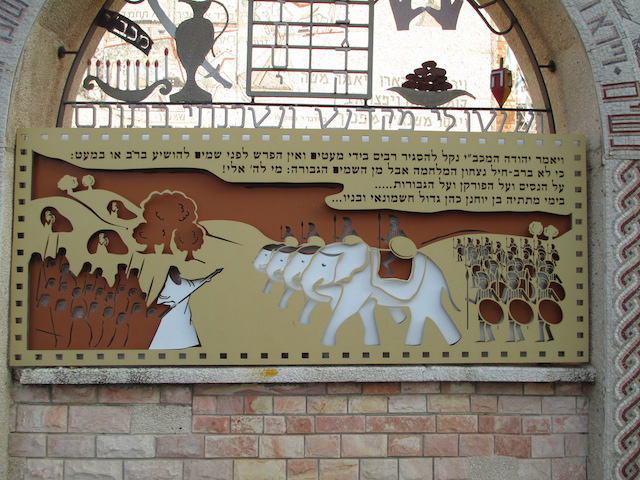
The Law taking center stage is assumed to have been ongoing by the time of the Maccabean Revolt when the books of the Law were seized from the temple and any who possessed copies. The seizure was followed by a subsequent destruction of the law documents, which gave rise to Jewish zeal for the customs of their ancestors (1 Macc. 1:56–57). The Jews had formed the habit of searching the Law’s book when faced with national threats (1 Macc. 3:48), and they’d read from their holy books even before going into battle (2 Macc. 8:23). Following Ezra and Nehemiah’s example, they became stringent in their observance of studying the Law and turning to it. This was a dramatic shift from their pre-exilic mindset. 

The Essenes dwelt around the Dead Sea while some lived in cities. The Qumran community mandated a third of every night for reading the book and studying the law as a community. Their study and reading of the law were likely oral rather than silent because of the Maccabees’ customs.  

For just as it is harmful to drink wine alone, or, again, to drink water alone, while wine mixed with water is sweet and delicious and enhances one’s enjoyment, so also the style of the story delights the ears of those who read the work. And here will be the end. (2 Macc. 15:39)

In the time of my maturity I remained with my husband, and when these sons had grown up their father died. A happy man was he, who lived out his life with good children, and did not have the grief of bereavement. While he was still with you, he taught you the law and the prophets. He read to you about Abel slain by Cain, and Isaac who was offered as a burnt offering, and about Joseph in prison. (4 Macc. 18:9–11)

Baruch read the words of this book to Jeconiah son of Jehoiakim, king of Judah, and to all the people who came to hear the book…. And you shall read aloud this scroll that we are sending you, to make your confession in the house of the Lord on the days of the festivals and at appointed seasons. (Baruch 1:3, 14)

The Essene’s method of interpretation was to not depart from the commandments and not add anything to them. The preservation of God’s commands in their most accurate form was a significant concern for this community. Hence, they believed that their interpretation of the law was the last. Their proper, communal study of the Law was thought to atone for the land, whereas earlier generations had ignored the Law’s reading and hearing. Since the community also had priests and Levites as members, and these clerics read the text aloud in the assemblies that required a minimal number of ten. 

By the time of Philo, the Jews were regularly meeting in synagogues where they would read the scriptures and, after that, explain whatever was unclear. However, scripture reading was not restricted to the synagogue or scribal community. Among the Therapeutae, Philo recorded that scripture readings and the sermons that followed were common at banquets.

While the origin of the synagogue is widely debated as originating with Moses or sometime during or after the exile, the literary value of its activity as it is observed in the New Testament would give greater weight to sometime after the removal. Nevertheless, the synagogue rose during the Intertestamental Period. The earliest New Testament reference to a synagogue meeting came in Luke’s Gospel when Jesus read from the prophets and gave a sermon. The synagogue meetings were not for worship per se but religious instruction. Synagogues were institutions of religious education; to speak of synagogue worship negates the temple’s place in the life of the ancient Jew. The temple was where worship was rendered, as well as Scripture read at times too.

There were at least two readings in a synagogue meeting — one from the Law and the other from the prophets. The latter was followed by the synagogue ruler asking if anyone had a message after the reading. The Law was read on a liturgical calendar and in its entirety every three years. Had a priest or Levite been present, and they would have been given preference over an educated Israelite reading, so Jesus’ reading infers the absence of both. The reading of the prophets formed the conclusion of the synagogue service known as the Haftarah. Since this portion of the reading was not preselected, the reader, at their discretion, could select the passage to read.

When the church was born, it was not considered distinct from Judaism, so synagogue and temple meetings continued until apostolic preaching went to the Gentiles. Upon conversion of the Gentiles and before their conversion, the early Christians primarily met in houses. Within, the worship of the early church became defined as separate from the temple or synagogue. Still, the early church’s house meetings shared many organization and style practices with those of the synagogue. 

Writing the Old Testament

The first instance of recording Scripture occurs at Moses’s hand at the covenant’s inauguration between YHWH and Israel (Exod. 24:4–8). Scholars mostly agree that the Book of the Covenant mentioned there entailed chapters 21–23 of Exodus, but opinions vary. Moses’ upbringing in Egypt explains how he became a scribe in the first place, because they placed a high amount of esteem and respect on the scribe. They believed that a scribe was his own boss and the highest of trades to which one could aspire. Moses obviously had scribal training in Egypt in the first forty years of his life in the higher echelons of society, and that skill would serve him well as the leader of Israel. 

Even in Israel’s later history, we see the scribe as one moving in royal circles ( 2 Chron. 24:11; Esth. 3:12). The scribal chamber was within the palace (Jer. 36:12), and their work often detailed the exploits of the monarchs they served (1 Kings 11:41) as well as the reign of the monarchy itself (1 Kings 14:19, 29). They also served by writing the decrees ordered (Dan. 6:8) and taking dictation (Jer. 36:32). Some might be sent to record the military skirmishes the realm was engaged in (Jer. 52.25), and a useful skill for the scribe to possess in later times was to be bilingual (2 Kings 18:26). Following the station of Moses as a prophet were other prophets who recorded books or records here or there (Josh 24:26; 1 Sam 10:25). Later, we even read about some later holy people referring to what had been written (Dan. 9:2; Neh. 8:1). 

This process led what we know as the Old Testament to be formed around 400 BCE, with some arguing that the Law, or Penteteuch (first five books of the Bible), itself was authoritative by that time if not earlier. By 200 BCE or earlier, the prophets were canonized (cf. Is. 34:16; Jer. 36:6ff). Unlike our Christian Bibles where the Old and New Testaments are major divisions, the Hebrew Bible (Tanakh) grouped its books differently. There are three groupings of books: 

  1. The Law (Torah)
    1. Gen–Deut. 
  2. Prophets (Nevi’im)
    1. Josh, Judg., Samuel and Kings (Former Prophets)
    2. Isaiah, Jer., Ezek., and the Twelve (Latter Prophets)
  3. Writings (Ketuvim).
    1. Song of Songs, Ruth, Lamentations, Ecclesiastes, and Esther (Five Megillot)
    2. Daniel, Ezra and Nehemiah, and Chronicles. 

This tripartite division is reflected from Ben Sira, who was the first to refer to it in this way (180–175 BCE), but may be earlier than him. 

Centuries before this time, King Josiah (622 BCE) found a copy of the Law in the temple, and his subsequent reverence of it as such demonstrates its authority in the life of Israelite society (2 Kings 22:3–20). After captivity, Ezra had a copy of the Law in which to lead the nation (Ezra 7:6; Neh. 8:1ff). Centuries before them, Joshua (13th century BCE) read the same (Josh 8:34–35), and King David was to have had a personal copy (Deut. 17:18–20; cf. Deut. 31:9, 25–26). We know David consulted it after Uzzah died (2 Sam. 6:1–10; cf. 1 Chron. 15:1–13), but it’s obvious that it wasn’t central at all times.  

The interlude from the reading of Joshua until the next reading is a noted period of silence of public readings. During that time, the united kingdom of Israel was divided, and the northern kingdom following an idolatrous path while the southern kingdom sinned as well, but with periods of reformation. The next public reading came after the high priest Hilkiah found the Book of the Law in the temple during the reign of King Josiah of Judah. Hilkiah took the book to the king’s secretary who then took it to the King. Upon hearing the words of the Book of the Law, King Josiah grieved and sent to inquire of the Lord because all the curses of the book were to be rendered to the unfaithful people of Judah (2 Kings 22–23; 2 Chron. 34). When Josiah assembled the people to have the Book of the Law read in their hearing, Josiah led a covenant renewal to which the people consented. However, because of so many years of apostasy that began with King Solomon, changing the trajectory of Judah was unrealized because of so many years of neglecting to read the Law. Therefore, the land was purged of its inhabitants so that it could undergo a period of cleansing (cf. Lev. 18:28; 20:22).

This points us to the authority the Law and Prophets had. What we find was that those who were well regarded, adhered to the Law. We also note that the absence of it from the life of Israel resulted in an ignorance that permitted apostasy.