Not Far Enough for John Smyth

Many didn’t believe the church went far enough when England became Protestant. Those who read Scripture and applied it rather stringently were called Puritans. While some Puritans argued against episcopacy, others saw it as applicable but not divinely ordered. They argued for elders in each congregation; among those who argued for this, some believed congregations should be independent, and they were called Presbyterians. Baptists arose among the independents at the behest of an Anglican priest, John Smyth. Because of their views, they were persecuted by Mary Tudor, which led to their exile in Amsterdam. 

While in Amsterdam, Smyth studied Scripture and determined that infant baptism was invalid, so he took a bucket and ladle and poured water over his head and that of his followers. The early custom of the Baptists wasn’t immersion but pouring over a believer’s head. Returning to England, they established the first Baptist Church in 1612. Two schools of thought arose between Baptists—many agreed with John Calvin’s doctrine of predestination. Others followed the belief of Jacobus Arminius, who rejected predestination and advocated that God had limited control concerning man’s freedom and response. These were called Arminians and were known as General Baptists. The other group was referred to as “Particular Baptists.” 

Today, there are a variety of Baptist Churches. 

  1. Independent Baptists are autonomous as opposed to Southern Baptists, who are primarily governed by the decisions of the Southern Baptist Convention. Those that aren’t independent send a percentage of their funds to a general fund overseen by the convention or association to which it belongs. The convention determines the financial and spiritual priorities of the congregations under their umbrella. 
  2. Primitive Baptists are largely Calvinist and can somewhat resemble Pentecostals. They trust the Spirit to move in their worship, which can take a person anywhere. There is a Pentecostal Free Will Baptist church that believes in free will. Then again, there are Free Will Baptist Churches, too. 
  3. Seven-Day Baptists hold the Sabbath as sacred and binding. This type of Baptist Church was first established in America in Newport, Rhode Island, in 1671. 
  4. Missionary Baptist Churches focus on evangelism and helping the local community. 
  5. Baptist Churches that are called “First Baptist Church” are to suggest that they were the first in the town or community. 
  6. There are more than 65 Baptist denominations, but the majority belong to just five. 

Many churches have eliminated denominational titles because they indicate division and the bad press associated with things that have occurred. One of the hallmarks of many evangelical groups, with which Baptists are often associated, is the sinner’s prayer. In 2012, David Platt, a Baptist minister, criticized the sinner’s prayer as unbiblical and superstitious. 

Thomas Kidd informs that Anglo-American Puritans and evangelicals used the phrase “receive Christ into your heart” in the seventeenth and eighteenth centuries. The phrase became more formalized during the nineteenth-century missionary movement and was a helpful way to explain that a person needed to make the personal decision to follow Jesus. This phrase’s commonality rose in the 1970s. Kidd also notes that George Whitefield published a hymn called “A Sinner’s Prayer.” 

God of my salvation, hear, and help me believe:

Simply would I now draw near, thy blessings to receive.

Full of guilt, alas I am, but to thy wounds for refuge flee; 

Friend of sinners, spotless lamb, they blood was shed for me.

One thing they believe that’s a significant divergence from us is that you can be saved before baptism. Also, they don’t partake in the Lord’s Supper weekly and use instruments. On this last point, this development is only 200 years old. Even some of their number opposed instruments.

“I would just as soon pray with machinery as to sing with machinery.” —Charles Spurgeon (Baptist) on Psalm 42

“Staunch old Baptists in former times would have as soon tolerated the Pope of Rome in their pulpits as an organ in their galleries. And yet the instrument has gradually found its way among them and their successors in church management, with nothing like the jars and difficulties which arose of old concerning the bass viol and smaller instrument of music.” —David Benedict (Baptist Historian) “Fifty Years among the Baptists”

Preceding Baptists, Mennonites, and Quakers was a group referred to as Anabaptists. As far back as the fifth century, when infant baptism was made the standard, as seen in the fifth Council of Carthage (ca. AD 401), dissidents who would be baptized as adults after being so as infants were called such. Their congregations grew and did well during the Roman Empire despite Catholicism persecuting them. Many were called Novatianists (third-century), Donatists (fourth-century), Albigenses, and Waldenses. Baptists often consider themselves inheritors of this history.
Some Developments in Early Christianity (and later)

Catholicism and Orthodoxy were the same for centuries, claiming to be the original church. A split came in the Great Schism in 1054. They share seven ecumenical councils and adhere to the decisions that are derived from them (kind of). However, the Roman Catholic church changed the Nicene Creed (AD 325) to add filioque (“the son”), which upended the doctrine of the Trinity. What changed was that the creed said the Holy Spirit came from God the Father, but by adding the filioque, it read that the Holy Spirit came from the Father and Son, thus making the Spirit subjective to both and lessening his standing in the Trinity. Orthodoxy does not acknowledge this change that was added in the Middle Ages (AD 589).  

Roman Catholicism also added doctrines through the pope’s primacy: purgatory, immaculate conception, stigmata, and praying the rosary, among others. They differ on original sin. Catholicism teaches that every person born is tainted with the guilt of the sin of Adam. This is why they “baptize infants.” Actually, they sprinkle them. “Baptize” means to immerse, which they don’t do. There’s a Greek term for sprinkling seen in Hebrews concerning the blood of bulls and goats (Heb. 9:19-21). That term is rhantizo. Orthodoxy views original sin as having the proclivity to sin because we are all born in the flesh. Still, newborns are innocents who will someday act upon that proclivity and invite sin into their lives. They immerse infants for around forty days of life. 

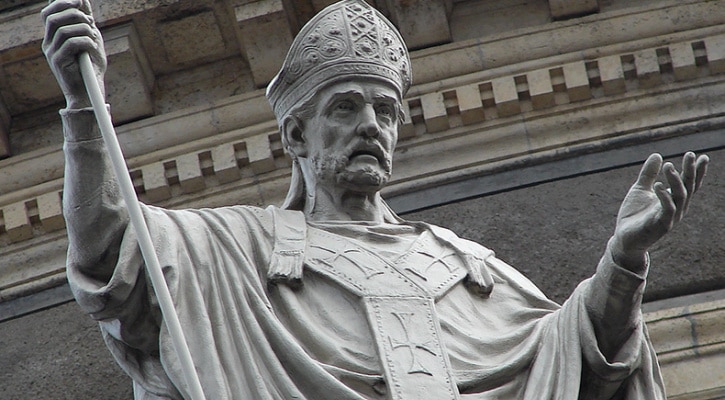
Ignatius of Antioch was the first to mention the catholic church (Smyrneans 8; ca. AD 107), and he did so as a call to unity around the congregational bishop who was to protect the church from heresy. The usage of “orthodox” was prevalent by the fourth century to distinguish those of the apostolic tradition from heretics. Here are changes that occurred that varied from apostolic teaching:

  • In the early second century, the local congregation’s leadership went from elders, deacons, and ministers (1 Tim. 3) to one elder being chosen as bishop among his fellow elders. Jerome later regarded this change as a “result of tradition, and not by the fact of a particular institution by the Lord” (Comm. Titus 1.7; cf. Did. 15.1; 1 Clement 42.4; Poly., Phil. 5-6; Shep. Herm. vis. 8.3). This bishop was over the elders, deacons, and congregation. At times, you couldn’t take the Lord’s Supper unless the bishop was present to preside over it unless he appointed a proxy in his absence from among the elders. More and more became tied to the bishop, so he performed baptisms exclusively (see Ignatius, Mag. 2; Trall. 2; Smyrn. 8).
  • The Protoevangelium of James is a second-century apocryphal Christian text, considered to be an “infancy gospel,” that narrates the birth and early life of Mary, the mother of Jesus. It includes details not found in the canonical New Testament, most notably the idea of her perpetual virginity; it is believed to have been written sometime around the mid-2nd century. This is the earliest evidence of special attention given to Mary, which would give rise to the practice of venerating her. 
  • By the third century, Cyprian of Carthage (ca. AD 200–258) wrote about baptizing infants as a passing matter (Epistle 58; cf. Acts 8:12, 36–37; 16:29–33), which suggests the practice was entirely common by his time. Discussions of the matter appear as early as Irenaeus (ca. AD 120/140–200/203; Contra Haer. 2.22.4) and Tertullian (ca. AD 200; On Baptism 18). 
  • In the latter third century, veneration of martyrs on the anniversary of their deaths became common. For Origen (ca. 185–254), explicitly, veneration stood with Jesus and not in competition with him (1 Tim. 2:5; cf. Lev. 19:31; Is. 8:19; Eccl. 9:5–6). In the fourth century, they were regarded as sancti, from which “saints” arose. 
  • The Council of Elvira imposed celibacy on clergy (canon 33; ca. AD 300–310), contrary to 1 Timothy 4:3. 
  • By AD 428, Pope Celestine rebuked bishops for not wearing distinguishing attire, which means clerical garbs arose sometime before then (cf. Matt. 23:5). 
  • Owing to their view of original sin, they celebrated Mary’s immaculate conception as early as the fifth century. This doctrine teaches that she was conceived without original sin so that she could bear Jesus. The doctrine was officially defined in 1854.
  • The term “mass” appears around AD 604. It derives from the Latin term missa, meaning “to go.” It was pronounced at the end of worship and is closely associated with “mission.” 
  • In AD 595, the Patriarch of Constantinople, John the Faster, assumed the title “Ecumenical Patriarch.” Gregory the Great, or Pope Gregory I, wrote to the emperor, begging him not to acknowledge it. Emperor Maurice accepted it. A few years later, Emperor Maurice was slain by a usurper—Phocas. Pope Gregory sent letters of praise to the new emperor. However, in AD 606, Phocas transferred the title “Universal Bishop” to Boniface III, the bishop of Rome, thus establishing the modern-day Catholic Church of Rome.
  • The doctrine of transubstantiation, elaborated by Scholastic theologians from the 13th to the 15th century, was incorporated into the documents of the Council of Trent (1545–63). This doctrine taught that when the priest blessed the bread and wine, it became the literal body and blood of Jesus. 
  • Papal infallibility was established in 1870. 

Perhaps the most significant difference between us is our views on Scripture. They contend that the church created the canon, thus exercising authority with and greater than Scripture. To them, the church is the proper interpreter of Scripture. I believe writings were already acknowledged as Scripture in the New Testament (2 Peter 3:15-16). Paul quoted Luke 10:7 in 1 Timothy 5:18. We also note that unanimity was taught in all the churches (1 Cor. 4:17; 7:17; 16:1). Also, New Testament writings were circulated among the churches (cf. Col. 4:16; 1 Thess. 5:27; 1 Peter 1:1; Rev. 1:4). Here are a few other factoids:

  • Didache (AD 50–60) refers to the Lord’s Prayer as it appears in Matthew. 
  • The letter 1 Clement was written near AD 95, and he alludes to the writings of Paul as Scripture and Matthew, Luke, Acts, James, and 1 Peter. 
  • In AD 110, Ignatius alludes to Matthew, Luke, and John. 
  • Polycarp, in AD 110, called Ephesians Scripture. He also references Romans, 1 Corinthians, Galatians, Philippians, 2 Thessalonians, and 1 & 2 Timothy; he quotes Matthew, Mark, and Luke.

I wouldn’t say the church created the New Testament. I would contend that they acknowledged and compiled the books identified as Scripture since the apostolic age. This was done as a reaction to proposed canons, some of which omitted the inspired books. This may have begun with Marcion, the second-century heretic who omitted all of the Old Testament and only recognized Luke’s gospel and some of Paul’s epistles as Scripture. In addition, we have Bryennios’ List, the Muratorian canon, Melito’s canon, Origen’s commentaries, and others. Many of these agree with minor variations, but they didn’t create them so much as to recognize what was a part of the apostolic tradition.

Ancient Interpretations (Acts 8:16)

In Acts, Luke uses a similar phrase for different meanings. Given the context, it’s up to the reader to discern what he means by what he says. Let’s lay the groundwork. In Acts 2:38, we’re told that when one repents and is baptized, they receive forgiveness of sins and the Holy Spirit. This is stated with a promise to those present, those who come after them, and all who are far off, as many as the Lord calls to Himself by preaching the gospel. We conclude that everyone who repents and is baptized, obeying God, receives forgiveness and, more pointedly, the gift of the Holy Spirit. Some folks disagree as to what the gift of the Holy Spirit is. Still, I interpret it as the believer being given the Holy Spirit himself. If you disagree, that’s a discussion we can have another time since that isn’t the focus of this article.

As we read through Acts, we come to Acts 8, where Philip is preaching to the Samaritans. We read that after Philip preached and worked wonders, many people, men and women, believed the preaching and were baptized (Acts 8:12). We read a couple verses later that Peter and John are sent to Samaria to pray “for them that they might receive the Holy Spirit” (Acts 8:15–16). Have we misunderstood our earlier interpretation? Many brethren interpret as I do as a double entendre (a word or phrase open to two interpretations). In Acts 2:38, we don’t see Christians working signs and wonders. Only the apostles could work signs and wonders (Acts 2:43; 4:33; 5:12). Even in Acts 8:18, the laying on of apostolic hands conferred the ability to work signs and wonders. What are we to make of these two interpretations?

 Let’s ask an ancient Christian by the name of John Chrysostom. He flourished around the end of the fourth century and was Bishop of Constantinople. While we may have many disagreements about how church was done in his time, we must credit him for being a great expositor of Scripture. That second name, Chrysostom, wasn’t a surname but an honorarium given to him by many people. It means “Golden-mouthed” in Greek because John was a gifted orator who captivated audiences with his eloquent speaking style. He preached a series of homilies in the book of Acts, and when he comes to Acts 8:16, here’s what he wrote: “How was it then that they did not receive the Spirit? They had received the Spirit of remission of sins but not the Spirit of the signs.… To show that this was the case and that it was the Spirit of signs that they had not received, notice how Simon, once he saw the result, came and asked for this.” It would seem that John agrees with our conclusion, and he did centuries before we opened the Word.

The Divine Pattern

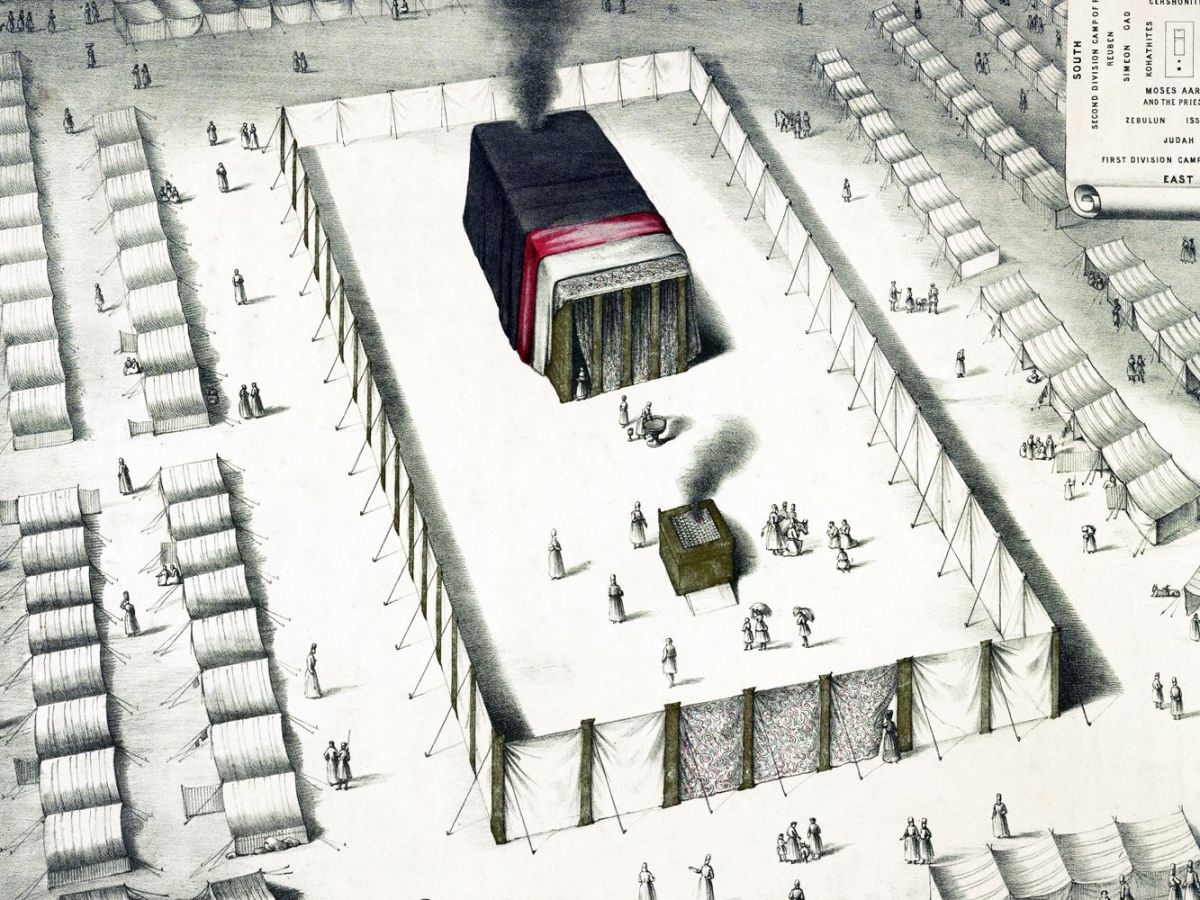
Decades ago, Goebel Music wrote a voluminous book, Behold the Pattern. While much of the information is helpful, he may have been capable of putting things more succinctly. Nevertheless, those of us in churches of Christ are patternists when it comes to the life of the church. As God gave the divine pattern of the tabernacle to Moses atop Mount Sinai, so Jesus endowed the apostles with the Holy Spirit to reveal to us a pattern for being Christians. Furthermore, that pattern extends to the organization and worship of the church.

The earliest account of worship appears in 1 Corinthians 11-16. While it isn’t written as a word-for-word instruction manual on how to worship, we can deduce enough from this passage to know how the early Christians worshipped and what not to do. Some disagree over whether the beginning of chapter 11 or the demarcation of 11:17-18 is the point at which Paul addresses the assembly. If we hold to the latter, which I may be more prone to, the focal point of worship begins with the Lord’s Supper. A reading through chapters 12-14 discloses that prayer and song was a part of that gathering. Prophecy or revelations of knowledge may have been akin to our modern sermon. In chapter 15, Paul invokes the Scriptures regarding Jesus’ death and arise from the grave, which may suggest that Scripture reading had a place in the worship (cf. 1 Tim. 4:13). When we arrive at 16:1-2, a contribution was given weekly, and if we take the weekly to apply to everything preceding the offering, then the Lord’s Supper, singing, praying, preaching, Scripture reading, and offering were what the early Christians did in worship. Not only should we do what they did, but we should embody the heart of Jesus too. It isn’t enough to simply do it absent the mind and heart of Christ.

As it relates to the organization of the church, 1 Timothy 3 discloses that elders and deacons were overseers and servants of the church. Timothy himself was referred to as a deacon, but the term is translated in English as “minister” (1 Tim. 4:6), which may denote a separate function. Elder, bishop, overseer, and pastor were one-in-the-same and not different offices (cf. Acts 20:17, 28; 1 Peter 5:1-5). Today, however, many fellowships follow more the Ignatian separation of pastor, elders, and deacons, or some version thereof.

Eden, Sinai, Tabernacle, and Temple

In trying to show a cohesive unit throughout Scripture, I’ve often referred back to creation and Eden. I’d like to show you nine ways that Eden was a Temple and that the later Mount Sinai and tabernacle/temple were built upon Eden.

  1. The Temple was where God’s presence dwelt, and He made Himself known to Israel. His walking with Adam and Eve is prototypical of this reality (Gen. 3:8).
  2. When placed in the Garden, Adam is to “cultivate” and “keep” it (Gen. 2:15), which were words used elsewhere regarding priestly service in maintaining sacred space (Num. 3:7–8; 8:25–26).
  3. The tree of life was the model for the lampstand in the Temple.
  4. The Temple was made with wood carvings of landscapes reminiscent of Eden (e.g., pomegranates, palm trees).
  5. The entrance to the Temple was to the east (Ezek. 40:2, 6), as was the entrance to the Garden of Eden (Gen. 3:24).
  6. The tree of the knowledge of good and evil and the Ark of the Covenant were touched on pain of death—both being the source of wisdom (e.g., Ten Commandments).
  7. A river flowed from Eden (Gen. 2:10) and the Temple (Ezek. 47:1–2).
  8. There’s a tripartite structure to the Temple (outer court, Holy Place, and Holy of Holies), the mountain at Sinai (base, middle, and summit) and Eden (Eden as Holy of Holies, the Garden as the Holy Place, and the outer world as the outer court).
  9. Eden, Sinai, and the Temple are all associated with a mountain (cf. Ezek. 28:13–14).

I would hope it would be safe to say that a unified cohesion exists concerning the significant theme of Scripture. Now, however, we turn to the pattern God gave Moses. God, in these instructions, spoke to Moses six times, the seventh being the Sabbath law. When God created the heavens and earth, he spoke six times and on the seventh rested. The tabernacle is, therefore, a microcosm, a new creation.

Patternistic Religion

Scripture marks three times that God reminds Moses to build the tabernacle according to the pattern he received. The first time entails the Ark of the Covenant pattern and the lampstand (Exod. 25:40). The second time appears after constructing the sanctuary, something into which the former two shall be housed (Exod. 26: 30). The final admonition appears after instructions on the veil between the Holy of Holies and the Holy Place (Exod. 27:8). As Christians, we are collectively (1 Cor. 3:16) and individually (1 Cor. 6:19) the holy of holies because God’s Spirit dwells in us.

The Ark of the Covenant has over it the mercy seat where two cherubim face one another to guard it, just as they were placed to protect the entrance to Eden. Moses received the law from the summit of Sinai. Since they were deposited in the Ark, the mercy seat now functions as the summit of Sinai, thus making this place a portable Sinai. The mercy seat is vital because the High Priest could only enter the Holy of Holies once a year on the Day of Atonement (Lev. 16:1–3, 29–34). He was to sprinkle the blood of a bull and goat on the mercy seat to remove the people’s uncleanness, transgressions, and sins (Lev. 16:14–16).

Later, the author of Hebrews informs us that the blood of bulls and goats cannot take away sins because these annual sacrifices would have only been one-time and not yearly (Heb. 10:1–4). What are we to do? Interestingly enough, when the Hebrew Scriptures were translated into Greek in the fourth century BCE, a word was used for “mercy seat” that appears as another word in the New Testament. Rather than translating the word as “mercy seat” in the New Testament, it’s translated as “propitiation” (Rom. 3:23–25). On that mercy seat, the footstool of God, the summit of Sinai, was the conduit between humanity and God. Jesus Himself is that mercy seat—the place where sacrifice and atonement meet. The place where the righteousness of God is revealed and the wrath of God abated.

If we want to understand the end, we must, first, understand the beginning. Jesus promises that those who overcome shall eat of the tree of life in the Paradise of God (Rev. 2:7). Interestingly enough, when the Old Testament was translated into Greek, the word that replaced “garden” in Genesis is the word paradise. The original audience of Revelation would have understood that the tree of life was in Eden, the holy of holies. They would have understood Paradise as the garden. When Jesus promised the overcomers that they would eat of the tree of life in paradise, they envisioned Eden. The end takes them back to the beginning, the very initial design that God had in mind.