Oaths, Retaliation, and Love (Matt. 5:33–48)

Regarding oaths, Jesus doesn’t quote any specific passage but summarizes the concept of taking an oath, specifically invoking God’s name (Exod. 20:7; Lev. 19:12; Num. 30:3–15; Lev. 24:19–20). Dire consequences could result from invoking God’s name in an oath. They were required occasionally, however (Exod. 22:10–13; Num. 5:16–22). By the time of Jesus, Jews avoided using God’s name lest it be in vain, so they would swear by sacred things (cf. Philo, Special Laws 2.1.5; Nedarim 1.3–4). Jews believed one was obligated if he swore by the temple’s gold or the altar’s offering but not by the temple or altar themselves (Matt. 23:16–22). You weren’t required to keep an oath if you swore by heaven or earth, but if you used any variation of God’s name, you were required to fulfill your oath (Shebuoth 4.13). Because they used loopholes in fulfilling their vows, they were hypocrites and deceitful, profaning God’s name. Just answer truthfully (cf. 2 Cor. 1:17–24; James 5:12). Jesus’ attitude was shared by the Essenes. 

They are eminent for fidelity, and are ministers of peace; whatsoever they say also is firmer than an oath; but swearing is avoided by them, and they esteem it worse than perjury; for they say, that he who cannot be believed without [swearing by] God, is already condemned. (Josephus, Wars 2.8.6)

This isn’t a prohibition against oaths per se because Jesus answered the High Priest while under oath (Matt. 26:63–64). 

The eye for an eye concept appears in three places and spells out different ways compensation may be made for damage to a person’s body (Exod. 21:23–25; Lev. 24:19–20; Deut. 19:21). This concept wasn’t unique to Judaism. Similar ideas appear in Roman Law and the Babylonian Code of Hammurabi, but the Torah concept treated everyone equally and not according to social class. It was meant to limit vengeance. We don’t see a trace of this being carried out because, more often than not, financial compensation was provided for the injury. Jesus gives us the commands not as to how to respond to physical harm but to public humiliation. His examples are the slap (cf. 2 Cor. 11:20), lawsuit, and conscription. Not escalating matters is to shame the attacker and maintain one’s honor. Usually, the response to a slap would be to either cower or hit back. Hitting back escalates, and cowering relinquishes a person’s dignity. Standing firmly, offering the other cheek, is a way to control the situation. With the lawsuit, a person can avoid the court, which would result in arrest, or they could accept the verdict, which might entail suffering (cf. Exod. 22:26–27). The injustice of the whole situation is revealed by giving the tunic with the cloak. Roman law compelled a person to obey for a mile (cf. Matt. 27:32). To refuse meant a beating. To comply is humiliation, so going beyond what was compelled by law is intended to humiliate the one who has conscripted a person. 

The first part of verse 43 derives from Leviticus 19:18. The Torah doesn’t say to hate your enemies, but in the Dead Sea Scrolls, we read, “He is to teach them to love everything [or everyone]. He chose and to hate everything [or everyone] he rejected” (1QS 1:3–4). There are other Old Testament passages mitigating how one feels about their enemies. When an enemy falls, we’re not to gloat (Prov. 24:17); otherwise, God will be displeased (Prov. 24:18; cf. 25:21–22). When Judah was exiled, they were supposed to pray for their city (Jer. 29:7). Paul iterates doing good to enemies is bound to frustrate them (Rom. 12:20). Praying for them not only is for their benefit but ours as well. It orients our minds towards them how it should be rather than allowing bitterness to take root. To be like our heavenly father is to love those who are unlovable. It’s to go above and beyond what is customarily anticipated or endorsed. To fall short of this is to carry the same deformity as our enemies. 

Lust and Divorce (Matt. 5:27-32)

This specific topic is a hot-button issue. Divorce is widespread, and divorced people tend to be ostracized in the church. I am a child of divorced parents. Both of my parents remarried and have since divorced. Both sets of my grandparents were divorced. Growing up in that environment doesn’t inspire much hope in marriage, but when we look to God, he gives us the proper view. I am one person and can only do what I can do. My wife also wants to live for Jesus, which helps our marriage. If either of us became selfish, it could end in divorce. 

I have empathy for divorced people because they tend to be viewed one way by the church, but what a lot of people may not know is how hard some have fought to preserve their marriages. Through no fault, they could only do their part and not their spouse’s part. There are some scenarios that Jesus doesn’t address—desertion, physical and mental abuse, toxicity in marriage (substance abuse), and some others. My rule is that you must leave if you are in a home where you live in fear. My mother suffered domestic abuse, and the bravest thing she did was to go. Many women stay for reasons most of us won’t understand, some to their peril. We should support such people, especially those who hold our beliefs about this topic. Some will not leave because of what Scripture says on this topic because they feel they will be sinning, and I have had to remind several women that Jesus commands the husband to love his wife as Christ loves the church. Many husbands fail to do this when they are careless or abusive in any specific way. 

According to Forbes, half of all first marriages end in divorce. Second and third marriages fail at a higher rate. The average length of a marriage is eight years. When I do premarital counseling, I encourage couples to agree on four things: 1) religion (I would discourage a Christian marrying a Muslim, atheist, etc. We’re not to be unequally yolked), 2) money, 3) children (do you want to have them; how many do you want; how will you raise/discipline them?), and 4) inlaws (setting boundaries). Marriages will have their ups and downs, but when we are married, we say, “I do,” not, “I’ll try.” 

Jesus builds a hedge against adultery, saying that if you look at a woman with lust, you’ve already committed adultery. The term gyne is used here, and it is not a term that can be translated as “maiden” (kore) or “virgin” (parthenos). The woman in question may have been another man’s wife, so to look at another man’s wife with lust is adultery. Were it the other two, it may not be adultery unless the man looking upon her was married. In that case, it would be fornication. Both are sinful, but it’s essential to be as precise in the context as possible. The law prescribed that both offenders were to be put to death (Lev. 20:10), reminding us of the woman caught in adultery (despite the man not being brought forth). I couldn’t find evidence of this capital punishment being carried out. 

Amy-Jill Levine wrote that a Jewish man could have sexual relations with a divorcee, prostitute, or another unmarried and unengaged woman. At the same time, he was married, and it wasn’t considered adultery, which I find odd. The command is one-sided here and likely so due to the makeup of society at the time. Women are as capable of doing what the man here does. “Lust” could be translated as “covet” or “desire.” Israel was guilty of adultery by her eyes in lusting after idols (Ezek. 6:9). The rest of what he says in verses twenty-nine and thirty are standard rabbinic hyperbole. He isn’t commanding bodily mutilation but emphasizing that whatever is the cause of the temptation is what should be eliminated from the person’s life lest they are cast into hell. In our time, it may be social media, rendezvous with someone of the opposite sex, etc. A lot of people criticized Mike Pence because he doesn’t meet with women alone, something called the Billy Graham rule, but he does that to protect himself and his marriage because people talk.  

Jesus begins his discussion on divorce by referring to Deuteronomy 24:1–4. Our phrase “some uncleanness” in Hebrew is vague. At its root, it means “nakedness,” “genitals,” or “indecent.” Some suggest this has to do with barrenness. Others say that it has to do with infidelity. Robert Alter points out that the same idiom appears in Deuteronomy 23:14 (v. 15 in his text) and denotes prohibited sexual nakedness. The jury remains out of what was meant, but when we turn back to Matthew, Jesus says a man may divorce his wife for “sexual immorality” and not “adultery.” We have two different words for the two used a few verses earlier. Sexual immorality derives from the word that gives us the English word “pornography.” This term is broad and encompasses adultery, harlotry, incest, idolatry, and fornication (which can include premarital sex). In Deuteronomy, the summary was that if a husband divorced his wife and she married again, he could not take her back because another man had defiled her. Here, however, whoever marries this divorced woman commits adultery. Jesus restricts the meaning they had. 

On another occasion, Jesus is tested on this topic in Matthew 19. Once more, Deuteronomy 24 begins the conversation. There were two prevalent schools of thought at that time. The House of Shammai was pretty conservative in that a person could only divorce for adultery (Gittin 9:10). The House of Hillel takes a no-fault position, which means for any reason. Jesus appeals to God’s intent on creation by making one man and one woman. Their joining together isn’t meant to be separated. God hates divorce (Mal. 2:16), but we have to remember that God divorced Israel (Jer. 3:7–8), so he has a vested interest in the topic. He explains why they were given the exception when they pressed the topic. This teaching is so conservative that his disciples ponder celibacy.

There’s one last text worth looking at that some call the Pauline exception in 1 Corinthians 7:10–16. In context, some had converted while their spouse remained unconverted to faith in Jesus. In this case, they were to live with one another peaceably. Still, some use a phrase to justify divorce and remarriage: “A brother or a sister is not under bondage in such cases” (v. 15). They suggest that this permits the believer who’s been deserted to marry again. I can’t see Paul contradicting Jesus, and I don’t believe that’s what he means. The whole context is him urging Christians to remain or reconcile with their unbelieving spouse, but if the unbeliever departs, the believer isn’t obligated to stay with them. 

Jesus’ View of the Law and Murder (Matt. 5:17-26)

Rumors had undoubtedly circulated about Jesus’ view on the Law and Prophets—two of the three divisions of the Hebrew Scriptures; the last is the Psalms. The Law entails the first five books of the Bible. We usually only think of Isaiah, Jeremiah, and the like regarding the prophets. However, Joshua, Judges, the books of Samuel, and the Kings are considered former prophets in Jewish circles. He spoke of it with great reverence since Jesus and his disciples were living under the law. The “jot” is the Hebrew yod, and the tittle is the extension of the dalet when compared with the resh or vav. Any minor alteration in the law could have changed the meaning, so scribes were meticulous to preserve the text. No matter how insignificant someone believes it is, every part is meaningful. We can learn much from Jesus’ regard for the law, which should also inform how we view Scripture. We can also look at his call to righteousness in one of two ways: denigrating the scribes and Pharisees or as a high bar. There is an element of the former, but the latter seems to be more accurate. 

In Jesus’ commentary on the law, he says, “You have heard it said,” and then follows up with, “But I say to you.” We see this six times in the remainder of chapter five. The first commandment he addresses is murder. There’s a difference between murder, killing, manslaughter, and justice. Murder is premeditated with malicious intent. Even the commandment in Hebrew reads, “You shall do no murder.” If I were to strike a pedestrian with my truck because they ran in front of me and they died, I would not have murdered them. However, if I see this person and target them, then that’s murder. Were I negligible in hitting them, say because I was inebriated, I could be charged with manslaughter. When the state executes a criminal, it’s supposed to be in the name of justice, and murder was a capital offense (cf. Num. 35:16–18). The murderer being put to death is justice and not another murder or killing. What’s interesting, though, is how God protects Cain after he murdered Abel and Moses after he killed the Egyptian. 

Words matter, and “murder” is the appropriate term in both Greek and Hebrew. Yet, Jesus takes it farther than murder. He builds a hedge around the commandment, much like rabbis in his time. He begins with anger and progresses to insults—something that could be a legal offense.  Depending on your translation, you may have the wording as having anger “without a cause.” Most translations, if they don’t include the phrase, have some sort of note ascribing it to some ancient manuscripts. The earliest manuscript of Matthew 5:22 is dated between AD 125–50 and is designated as the Barcelona papyrus (P67). This fragment doesn’t contain the phrase “without a cause.” Two other manuscripts contain it—Coptic and Old Syriac (third–fourth centuries). Its appearance or disappearance doesn’t affect the overall meaning of our faith. Jesus teaches us to rid our lives of anger if it’s excluded. If it does appear, we later read how to handle someone we may be angry with in the following verses (cf. Matt. 18:15–17). 

A person becomes angry with another, then begins to insult them, and they call them the worst thing imaginable in that culture (cf. Eph. 4:29–32). The progression builds up to murder, which is why Jesus begins with anger. Rather than getting that far, Jesus urges reconciliation before worship, possibly alluding to Cain and Abel. Jews taught that you had to seek peace with your neighbors before reconciliation with God (Prov. 6:1–5). Today, however, most Christians give this no mind. If you’re offended, you just go somewhere else. Sometimes, people may not even know that you feel wronged. Meanwhile, you carry the weight of the hurt, expecting the offender to lift it when they might be clueless. In his context, Jesus urged reconciliation, and Paul urged suffering wrongdoing rather than seeking retribution (cf. 1 Cor. 6:1–6). Please remember that the context is within the community of faith (church), as indicated by the term “ brother.”

The Magna Carta of Christianity

In the year 1215, a very important document was issued. This document was the first to put into writing that the king and his government were not above the law, so it placed limitations on royal authority by establishing law as a power in itself. I’m talking about the Magna Carta. The pioneer law inspired legislation in the West from there on out. The Sermon on the Mount is the Christian version of the Magna Carta in that it sets forth the heart of God and the nature of his kingdom. Where misunderstandings existed, Jesus clarified. Where obscurities puzzled, Jesus explained. 

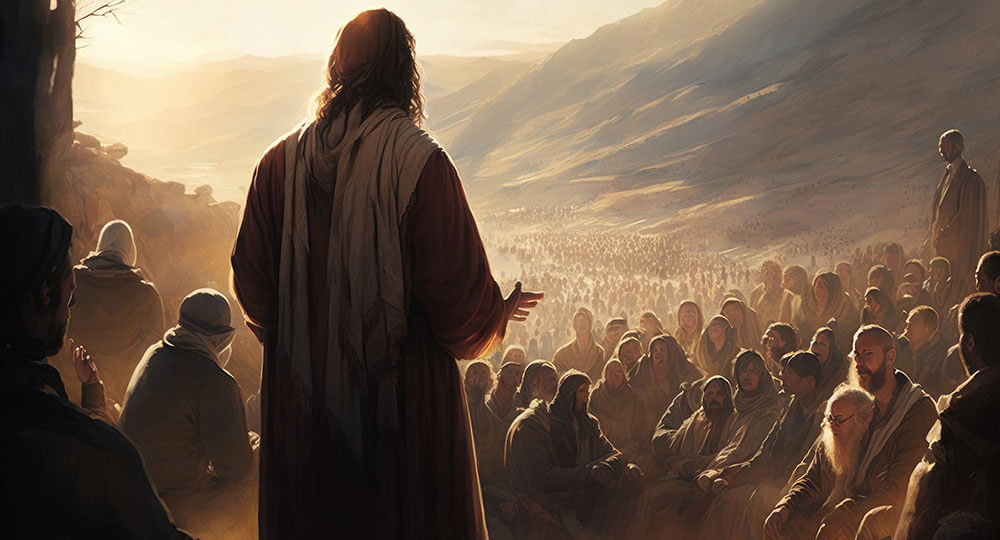
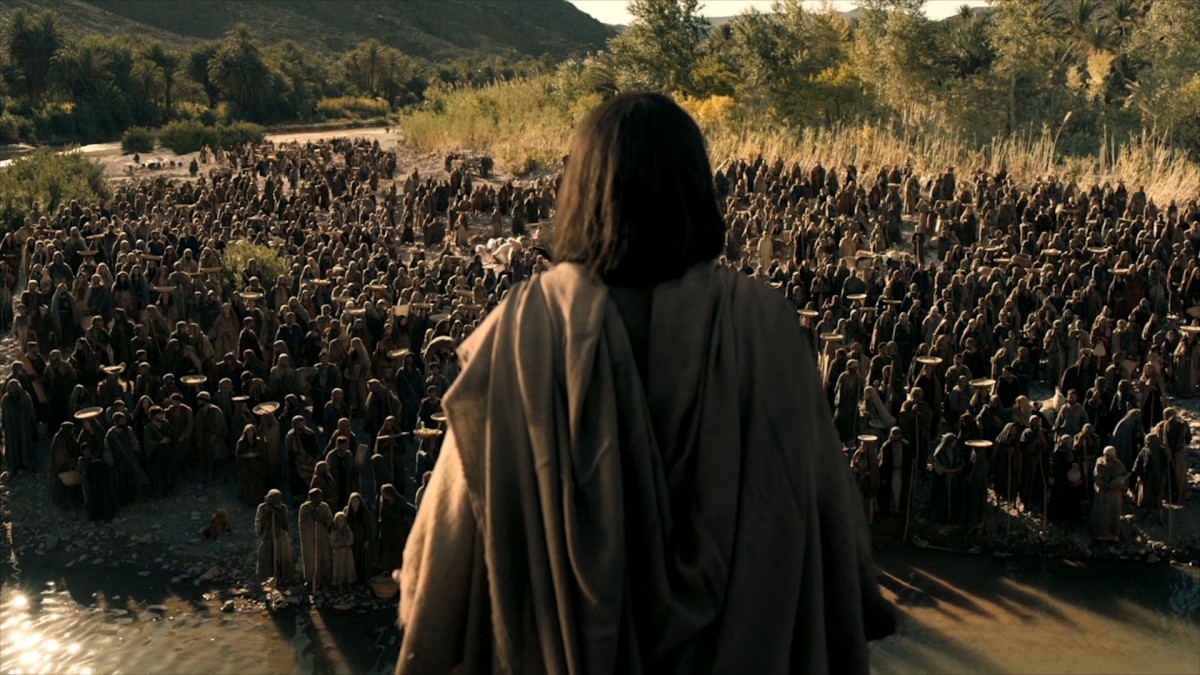
When we arrive at Matthew 5, we must recall how Jesus’ fame had spread through Syria, Galilee, and Judea at the end of the previous chapter. They undoubtedly follow when he ascends the mountain, but they may be more concerned with being fed or healed. Yet, Jesus is speaking to his disciples. What’s unsure is whether Matthew has in mind all twelve or just the ones he’s called thus far: Peter and Andrew, James and John. Jesus speaks to them, but anyone who overhears is welcome to listen. As Moses ascended Sinai to receive the Law from God, so God ascended a mountain to deliver his Sermon on the Mount. There’s a new lawgiver in town, and it’s God in the flesh. 

He inaugurates his sermon by pronouncing blessings. “Beatitude” comes from the Latin Bible, where the word beati is in the place of “blessed.” It denotes “blessed,” “happy,” and even “rich,” with the connotation that they are divine in nature. Many Jewish prayers begin with the Hebrew version, baruch, as in, “Blessed are you, Lord our God.” Examples abound in the Hebrew Scriptures (Jer. 17:7–8; Ps. 118:26). The situations in which Jesus pronounced this blessing seem like the most unlikely candidates for it. This is the nature of God’s kingdom—it turns the world right side up. The wisdom of God is wiser than the wisdom of the world, so we will have to overhaul our thinking to think as God does. 

“Poor in spirit” has always intrigued me. It doesn’t mean weak in faith. According to David Bentley Hart, the word describes a beggar who seems to be cowering. These folks lack pride and are beneficiaries of the help others offer. They will even pay it forward and help others in need. I believe they recognize their dependence on God and live with that realization in acting. Because this is in the present tense, it’s not something in the future but the present. The kingdom of heaven is theirs now, not in some distant time. In the next one, bereavement could describe not only those mourning loss but the state of women and children who were often destitute and impoverished if no male was present. Their comfort could come in the manner of material help as well as emotional support. Mourning shouldn’t be minimized, however. Trite sayings and platitudes aren’t helpful. To mourn means that you had someone in your life that you truly loved, whose absence now leaves a void. While a dreadful feeling, comfort is promised. 

You may have heard the saying, “Meekness is not weakness, but strength under control.” It’s a nice saying with some truth. This beatitude resembles Psalm 37:11, and the same word is used regarding Jesus in Matthew 11:29 and 21:5. There’s no weakness but strength under control. Jesus never lorded his power over his disciples. He served and led them by serving them (cf. Phil. 2:6–11). Environmentalists love the play on inheriting the earth and tying it to treating the world well. I’m not sure Jesus meant that, but caring for the planet is still good. I believe Jesus’ intention concerns the new heaven and earth (cf. 2 Peter 3:13; Rev. 21:1). Some usually take the next beatitude to mean Bible study or knowledge. After all, the will of God in Scripture is righteous and leads us to such, but that’s an internal reading. It’s more of a state of things—of justice. There needn’t be a qualifier placed on the word “justice” (i.e., environmental, gender, etc.). We should desire it on the personal, societal, and global levels. We see so many injustices, so our hunger and thirst for such are met in God’s kingdom.

The next one is misleading. From an initial impression, it means that a forgiving person is blessed and they will be forgiven. However, the term translated as merciful denotes sympathy felt towards another, leading to action. This would be like seeing an elderly person struggling to open a door, so you open it for them. We call it common courtesy, which can be in little or big things. When I envision someone that’s pure in heart, several people come to mind. They were good people who wanted only good and didn’t wrap themselves with worldliness. God was at the forefront of their very being. 

The peacemaker beatitude has been popularized and applied to law enforcement, but the idea is more about one who isn’t a tattler or busybody. We all can do things to stir up trouble, but as peacemakers, we don’t offer to do so. In the first century, a group called the Zealots were a revolutionary group that wanted to restore the kingdom of Israel using violence. They aimed to depose the Roman oppressors. Their influence penetrated all Jewish society (cf. John 6:15; 18:10–11), but this wasn’t what Jesus wanted (cf. John 18:36). This was not the kingdom of God. 

The beatitudes are closed out by blessings pronounced on those who will suffer for righteousness’ sake (1 Peter 4:14–16). “Revile” is an antiquated term. It’s better to think of “insult,” as we understand it. Physical harm, ostracizing (cf. Luke 6:22), verbal abuse, and false accusations may occur. If it’s the result of being a Christian, Jesus says we are blessed. 

Ancient Interpretations (Romans 10:9–13)

When studying a passage, I enjoy reading commentaries, word studies, and other research materials. Yet, I’ve learned to also consult Christians who lived closer to the time of Jesus than the scholars and commentators who give us great work. Neither the early church leaders nor modern scholars are always right, but it doesn’t mean they didn’t get anything right.

Some good neighbors instruct a person to be saved using Romans 10:9–13, and they even use this passage and say, “Invite Jesus into your heart,” or, “Pray the sinner’s prayer.” Allow me to say that I don’t question a person’s sincerity in their beliefs. As the late Antonin Scalia once said, “I attack ideas. I don’t attack people. Some very good people have some very bad ideas.” Neither the sinner’s prayer nor asking Jesus into your heart is in the Bible. This notion can be traced back to Billy Graham popularizing it in his crusades.

Historian Thomas Kidd traces it back to Anglo-American Puritans in the seventeenth and eighteenth centuries. The Puritan devotional writer John Flavel spoke of those who heard the gospel but would “receive not Christ into their hearts.” Thomas Boston, a Scottish Calvinist, encouraged Christians to take communion to receive “Christ into their hearts.” Benjamin Colman wrote in the early eighteenth century that Christians should “receive Christ into their hearts and hold him forth in their lives.” The phraseology became more and more formalized as time passed.

How should this passage be interpreted? Let’s ask some ancient Christians. While many have commentaries on this passage, I want to introduce you to Augustine. Augustine lived from the middle of the fourth century into the fifth century. He was a rather worldly fellow until he heard the preaching of Ambrose of Milan. Ambrose communicated the gospel in a way that appealed to Augustine because the sinner was also a philosopher and very intelligent. Most of the preachers he heard preached so simply that it turned him away, but Ambrose helped him. Later on, Augustine would become the bishop of Hippo (now Algeria). Western civilization owes a lot to Augustine. He lived to see the fall of the Roman Empire, and his writings have shaped much of Western civilization.

In his writing entitled The Christian Life, Augustine writes, “This condition is fulfilled at the time of baptism when faith and profession of faith are all that is demanded for one to be baptized.” Just as we do today, we ask for their confession before baptizing someone. They confess that they believe that Jesus is the Son of God. We also see it in verses such as Acts 2:21, 9:14, 22:16, and 1 Corinthians 1:2 in one form or another.

The”Church” Did Not Create the Bible?

The most significant difference between Orthodox/Catholics and us is the place Scripture and the church hold. After conversing with several priests and members of those traditions, they often say that the church created the Bible. Therefore, only the church (e.g., clergy) can correctly interpret it and have authority beyond it. Our position isn’t that they created the Bible but recognized what God had inspired and held as such throughout the existence of the church and Israel. 

They already recognized certain writings as Scripture (2 Peter 3:15–16). Paul quoted Luke 10:7 in 1 Timothy 5:18, thus attributing to Luke’s gospel as Scripture. Unanimity was taught so that what was taught in one church was taught in all (1 Cor 4:17; 7:17; 16:1), and New Testament writings were circulated (Col. 4:16; 1 Thess. 5:27; 1 Peter 1:1; Rev. 1:4). Even New Testament writings are cited in early Christian letters. 

Didache (AD 50–60) refers to the Lord’s Prayer as it appears in Matthew. The letter 1 Clement was written near AD 95, and he alludes to the writings of Paul as Scripture and Matthew, Luke, Acts, James, and 1 Peter. In AD 110, Ignatius alludes to Matthew, Luke, and John. Polycarp in AD 110 calls Ephesians Scripture. He also references Romans, 1 Corinthians, Galatians, Philippians, 2 Thessalonians, and 1 & 2 Timothy; he quotes Matthew, Mark, and Luke. The point is that from the first century until the Bible was officially canonized, early Christians quoted from books we call Scripture as though they were divinely inspired and authoritative. 

In the second century, Melito of Sardis wrote about the Hebrew Scriptures and the books regarded as divine. 

Accordingly when I went to the East and reached the place where these things were preached and done, I learned accurately the books of the Old Testament, and I send them to you as written below. These are their names: Of Moses five, Genesis, Exodus, Numbers, Leviticus, Deuteronomy; Joshua the son of Nun, Judges, Ruth, four of Kingdoms, two of Chronicles, the Psalms of David, Solomon’s Proverbs or Wisdom, Ecclesiastes, Song of Songs, Job; of the Prophets: Isaiah, Jeremiah, the Twelve [minor prophets] in one book, Daniel, Ezekiel, Esdras.

Eusebius Eccl. Hist. 4.26.14

Other lists predated Melito’s (e.g., Josephus, Against Apion [AD 94]; Bryennios List [AD 100–150]). 

What precipitated the New Testament was the proposal of a canon that rejected many of the already regarded books. In AD 144, Marcion listed the gospel of Luke and ten of Paul’s epistles, omitting the rest of the New and Old Testaments. A response came in AD 180 in what’s known as the Muratorian Canon. It contained twenty-two of our twenty-seven New Testament books. This was also when Melito gave his list of the Old Testament. Athanasius’ 39th Festal Letter (AD 367) has the list of New Testament books we employ.  

One rebut you may encounter is that authority among clergy is apparent in the Jerusalem Council in Acts 15. Subsequent councils look to this example as to how the church makes determinations. Eastern Orthodoxy is often called the church of Councils because it is how they solve disputes and come to the census. There are four stages: 1) assembly (Acts 15:6), 2) testimony (Acts 15:7–12), 3) decision (Acts 15:13–21), and 4) adoption (Acts 15:22–29). The main difference between then and now is that the Holy Spirit inspired those men, and they even invoked the Spirit’s activity among Cornelius to arrive at their conclusion. Moreover, when they use the word “church,” they have the clergy in mind. The church doesn’t consist solely of her ministers.