YHWH, God of Slaves and Destroyer of Egypt gods

A Shepherd Meets God in the Wilderness

The story begins with Moses tending his father-in-law’s flock, but he went by a different name when we last read about his father-in-law. Here in the opening of chapter 3, he’s Jethro (as well as 18:1), but he was Reuel (2:18). As if things aren’t confusing enough, he’s called Hobab in Numbers 10:29 and Judges 4:11. Now, because our translators don’t want us to be too confused, they refer to him as Jethro in Exodus 4:18, but in Hebrew, his name is Jeter. Oy vey! Since we’re on multiple names, Moses came to Horeb, also referred to as Sinai.

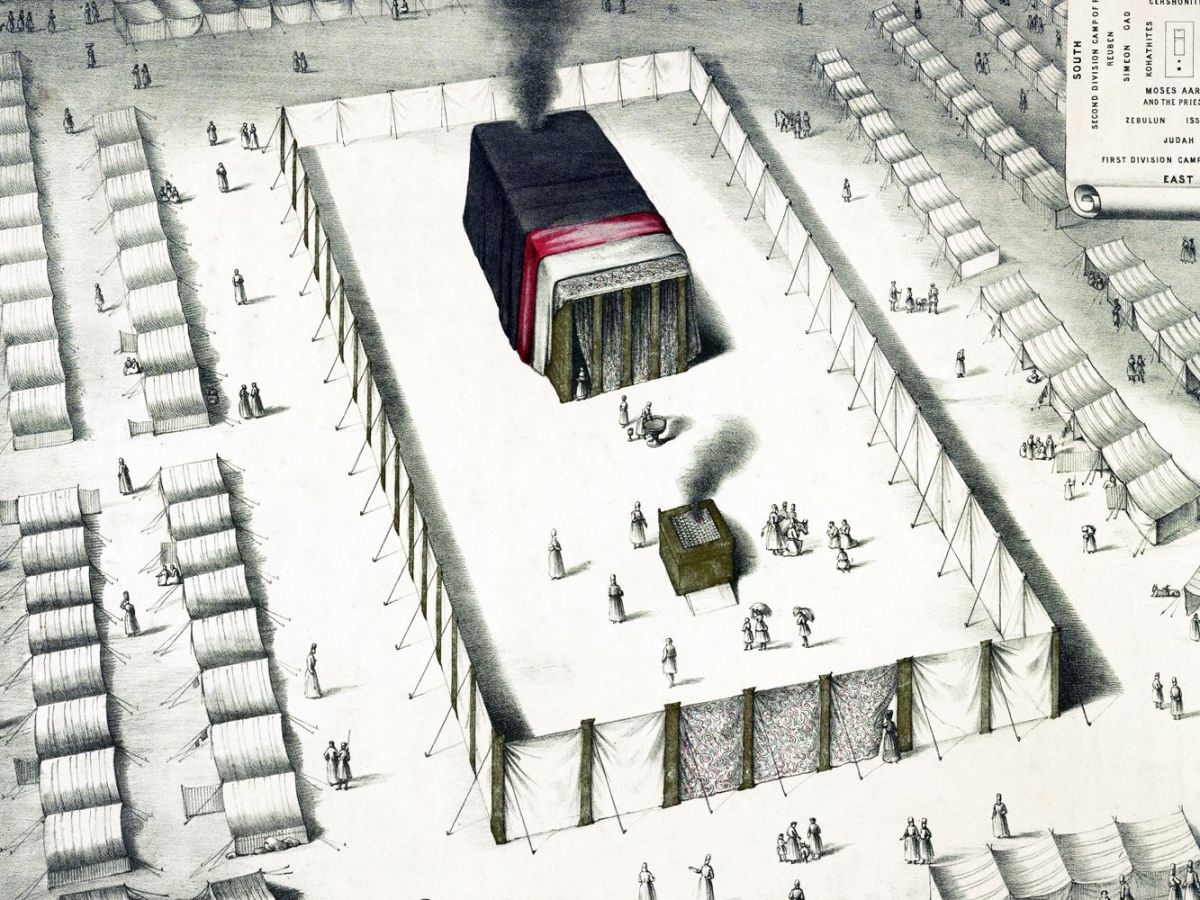
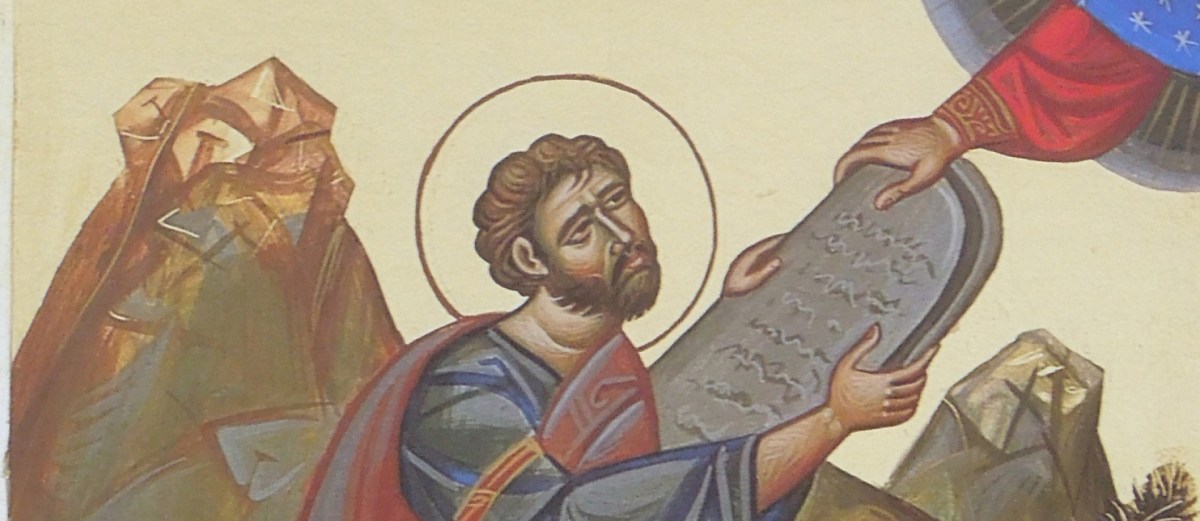
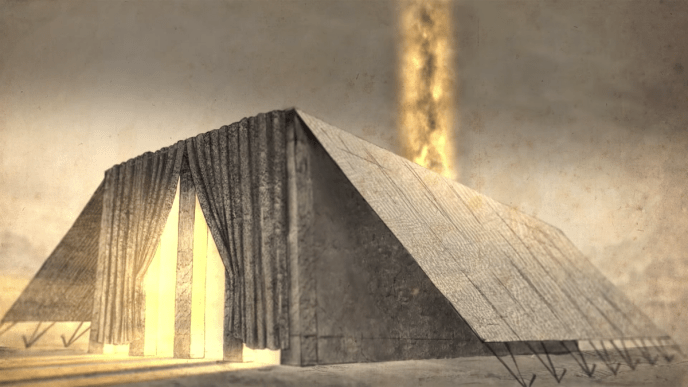
Moses comes upon a burning bush (seneh) in Sinai (sinay). Nice pun, no? Anyway, it’s burning but not consumed. God has previously disclosed Himself as fire (Gen. 15:13–17). As he turns to inspect, God calls out to Moses and stops him. He’s on holy ground. This is unlike anything else, so it can’t be regarded carelessly. We later read that God dwells on seneh (Deut. 33:16). Still, when He later instructs Moses on the tabernacle, it becomes a portable Sinai. Nevertheless, God knows the suffering of His people. He has heard their cry (Exod. 3:7, 9)—the same word used by Sodom and Gomorrah’s inhabitants (Gen. 18:21; 19:13). God wants Moses to do this thing, and the sign will be that they will worship Him at the very mountain where Moses stands (Exod. 3:12). God will “stretch out” His hand (shalahti), and it will cause Pharaoh to “let go” (yeshalach) in Exodus 3:20.

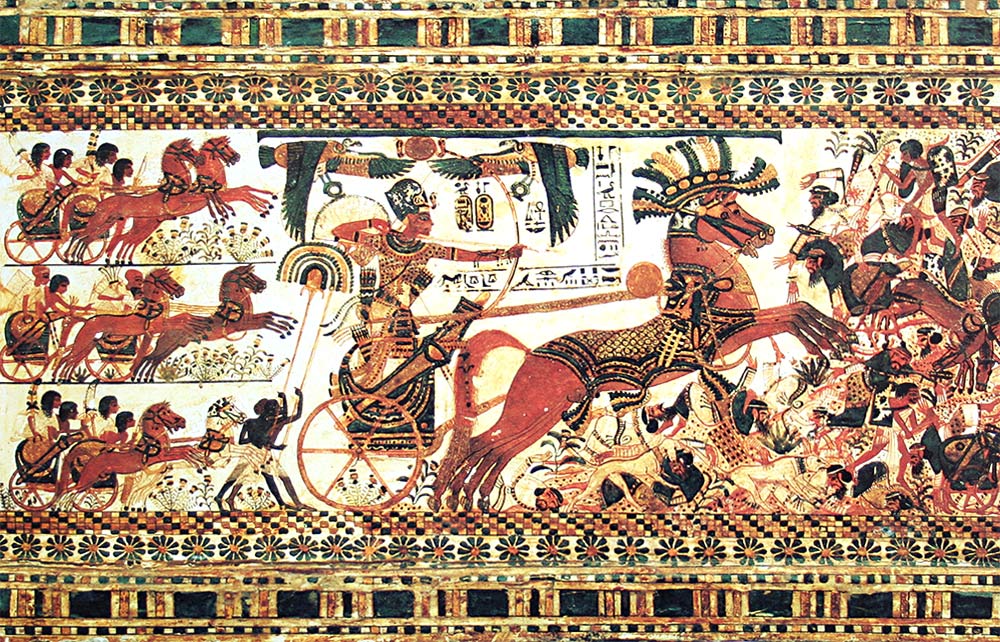
Moses objects several times (Exod. 3:11, 13; 4:1, 10), but God answers him at every turn, even giving him signs. The signs that God gives Moses in Exodus 4:1–9 represent a couple of things. The snake may have been the cobra that Pharaoh typically wore around their headdress. Pharaoh’s power was absolute. He was as good as a god in ancient Egypt, but, later, when his magicians duplicate this miracle, and Aaron’s rod swallows up theirs, it’s a foretaste of the downfall of Pharaoh (Exod. 7:8–12). The second miracle of Moses’ hand turning to leprosy and back to normal foretastes the plagues that are to come. Moses’ final objection is that he just doesn’t want to do it (Exod. 4:13). God becomes angry but offers Aaron as the mouthpiece.

Moses has requested permission from his father-in-law to go to Egypt and see his countrymen. Jethro bid him “Godspeed,” and Moses left. In the meantime, God spoke to Moses’ elder brother, Aaron, and asked him to meet Moses in the wilderness. After they met and talked, they go to the elders of Israel and tell them all that God has told Moses. They bow their heads in trusting what has been said to them, so the showdown begins. Moses and Aaron go to Pharaoh and say that Yahweh has ordered that they go on the three-day journey to worship Him. Still, Pharaoh refuses to acknowledge Israel’s God. He thinks they have too much time on their hands to contemplate such a thing, so he multiplies their labors by requiring the same daily quota. Instead of the materials being brought to them as previously, they’re to procure them independently. It’s too hard, so they gripe at Moses, and Moses gripes to God. Yahweh reassures Moses about what He’s going to do, and Moses relays the message. Because Israel’s oppression is worse than before, they refuse to listen to Moses. For the first time in the story, God speaks to Moses and Aaron (Exod. 6:13). This is a sign of things to come—the high priesthood—because the genealogy that follows reveals that they are Levites, priests.

Plaguing Egypt

The plagues would be an undoing of God’s order, just as He allowed chaos to reign in the deluge, so He’d let chaos temporarily reign in the plagues. Each of God’s creative acts finds its negative counterpart in the plagues. Interestingly, each domain that God plagued also corresponds to the realm of a reigning Egyptian god or gods. We read ten times, “And God said,” in creation (Gen. 1:3, 6, 9, 11, 14, 20, 24, 26, 28–29). We also see a unique plague corresponding to most creative acts.

This particular episode has mixed in it the creation of observance, a memorial that would last through generations.            

  • Plague 1: “bodies” or “gatherings” of water (Exod. 7:19) correspond to when God created the seas in Gen. 1:10. Hapi was the god of the Nile, and it turning to blood symbolizes the god’s slaying as well as payback for Egypt’s slaying of Israelites children.
  • Plagues 2–4: This triad of plagues (frogs, lice, and flies) are associated with the three elements of the earth—water (Gen. 1:20), land (Gen. 1:24), and air (Gen. 1:22). This is all contra Genesis 1:28. The goddess Heket had the head of a frog and controlled fertility. Geb was over the dust of the earth, and Kephri was the god of creation and had the head of a fly.
  • Plague 5: Pestilence among livestock reverses Genesis 2:18–20. There was a marked distinction between Israel and Egypt (Exod. 9:6–7; cf. 8:22). Hathor was a goddess depicted with the head of a cow.
  • Plague 6: This plague corresponds to the creation of humanity in God’s image (Gen. 1:26–27). They weren’t made sickly but whole. God’s affliction of the flesh reminds the people that they aren’t superior to others, and Pharaoh isn’t a god. Isis was the goddess of medicine and peace.
  • Plagues 7–8: These two demolish the vegetation, which was a reversal of God giving it (Gen. 1:12; cf. Exod. 10:15). Nut was the goddess of the sky, and Seth, the god of storms and disorder.
  • Plague 9: When God darkened the earth, He took creation back to the state that existed between Genesis 1:4–5. Ra was the sun god and personally backed Pharaoh, so this was enormous.
  • Plague 10: Osiris was the god of death, but Pharaoh was considered the god of Egypt. The taking of life was the reversal of God breathing life into humanity (Gen. 2:7).

God instructed Moses on the Passover. A male lamb without blemish was to be taken and sacrificed for each household according to its number. The blood was to be applied to the doorposts and lintels of the houses. This meal was to be eaten in haste, and they were protected by the lamb’s blood. Egypt, however, suffered the loss of its firstborns. Keep in mind, a firstborn isn’t always an infant or toddler. I’m a firstborn, and many of us, regardless of age, are too. This doesn’t specify children but firstborn. On that note, God gives the law regarding the firstborn. Every firstborn of their livestock and children are God’s. Children may be redeemed by a sacrifice as well as donkeys, but the firstborn belongs to God. We later see this when descendants of Levi are substituted as the firstborn child (Num. 3:11–13). Descendants of Levi were sacrificed to serve the Lord all the days of their lives. This sort of reminds us of Abraham’s call to sacrifice Isaac: luckily, God provided the substitute for Isaac’s redemption.

Israel now leaves Egypt, but a detail emerges that we’d do well to notice. Moses procures the bones of Joseph (Exod. 13:19; cf. Gen. 50:25). This oath made by the children of Israel looked ahead to a day when Israel would leave Egypt. When they arrived, they did so in good standing with the Egyptians and were welcomed because of who Joseph was to Egypt. Similarly, you and I will be accepted by God because of who Jesus is and what He’s done. Our attachment to Him, the lamb of God, causes God to stay His hand and pass us over when judgment comes.

Slavish Tendencies

Shortly after leaving Egypt, Israel is once more faced with the dilemma of liberty. It isn’t always cheap, and it often means self-reliance more than anything. So, they complained (Exod. 14:11–12). Pharaoh and his army close in on Israel, but luckily, it wouldn’t be long after this complaint that they’d walk through the Sea of Reeds. One might think their mood would have vastly improved after that miracle, not to mention the fact that God placed Himself as a cloud between them, giving Egypt cloudy darkness while giving Israel light. Their mood wouldn’t improve much after that. They’d left on the 10th of the first month, and now on the 15th of the second month, just a little over a month since they departed Egypt, they grumble once more (Exod. 16:3). God provides for them and gives them instructions about the Sabbath. These complainers: do you think they followed His words to the T? Nope (Exod. 16:20). Now, God isn’t too pleased (Exod. 16:28–30). It’s not too long before they complain again (Exod. 17:3). Wouldn’t we think that having seen what they saw and having lived through what they endured would be a good enough reason to rejoice like they had in chapter 15?

Similarly, Paul wrote to the Roman Christians something similar (Rom. 6:16–23). The Roman Christians still behaved as if they had before. No transformation. No change. But they had heard the good news, obeyed the gospel, and kept on living as they had. God no more expected Israel to live as slaves as He does. We are Christians to live as slaves. We are either slaves to sin, the taskmaster that oppresses us and kills us, or to righteousness. The latter is life-giving through Jesus Christ, our Lord. The former is life-taking. As Christians, when we live after the precepts of our God and follow His path, we demonstrate that we have truly been redeemed. Many of us acknowledge Jesus as the Son of God, but do we live as if Jesus is our Lord? In the ancient world, one’s lord was their master. They couldn’t do anything to shame their lord, and if their lord gave an order, they were obliged to follow it. We have a good Lord who loves us, and rather than barking orders, He tells us what to do because it’s what’s best for us. Shall we be slaves to Egypt and sin, or righteousness and God?

Recreation

In our first lesson on Exodus, I pointed out how Moses used language akin to the creation narrative in Genesis as well as the flood. In the previous study, I pointed out how the plagues were demonstrative of God removing His order from certain creation elements to punish the Egyptians. Keeping with this theme of creation, when the Israelites cross the Sea of Reeds, we note a recreation theme, just as it was post-flood. Notice in Exodus 14:21 how a “wind” drives the water back to create “dry land.” The word translated wind is the same word that can be translated as “spirit”—ruach. We remember how the Spirit of God, His ruach, hovered over the face of the waters (Gen. 1:2). On Day 2 of creation, God divided the waters, and some were below, and others were above. On Day 3, God further separated the waters below to reveal the dry ground. Notice the theme?

Crossing the Sea of Reeds is a replay of creation. In Genesis, the earth came out of the water, but in Exodus, waters are split to reveal dry ground. As the distinction between land and water was created, the earth was made habitable to humans. This dry ground is life-giving to the Israelites. Then, in a replay of the flood, the waters crash down on the unrighteous Egyptians, just as God flooded the earth. Waters are tamed to bring life and released to bring death (1 Peter 3:20; 2 Peter 3:5–6). Notice how Paul ties the Christian initiatory rite of baptism to Israel (1 Cor. 10:1–2).[1] As water saved Noah and his family, and Israel and their family, the waters of baptism save us too (Rom. 6:3–6). We are, therefore, a new creation just as the earth was recreated after the flood, and Israel was created anew by passing through the waters. This is why we live as slaves to righteousness and God rather than to sin.


[1] I must give credit to Peter Enns and his book, Exodus for Normal People (Perkiomenville, PA: The Bible for Normal People, 2021). A lot of the information in these lessons that I’ve preached have come from him and his book.

What Exodus Has To Do With Creation

A recurring theme in Genesis was the threat of famine that sent the Hebrews to Egypt for food (Gen. 12:10; 26:1–2; 42:1; 46:1–4). The last time it occurred in Genesis, the entire family of Israel wound up there due to the seven-year famine Pharaoh dreamt about. That sojourn ultimately led them to settle in the land of Goshen. What began as an effort to sustain themselves would turn into a reversal of fortune. Somewhere along the continuum of time, things changed, but this is expected since Yahweh had promised Abraham that his descendants would be slaves in a foreign land for 400 years (Gen. 15:13–14). Yet, He would bring them back to the land of Canaan after the fourth generation. Before they’d return, things would get worse before they got better.

What Moses is Showing Us

In the early chapters of Exodus, we notice a retelling of the creation story in a sense, but through the history of Israel. Israel is depicted to the ancient reader as fulfilling the vocation of humanity from the beginning. The first evidence being the divine order to fill the earth and subdue it (Exod. 1:7; cf. Gen. 1:20, 28; 9:1; 17:6). Whereas it was commanded of Adam/Eve and Noah, God told Abraham that He would make it happen for him. In each instance, God is narrowing down His purpose for creation through specific ones. He began with Adam (human) and Eve (life). After their expulsion from Eden because of sin, the line was narrowed through Seth, and the mandate was once again given to Noah. As sin persisted, the vocation was given to Abraham to be realized in Israel. They had multiplied and filled the land.

Israel is God’s vessel for demonstrating His creative purposes. It’s meant to be through them that humanity comes to know the God of creation and form a relationship with Him. When we read at the beginning that they “increased abundantly” (Exod. 1:7), it might be better that we substitute that translation with “abounded.” This is the same word used to describe the sea creatures in Gen. 1:21, and it’s also used post-flood in 8:17; 9:7. These usages point initially to the creation and, then, to recreation. The author hints that a new creation is being carried out through Israel, and it is accomplished in part by their multiplication.

Fulfilling God’s divine vocation resulted in the Egyptians taking notice. To Pharaoh, the growing number of Israelites was a threat. However, the more he tried to stop it, the little it did to accomplish his goal. If anything, Pharaoh’s oppression intensified Israel’s growth (Exod. 1:12). With Pharaoh wanting Israel to diminish and God wishing them to fill the earth, a show-off and clash are sure to result. The last time such an occasion reared its ugly head was at the Tower of Babel. Those present had pitted themselves against God, and He scattered them. Pharaoh is about to do the same, and those of us who know the story know it won’t end well for the King of Egypt.

Rather than Israel subduing the land, they were stopped (enslaved). Humanity was suppressed by sin resulting in the fall. Being further subdued resulted in the flood, so the enslavement warrants a liberation just as God had previously given. As Israel continued growing and evil pervaded in their enslavement and oppression, Pharaoh ordered the murder of all male newborns. Of course, the scheme didn’t work because the Hebrew midwives kept it from happening (Exod. 1:17, 21). One specific Levite couple had a “beautiful” son. Literally, this is the same word translated as “good” seven times in Genesis 1—tov. This reminder points to the fact that this son will be used in God’s scheme of recreation.

Pharaoh began ordered newborn males to drown in the Nile. This boy’s parents put him in “an ark of bulrushes” (Exod. 2:3). In Genesis, the flood destroyed the whole human race. Still, in Exodus, Pharaoh wanted male children drowned in the Nile, threatening to destroy Israel. As the ark saved Noah, so an ark saved Moses. Noah saved humanity; Moses would save Israel. Sadly, this wasn’t the story for everyone and likely explains why God later takes the firstborn among Egypt and drowned the Egyptians in the Sea. Moreover, as God parted the chaotic waters above a vault and below as the sea, so He’d part the waters of the Red Sea for Israel’s escape. As the flood destroyed the earth’s inhabitants, God’s releasing of the parted sea would drown the Egyptians.

Moses grows up in Pharaoh’s court, raised by Pharaoh’s daughter. He kills an Egyptian who was beating a Hebrew. Afterward, he tries to play peacemaker between two other Hebrews who make it known that they are aware of what he had done to the Egyptian. Pharaoh also learns and seeks Moses’ life, so Moses flees. He finds women being harassed at a well and rescues them, one of whom would become his wife after the manner of Isaac and Jacob. He meets a Midianite priest who becomes his father-in-law, and chapter two ends with a simple verse that our English complicates. “God saw the Israelites. God knew.”

Hebrew Numerology, Archaeology, and Exodus

Around 1800 BCE, people from the land of Canaan had already made their way to Egypt and established a dynasty. This comes to us from historical and archaeological evidence. It isn’t specified that these people were Israelites. Still, they may have been given the timeline of the sojourn in Egypt and the lifetime of Moses. The Israelites were to be slaves in the land of Egypt for 400 years, so this would line up rather nicely with the traditional lifetime of Moses and the writing of the books of Moses (1450–1400 BCE). However, around 1650 BCE, a group called “Hyksos” invaded Egypt and ran things until about 1550 BCE. They’re presumed to have been from Asia.

The traditional dating of Exodus is 1446 BCE, which is given to us from a literal reading of 1 Kings 6:1, which placed the building of Solomon’s temple at 966 BCE, 480 years after the Exodus. Sometimes, however, it’s hard to know if the numbers are used literally or symbolically. The Israelites and ancient peoples of the east believed numbers had symbolic and, therefore, religious meanings. In this case, if we were to read it symbolically, we’d begin with the number 40, which is a go-to number symbolizing a complete or appropriate period. Moses’ life is broken up into three periods of 40 years. Israel would spend 40 years in the wilderness wondering. Jesus fasted for 40 days and was tempted. Are we to understand these numbers literally or symbolically? 40 times 12 gives us 480—twelve symbolizing the tribes of Israel. According to the numbers, these symbolic numbers held religious connotations, which would have been viewed as a divine period of time. There can be problems reading the numbers as literal numbers rather than symbolically as they might have.

This is always something I caution when reading the Old Testament. Some who read these books read everything literally, and that’s a product of our Western Civilization, especially for us living in the twenty-first century who’ve inherited the Enlightenment way of processing information. They thought and told stories differently than we do, so we have to try to get in their minds as best as possible. This can be hard, but it makes studying the Old Testament so much more enjoyable once we’re there.  

When Did Exodus Occur?

Archaeology points to a mass Hebrew settlement in the land of Canaan in the 12th century BCE. When you look at it that way, it will make for a massive discrepancy between the actual historical exodus and the conquest of Canaan. Some figures suggest a disparity of 200–300 years. We know that much time didn’t elapse between the departure and conquest, so what are we to make of this gap of centuries between the two based on archaeological evidence?

First, just because this was when the settlements appear doesn’t mean that’s when Israelites arrived in the land of Canaan. They could have been there sooner. The settlements may point to a period of economic prosperity more than arrival in the land. Second, because the Pharaohs are unnamed in the book of Exodus, it may point us to an actual, historical conflict that occurred in the 16th century BCE between a divided Egypt. This second point is what I’ll focus on here.

From Genesis, Israelites settled in Goshen, which was located in northern Egypt. Interestingly enough, Northern Egypt is referred to as “Lower Egypt” while Southern Egypt is referred to as “Upper Egypt.” Anyway, in the sixteenth century BCE, Egypt was divided, culturally and politically. Northern Egypt was ruled by the Hyksos. Some historians believe that the Hebrews were their slaves during this period. Perhaps as we see from the story of Exodus, Pharaoh grew concerned by their numbers and that they may ally themselves with Southern Egypt against them, which would unify the country.

Near the end of the 16th century, the Southern Egyptians began a campaign to unify Egypt. There’s a notable coinciding abandonment of Semitic people, which the Israelites were, around the same time. Before these events, Egyptian sources report natural disasters that afflicted Egypt, including abnormal weather conditions and disease. Could these have been the plagues? That sounds like it. The discrepancy of dates is more about how the data is read than anything. There is a plausible explanation, and this is it.

Father Abraham

A lot of time was spent on the first eleven chapters of Genesis, but that all set us up to transition to Abraham. You’ll notice that from the beginning of Genesis until this point, God has selected individuals out of a group to represent Him in the fallen world. Adam and Eve were intended for this purpose, but they failed. Out of their two children, the good one was murdered for being good, and the murderer was further exiled from God. They bore another son through whom came Noah, and God hit the reset button on creation. Out of Noah’s sons, Shem would be the forefather of Terah, who’d have three sons, and out of those three sons, just like with Noah, one would be selected, Abraham.[1]

When we’re first introduced to Abraham, he goes by the name Abram (Gen. 11:26). He lives in Ur in Babylon, and our focus stays on him from here until he died in Genesis 25. Terah takes his family and leaves Ur, and they make it as far as Haran, some 600 miles northwest of Ur, where Terah dies. After his father’s death, Abram receives the call of Yahweh. They intended to make it to the land of Canaan (Gen. 11:31–32), but that didn’t happen. In these patriarchal times, the father, or head of the family, guided the family life. We know that Terah led the family in idolatry (Josh. 24:2). Still, we don’t understand why he left Ur and why they were headed to Canaan. However, this mirrors Israel in their later history because they would end up in Babylon because of idolatry, only to be allowed to return to the Promised Land, similarly to how their forefather traveled.

God wanted His first humans to be fruitful and multiply (Gen. 1:28), and God issued the same mandate to Noah (Gen. 9:1–3). The same request is made of Abram (Gen. 12:2; 15:5). Not only is this Israel’s story in a miniature form, but it’s also God trying to do what He intended to do from creation. In a world that’s fallen, God is redeeming it through one person, one family. “The Adam story looks forward to Israel’s story; the story of Abraham looks backward to creation.”[2]

No sooner than Abram arrives in the land God has promised to him, he leaves to go to Egypt because of a famine (Gen. 12:10). Sound familiar? This is the exact same trek Israel will follow for the same circumstance years later. Abram is concerned because his wife is beautiful, so he hands her over, and she is taken by the Egyptians. No worry, because Abram becomes rich in the process (Gen. 13:2–6). Yet, God plagues Pharaoh, and he sends Abram and Sarai off—just like He’d do for Israel. Abram and his nephew would settle apart from one another since their herds and flocks were too numerous. Lot would fall into enemy hands, forcing Abram to take his forces and retrieve him from captivity. Again, reminiscent of Israel and Egypt in a way.

After successfully retrieving Lot from bondage, Abram meets Melchizedek (“righteous king”), a king-priest of Salem, an early name for Jerusalem. This foreshadows the Davidic line from which Jesus came and the order He fulfilled. David himself somewhat fulfilled priestly roles and was also a priest-king in a sense. Much more could be written about this point, but it is an exciting study, to say the least.

Abram becomes concerned with how God will keep His promise. He proposes to God that he make an heir from his household, but God tells him that he will father a son (Gen. 15:3–4). To keep His promises, God binds Himself to Abram with an oath, a covenant (Gen. 15:9–21). This covenant’s meaning is that God will become the pieces of the sacrifices offered if He doesn’t come through with what He promised Abram. At the Exodus time, this was the promise invoked (Exod. 2:24–25).

All is well, right? Well, after some time, we’re not told how long Abram figures on helping God again. His wife, Sarai, offers her Egyptian slave, Hagar. Once the latter became pregnant, she despised her mistress, believing herself to have been elevated in status now. They have a tiff over this, and Hagar is sent away only to return after a divine revelation. Her son, Ishmael, will be a patriarch himself, and the Arabs claim descent from him (cf. Gen. 25:12–18).

A Turning Point in the Abrahamic Narrative

Let’s pause for a moment to remind ourselves how Abram has fared thus far. He has gone to the land only to leave because of famine. Talk about trusting in God, right? He lies and passes off his wife as his sister. The noble husband that he is. He returns to the land and has to divide from his nephew because their herdsmen aren’t getting along. He doesn’t want the problem to boil over into a family dispute. Good thinking here, at least. Since he’s not had children, he wants to name an heir from among his household servants, but God says, “No.” Then, after God makes a covenant with him, he goes on ahead to help God, at the behest of his wife, in keeping that promise by having a child with one of the maids. Still, that wasn’t what God had in mind, and, plus, it led to a family feud.

Between chapters sixteen and seventeen, thirteen years have passed. Ishmael is a gangly son that Abram has had the joy to watch grow up. Hagar has gone back to her place of being a submissive servant, and Sarai is happy. Yet, still no land and people. Out of nowhere, Yahweh shows up, commands that Abram walk before Him and be blameless. You kind of wonder whether or not that was an indictment of his early years of following God. Thus far, Abram has followed God for twenty-four years (cf. Gen. 12:4). Now, God commands that Abram have some skin in the game (pardon the pun). He commands circumcision (Gen. 17:9–13), likely a manner of God claiming the organ to indicate that Abram’s offspring was His and that Abram’s and Sarai’s future were in His hands. Anyone not circumcised, funny enough, would be cut off (Gen. 17:14). His (“Exalted Father”) and Sarai’s (“Princess”) names are both changed, akin to a monarch ascending the throne.

Abraham’s visited by angels who confirm Yahweh’s promise and even give him a timeline of one year (Gen. 18:10). The way it’s phrased, it was as if they said, “This time next year, I’ll return.” A condition of this promise is Abraham walking before God and being blameless, and this too is reiterated in Gen. 18:19. This time, however, Abraham is to examine God in a manner of self-discovery about himself as well as the character of Yahweh. Abraham is here and later depicted as a lawfully obedient follower of God (cf. Gen. 26:4–5), so the Israelite is simply following in his footsteps. Within the law are blessing (children) and curse (destruction of Sodom and Gomorrah). Whenever people act as depraved as those of Sodom and Gomorrah’s cities, they have nothing but to be cursed and incur God’s wrath for the pain they cause.

The promised, anticipated son is finally born. Abraham and Sarah had waited for this moment for so long, and now it had finally came to pass. After a couple of years or so, Isaac is weaned, and a big celebration follows. Sadly, the festival would turn to a wake because Sarah would finally have Hagar and Ishmael banished. Abraham isn’t thrilled about it, but God tells him to listen to her because the promise would be fulfilled in Isaac. Oh, and God would take care of Ishmael too.

Several, perhaps many, years later, God asks the impossible of Abraham—to sacrifice Isaac. Critical to understanding this story is the laws regarding the firstborn. God says that the firstborn belongs to Him (Exod. 13:1, 11–13). That which opens the womb is God’s, and in the case of animals, we can accept this because sacrificing an animal to God was a part of the customs. God took the Levites to Himself, and they served in the tabernacle/temple, and for Isaac, he would be God’s too. Yet, God would make the exception in the case of humans. He wouldn’t accept human sacrifices because that’s what the pagans did (cf. 2 Kings 16:3). He would, however, take a substitute (Num. 8:17). We know the rest of the story, as Paul Harvey would say.

Abraham’s life points to the theme of God wishing to bless all peoples of the earth. He began with Adam, which was a bust, then through Seth, we’d find Noah, Shem, and Abraham. Abraham’s relationship with God is at times shaky. Still, overall he is the patriarch of the family of God in faith. He occupies many pages in the New Testament. To understand Abraham is to see the fulfillment of the promises God made over 4,000 years ago. In Abraham, we have that family through whom God promised to bless the earth in the flesh and in spirit. We are children of Abraham, who worship Jesus Christ, the Son of Yahweh.


[1] In case you hadn’t noticed, parents have a triad of children out of which one is selected. Adam and Eve bore Cain, Abel, and Seth, and Seth is selected. Enosh is named from Seth, and through him comes Noah, who also has three sons: Shem, Ham, and Japheth. Shem is from whom the Israelites would descend, and his lineage would go through Arphaxad to Terah who had three sons, Abram, Nahor, and Haran. Abram is selected, so the next logical sequence would be one son, and Abram’s one son out of two would be Isaac.

[2] Enns and Byas, Genesis for Normal People, 99.
God Confuses Languages

The story about the Tower of Babel is sandwiched between genealogies.[1] Still, these are more than portions of Scripture we’d want to skip. It’s what’s often referred to as the Table of Nations. It comes between two toledoth (10:1; 11:10), the second of which is followed by yet another (11:27). The sections become more extended from here out, so while we have ten in total and six already used, their frequency becomes less. What’s interesting to note, first, is that all of these nations have their own language (Gen. 10:5, 20, 31). Still, when we arrive at Babel’s story, it begins with everyone having the same language (Gen. 11:1). Some might see this as a contradiction, but it’s actually a literary device that beckons the reader to pay attention.

We could detail the various people and the nations from them, but I want to focus on the point leading up to the story about the Tower of Babel. Cush (Ethiopia) is the father of Nimrod, a name often used to insult someone else in our time. Nimrod built Babel and Nineveh, who would later be two of Israel’s greatest enemies (Gen. 10:8–11). Jonah would preach to Nineveh, which later became the Capitol city of Assyria—who conquered the northern ten tribes of Israel. They led them into captivity while importing foreigners to intermingle with them, thus diluting the bloodline in 721 BCE. Years later, Babylon would subdue Judah and Benjamin, the Southern Kingdom, and lead them into captivity in 586 BCE.  

Centuries before, however, these two enemies of Israel can be traced to one person, Nimrod, who we eventually trace back to the degraded son of Noah, Ham. When we look at Ham’s sons, all of them are later enemies of Israel (Gen. 10:6). Cush, whom we’ve already looked at, birthed enemy kingdoms of Israel. Ham’s son, Canaan, well, we know about him. Mizraim was the Aramaic name of the Egyptians, who were often hostile to Israel. Put (Libya) was further west than Egypt and often supported the Egyptians and other Israel enemies (cf. Nahum 3:9; Ezek. 27:10; 30:5; 38:5).

Let’s say you’re an ancient Israelite who lives either before, during, or after Jerusalem’s siege by the Babylonians. This story and the Table of Nations are especially intriguing to you. The part about the Tower of Babel appears mid-genealogy in explaining your own lineage, so you sit up straight and take note. These post-flood people come together in the plain of Shinar (11:1; cf. 10:10), which is Iraq today. Iraq was, long ago, Babylon, and before then, it was the land of the Chaldeans. That’s important because it’s where Abraham came from, Ur of the Chaldeans.

Nevertheless, these people come together to build a city and a tower. This ancient tower is what’s known as a ziggurat. This sort of structure was common in ancient Mesopotamia. They weren’t built for people to go up despite it looking like a pyramid with stairs around it and the top having an altar. Ancient people often sought high places to worship the gods because they were “up there,” so the higher you could get, the closer to the gods. In this case, the ziggurat was for the gods to come down more than for the people to go up. In Genesis 3, humanity lost the presence of God by being cast from Eden, so they build this structure with the hope that God would come to them. They were often made next to temples, and the thinking was that God would come down and enter His temple to occupy it and so that they could have His presence among them once more.  

The two indicators of what might have been wrong here are that they 1) wanted to make a name for themselves, and 2) didn’t want to be scattered (11:4). I’m going to get to what I believe was wrong here, keeping in mind the story of Genesis up to this point. Still, God’s solution is to balal (“confuse”) their language. Literally, God is going to balal babel. It’s sort of punny. Ok, so what’s the problem? Humanity is at it again. From the beginning, humanity has crossed the boundaries of being creatures. We, time and again, want to be gods. Our initial fall was aspiring to have God’s wisdom (Gen. 3:4). Sons of God come down once again, transgressing the earthy and heavenly boundaries (Gen. 6:1–4). Humanity, or a portion of humanity, wants to break through those exact boundaries, not by going up (Gen. 11:4), but by making a name for God rather than self. That was their sin. That was what displeased God. There were several ways they could have made a name for themselves, but when it came to sacred space, that was to be done for God and not for oneself.

God is the one who creates and orders. Still, in building this tower and city, these people were making their own order and unity around themselves and not God, so He confuses and disperses them. Yet, God undid His work at Babel on Pentecost (Acts 2:1–7). The Holy Spirit gave the apostles the ability to speak in languages for which they were untrained, but what’s even more marvelous is how everyone present heard in their own language. They listened to the good news about Jesus, who came to rectify humanity’s errors plagued upon the earth. He did this by dying on the cross, and those who have faith in Him will be saved. They exalted the name of Jesus rather than themselves.


[1] Archaeologists have uncovered a relief detailing the building of a ziggurat during the reign of Nebuchadnezzar II. The archaeological evidence, including bricks from the ziggurat in question, plus the story in Genesis has caused scholars to date the account here to the exilic period that began in 586 BCE. A redactor is believed to have inserted it as a fictional story with a very real meaning.

What the Flood in Genesis is Really About

Did you know that some of the fairy tales we grew up learning as children were actually sanitized horror stories, some of which were very salacious? For example, Little Red Riding Hood was originally about the werewolf fornicating with the girl, who herself was equated with a prostitute, and killing her after, first, seducing her. In the sixteenth century, the story was written during Europe’s werewolf epidemic. Men who committed horrific murders were said to have been werewolves since it would have taken such a beast to have achieved such horrible things. This was actually a legal charge of which some people were convicted in those days.

Sleeping Beauty, originally from the seventeenth century, was about a woman being assaulted in her sleep by a sex-starved king. Snow White and the Seven Dwarfs was initially about child labor in coal mines. Snow White was based on a beautiful woman whose father employed children in the mines since they were so small that only children could work in them. Disney went along and sanitized these stories to make them more child-friendly. Don’t even get me started on Pocahontas! Nevertheless, Sunday schools throughout the world have done the same with Noah and the Ark. We’ve caricatured this story by focusing only on Noah, the ark, and the animals going two-by-two, but this is actually very sad when read with ancient lenses.

In reading the flood story, we have to understand how ancient people told stories. We tend to read this as literal history with our Western minds. Still, ancient Easterners told stories using hyperbole—like some of the fishing stories our dads and uncles tell. We know the fish wasn’t that big and didn’t almost drown you with its strength, but we get your point. The flood was clearly a historical event, but the details surrounding this may, in fact, just be hyperbole. Take a comparison of Genesis 6:5–7 and Genesis 6:9. If we read this as literal, these passages are in contradiction of one another. Was not Noah a man, and would he not have been as guilty as the others? But the point is that amid such depravity on the earth, one man from whom the Israelites descended found grace in God’s eyes.

We see in Genesis a narrowing of their lineage. We’ve gone from Adam and Eve to Seth, and through him Noah, and from him Shem—from whom the Semitic people descend. As the story goes on and on, the focus becomes narrower and narrower until we arrive at Jacob and his descendants. The genealogy of Genesis 5 followed Seth and his son, Enosh, at the point when they began to call on the name of Yahweh (Gen. 4:25–26), which was another way to say that they worshipped God. Noah’s story derives from there and explains why he was a righteous man in a corrupt time, which will lead us closer to Israel and the Promised Land. Remember, Genesis is about Israel’s national story, its beginning, and focuses on land (that of Canaan) and people (Israel).

The Deluge

There is, however, something that should be noted: Israel wasn’t the only ancient civilization with a flood story. The oldest of these stories is the Epic of Gilgamesh (2150–1400 BCE). Other Mesopotamian civilizations had flood stories, as well as even the Greeks and Aztecs. Some archaeologists estimate that there was a catastrophic flood in the ancient Near East around 2900 BCE.[1] The telling of the story here should emphasize why more so than how. We should focus on why God did what He did rather than recreate a historical event with the details we have supplied. Sorry, Ken Ham. The point is human corruption precipitated the flood (Gen. 6:5, 11–13), and we may conclude that murder and the eating of live animals were a part of the issue (Gen. 9:1–7). There’s also the intro to this where divine figures are leaving their first estate (Jude 1:6; cf. 2 Peter 2:45; Eph. 6:12) to consort with humans, and the comingling of the earthly and divine figures are antithetical to God’s design making it, therefore, sinful to do so. This precipitates what follows. God, however, is not concerned with just being mean to humans, but out of all those who are on the face of the earth, none are good like Noah. God is going to hit the reset button. The flood will ultimately result in wiping off those humans who’ve placed themselves against God and His design. The one who honors Him will survive and go on to perpetuate people who, hopefully like himself, will continue in a good way.

This isn’t destruction so much as recreation. At least, this would be how Peter would explain it centuries later (2 Peter 3:5–6). There are some striking similarities between this recreation and creation itself. On the first day of creation, an empty void exists as a water mass (Gen. 1:2). God divided the waters above and below, and he partitioned the waters above with a dome or firmament (Gen. 1:6). We, next, read about this dome having windows in Genesis 7:11, so the flood-doors were opened and even the waters elevated from the deep below. God had divided creation, but now He’s undoing what He had done. Where chaos had existed, and God ordered it, He removes His order for the disorder to reign on inhabited earth. “If God’s creation behaves in a ‘disorderly’ and chaotic way, God will unleash the forces of chaos upon it.”[2] However, for Noah and his family, God has provided salvation.

After the flood is over, Noah builds the first-ever altar to Yahweh (Gen. 8:20). The animals on the ark are for offering to God. Remember Cain and Abel and offerings. Noah is now the new creation, the new Adam, who teaches worship via an altar. Then, we witness another first: God makes a covenant (Gen. 9:9–11). Rather than humanity living in constant fear of God’s judgment, God promises society to never allow chaos to have control, and the sign of this is the bow in the sky (Gen. 9:12–17). As God makes later covenants, we see Him give indications of the covenant. To Abraham, He gave the sign of circumcision (Gen. 17:9–14), and to Moses, He gave the Sabbath (Exod. 31:12–18). To we who are Christians, the covenant sign is the Lord’s Supper (Luke 22:20). “These signs are like brands. They serve as a reminder to the covenant partners of the relationship established between them.”[3]


[1] Enns and Byas, Genesis for Normal People, 74.

[2] Ibid., 82.

[3] Temper Longman III and John H. Walton, The Lost World of the Flood: Mythology, Theology, and the Deluge Debate (Downers Grove: InterVarsity Press, 2018), 106.

How Humanity Chooses Death

Imagine we’re in heaven with God. No decay, no futility, and nothing of the world we know that contributes to human woes. Now, if I were to ask how many of you would rather die than live, we’d all look suspiciously at anyone who raised their hand. Yet, the first humans had heaven on earth, and they chose death. After God created the human (Gen. 2:7),[1] He planted a garden in the heavens and earth. In the Greek Old Testament, He planted paradise. Whenever you read about paradise in the New Testament, think heaven, or Eden. When Jesus said to the thief, “Today, you’ll be with Me in paradise,” He had Eden (lavish) in mind. When John told the Ephesians that if they overcame, it would be given to them to eat of the tree of life in the paradise of God, he had in mind Eden. We often call it heaven, but that’s where the tree of life exists.

Next to the tree of life is the tree of the knowledge of good and evil. This is the tree from which humans are forbidden to eat (Gen. 2:16–17), but before this prohibition is given, they are placed in paradise to “tend” and “keep” it (Gen. 2:15). God had given humanity a royal function in Gen. 1:28–29, but He now gives them a priestly function in Gen 2:15 (cf. Exod. 3:12; Num. 3:7–10). We often read the “tend” and “keep” as agricultural, but that isn’t the case though it can be. The work they would have done would be what we call worship, yet, not in the sense that we think of it. Rather, their jobs in the garden would have been to maintain the sacred space. If you’ve ever seen Buddhist monks tending the compound of their monastery, that’s what we have in mind here. That’s the tending that would have gone on. They were meant to maintain the area as sacred, and to protect it from the profane, which was why the command was given to not eat from the particular tree.

God gives the human a companion, an ‘ezer kenegdo. The second term means “besides,” so she’s to be by his side. “Helper” may give us the impression that she’s to aid him, but that also suggests that he takes the primary role. That isn’t what’s conveyed here. Rather, she’s to be actively intervening on his behalf. At least, that’s how the term was used in a military context.[2] Imagine two soldiers who are privates: they’re equal, they look out for one another, and they step up for the other in mutual service. This is what’s in mind. Man isn’t in control of woman, and she’s not subordinate to him. That doesn’t appear until God curses them. They’re two soldiers equal to one another and equally subordinate to God.

Remember how God ordered creation out of chaos? The serpent that shows up in the Garden is a chaos creature. In Christian theology we learn that this specific being was Satan, but ancient Israelites did not have such a view here. God created this creature (Gen. 1:21), and in the ancient east, they were mischievous and destructive.[3] Were Adam (human) and Eve (life) to do their royal and priestly function as image-bearers of God, they would have preserved the sacred space and ordered the creature gone when he clearly led them astray with lies. Yet, they bore with his nonsense and it cost them greatly.

A Repeat

The story that follows is Cain’s murder of Abel. God accepted both produce and meat as an offering, but one thing that differentiated the sacrifices was that Abel brought the firstlings of his flock while it appears that Cain brought just anything (Gen. 4:4–5). We later see reflected in Moses’ Law the importance of returning the first fruits to God (Exod. 13:12; Lev. 23:10), so when ancient Israelites heard this story read, they would make the connection. Because Cain grew jealous and killed his brother, he too would suffer a punishment akin to his parents. They were expelled from the sacred space of Eden, so Cain too would be exiled from the presence of God. When we recall that the earth was God’s temple, we can easily conclude that Eden corresponded to the holy of holies. God’s original plan was for all humanity to occupy the holy of holies, to be with Him and in His presence. Sin forces us out, away from God, but the blood of Christ brings us back.

Did Adam and Eve die on the day they ate the fruit? Yes! Centuries later when Israel was exiled, a connection was drawn between exile and death. Ezekiel envisions a valley of dry bones that represents Israel, but Israel is not literally dead. They were exiled, in Babylon. God’s promise to Abraham to give them land, and that a descendant of David would sit on the throne forever was all lost when they were exiled. Exile was death. The vision of Ezekiel was that the bones were brought back to life which represented Israel returning from captivity (Ezek. 37:11–14). When they are reconnected to their ancestral homeland with God, they are brought back to life.[4]

Abel is dead, and Cain is exiled and settles in Nod (“Drifting”). In exile, Cain builds a city—which was what the gods did, build cities. Cain invariably behaves as a god and in an irreverent manner, and one of his descendents follows in his footsteps and kills and even believes he’ll be protected more so than his father (Gen. 4:23–24). Adam and Eve wouldn’t ever claim Cain and his descendants, and Abel didn’t have offspring, so they had another son, Seth (“Granted”). Seth and his son Enosh began calling upon the name of Yahweh, which meant that they began worshipping Him (Gen. 4:26). Next is a long genealogy, and we’re prone to skip right over that part, but it bears some significance to the reading of this section. The genealogy reads from Adam to Seth, overlooking Cain and not able to claim Abel since he bore no offspring. The entirety of the genealogy of Genesis 5 is to set us up for the next section, and it does that by taking us from a righteous Seth to a righteous Noah. He was actually born to reverse the curse of Adam (Gen. 5:29).


[1] Adam is the Hebrew term for “human,” and adamah is the word for “ground.” It’s a play on words that’s used here.

[2] Alter, Books of Moses, 22.

[3] John H. Walton, The Lost World of Adam and Eve: Genesis 2–3 and the Human Origins Debate (Downers Grove: InterVarsity Press, 2015), 132–33.

[4] Peter Enns and Jared Byas, Genesis for Normal People: A Guide to the Most Controversial, Misunderstood, and Abused Book of the Bible (n. p.: The Bible for Normal People, 2019), 49–51.

Reading Genesis 1 with Ancient Eyes

Imagine opening a puzzle box, only to dump out all the pieces. It’s a 1,000 piece puzzle. Your table looks like pure chaos, so you begin arranging the pieces, turning them face up. You arrange your outer perimeter. Then, you begin filling in the middle. It takes you time, but by the time you’ve finished, you’ve recreated the beautiful painting—da Vinci’s masterpiece, The Last Supper. You affix it to a backboard, then you frame it and hang it on the wall. You’re finished, and you can admire your labor. This is something like what God did with creation. He had pure chaos, arranged it in order, put it together, and once it was complete, He stopped to appreciate it. 

Isaac Newton gave us the scientific method, which was a way of evaluating data to arrive at a conclusion of facts. One begins with a hypothesis, tests the hypothesis through experiments, and modifies it based on the tests and experiments’ outcomes. This method was then carried from science into various other disciplines—law, history, and sacred history (theology). In some sense, our manner of biblical interpretation, known as “hermeneutics,” borrows from this method. However, at times this is to our peril. 

Allow me to unequivocally say that Genesis is not a scientific textbook by which we determine the age of the earth, the viability of a worldwide flood or the ark which bore creatures in pairs, and other such things. Our understanding of the cosmos differs from theirs. We have made advances in knowledge that they didn’t have then. They know what they know, and we know what we know. Genesis is a very sophisticated book, but we shouldn’t try to make it say something based on what we know when it wasn’t an issue for them. Now, someone might ask, “So you don’t believe God created the earth in seven literal days?” I believe God can do that, but that’s not the point of Genesis 1. To draw that conclusion is to focus on a few details of an entire story whose aim wasn’t to answer that question in particular, and I doubt Moses and the ancient Israelites could have envisioned our time and technology. This is a sacred book, not a scientific methodology, so we must read it as if we were ancient easterners living in the first millennium BCE. 

Genesis is a story. It’s the telling of a nation’s history about the land where they were situated and the God who had brought them to that land. This book must be read literarily and then theologically. We must understand the type of literature this is before we can properly understand the book as a whole. When we recall that Moses is recording this as Israel’s national epic, we can conclude that some of the information will have to do with rebutting competing nations and their narratives. Remember, these folks just came from polytheistic Egypt, so Moses will have to deconstruct some of their beliefs in order to fully turn them to their God. 

A Genesis of Genesis

At some point during his last eighty years of life, Moses, maybe on Sinai, recorded the beginning of Israel’s national history as angels mediated the law to him (Acts 7:53; Gal. 3:19; Heb. 2:2), or he received the revelation at some other time. Moses’ life is sectioned off into three blocks of forty years: the first being his life as in Egypt, the second with him as a shepherd, and the third as Israel’s leader. We may soon forget that we’re reading about a man who’s over 80. However, whenever he received the information on Genesis, we know that it was to tell Israel’s national story about the relationship they had with God and the land. He wasn’t an eyewitness. No one in that time was, but they likely had oral traditions and stories about the things he’d record. 

The entirety of the story centers on land and people: Canaan and the people of Israel. They had long been immersed in slavery, so they had little to no personal identity. Their entire identity had been as slaves, and breaking the mindset of being a slave was what Moses aimed to do. You can only go from being a slave to a free person when you have your own national story, and not your master’s. When you have your own God, and not the gods of your master. Rather than the plethora of temples, you want to know about Yahweh’s temple, and this is the story Moses tells. 

Sacred Space

We’re taken back to the beginning where God creates. To the original audience, everything was made for functionality and not merely as material, so we have to think about function over the material. For example, were I to hold up a pencil and ask you to describe it, you’d likely say that it was made of wood, give its color, and describe it based on its appearance. The ancient easterners would have described it as something they write with rather than how it appeared. The function was at the forefront of their mind more so than appearance or material, so this will shift us in our thinking. 

Elohim, so God is called, is creating order out of the formless, void earth. He’s arranging space for what’s to come by putting things in order on days 1–3, but beginning day 4, He fills it: the earth with light, the water with creatures, and the skies with birds. The world is filled with animals as well, and then God creates a human. At first, one human is made, but then two, a male and female, appear (Gen. 1:27). His crowning achievement is these humans. 

Unlike other creation accounts, or myths, Israel’s God creates everything to function a particular way. He’s Lord over it all. Also unlike other creation stories, when He creates humans, it’s not as His playthings or to entertain Himself, but to rule over His creation. Humanity bears His image and likeness. Whenever ancient deities faced a dilemma, they began arranging things to sort out the dilemma. Upon fixing everything, they rested in their temples. That’s why temples were built—not for humans to go to for worship and sacrifice, necessarily, but for the deity to occupy after a catastrophic issue that they resolved.

Given the literature and language of this passage, God built a temple for Himself. Let’s note some of the architectural language in the creation account. First, the “firmament” could also be translated as a “vault” (raki‘a) in verses, 6–8 and so on. Second, everything enclosed by this vault, the seas and earth, would have been akin to the floors of a temple and the lights for day and night may have been natural light for the day and candles or oil lamps for nights. Many temples contained elements of creation in them. The ceilings would have had sun, moon, and starts, though to many cultures those were gods in and of themselves, but here they are created by Elohim for a function, and not to be worshipped. Trees of some sort might have adorned the walls. In Solomon’s temple pomegranate and fig trees adorned the golden walls to remind the priests of the Garden. Within temples were images of the god, but in this case, the image of God resides in living beings, humans.  

Upon finishing His work of bringing order out of chaos, He stops and takes up residence in this new temple He formed. Once the existence of disorder, He’s ordered it, and now that His work was done, He inhabits it. This would have been how ancient audiences understood this story. We think merely in terms of the world, but they would have understood that a deity rested in a temple after some troubling event had been settled and peace reigned. The humans He created bore His image and likeness. Hence, their job is to embody God’s qualities and do His work, much akin to how the Vice-Regent in India was regarded as the King-Emperor himself in the early twentieth century. This is what we do: we tend the earth and its various parts while representing God. 

The heavens and earth were created as a sacred space where God dwelt with his creation, among whom were humans. While more time will be given to this in the next lesson, we should keep in mind the sacred space theme. A lot of Scripture is about sacred space and God being with His creation—humanity. This is how the Bible begins and, for all intents and purposes, ends. Everything in between shows us the love God has for creation. He continually pursues humanity who violates sacred space, pushing God away. Yet God, in His infinite power and mercy, cannot be kept from us. He does everything possible to draw near us, culminating with Him coming to the earth in the flesh, a doctrine known as the incarnation. God willingly sacrifices Himself in our stead, so He can have us with Himself. We must decide whether we shall keep pushing Him away or be drawn in by His warm embrace and love. 

How to Study Genesis

Suppose I were to ask you to describe Genesis to me. In that case, you might describe it as about the origins of the earth, the creation, sin, and subsequent fall of Adam and Eve, Noah and the Ark, and Abraham. Have you ever asked what purpose the book was supposed to serve? It wasn’t to decide whether creation or science was accurate—a false dichotomy, if you will—or tell us how old the earth is. Sadly, the way the church has taught the Old Testament has been to wrap it up in the childhood stories we learn in Sunday school. We don’t know the entire story, but only the stories within the story. 

The book’s Hebrew name is the first word of the book, bere’šit, and means, “In the beginning.” The term “Genesis” came from the Greek translation of the book, which dates to the third–second centuries BCE. The same date as the oldest manuscript we have of Genesis from the Dead Sea Scrolls. The purpose of Genesis was to detail the foundational story of Israel. This was, therefore, a national epic, and nothing less. The first eleven chapters are a synopsis of the world and answer various questions: “How did the world get here?” “Where did evil come from?” “Wouldn’t we have all spoken one language?” The story moves from this toward Israel’s history, beginning in chapter twelve with Abraham’s story. From there, through his son and grandson, the latter would be the head of the nation and from whom every Israelite is a descendant. 

Since many people aren’t Israelites, they might read it differently than we do. Jews read it differently from Christians, and academics read it unlike Christians in a pew might. Depending on why you’re reading this book and in what context you generally operate will determine how you read Genesis. I was hoping you could take off your context and go with me into the mind of an ancient Israelite. To do that, I’ll have to explain to you how you can do that. Don’t worry. You’ll be Jewish in no time! 

Sections

I’ve already mentioned two significant sections of the book: the first eleven chapters are usually referred to as primeval history. In contrast, the remaining chapters tell Israel’s national record through their patriarchs. However, various sections are marked off by the Hebrew term in the book, toledoth. This word translates as either “generations,” “chronicles,” or “lineage.” Moses used this term as somewhat of a boundary marker for the different sections: 

Genesis 2:4b–4:26

Genesis 5:1–6:8

Genesis 6:9–9:29 (new creation in 8:1–9:29)

Genesis 10:1–11:9

Genesis 11:10–26

Genesis 11:27–25:11

Genesis 25:12–18

Genesis 25:19–35:29

Genesis 36:1–37:1

Genesis 37:1–50:26

We’ll study the book based on Moses’s sections for us. 

I am a massive fan of the Avengers movies. There are four of them by that title, with many more making up the entire franchise. However, what makes me appreciate them is that I’ve seen them all in their order. Genesis is but one book in a collection of five. To read Genesis isolated from the other four is to miss the entirety of what Moses did for Israel. Unlike modern scholars, as I read even from the mouth of Jesus in the gospels, Moses authored these books. However, I grant that they are written in the vernacular of monarchical Hebrew and redacted (edited). What does this mean? If you read the King James Bible, you know from its vernacular and history written in Elizabethan English the same as Shakespeare. However, if you’ve tried to read the original 1611 version, it’s rather hard to read. Editors have updated the vernacular while preserving the Elizabethan sway it held. The same is true of the Hebrew in which Genesis appears (cf. Josh 24:26). 

In addition to the actual Hebrew style used, some clues point us to a monarchical period: Genesis 12:6 and 13:7 mention how the Canaanites lived in the land at that time which suggests that whoever added that detail wrote when they were not in the land. The list of kings in Genesis 36 is placed within the context of “before any king reigned over the children of Israel” (Gen. 36:31). Whoever added this detail lived during Israel’s monarchical period, which began about 1000 BCE. Abraham lived another thousand years before then (2100 BCE or so). 

I don’t believe that the entire Pentateuch was in the sixth century BCE, but it was edited over centuries. Something that makes me think this, in addition to what I’ve already mentioned, is how Deuteronomy 34 records Moses’s death, which I’m confident he wouldn’t have written, and that no one to that day knew where he was buried (Deut. 34:7). Furthermore, there hadn’t been anyone like him up to that point (Deut. 34:10–12), but what point was that? This portion was likely added by someone who lived a long time after Moses, during the monarchical period of Israel’s history. Now that we have a setting, we’ll know how to read it: Israel’s national record before they were a kingdom. 

Since Moses is believed to have been the author of Genesis, we can safely say that he received the knowledge of the things written therein due to inspiration by the Holy Spirit. After all, we don’t learn about him until the next book of the Bible, so what we read about in Genesis wasn’t a result of an eye-witness account unless one considers God the eye-witness, who then passed it along to Moses.1


1 Daniel E. Fleming, “History in Genesis,” Westminster Theological Journal 65 (2003): 251–62.