Reading Leviticus

When most believers try to read the Bible in a year, they’ll begin with Genesis. By the time they get to Exodus 25, it isn’t as easy because the readings are step-by-step instructions about the tabernacle, its construction and furniture. Then, once you get to Leviticus, the average reader becomes so despondent that some give up the project altogether. However, there’s a difference between reading and understanding. Once Leviticus is understood, it makes sense.

Let’s look at the bigger picture, and we’ll see how Leviticus is actually a book of grace. First, return with me to the Garden of Eden. There, God and humanity had perfect fellowship that was uninterrupted. Until, that is, sin entered the picture. Afterward, God removed humanity from Eden, where His presence dwelt, and, eventually, humanity began to have to sacrifice an animal to atone for their sins. The first mention of an altar appears after the flood, and it was built by Noah. Just so we don’t forget, God offered the first sacrifice. Remember when Adam and Eve knew they were naked? They sewed fig leaves to provide clothing, but a little later on, God made for them garments of animal skins—which suggests that the first sacrifice was made then.

What does Leviticus have to do with Eden, you ask? What God wants more than anything is for humanity to dwell (tabernacle) with Him. He chose Israel as the vessel for this goal, but, first, Israel has to set the stage for all humanity. The tabernacle is the way that God can live among His people, and how His people can dwell before Him. Because God is holy, He cannot let sin, an injustice against heaven’s laws, go unpunished. However, because He is holy, He balances wrath with grace by offering ways that humanity can avoid judgment. Some Protestant readings of Leviticus suggest that the book is a way for Israel to not incur His wrath, and because humans are depraved they deserve God’s wrath and judgment. They might even point to Leviticus 10:1–2 as a proof of that. I read it differently. Leviticus is a book of grace where God offers to Israel how He can remain among them, and how they can dwell before Him in holiness.

Reading Leviticus reveals clusters of chapters that focus on various sacrifices and their meanings. The beginning and ending chapters consist of this material. As we move inward, we’re met with laws regardings priests, and further inward we’re shown the purity laws that must be followed. Once we reach the middle of the book, we’re introduced to the Day of Atonement—the one day that the high priest may enter the holiest place behind the veil, in God’s very presence, and make atonement for the entire nation. Encompassing the whole of the book is the theme of holiness.

God calls Israel’s attention to Himself as a recognition of all that is holy. You’ll often read God give instructions and then declare, “I am the LORD your God” (Lev. 11:44; 19:2; 20:26; 21:8). He, then, demands that Israel follow His ordinances and commandments as a show of their commitment to Him and as an exhibition of their own holiness (Lev. 18:4, 30; 22:31–32; 26:46). He always warns Israel against societal conformity. He does not in any way want Israel to do as the Egyptians did, nor as the Canaanites do (Lev. 18:3, 24–28). This is an especial notable concept for American Christians. We will not be judged on how American we are, and our level of patriotism will not be the standard. Our allegiance to Jesus will be. Holiness in Leviticus extends to how God is worshipped (Lev. 10:1–2), sexual relations (Lev. 18:6–22; 20:10–21), and how we regard our neighbors (Lev. 19:16–18; 19:32; 20:9). The second greatest commandment that Jesus gave originated in Leviticus. It isn’t a Christian command so much as one that God gave His people as far back as the covenantal relationship.

For the Christian, Leviticus and the theme of holiness is important. We have been recreated in holiness, so we are no longer slaves to sin but righteousness (Rom. 6:15–19). God has called us to holiness (1 Thess. 4:7), and without holiness we shall not see God (Heb. 12:14). This is but one concept that is as important to us as Christians as any, and it originates in Leviticus.

Paradise Restored in the Tabernacle

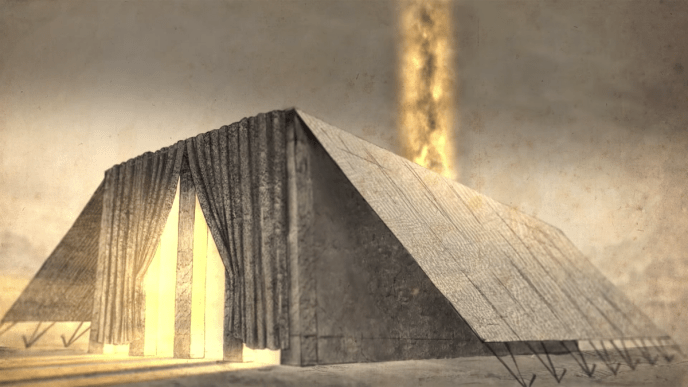
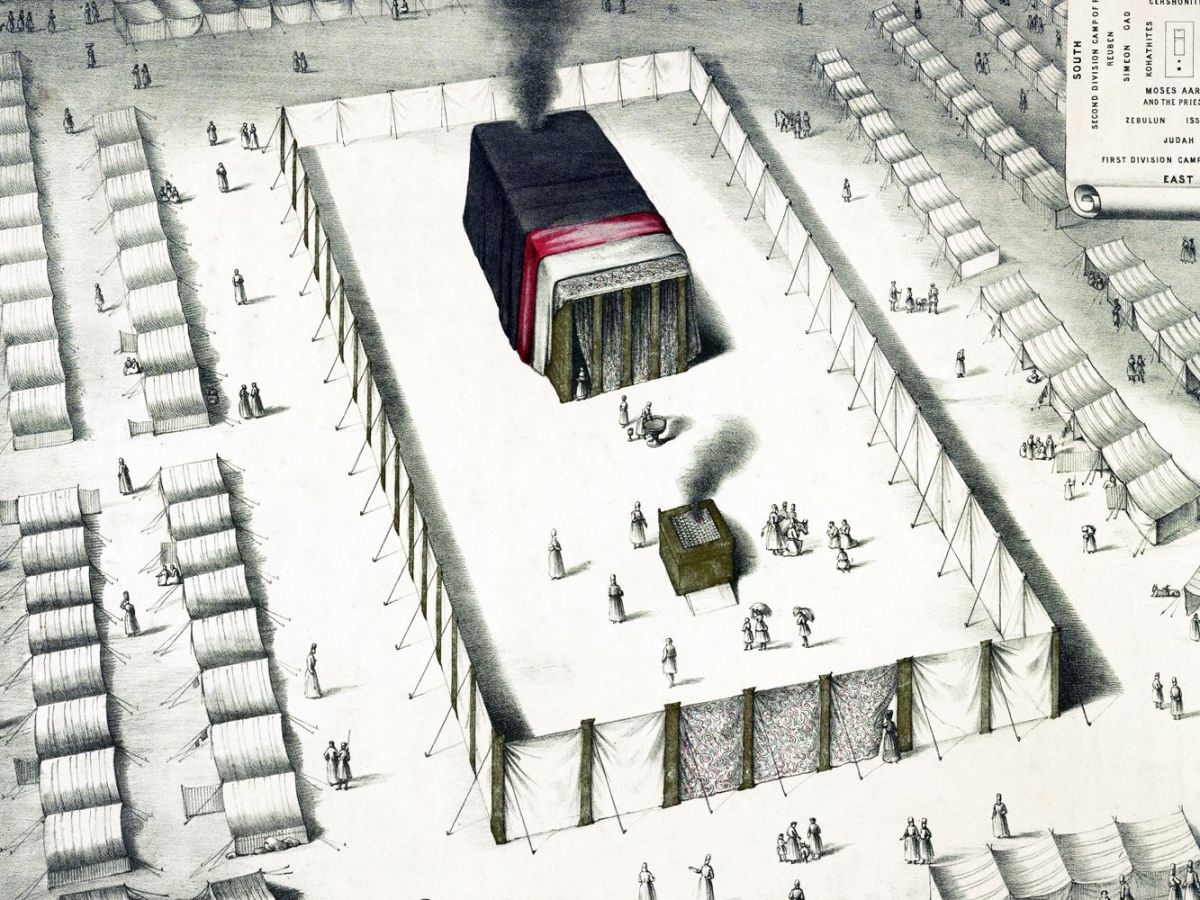
Moses, having received the pattern for the tabernacle, now puts blueprints into action. After calling for a free-will contribution from Israel, the assembly brought so much that they had to command them to stop (Exod. 36:3-7). God’s people, knowing of a need to glorify and honor Him, always steps up and meets that need. The wonderful part about this is that it is as true today as it was then. The construction ensues and the reader is reminded time and again that everything is done as Moses commanded, or as God commanded Moses (Exod. 38:22; 39:1, 7, 21, 26, 29, 31-32, 43; 40:16). Finally, after made and consecrated, God inhabits His tabernacle (Exod. 40:33-38). His presence dwells above the tabernacle, by day as a cloud and, by night, as a pillar of fire. Israel now knows that they dwell among God, and He among them, priests mediating between the two.

The specifics of tabernacle construction mirror that of paradise, the Garden of Eden. Upon completion of the earth as with the tabernacle, the same Hebrew term is employed for their completion (Gen. 2:1; Exod. 39:32; 40;33). After the completion of each, a blessing is pronounced (Gen. 2:3; Exod. 39:42-43). Finally, the comparison is that God now dwells among Israel just as He did among Adam and Eve. This cohesive theme throughout all of Scripture shows that if we understand the beginning, we’ll understand the end, the same being shown throughout Scripture. In a manner of speaking, paradise is restored but imperfectly. The original paradise, the word the Greek Septuagint uses for the garden of Eden, was heaven on earth and sinless. The new paradise demands sacrifices for atonement. Nevertheless, we see God’s aim to be with His people and among them.

Christians in churches of Christ, no thanks in part to Alexander Campbell’s Sermon on the Law, often relegate the Old Testament to something of a bygone era and not really significant to the church today. This is not a sentiment that I share, because Scripture has proven this to be untrue. Exodus, however, provides us with several items of significance for the church.

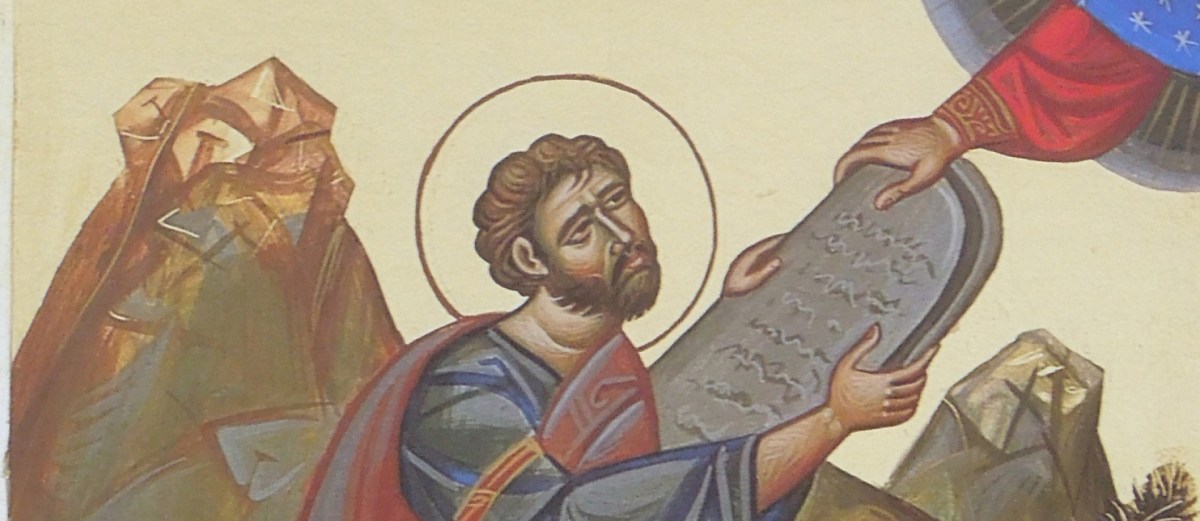
  • Jesus is the new lawgiver. Just as Moses ascended Sinai to receive the law to give to Israel, so God incarnate from the Mount gives the law to His followers.
  • The Lord’s Supper was born out of the Passover meal.
  • Jesus’ death is modeled as a sacrificial lamb.
  • Paul compares baptism to the Israelites walked between the waters of the Sea of Reeds as they exited slavery into liberty.
  • Hebrews depicts Christian living on earth as sojourning in the wilderness on the way to the Promised Land.

Insignificant? Absolutely not.

The Divine Pattern

Decades ago, Goebel Music wrote a voluminous book, Behold the Pattern. While much of the information is helpful, he may have been capable of putting things more succinctly. Nevertheless, those of us in churches of Christ are patternists when it comes to the life of the church. As God gave the divine pattern of the tabernacle to Moses atop Mount Sinai, so Jesus endowed the apostles with the Holy Spirit to reveal to us a pattern for being Christians. Furthermore, that pattern extends to the organization and worship of the church.

The earliest account of worship appears in 1 Corinthians 11-16. While it isn’t written as a word-for-word instruction manual on how to worship, we can deduce enough from this passage to know how the early Christians worshipped and what not to do. Some disagree over whether the beginning of chapter 11 or the demarcation of 11:17-18 is the point at which Paul addresses the assembly. If we hold to the latter, which I may be more prone to, the focal point of worship begins with the Lord’s Supper. A reading through chapters 12-14 discloses that prayer and song was a part of that gathering. Prophecy or revelations of knowledge may have been akin to our modern sermon. In chapter 15, Paul invokes the Scriptures regarding Jesus’ death and arise from the grave, which may suggest that Scripture reading had a place in the worship (cf. 1 Tim. 4:13). When we arrive at 16:1-2, a contribution was given weekly, and if we take the weekly to apply to everything preceding the offering, then the Lord’s Supper, singing, praying, preaching, Scripture reading, and offering were what the early Christians did in worship. Not only should we do what they did, but we should embody the heart of Jesus too. It isn’t enough to simply do it absent the mind and heart of Christ.

As it relates to the organization of the church, 1 Timothy 3 discloses that elders and deacons were overseers and servants of the church. Timothy himself was referred to as a deacon, but the term is translated in English as “minister” (1 Tim. 4:6), which may denote a separate function. Elder, bishop, overseer, and pastor were one-in-the-same and not different offices (cf. Acts 20:17, 28; 1 Peter 5:1-5). Today, however, many fellowships follow more the Ignatian separation of pastor, elders, and deacons, or some version thereof.

Eden, Sinai, Tabernacle, and Temple

In trying to show a cohesive unit throughout Scripture, I’ve often referred back to creation and Eden. I’d like to show you nine ways that Eden was a Temple and that the later Mount Sinai and tabernacle/temple were built upon Eden.

  1. The Temple was where God’s presence dwelt, and He made Himself known to Israel. His walking with Adam and Eve is prototypical of this reality (Gen. 3:8).
  2. When placed in the Garden, Adam is to “cultivate” and “keep” it (Gen. 2:15), which were words used elsewhere regarding priestly service in maintaining sacred space (Num. 3:7–8; 8:25–26).
  3. The tree of life was the model for the lampstand in the Temple.
  4. The Temple was made with wood carvings of landscapes reminiscent of Eden (e.g., pomegranates, palm trees).
  5. The entrance to the Temple was to the east (Ezek. 40:2, 6), as was the entrance to the Garden of Eden (Gen. 3:24).
  6. The tree of the knowledge of good and evil and the Ark of the Covenant were touched on pain of death—both being the source of wisdom (e.g., Ten Commandments).
  7. A river flowed from Eden (Gen. 2:10) and the Temple (Ezek. 47:1–2).
  8. There’s a tripartite structure to the Temple (outer court, Holy Place, and Holy of Holies), the mountain at Sinai (base, middle, and summit) and Eden (Eden as Holy of Holies, the Garden as the Holy Place, and the outer world as the outer court).
  9. Eden, Sinai, and the Temple are all associated with a mountain (cf. Ezek. 28:13–14).

I would hope it would be safe to say that a unified cohesion exists concerning the significant theme of Scripture. Now, however, we turn to the pattern God gave Moses. God, in these instructions, spoke to Moses six times, the seventh being the Sabbath law. When God created the heavens and earth, he spoke six times and on the seventh rested. The tabernacle is, therefore, a microcosm, a new creation.

Patternistic Religion

Scripture marks three times that God reminds Moses to build the tabernacle according to the pattern he received. The first time entails the Ark of the Covenant pattern and the lampstand (Exod. 25:40). The second time appears after constructing the sanctuary, something into which the former two shall be housed (Exod. 26: 30). The final admonition appears after instructions on the veil between the Holy of Holies and the Holy Place (Exod. 27:8). As Christians, we are collectively (1 Cor. 3:16) and individually (1 Cor. 6:19) the holy of holies because God’s Spirit dwells in us.

The Ark of the Covenant has over it the mercy seat where two cherubim face one another to guard it, just as they were placed to protect the entrance to Eden. Moses received the law from the summit of Sinai. Since they were deposited in the Ark, the mercy seat now functions as the summit of Sinai, thus making this place a portable Sinai. The mercy seat is vital because the High Priest could only enter the Holy of Holies once a year on the Day of Atonement (Lev. 16:1–3, 29–34). He was to sprinkle the blood of a bull and goat on the mercy seat to remove the people’s uncleanness, transgressions, and sins (Lev. 16:14–16).

Later, the author of Hebrews informs us that the blood of bulls and goats cannot take away sins because these annual sacrifices would have only been one-time and not yearly (Heb. 10:1–4). What are we to do? Interestingly enough, when the Hebrew Scriptures were translated into Greek in the fourth century BCE, a word was used for “mercy seat” that appears as another word in the New Testament. Rather than translating the word as “mercy seat” in the New Testament, it’s translated as “propitiation” (Rom. 3:23–25). On that mercy seat, the footstool of God, the summit of Sinai, was the conduit between humanity and God. Jesus Himself is that mercy seat—the place where sacrifice and atonement meet. The place where the righteousness of God is revealed and the wrath of God abated.

If we want to understand the end, we must, first, understand the beginning. Jesus promises that those who overcome shall eat of the tree of life in the Paradise of God (Rev. 2:7). Interestingly enough, when the Old Testament was translated into Greek, the word that replaced “garden” in Genesis is the word paradise. The original audience of Revelation would have understood that the tree of life was in Eden, the holy of holies. They would have understood Paradise as the garden. When Jesus promised the overcomers that they would eat of the tree of life in paradise, they envisioned Eden. The end takes them back to the beginning, the very initial design that God had in mind.

Reading Biases Back Into Scripture: COVID-19 and End-Times Propaganda

Last Thursday, I returned to the office after lunch and was handed a sheet of paper delivered for me. The deliverer wasn’t someone we knew and not a member of Glendale. On the paper was this person’s beliefs about the COVID-19 vaccine. They had broken down the word “Corona.” They attributed, falsely, I might add, numerology to each letter that resulted in the number 666. They, then, wrote what was in the vaccine, which, to them, was code for Lucifer and other such demonic associations. This person, then, cited 1 Corinthians 3:16; Revelation 13:16–17; Matthew 4:10 for their justification. If I had the opportunity, I would speak with them. Since I wasn’t here and they were unknown to the office staff, I can’t even contact them to discuss this. I wouldn’t attribute evil motives to the person. I believe that they genuinely believe this. However, as Jesus once said, “They do err not knowing the Scriptures.”

When Paul wrote to the Corinthians in his first letter, he addressed divisions in the church and answered some questions. He urged unity in 1 Corinthians 3:16 to the church as a whole because they were the temple of God. This passage has nothing to do with what a person puts in their body. People, even in the churches of Christ, have often invoked 1 Corinthians 6:19 for that purpose. Even then, that passage has absolutely nothing to do with what a person puts in their body. Instead, it has to do with what a person does with their body—serve God holiness or engage in sexual immorality. Paul explicitly notes that sin is done “outside” the body and that sexual immorality is a sin “against” the body (1 Corinthians 6:18). He doesn’t, for one second, speak about what a person puts in their body. Jesus addressed that in Matthew 15:10–20.

The passage where John the Revelator wrote about 666 and the Mark of the Beast appears in Revelation 13:16–18. Since mandatory vaccination and passports are a topic of discussion, this person equated their belief in the conclusion of the numerology. If a person doesn’t have a passport, they cannot transact business with the Mark of the Beast from this passage. You may or may not remember that I preached through the entire book of Revelation a couple of years ago. I specifically addressed the Mark of the Beast, and if you click on the blue highlighted part, you’ll be redirected to those notes.

I am not a medical doctor or scientist, so I can’t speak authoritatively on the vaccine. I know many of you have taken it, and many have not. I don’t think we should judge one another either way for having received it or not. Let’s not let the Enemy divide us over this. If you’ve not taken it and are on the fence, I would encourage you to speak with your primary care physician about it. Don’t take a politician’s guilt-tripping, a bureaucratic medical doctor’s urging, or even a health department’s advice to take it. Your primary care physician knows your history and current state of health, and they can give you the absolute best advice. This is what I did months ago, and my decision was based on that advice, and not on those who do not know me or the state of my health.

Meeting God at Sinai

Three months have passed since Israel left Egypt. Since they left bondage. Now, the sign that God promised to Moses is coming to fruition (Exod. 3:12). On this mountain, they were to “serve” God. This is a cognate of “tend” (ovda) in Genesis 2:15, which denotes priestly service (cf. Num. 3:7–10). This is fitting because God tells Israel that He intends for them to be a kingdom of priests and a holy nation (Exod. 19:6). God’s royal decree to Adam and Eve was to “subdue [the earth]; have dominion” over every living thing (Gen. 1:28). God gave the first humans both a royal and priestly service. The fall interrupted their ability to carry it out. He has now passed that service to Israel. Priests mediate humans to the divine and the divine to humans. As a “holy nation,” if they keep God’s commands, they would mediate between God and the nations, a promise God had made to Abraham (Gen. 12:3). As far as a timeline of events goes, beginning in Exodus 19—through Leviticus—and ending in Numbers 10 is one year of Israel camping at Mt. Sinai.[1]

Meeting God

Thus far, Moses and God have spoken with one another. Moses goes and informs the people of what God has said, and he returns to God to relay their affirmation of these very things. Then, God is preparing to appear in the presence of the Israelites, but before they do so, they are to prepare (Exod. 19:10–13). This would occur over three days. We have to imagine that they’ve been traveling for a few months and probably haven’t bathed or changed clothes. Perhaps they stunk and needed to do laundry. Still, the cleanness they were to appear as was appropriate for appearing before God. Boundaries are established around the mountain to show the demarcation between the sacred and the common. Wherever God is, there is holiness. Were sinful commoners to approach such holiness, the result would be catastrophic. When the third day came, Israel saw a frightful sight (Exod. 19:16–19). God once more orders Moses to remind Israel to respect the boundaries set.

The following few chapters demonstrate God’s ordering of society. Various commands, general and specific, are given—the most famous of which is the Ten Commandments. The first three have to do with respecting God, and the last seven have to do with one’s neighbor. Thus we see the first and greatest command reflected here and the second, which is like unto the first. After that, specificity reigns until chapter 24 and is referred to as the Book of the Covenant. Afterward, Moses, his brother and nephews, and seventy elders go up the mountain. Moses recounted all of God’s words, and the people assent to His law.

Early in the morning, Moses built an altar at the base of the mountain. He set up twelve columns for the twelve tribes of Israel. Offerings and sacrifices were made, the blood was taken and used to cleanse the altar and the people. Then, he and those bid to come up the mountain do so. They see God and eat and drink. Sacrifice was always followed by a communal meal of the worshippers. Notice the similarities of these events to Christianity: the Word of God is given, recorded, read, and assented to by God’s people. The sacrifice of Jesus, His body and blood, are what we partake of every Lord’s Day as a community of God’s people. We, too, eat and drink, and we do so in God’s presence. The continuity is astounding.

The preacher of Hebrews informs us of our New Covenant in light of this first covenant (Heb. 9:18–20). These sacrifices, however, were ineffective at the atonement of humanity to God (Heb. 10:1–4). Those can never take away sins like the blood of Christ (Heb. 10:11–14). God set up this system to prepare us for that which was to come. We eat from an altar far superior to the one given to Moses and Israel (Heb. 13:10). Under the Old Testament, priests were given portions of most sacrifices, but laypeople couldn’t partake. As Christians, we all partake.


[1] Enns, Exodus for Normal People, 22–23.

YHWH, God of Slaves and Destroyer of Egypt gods

A Shepherd Meets God in the Wilderness

The story begins with Moses tending his father-in-law’s flock, but he went by a different name when we last read about his father-in-law. Here in the opening of chapter 3, he’s Jethro (as well as 18:1), but he was Reuel (2:18). As if things aren’t confusing enough, he’s called Hobab in Numbers 10:29 and Judges 4:11. Now, because our translators don’t want us to be too confused, they refer to him as Jethro in Exodus 4:18, but in Hebrew, his name is Jeter. Oy vey! Since we’re on multiple names, Moses came to Horeb, also referred to as Sinai.

Moses comes upon a burning bush (seneh) in Sinai (sinay). Nice pun, no? Anyway, it’s burning but not consumed. God has previously disclosed Himself as fire (Gen. 15:13–17). As he turns to inspect, God calls out to Moses and stops him. He’s on holy ground. This is unlike anything else, so it can’t be regarded carelessly. We later read that God dwells on seneh (Deut. 33:16). Still, when He later instructs Moses on the tabernacle, it becomes a portable Sinai. Nevertheless, God knows the suffering of His people. He has heard their cry (Exod. 3:7, 9)—the same word used by Sodom and Gomorrah’s inhabitants (Gen. 18:21; 19:13). God wants Moses to do this thing, and the sign will be that they will worship Him at the very mountain where Moses stands (Exod. 3:12). God will “stretch out” His hand (shalahti), and it will cause Pharaoh to “let go” (yeshalach) in Exodus 3:20.

Moses objects several times (Exod. 3:11, 13; 4:1, 10), but God answers him at every turn, even giving him signs. The signs that God gives Moses in Exodus 4:1–9 represent a couple of things. The snake may have been the cobra that Pharaoh typically wore around their headdress. Pharaoh’s power was absolute. He was as good as a god in ancient Egypt, but, later, when his magicians duplicate this miracle, and Aaron’s rod swallows up theirs, it’s a foretaste of the downfall of Pharaoh (Exod. 7:8–12). The second miracle of Moses’ hand turning to leprosy and back to normal foretastes the plagues that are to come. Moses’ final objection is that he just doesn’t want to do it (Exod. 4:13). God becomes angry but offers Aaron as the mouthpiece.

Moses has requested permission from his father-in-law to go to Egypt and see his countrymen. Jethro bid him “Godspeed,” and Moses left. In the meantime, God spoke to Moses’ elder brother, Aaron, and asked him to meet Moses in the wilderness. After they met and talked, they go to the elders of Israel and tell them all that God has told Moses. They bow their heads in trusting what has been said to them, so the showdown begins. Moses and Aaron go to Pharaoh and say that Yahweh has ordered that they go on the three-day journey to worship Him. Still, Pharaoh refuses to acknowledge Israel’s God. He thinks they have too much time on their hands to contemplate such a thing, so he multiplies their labors by requiring the same daily quota. Instead of the materials being brought to them as previously, they’re to procure them independently. It’s too hard, so they gripe at Moses, and Moses gripes to God. Yahweh reassures Moses about what He’s going to do, and Moses relays the message. Because Israel’s oppression is worse than before, they refuse to listen to Moses. For the first time in the story, God speaks to Moses and Aaron (Exod. 6:13). This is a sign of things to come—the high priesthood—because the genealogy that follows reveals that they are Levites, priests.

Plaguing Egypt

The plagues would be an undoing of God’s order, just as He allowed chaos to reign in the deluge, so He’d let chaos temporarily reign in the plagues. Each of God’s creative acts finds its negative counterpart in the plagues. Interestingly, each domain that God plagued also corresponds to the realm of a reigning Egyptian god or gods. We read ten times, “And God said,” in creation (Gen. 1:3, 6, 9, 11, 14, 20, 24, 26, 28–29). We also see a unique plague corresponding to most creative acts.

This particular episode has mixed in it the creation of observance, a memorial that would last through generations.            

  • Plague 1: “bodies” or “gatherings” of water (Exod. 7:19) correspond to when God created the seas in Gen. 1:10. Hapi was the god of the Nile, and it turning to blood symbolizes the god’s slaying as well as payback for Egypt’s slaying of Israelites children.
  • Plagues 2–4: This triad of plagues (frogs, lice, and flies) are associated with the three elements of the earth—water (Gen. 1:20), land (Gen. 1:24), and air (Gen. 1:22). This is all contra Genesis 1:28. The goddess Heket had the head of a frog and controlled fertility. Geb was over the dust of the earth, and Kephri was the god of creation and had the head of a fly.
  • Plague 5: Pestilence among livestock reverses Genesis 2:18–20. There was a marked distinction between Israel and Egypt (Exod. 9:6–7; cf. 8:22). Hathor was a goddess depicted with the head of a cow.
  • Plague 6: This plague corresponds to the creation of humanity in God’s image (Gen. 1:26–27). They weren’t made sickly but whole. God’s affliction of the flesh reminds the people that they aren’t superior to others, and Pharaoh isn’t a god. Isis was the goddess of medicine and peace.
  • Plagues 7–8: These two demolish the vegetation, which was a reversal of God giving it (Gen. 1:12; cf. Exod. 10:15). Nut was the goddess of the sky, and Seth, the god of storms and disorder.
  • Plague 9: When God darkened the earth, He took creation back to the state that existed between Genesis 1:4–5. Ra was the sun god and personally backed Pharaoh, so this was enormous.
  • Plague 10: Osiris was the god of death, but Pharaoh was considered the god of Egypt. The taking of life was the reversal of God breathing life into humanity (Gen. 2:7).

God instructed Moses on the Passover. A male lamb without blemish was to be taken and sacrificed for each household according to its number. The blood was to be applied to the doorposts and lintels of the houses. This meal was to be eaten in haste, and they were protected by the lamb’s blood. Egypt, however, suffered the loss of its firstborns. Keep in mind, a firstborn isn’t always an infant or toddler. I’m a firstborn, and many of us, regardless of age, are too. This doesn’t specify children but firstborn. On that note, God gives the law regarding the firstborn. Every firstborn of their livestock and children are God’s. Children may be redeemed by a sacrifice as well as donkeys, but the firstborn belongs to God. We later see this when descendants of Levi are substituted as the firstborn child (Num. 3:11–13). Descendants of Levi were sacrificed to serve the Lord all the days of their lives. This sort of reminds us of Abraham’s call to sacrifice Isaac: luckily, God provided the substitute for Isaac’s redemption.

Israel now leaves Egypt, but a detail emerges that we’d do well to notice. Moses procures the bones of Joseph (Exod. 13:19; cf. Gen. 50:25). This oath made by the children of Israel looked ahead to a day when Israel would leave Egypt. When they arrived, they did so in good standing with the Egyptians and were welcomed because of who Joseph was to Egypt. Similarly, you and I will be accepted by God because of who Jesus is and what He’s done. Our attachment to Him, the lamb of God, causes God to stay His hand and pass us over when judgment comes.

Slavish Tendencies

Shortly after leaving Egypt, Israel is once more faced with the dilemma of liberty. It isn’t always cheap, and it often means self-reliance more than anything. So, they complained (Exod. 14:11–12). Pharaoh and his army close in on Israel, but luckily, it wouldn’t be long after this complaint that they’d walk through the Sea of Reeds. One might think their mood would have vastly improved after that miracle, not to mention the fact that God placed Himself as a cloud between them, giving Egypt cloudy darkness while giving Israel light. Their mood wouldn’t improve much after that. They’d left on the 10th of the first month, and now on the 15th of the second month, just a little over a month since they departed Egypt, they grumble once more (Exod. 16:3). God provides for them and gives them instructions about the Sabbath. These complainers: do you think they followed His words to the T? Nope (Exod. 16:20). Now, God isn’t too pleased (Exod. 16:28–30). It’s not too long before they complain again (Exod. 17:3). Wouldn’t we think that having seen what they saw and having lived through what they endured would be a good enough reason to rejoice like they had in chapter 15?

Similarly, Paul wrote to the Roman Christians something similar (Rom. 6:16–23). The Roman Christians still behaved as if they had before. No transformation. No change. But they had heard the good news, obeyed the gospel, and kept on living as they had. God no more expected Israel to live as slaves as He does. We are Christians to live as slaves. We are either slaves to sin, the taskmaster that oppresses us and kills us, or to righteousness. The latter is life-giving through Jesus Christ, our Lord. The former is life-taking. As Christians, when we live after the precepts of our God and follow His path, we demonstrate that we have truly been redeemed. Many of us acknowledge Jesus as the Son of God, but do we live as if Jesus is our Lord? In the ancient world, one’s lord was their master. They couldn’t do anything to shame their lord, and if their lord gave an order, they were obliged to follow it. We have a good Lord who loves us, and rather than barking orders, He tells us what to do because it’s what’s best for us. Shall we be slaves to Egypt and sin, or righteousness and God?

Recreation

In our first lesson on Exodus, I pointed out how Moses used language akin to the creation narrative in Genesis as well as the flood. In the previous study, I pointed out how the plagues were demonstrative of God removing His order from certain creation elements to punish the Egyptians. Keeping with this theme of creation, when the Israelites cross the Sea of Reeds, we note a recreation theme, just as it was post-flood. Notice in Exodus 14:21 how a “wind” drives the water back to create “dry land.” The word translated wind is the same word that can be translated as “spirit”—ruach. We remember how the Spirit of God, His ruach, hovered over the face of the waters (Gen. 1:2). On Day 2 of creation, God divided the waters, and some were below, and others were above. On Day 3, God further separated the waters below to reveal the dry ground. Notice the theme?

Crossing the Sea of Reeds is a replay of creation. In Genesis, the earth came out of the water, but in Exodus, waters are split to reveal dry ground. As the distinction between land and water was created, the earth was made habitable to humans. This dry ground is life-giving to the Israelites. Then, in a replay of the flood, the waters crash down on the unrighteous Egyptians, just as God flooded the earth. Waters are tamed to bring life and released to bring death (1 Peter 3:20; 2 Peter 3:5–6). Notice how Paul ties the Christian initiatory rite of baptism to Israel (1 Cor. 10:1–2).[1] As water saved Noah and his family, and Israel and their family, the waters of baptism save us too (Rom. 6:3–6). We are, therefore, a new creation just as the earth was recreated after the flood, and Israel was created anew by passing through the waters. This is why we live as slaves to righteousness and God rather than to sin.


[1] I must give credit to Peter Enns and his book, Exodus for Normal People (Perkiomenville, PA: The Bible for Normal People, 2021). A lot of the information in these lessons that I’ve preached have come from him and his book.

What Exodus Has To Do With Creation

A recurring theme in Genesis was the threat of famine that sent the Hebrews to Egypt for food (Gen. 12:10; 26:1–2; 42:1; 46:1–4). The last time it occurred in Genesis, the entire family of Israel wound up there due to the seven-year famine Pharaoh dreamt about. That sojourn ultimately led them to settle in the land of Goshen. What began as an effort to sustain themselves would turn into a reversal of fortune. Somewhere along the continuum of time, things changed, but this is expected since Yahweh had promised Abraham that his descendants would be slaves in a foreign land for 400 years (Gen. 15:13–14). Yet, He would bring them back to the land of Canaan after the fourth generation. Before they’d return, things would get worse before they got better.

What Moses is Showing Us

In the early chapters of Exodus, we notice a retelling of the creation story in a sense, but through the history of Israel. Israel is depicted to the ancient reader as fulfilling the vocation of humanity from the beginning. The first evidence being the divine order to fill the earth and subdue it (Exod. 1:7; cf. Gen. 1:20, 28; 9:1; 17:6). Whereas it was commanded of Adam/Eve and Noah, God told Abraham that He would make it happen for him. In each instance, God is narrowing down His purpose for creation through specific ones. He began with Adam (human) and Eve (life). After their expulsion from Eden because of sin, the line was narrowed through Seth, and the mandate was once again given to Noah. As sin persisted, the vocation was given to Abraham to be realized in Israel. They had multiplied and filled the land.

Israel is God’s vessel for demonstrating His creative purposes. It’s meant to be through them that humanity comes to know the God of creation and form a relationship with Him. When we read at the beginning that they “increased abundantly” (Exod. 1:7), it might be better that we substitute that translation with “abounded.” This is the same word used to describe the sea creatures in Gen. 1:21, and it’s also used post-flood in 8:17; 9:7. These usages point initially to the creation and, then, to recreation. The author hints that a new creation is being carried out through Israel, and it is accomplished in part by their multiplication.

Fulfilling God’s divine vocation resulted in the Egyptians taking notice. To Pharaoh, the growing number of Israelites was a threat. However, the more he tried to stop it, the little it did to accomplish his goal. If anything, Pharaoh’s oppression intensified Israel’s growth (Exod. 1:12). With Pharaoh wanting Israel to diminish and God wishing them to fill the earth, a show-off and clash are sure to result. The last time such an occasion reared its ugly head was at the Tower of Babel. Those present had pitted themselves against God, and He scattered them. Pharaoh is about to do the same, and those of us who know the story know it won’t end well for the King of Egypt.

Rather than Israel subduing the land, they were stopped (enslaved). Humanity was suppressed by sin resulting in the fall. Being further subdued resulted in the flood, so the enslavement warrants a liberation just as God had previously given. As Israel continued growing and evil pervaded in their enslavement and oppression, Pharaoh ordered the murder of all male newborns. Of course, the scheme didn’t work because the Hebrew midwives kept it from happening (Exod. 1:17, 21). One specific Levite couple had a “beautiful” son. Literally, this is the same word translated as “good” seven times in Genesis 1—tov. This reminder points to the fact that this son will be used in God’s scheme of recreation.

Pharaoh began ordered newborn males to drown in the Nile. This boy’s parents put him in “an ark of bulrushes” (Exod. 2:3). In Genesis, the flood destroyed the whole human race. Still, in Exodus, Pharaoh wanted male children drowned in the Nile, threatening to destroy Israel. As the ark saved Noah, so an ark saved Moses. Noah saved humanity; Moses would save Israel. Sadly, this wasn’t the story for everyone and likely explains why God later takes the firstborn among Egypt and drowned the Egyptians in the Sea. Moreover, as God parted the chaotic waters above a vault and below as the sea, so He’d part the waters of the Red Sea for Israel’s escape. As the flood destroyed the earth’s inhabitants, God’s releasing of the parted sea would drown the Egyptians.

Moses grows up in Pharaoh’s court, raised by Pharaoh’s daughter. He kills an Egyptian who was beating a Hebrew. Afterward, he tries to play peacemaker between two other Hebrews who make it known that they are aware of what he had done to the Egyptian. Pharaoh also learns and seeks Moses’ life, so Moses flees. He finds women being harassed at a well and rescues them, one of whom would become his wife after the manner of Isaac and Jacob. He meets a Midianite priest who becomes his father-in-law, and chapter two ends with a simple verse that our English complicates. “God saw the Israelites. God knew.”

Hebrew Numerology, Archaeology, and Exodus

Around 1800 BCE, people from the land of Canaan had already made their way to Egypt and established a dynasty. This comes to us from historical and archaeological evidence. It isn’t specified that these people were Israelites. Still, they may have been given the timeline of the sojourn in Egypt and the lifetime of Moses. The Israelites were to be slaves in the land of Egypt for 400 years, so this would line up rather nicely with the traditional lifetime of Moses and the writing of the books of Moses (1450–1400 BCE). However, around 1650 BCE, a group called “Hyksos” invaded Egypt and ran things until about 1550 BCE. They’re presumed to have been from Asia.

The traditional dating of Exodus is 1446 BCE, which is given to us from a literal reading of 1 Kings 6:1, which placed the building of Solomon’s temple at 966 BCE, 480 years after the Exodus. Sometimes, however, it’s hard to know if the numbers are used literally or symbolically. The Israelites and ancient peoples of the east believed numbers had symbolic and, therefore, religious meanings. In this case, if we were to read it symbolically, we’d begin with the number 40, which is a go-to number symbolizing a complete or appropriate period. Moses’ life is broken up into three periods of 40 years. Israel would spend 40 years in the wilderness wondering. Jesus fasted for 40 days and was tempted. Are we to understand these numbers literally or symbolically? 40 times 12 gives us 480—twelve symbolizing the tribes of Israel. According to the numbers, these symbolic numbers held religious connotations, which would have been viewed as a divine period of time. There can be problems reading the numbers as literal numbers rather than symbolically as they might have.

This is always something I caution when reading the Old Testament. Some who read these books read everything literally, and that’s a product of our Western Civilization, especially for us living in the twenty-first century who’ve inherited the Enlightenment way of processing information. They thought and told stories differently than we do, so we have to try to get in their minds as best as possible. This can be hard, but it makes studying the Old Testament so much more enjoyable once we’re there.  

When Did Exodus Occur?

Archaeology points to a mass Hebrew settlement in the land of Canaan in the 12th century BCE. When you look at it that way, it will make for a massive discrepancy between the actual historical exodus and the conquest of Canaan. Some figures suggest a disparity of 200–300 years. We know that much time didn’t elapse between the departure and conquest, so what are we to make of this gap of centuries between the two based on archaeological evidence?

First, just because this was when the settlements appear doesn’t mean that’s when Israelites arrived in the land of Canaan. They could have been there sooner. The settlements may point to a period of economic prosperity more than arrival in the land. Second, because the Pharaohs are unnamed in the book of Exodus, it may point us to an actual, historical conflict that occurred in the 16th century BCE between a divided Egypt. This second point is what I’ll focus on here.

From Genesis, Israelites settled in Goshen, which was located in northern Egypt. Interestingly enough, Northern Egypt is referred to as “Lower Egypt” while Southern Egypt is referred to as “Upper Egypt.” Anyway, in the sixteenth century BCE, Egypt was divided, culturally and politically. Northern Egypt was ruled by the Hyksos. Some historians believe that the Hebrews were their slaves during this period. Perhaps as we see from the story of Exodus, Pharaoh grew concerned by their numbers and that they may ally themselves with Southern Egypt against them, which would unify the country.

Near the end of the 16th century, the Southern Egyptians began a campaign to unify Egypt. There’s a notable coinciding abandonment of Semitic people, which the Israelites were, around the same time. Before these events, Egyptian sources report natural disasters that afflicted Egypt, including abnormal weather conditions and disease. Could these have been the plagues? That sounds like it. The discrepancy of dates is more about how the data is read than anything. There is a plausible explanation, and this is it.

The Contaminated Waters of Baptism

We’re in a room of different people, and you ask the question, “Who all has been baptized? Raise your hands, please.” Hands go up en masse. Then, as you ask these people to detail their accounts, you give a questionnaire to use for this purpose. One question may be, “How old were you when you were baptized?” Some people put a few weeks old, others nine years old, and others put they were in a specific decade. Another question is how you were baptized. There are multiple choices with a box to check beside their answer: sprinkling, pouring, and immersion. You ask what else they did at the time of their baptism, what the baptizer said as they were baptized, and on and on the questions go. Then, you ask everyone to keep their sheets with their answers, and then you open your Bible and begin studying the topic.

Baptism in the New Testament and Beyond

Since we in churches of Christ use the Bible as our guide, we look to specific passages about how the earliest Christians practiced their baptisms. We note that those who were baptized understood what they were doing and consented to such (Mark 16:16; Acts 2:41; 8:37). The only thing that would hinder a person from being baptized would be nonbelief (Acts 8:36–39). Certain people are incapable of faith through no fault of their own (e.g., mentally handicapped, infants). Alongside belief is the confession of Jesus as God’s Son (Acts 8:37; 22:16; Rom. 10:9–13). Since most people in a Bible study lack a working knowledge of Greek, we use our English Bibles and note that baptism was a burial (Rom. 6:4; Col. 2:12) and that whoever administers baptism pronounces Jesus’ words in the Great Commission for the invocation (Matt. 28:19). The result of this, therefore, is forgiveness of sins (Acts 2:38; 22:16), a renewal of one’s spiritual self (Rom. 6:3–4; Titus 3:5), sanctification (1 Cor. 6:11), and the putting on of Jesus (Gal. 3:27). Assuming the person has faith in Jesus as God’s Son and His work on the cross, the medium through which this is accomplished is baptism itself (1 Peter 3:21). The end of that process is called “salvation,” but the key to this salvation is our faith in God (Col. 2:12). Without faith, baptism is meaningless, and with faith, baptism is so meaningful because of Jesus’ work.

This was the understanding of the church in the days of the apostles, the earliest leaders of the church. However, even the second generation of Christians understood this. There was no forgiveness of sins without baptism.

Concerning the water, indeed, it is written, in reference to the Israelites, that they would never accept that baptism which leads to the remission of sins. (Epistle of Barnabas 11.1; c. 132–35)

Some teachers maintain that there is no other repentance than that which takes place, when we descended into the water and received remission of our former sins. He said to me, “That was sound doctrine which you heard; for that is really the case.” (Shepherd of Hermas 2.4.3; c. 150)  

[We] may obtain in the water the remission of sins formerly committed, [where] there is pronounced over him who chooses to be born again, and has repented of his sins, the name of God the Father and Lord of the universe. (Justin Martyr, First Apology 61; c. 153–55)

For centuries, Christianity taught that baptism washed away our sins. It wasn’t until Ulrich Zwingli (c. 1484–1531) that a view contrary to this began being taught.[1]

Contaminated Waters

 A Jewish-Christian source dating to the sixties, Didache, gave instructions for when the optimal environment was unavailable.

Now concerning baptism, baptize as follows: after you have reviewed all these things [chs. 1–6 instructions], baptize in the name of the Father and of the Son and of the Holy Spirit in running water. But if you have no running water, then baptize in some other water; and if you are not able to baptize in cold water, then do so in warm. But if you have neither, then pour water on the head three times in the name of Father and Son and Holy Spirit. (7.1–3)

Considering that this may have been composed in western Syria, where there may have been areas where water was scarce, explains the exceptions. This in no way mentions sprinkling but pouring. The thrice pouring of water may have been enough to recreate total immersion and count as sufficient for baptism. It wouldn’t be surprising that it corresponded to the thrice-invoked name of Father, Son, and Spirit.

Sprinkling is mentioned in the New Testament, mainly in Hebrews, but invariably concerning the imagery of sacrifice since the priest would sprinkle the animal’s blood upon that which was being sanctified (Heb. 9:19, 21; 11:28; 12:24). The usage also appears metaphorically (Heb. 10:22; 1 Peter 1:2). However, it’s never used about baptism. These are two separate Greek terms, but sprinkling is predominant in some traditions today despite not being so in the early church.

By the third century, some believed it more appropriate to delay baptism until one neared death. That way, they could be the purest upon dying when they met God. This led some people to wait too long to receive baptism as immersion, which the word actually means. Cyprian of Carthage (c. 250–58) defended sprinkling if one was on their sickbed. He also advocated that sprinkling and pouring were adequate measures of imparting the grace of baptism, citing Old Testament passages as justification (e.g., Ezek. 36:25–26; Num. 19:8). As long as this was done in the church, and the faith of the giver and receiver were sound, it was perfected by the Lord (Letters 69).

His view was relatively new given an occasion that arose where a man on his sickbed received this sort of “baptism.” Novation, a presbyter in the Roman church—oddly enough, one wonders how a person could become a presbyter without first becoming a Christian—was the first to receive a sickbed baptism by sprinkling. Of course, by this time, so much had changed. Only priests administered baptism, and they were to have cleansed the water beforehand so remission of sins could occur. More and more, the clergy came to define the faith rather than the rule of faith itself.

Cyprian also wrote extensively about baptizing infants in his works. He’s one of the earliest explicit sources that attest to this practice but not the earliest to mention it outright. That notoriety belongs to Tertullian, who opposed the practice (Baptism 18; c. 200). Other references have been inferred as suggesting infant baptism earlier, such as Justin Martyr (1 Apology 15.6) and Polycarp (Mart. Poly. 9.3). Nevertheless, the other references are stretches at best. By Tertullian’s time, he referred to it as something already being done “for which a practical and scriptural rationale was advanced (themselves indications of a new practice that needed justification).”[2]

On the one hand, you have infant baptism, sprinkling those on deathbeds, and various other methods of administering this one fundamental grace God imparted. The change came by way of well-meaning clergymen. Yet, in the fifth century, Augustine would refine and propose the doctrine of original sin. The custom of infant sprinkling/pouring would become the standard practice for centuries. The third century certainly had its difficulties with baptism. Still, we must decide whether to work within the confusion of the church’s leaders then or those inspired by the Holy Spirit in the New Testament. Is our baptism apostolic or traditional?


[1] Jack Warren Cottrell, “Covenant and Baptism in the Theology of Huldreich Zwingli,” (Dissertation, Princeton Theological University, 1971).

[2] Everett Ferguson, Baptism in the Early Church: History, Theology, and Liturgy in the First Five Centuries (Grand Rapids: Wm. B. Eerdmans Publishing Company, 2009), 363.

How the Papacy Was Born

Ask anyone who attends a church what the leadership structure is, and you’ll get various answers. Some people have a pastorate, presbytery (elders), and a diaconate (deacons). Others have the pastorate and diaconate (e.g., Baptists). We have presbytery and diaconate with the ministers acting in a role akin to the monarchy of England—we really have no power but yield influence. It’s become common to refer to the preacher as “pastor” in nearly every tradition except the high church traditions where they’re notably called “priest” or “father.” Among us, such preachers are the minister unless also an elder. He can be called pastor then but is usually not.

The person standing in the pulpit is usually esteemed differently than what he would have been in the early church. Church leaders in the New Testament were well thought of but not venerated. They would have been respected for their station and looked to for concrete leadership since the Gospel Way was usually oral more than literary. The Hebrew Scriptures were indeed used in the early church, as they were in the synagogue. Still, the first-century church lacked a complete New Testament as we have today. Instead, they had the leaders of the church (1 Cor. 12:28; Eph. 4:11) and in the congregations (Acts 14:23) to guide them. Additionally, the early church liturgy included robustly doctrinal hymns instead of modern praise and worship one witnesses in most churches. The ancient hymns were statements of belief, and when chanted repetitiously, even the simplest of Christians was capable of repeating them to explain Christianity (Phil. 2:5–11; Col. 1:15–20; 1 Tim. 3:16; Heb. 1:1–3; 1 Peter 2:21–25).

By the end of the second century, Ignatius’ tripartite polity was common throughout the church. After all, his urging Christians to submit to their bishops in all things would have ensured that the one bishop was regarded as the protector of truth. He was a local bishop of a city at the time, but later the position would grow to a territory. By the end of the second century, Hegesippus and Irenaeus had produced lists of bishops throughout various cities. The latter would draw up a list of bishops and strengthen such by arguing their succession from apostles.

The blessed apostles, then, having founded and built up the [Roman] Church, committed into the hands of Linus the office of the episcopate. Of this Linus, Paul makes mention in the Epistles to Timothy. To him succeeded Anacletus; and after him, in the third place from the apostles, Clement was allotted the bishopric. This man, as he had seen the blessed apostles, and had been conversant with them, might be said to have the preaching of the apostles still echoing [in his ears], and their traditions before his eyes.

Irenaeus, Adv. Haer. 3.3.3

Gnostic teachers first claimed an apostolic succession of their teachers, so Irenaeus’ list became a hallmark of the orthodox faith taught in churches. The Roman church rose to prominence for numerous reasons, the least of which entailed Peter and Paul having ministered there for several years. 

The Rise of Roman Primacy

The church at Rome had emerged as a leader of Christianity by the end of the second century. “For it is a matter of necessity that every Church should agree with this [Roman] Church, on account of its preeminent authority” (Iren., Ag. Her. 3.3.2). Being the capital of the empire also had its perks. The Roman church grew immensely during the second and third centuries. Despite being as large as they were, they maintained fidelity in preserving apostolic traditions. Their wealth allowed them to be noticed for their charity, often sending aid to the churches throughout the known world when needed. Some of the members held political positions of influence in the empire as well. This congregation was known to have had direct contact with Peter and Paul, who were put to death in the city.[1] These factors elevated this church throughout the universal assembly of Christians. In time, this notoriety would vest significant authority in the church’s bishop.

Though Peter is often touted as the first pope and founder of the Roman church, history and Scripture would dictate otherwise. When Pentecost came in either the late twenties or early thirties CE, “visitors from Rome, both Jews and proselytes” (Acts 2:10), were among those who heard the good news. Jews had lived in Rome as far back as the second century BCE, with many more becoming slaves due to Pompey’s triumph in the first century BCE. Among the Jews who came for Pentecost were also proselytes—Gentiles who’d fully converted to Judaism.[2] That both existed in Rome indicates that a converted Gentile population already identified as Jewish, so the mix of Jew/Gentile in Rome existed before even the church’s first Pentecost.

When Paul wrote his letter to the church, he made no mention of Peter. Paul’s close familiars, Aquila and Prisca, met him in Corinth when Jews were exiled from Rome, suggesting that the church was already in existence (Acts 18:1–2). Peter went to Rome in 42 CE after having been a bishop of Antioch.[3] As an elder in Rome (1 Peter 5:1, 13), Peter may have aided the church in becoming better structured and ordered, but he didn’t establish the congregation. Paul wouldn’t arrive in Rome until 60 CE and would live there and minister for at least two years (Acts 28:30). After that, we don’t entirely know where he went until the traditional date of his and Peter’s martyrdom in 67 CE. Given the time they spent in Rome, they would have been able to make headways and solidify Christian orthodoxy that would have been the envy of the church.

Ignatius, Clement, and Hermas wrote to the Roman church in the late first and early second centuries. In their writings, the Roman church had a plurality of presbyters-bishops and not a pope. Near the end of the second century, an ongoing debate on the proper date of Easter persisted. Until this time, peaceful tolerance over this difference had prevailed, but the discussion flared up again. Bishops from all over called meetings to discuss this. Some in Asia reaffirmed the practice of observing Easter on the 14th day of Nisan regardless of which day of the week it fell.

In contrast, the others insisted that it should always be celebrated on a Sunday. Victor of Rome grew frustrated by this ongoing controversy and attempted to excommunicate the Asian churches for their view (Hist. Eccl. 5.24.9). This was likely the first time a Roman bishop exercised power over the church universal. Still, this attempt at ex-communication failed despite Sunday being the day that prevailed. Nearly fifty years later, however, Cyprian of Carthage and Stephen of Rome disputed over baptism. Stephen of Rome invoked Matthew 16:18 for the first time to assert Roman privilege. By 382 CE, that text was solidified as a passage of Roman primacy since the see of Rome was then taught to have succeeded Peter. Then, the occupier of Peter’s see became regarded as holding priority over others but was not then necessarily head of the church universal.[4]  

The Papacy as We Know It

As time went on and Christianity grew, the bishop over a capital city or province became known as a metropolitan. Among the metropolitans, those in a city with a more extraordinary claim to apostolic succession were given the title of patriarch. This form of church polity was extant at the Council of Nicaea in 325 CE. An enormous issue arose when Constantine, in 330 CE, relocated the empire’s capital from Rome to Constantinople (Istanbul, Turkey). This city, so named after the emperor, was referred to as “New Rome.” Some believed that the relocation of the imperial capital meant a change for the church, but Rome did not take well to this belief. If the seat of imperial power now rested in Constantinople, fine. However, the Roman church was still to be esteemed as first among equals because both Peter and Paul had pastored there, thus giving them the purest form of Christianity. The first three patriarchates were Rome, Antioch, and Alexandria. Later added to them were Constantinople and Jerusalem. The Nicene Council gave more tremendous honor to Rome and Constantinople, but not authority.

At the Council of Chalcedon (c. 451), equal privileges were given to Constantinople as Rome wielded. These two sees were constantly battling over power and prestige. The Patriarch of Constantinople in 595 assumed the title of “Ecumenical Patriarch.” John the Faster, who’d taken that title, provoked Gregory the Great (Pope Gregory I) to petition the emperor, requesting that he not acknowledge such. By this time, the Western Roman Empire had fallen, and people in the West looked to Gregory for a sense of continuity. Being from a senatorial family, one might think that Emperor Maurice would have weighed this. Still, instead, he acknowledged John the Faster as Ecumenical Patriarch. Maurice was slain by a usurper a few years later, and Gregory sent letters praising the new emperor. Emperor Phocas would, in 606, transfer the title “Universal Bishop” to Boniface III, thus establishing the Roman supremacy of the pope. As you might imagine, the Eastern church didn’t accept this.


[1] Everett Ferguson, Church History: From Christ to Pre-Reformation, vol. 1 (Grand Rapids: Zondervan, 2005), 138.

[2] Horace portrayed the Jews as forceful in their proselytizing (Sat. 1.4.142–3; cf. Matt. 23:15). Many were Jews by conversion rather than by birth (Acts 13:43. Cf. Juvenal, Sat. 14.102–03). A Gentile could become Jewish by circumcision, immersion, and a sacrifice (Keritot 9a; cf. Pesahim 8.8; Exod. 24:8).However, Gentile conversion was not always welcomed and in some cases was even rejected.

[3] Jerome, On Illustrious Men 1.

[4] Henry Chadwick, The Early Church, rev. ed. (New York: Penguin Books, 1993), 237–38.

From Presbyterian to Monepiscopacy in Early Christianity

My earliest memories in a church were with my grandfather at New Hope Baptist Church in Nashville, TN. I often napped during worship, being younger than eight, and when granddad sang with the choir, a sweet elderly lady had charge over me. When they built a new state-of-the-art facility, we went from the quaint and charming church to the larger sanctuary, where eventually a full-on band would become a regularity. In the old building, we had but a piano, and that was it. There were drums, congas, and various other instruments and performances in the new building that seemed to dominate the service before too long. 

Fast-forward to when my mother met and married my stepfather, I was around nine or ten, and he attended a church of Christ. It was a culture shock. No instruments. No choir. The focus was more so on the sermon than the music. Very different. As a pre-teen, I attended church camp, and one of my uncles sat me down and talked to me about the gospel, sin, and salvation. At Taylor Christian Camp, I confessed Christ and was immersed in the creek, and became a follower of Jesus. An imperfect one at that, but a Christian.

When my (now) wife and I began dating at sixteen, I’d attend mass with her at St. Joseph Catholic Church in Madison, TN, and she would attend services with me. I found the Catholic Church interesting because it was unlike anything to which I’d been accustomed. I had questions. She had questions. We explored our belief in Jesus and what our respective churches did and taught. Still, we ultimately agreed that Scripture would have the final say. When she was seventeen, she confessed Christ as her Lord and was immersed at church camp of all places.

She had already resolved never to attend church as an adult because it was forced on her child, so she believed. Because we agreed that Scripture, not the clergy, should guide our walk with Jesus, she concluded that her christening as an unconsenting child wasn’t faith. Faith is necessary to salvation. As Paul told the Ephesians, we are saved by grace through faith, and the obedience that follows is our yielding to Jesus and His way, the Way. However, something began troubling me. Why were there so many different versions of Christianity? Why was what we did right and others wrong, assuming that was true? Were we even correct to start with? What if, as my wife had concluded, I’d been wrong for so long?

For context’s sake, my wife’s family was predominantly Catholic, and that’s all she had known. My family, however, was an assortment of various beliefs. We were Baptist but had aunts and uncles that were sort of charismatic—Church of God. I had cousins that were Mormons and other kin that were Methodists. My wife’s family was Catholic, and now I’m “church of Christ,” as one might say. What’s right? I began an exploration of this topic. What does the New Testament teach, and when did things start to change? That’s what I wanted to find out. Thankfully, a dear friend and mentor pointed me to Everett Ferguson’s work. Specifically, his book, Early Christians Speak, and so began my love of church history. I’d actually write my doctoral dissertation on Christian hospitality in the early church into late antiquity. I absolutely love history. It has been a great aid in determining why I believe what I believe and still believe.

Looking to the Top

I came to learn about first-century Christianity that many people couldn’t read. Only a few had access to the writings that now make up the New Testament because not every church had a complete Old and New Testament in them. With that in mind, we have to ask ourselves how the church functioned without a New Testament. Obviously, in the first century, there were apostles, prophets, teachers (1 Cor. 12:28), evangelists, and pastors (Eph. 4:11). These people led the church and guarded sound doctrine (orthodoxy) and, in turn, passed it on to others who would take up their mantle (cf. 1 Tim. 5:20; 2 Tim. 1:13; 2:2). Congregations weren’t relegated to a building on the local level as we tend to envision Christianity in America. It was typically by locale. House churches were dispersed throughout a city or province, with elders appointed over the saints in those areas (Acts 14:23). They guided, taught, and shepherded God’s people, and a part of their position was to guard sound doctrine among the saints (Titus 1:5–9).

In the New Testament, the terms “elder,” “bishop,” and “pastor” were used interchangeably of the same ministry (Acts 20:17, 28; 1 Peter 5:1–4). No one man had the title and oversaw a congregation, but a plurality of such men (cf. Phil. 1:1). They were responsible for those among them (1 Peter 5:2), so their oversight couldn’t have spread to other areas over which they knew little. The apostles, however, were leaders of the church in its universal sense. They could order and rebuke as the Lord willed. The elders of those congregations throughout the ancient world were to maintain what the apostles taught. Since we lack the apostolic presence today, this is why we rely upon Scripture. Moreover, the ancient church saw the apostles capable of imparting a measure of the Holy Spirit that would have proved beneficial to the congregations through spiritual gifts such as prophecy and the like. We lack such miraculous means today, but we do have the Scriptures, and they are sufficient.

Aiding the pastors in their works were deacons. The term “deacon” sounds churchy, but it means to minister or serve when translated. Deacons were often paired with elders (Phil. 1:1; 1 Tim. 3) and subordinates. Timothy was regarded as a deacon despite our English Bibles translating the word as “minister” (1 Tim. 4:6). What’s likely is that he was regarded as something other than just a deacon because of the particular task given to him among the Ephesians. Just as one term can have several different meanings, it was given a different meaning to Timothy.

In such a case as Timothy being a minister, this would constitute the third class of church leadership behind the elders but seemingly equal to the deacons. Timothy was gifted and appointed by the elders and endowed with a measure of the Holy Spirit’s gifts by Paul (1 Tim. 4:14; 2 Tim. 1:6). I think that it would be safe to say that such men didn’t wear the clerical dress (Matt. 23:5), equated themselves with God (cf. Acts 10:25–26), and bore no religious titles (Eph. 6:21; Phil. 2:25; Col. 1:7; 4:7). It might be safe to say that those who led the church in orthodoxy, service, and ministry were relatively simple and faithful as many would endeavor to be in the years that followed. However, circumstances would arise that would bring about changes in the way the church operated. These changes would eventually result in the Western Church departing from the apostolic polity of the church.

The Second Generation of Christians

Do you remember the biblical story when Jesus brought a child before His apostles and urged that they become like the child to see the kingdom of heaven (Matt. 18:1–5)? Later tradition claims that the child later became a leader in the church. His name was Ignatius, and he served in the Antiochene Church. There’s a little dispute around when he was a bishop of Antioch. If we follow the Orthodox ecclesial history, Peter was the first bishop. Evodius or Ignatius was the second or third bishop following Peter. Regardless, in or around 69 CE, Ignatius became a church leader in his mid-thirties or early forties. Before this time, he had been a disciple of the Apostle John with a dear friend and brother, Polycarp.[1]

Ignatius was martyred between 98–117 CE, with 108 being a rather popular date. As he journeyed to Rome from Antioch in Syria, he and the soldiers guarding him made some stops along the way. Ignatius would write several letters during visits as he headed for his martyrdom. We see in them a change in the polity of the church. Consider that Ignatius was the second generation of Christian leaders, so he wasn’t as concerned with being a “New Testament Christian” because such wasn’t a blip on the radar then. He was concerned with maintaining orthodoxy among the churches. In the local church, he believed that the bishop, an elevated elder with ties to an apostle, was the one to do just that.

Since, then, I have had the privilege of seeing you, through Damas you most worthy bishop, and through your worthy presbyters Bassus and Apollonius, and through my fellow-servant the deacon Sotion, whose friendship may I ever enjoy, inasmuch as he is subject to the bishops as to the grace of God, and to the presbytery as to the law of Jesus Christ, [I now write you].

Ignatius, Magnesians 2

This is among the earliest letters when the ministry of elder (presbyters) and bishop are separate rather than a particular position in the New Testament. As the letters go on, the views become more evolved.

For when you obey the bishop as if he were Jesus Christ, you are (as I see it) living not in a merely human fashion but in Jesus Christ’s way, who for our sakes suffered death that you might believe in his death and so escape dying yourselves. It is essential, therefore, to act in no way without the bishop, just as you are doing. Rather submit even to the presbytery as to the apostles of Jesus Christ …. Those too who are deacons of Jesus Christ’s “mysteries” must give complete satisfaction to everyone. For they do not serve mere food and drink, but minister to God’s Church.

Ignatius, Traillians 2.1–3

See that you all follow the bishop, even as Jesus Christ does the Father, and the presbytery as you would the apostles; and reverence the deacons, as being the institution of God. Let no man do anything connected with the Church without the bishop. Let that be deemed a proper Eucharist [Lord’s Supper] which is [administered] either by the bishop, or by one to whom he has entrusted it. Wherever the bishop shall appear, there let the multitle also be; even as, wherever Jesus Christ is, there is the Catholic Church.

Ignatius, Smyrneans 8

Now, if Ignatius introduced something new, evidence should exist that supports my earlier conclusion, right?

One source that dates to the sixties acknowledges bishops and deacons (Didache 15.1), while another that dates to the last decade of the first century does as well (1 Clement 42.4–5). Even Ignatius’ contemporary and fellow disciple under John, Polycarp, saw the church as administered by presbyters and deacons (Philippians 5.2; 6.1). Polycarp’s letter to the Philippians was written around Ignatius’s death and after his letters. Still, for some reason, Christianity adopted his threefold structure. The early fifth-century scholar Jerome wrote that a presbyter and bishop were the same things. The distinction came in, he writes, in Alexandria during Mark the Evangelist (c. 49–74 CE)—author of the gospel. Jerome wrote that the presbyters elected a bishop from among them to hold a more exalted position just as an army elects a general (Letter 146.1). The conclusion about elders and bishops being one and the same, as I mentioned earlier, is the same position that Jerome took a few centuries after Ignatius and others ran with the Ignatian structure. Upon further studying Jerome’s views on the matter, church historian Philip Schaff wrote that Jerome believed this to have been a “custom of the church” to root out heresies.[2]

Final Thoughts

As changes such as these began, the greater authority would be vested in those holding official positions in the church. The result would be two classes of Christians: clergy and laity. The clergy would emerge as the authoritative figures. Therefore, what the clergy said, went. Heresies that arose in the first and second centuries were the impetus to the tripartite congregational polity, but it wouldn’t stop there.


[1] See Andrew Stephen Damick, Bearing God: The Life and Works of St. Ignatius of Antioch the God-Bearer (Chesterton, IN: Ancient Faith Publications, 2017).

[2] In George Park Fisher, History of the Christian Church (New York: Charles Scribner’s Sons, 1907), 52.

Father Abraham

A lot of time was spent on the first eleven chapters of Genesis, but that all set us up to transition to Abraham. You’ll notice that from the beginning of Genesis until this point, God has selected individuals out of a group to represent Him in the fallen world. Adam and Eve were intended for this purpose, but they failed. Out of their two children, the good one was murdered for being good, and the murderer was further exiled from God. They bore another son through whom came Noah, and God hit the reset button on creation. Out of Noah’s sons, Shem would be the forefather of Terah, who’d have three sons, and out of those three sons, just like with Noah, one would be selected, Abraham.[1]

When we’re first introduced to Abraham, he goes by the name Abram (Gen. 11:26). He lives in Ur in Babylon, and our focus stays on him from here until he died in Genesis 25. Terah takes his family and leaves Ur, and they make it as far as Haran, some 600 miles northwest of Ur, where Terah dies. After his father’s death, Abram receives the call of Yahweh. They intended to make it to the land of Canaan (Gen. 11:31–32), but that didn’t happen. In these patriarchal times, the father, or head of the family, guided the family life. We know that Terah led the family in idolatry (Josh. 24:2). Still, we don’t understand why he left Ur and why they were headed to Canaan. However, this mirrors Israel in their later history because they would end up in Babylon because of idolatry, only to be allowed to return to the Promised Land, similarly to how their forefather traveled.

God wanted His first humans to be fruitful and multiply (Gen. 1:28), and God issued the same mandate to Noah (Gen. 9:1–3). The same request is made of Abram (Gen. 12:2; 15:5). Not only is this Israel’s story in a miniature form, but it’s also God trying to do what He intended to do from creation. In a world that’s fallen, God is redeeming it through one person, one family. “The Adam story looks forward to Israel’s story; the story of Abraham looks backward to creation.”[2]

No sooner than Abram arrives in the land God has promised to him, he leaves to go to Egypt because of a famine (Gen. 12:10). Sound familiar? This is the exact same trek Israel will follow for the same circumstance years later. Abram is concerned because his wife is beautiful, so he hands her over, and she is taken by the Egyptians. No worry, because Abram becomes rich in the process (Gen. 13:2–6). Yet, God plagues Pharaoh, and he sends Abram and Sarai off—just like He’d do for Israel. Abram and his nephew would settle apart from one another since their herds and flocks were too numerous. Lot would fall into enemy hands, forcing Abram to take his forces and retrieve him from captivity. Again, reminiscent of Israel and Egypt in a way.

After successfully retrieving Lot from bondage, Abram meets Melchizedek (“righteous king”), a king-priest of Salem, an early name for Jerusalem. This foreshadows the Davidic line from which Jesus came and the order He fulfilled. David himself somewhat fulfilled priestly roles and was also a priest-king in a sense. Much more could be written about this point, but it is an exciting study, to say the least.

Abram becomes concerned with how God will keep His promise. He proposes to God that he make an heir from his household, but God tells him that he will father a son (Gen. 15:3–4). To keep His promises, God binds Himself to Abram with an oath, a covenant (Gen. 15:9–21). This covenant’s meaning is that God will become the pieces of the sacrifices offered if He doesn’t come through with what He promised Abram. At the Exodus time, this was the promise invoked (Exod. 2:24–25).

All is well, right? Well, after some time, we’re not told how long Abram figures on helping God again. His wife, Sarai, offers her Egyptian slave, Hagar. Once the latter became pregnant, she despised her mistress, believing herself to have been elevated in status now. They have a tiff over this, and Hagar is sent away only to return after a divine revelation. Her son, Ishmael, will be a patriarch himself, and the Arabs claim descent from him (cf. Gen. 25:12–18).

A Turning Point in the Abrahamic Narrative

Let’s pause for a moment to remind ourselves how Abram has fared thus far. He has gone to the land only to leave because of famine. Talk about trusting in God, right? He lies and passes off his wife as his sister. The noble husband that he is. He returns to the land and has to divide from his nephew because their herdsmen aren’t getting along. He doesn’t want the problem to boil over into a family dispute. Good thinking here, at least. Since he’s not had children, he wants to name an heir from among his household servants, but God says, “No.” Then, after God makes a covenant with him, he goes on ahead to help God, at the behest of his wife, in keeping that promise by having a child with one of the maids. Still, that wasn’t what God had in mind, and, plus, it led to a family feud.

Between chapters sixteen and seventeen, thirteen years have passed. Ishmael is a gangly son that Abram has had the joy to watch grow up. Hagar has gone back to her place of being a submissive servant, and Sarai is happy. Yet, still no land and people. Out of nowhere, Yahweh shows up, commands that Abram walk before Him and be blameless. You kind of wonder whether or not that was an indictment of his early years of following God. Thus far, Abram has followed God for twenty-four years (cf. Gen. 12:4). Now, God commands that Abram have some skin in the game (pardon the pun). He commands circumcision (Gen. 17:9–13), likely a manner of God claiming the organ to indicate that Abram’s offspring was His and that Abram’s and Sarai’s future were in His hands. Anyone not circumcised, funny enough, would be cut off (Gen. 17:14). His (“Exalted Father”) and Sarai’s (“Princess”) names are both changed, akin to a monarch ascending the throne.

Abraham’s visited by angels who confirm Yahweh’s promise and even give him a timeline of one year (Gen. 18:10). The way it’s phrased, it was as if they said, “This time next year, I’ll return.” A condition of this promise is Abraham walking before God and being blameless, and this too is reiterated in Gen. 18:19. This time, however, Abraham is to examine God in a manner of self-discovery about himself as well as the character of Yahweh. Abraham is here and later depicted as a lawfully obedient follower of God (cf. Gen. 26:4–5), so the Israelite is simply following in his footsteps. Within the law are blessing (children) and curse (destruction of Sodom and Gomorrah). Whenever people act as depraved as those of Sodom and Gomorrah’s cities, they have nothing but to be cursed and incur God’s wrath for the pain they cause.

The promised, anticipated son is finally born. Abraham and Sarah had waited for this moment for so long, and now it had finally came to pass. After a couple of years or so, Isaac is weaned, and a big celebration follows. Sadly, the festival would turn to a wake because Sarah would finally have Hagar and Ishmael banished. Abraham isn’t thrilled about it, but God tells him to listen to her because the promise would be fulfilled in Isaac. Oh, and God would take care of Ishmael too.

Several, perhaps many, years later, God asks the impossible of Abraham—to sacrifice Isaac. Critical to understanding this story is the laws regarding the firstborn. God says that the firstborn belongs to Him (Exod. 13:1, 11–13). That which opens the womb is God’s, and in the case of animals, we can accept this because sacrificing an animal to God was a part of the customs. God took the Levites to Himself, and they served in the tabernacle/temple, and for Isaac, he would be God’s too. Yet, God would make the exception in the case of humans. He wouldn’t accept human sacrifices because that’s what the pagans did (cf. 2 Kings 16:3). He would, however, take a substitute (Num. 8:17). We know the rest of the story, as Paul Harvey would say.

Abraham’s life points to the theme of God wishing to bless all peoples of the earth. He began with Adam, which was a bust, then through Seth, we’d find Noah, Shem, and Abraham. Abraham’s relationship with God is at times shaky. Still, overall he is the patriarch of the family of God in faith. He occupies many pages in the New Testament. To understand Abraham is to see the fulfillment of the promises God made over 4,000 years ago. In Abraham, we have that family through whom God promised to bless the earth in the flesh and in spirit. We are children of Abraham, who worship Jesus Christ, the Son of Yahweh.


[1] In case you hadn’t noticed, parents have a triad of children out of which one is selected. Adam and Eve bore Cain, Abel, and Seth, and Seth is selected. Enosh is named from Seth, and through him comes Noah, who also has three sons: Shem, Ham, and Japheth. Shem is from whom the Israelites would descend, and his lineage would go through Arphaxad to Terah who had three sons, Abram, Nahor, and Haran. Abram is selected, so the next logical sequence would be one son, and Abram’s one son out of two would be Isaac.

[2] Enns and Byas, Genesis for Normal People, 99.