The Fall of Judah’s Neighbors

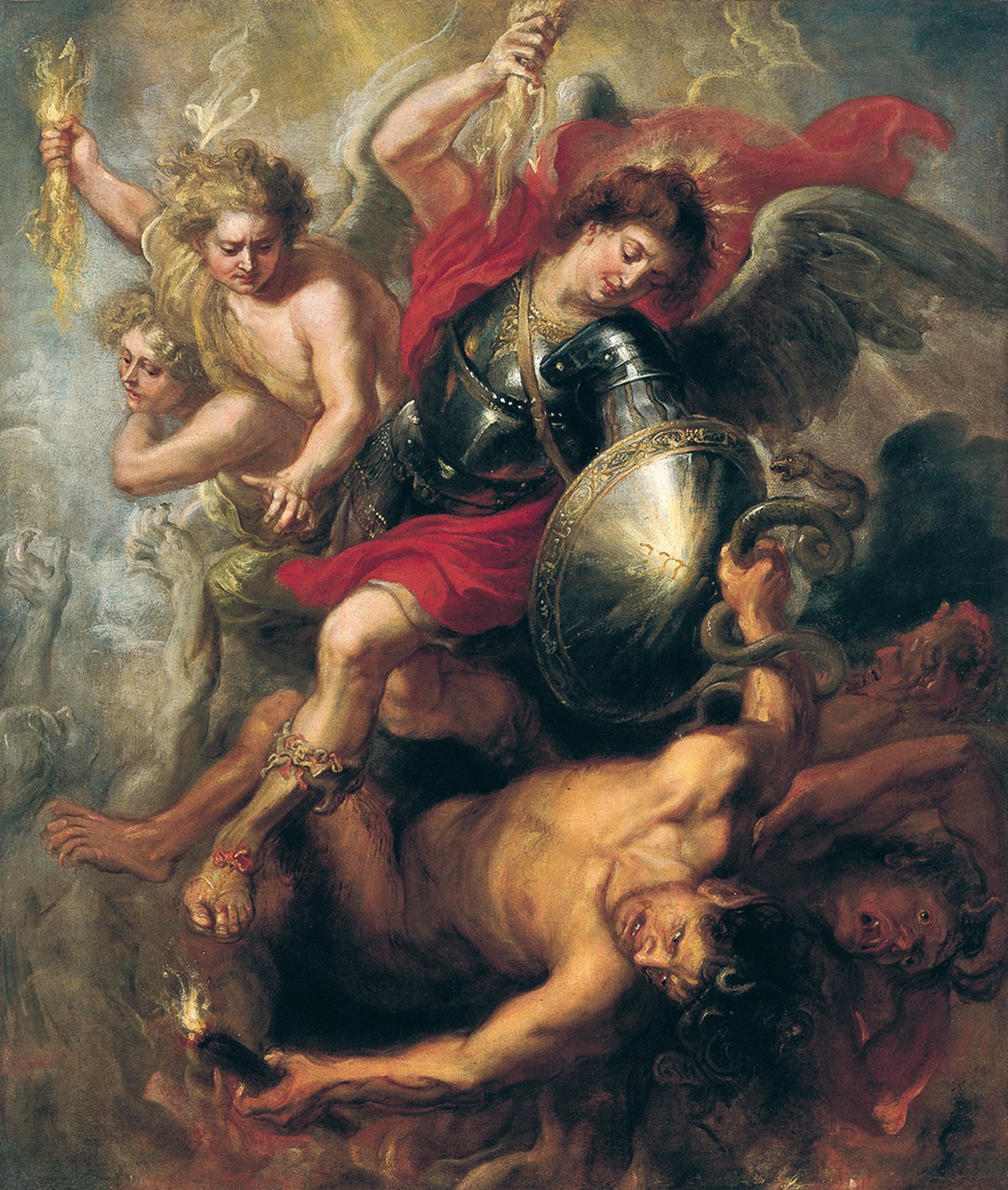
God is called “LORD of hosts” over 200 times in the Hebrew Scriptures, over 60 times appearing in Isaiah. “Hosts” can be understood as a significant number or an army. The notion of an army seems to be more plausible (cf. 2 Kings 6:15–17) because by the time we arrive at chapters 13–23, where God pronounces judgment, the language is interesting when we follow it. God calls his “holy ones” and “mighty ones” (13:3). God musters these for battle, coming from the end of heaven (13:4). Earlier in chapter 6, we saw an assembling of the heavenly court, God, with the seraphim. There’s one similar passage to Isaiah 6, and that’s 1 Kings 22:19–21. In both of these passages, God is seated on a throne, he asks for a volunteer, the court has a verbal exchange, a volunteer announces himself, and the mission is to deceive God’s people who have angered him with their sinfulness. 

A heavenly court is attested to not only in the passages mentioned and in Job 1:6–11; 2:1–6; Zechariah 3:1–5. Isaiah 6:10 seems like a problematic passage when God commissions the prophet to dupe the people essentially. However, when taken with the passage from 1 Kings 22 and Ezekiel 14:4–5, it makes sense that God would answer them according to their heart’s desire (cf. Is. 19:14). Against whom, then, will this heavenly army war? Other hosts of heaven were assigned to oversee the nations, but some became rebellious and received worship as gods (Deut. 32:8 [LXX], 17; Ps. 96:5; Dan. 10). The battle of the faithful and rebellious hosts ensue with the results being mirrored on earth—sometimes the angels fighting against the physical enemy. Divine warfare is a motif in Exodus. Each plague corresponds to YHWH attacking one of Egypt’s gods: e.g., the first plague is directed at Ḥapi, the Nile-god; the second at Ḥeqet, the frog goddess; the fifth at Apis, the bull and Hathor, the cow; the eighth, ninth, and tenth plagues at Ra. 

Angels minister to those who are to obtain salvation (Heb. 1:14), so it would stand that they would offer protection of the righteous one (Ps. 91:2, 11–12). A common belief was that earthly rulers mirrored the actions of the divine beings, so when the king of Babylon is spoken against, later believers associated some of the jargon used of him with Satan (Is. 14:12–15). Lucifer, meaning “Day Star,” is plausible as usage for Satan, given other passages about stars and their link with angels (Job. 38:7; Rev. 12:3–4). 

By the time we arrive at Ahaz’s death—anywhere between 715–725 BCE—Philistia is urged to not rejoice at the transition of monarchs. Ahaz had agreed to Assyrian domination, but that would change upon the end of his reign and the beginning of Hezekiah’s. Hezekiah changed allegiance to Egypt and led a rebellion against the Assyrian king. Isaiah 14:29 seems to refer to Ahaz as a serpent, and a viper comes from him like a seraph. Hezekiah, we will learn, subdued the Philistines (2 Kings 18:8), and did much good for Judah and Jerusalem as the rest of Isaiah’s oracle points out (14:30–32; cf. 2 Kings 18:6–7).  

The remaining oracles are poems of promised judgment against evildoer nations. God judges Babylon, Assyria, Philistia, Moab, Syria and Israel, Ethiopia, Egypt, and Jerusalem. Yet, God gives a couple of rays of hope. First, he will have mercy on Jacob and settle Israel in their land (14:1–2). Second, God will set one on David’s throne to judge with justice (16:5). Judgment sounds harsh, but God will give grace too. 

Isaiah Goes to Ahaz

In the final years of his life, while a leper in seclusion, Uzziah’s son reigned with him. Yet, the reign of Jotham doesn’t figure prominently into Isaiah’s ministry. Since the prophets often presided during times of crises, Jotham’s reign did not need prophetic intervention. Yet, things changed when Ahaz became king. By the time of the events of chapter seven, Israel has allied with Syria to make war against Jerusalem. The king of Assyria had chipped away at Israel’s territories (2 Kings 15:29), so the weakened kingdom believed an alliance with Syria was necessary. When Israel and Syria go against Jerusalem, Ahaz requested the help of Assyria (2 Kings 16:7–8) thus demonstrating a lack of faith (cf. Is. 7:4–9). The goal of Israel and Syria was to install a puppet king over Judah (Is. 7:7), but God didn’t allow it.  

Isaiah urged the king to ask for a sign, but he refused to do so. God, nevertheless, gave Ahaz a sign to reinforce the promises previously made about the Davidic line. A young woman would bear a child and call him “Immanuel” (God with us) thus confirming that God was keeping his promises. When Isaiah gave this sign by the Lord, I’m sure he did not have the future messiah in mind. That doesn’t mean that it can’t be understood that way, which I’ll get to shortly. There are four possible ways to understand the sign as they understood it. 

  1. King Hezekiah was the promised son. This is a very popular interpretation and some conclude that Hezekiah is referred to in 8:8. Furthermore, the description of the government in chapter nine seems fitting to Hezekiah in the immediate context, especially when read with chapters 36–39. I favor Hezekiah as the fulfillment of the prophecy, but I also hold that the next option is viable.   
  2. Others contend that this is Isaiah’s son mentioned in 8:1–4, whose name means “Speed the Spoil, Hasten the Prey.” He is referred to as a sign (Is. 8:18) and that argument could be made that 8:8 references him, but Isaiah and his wife already have a child (7:3). The son mentioned in 8:1–4 seems to be a sign to Isaiah while Immanuel was a sign to Ahaz.  
  3. Another interpretation is that it refers to an unknown woman fulfilling the promise, but if she were unknown they wouldn’t be aware of the sign when it came to pass. This is viable but highly unlikely. 
  4. Some believe Jesus is the only fulfillment of this prophecy, but that wouldn’t have brought comfort to Ahaz if something far off was meant. Jesus is a fulfillment of this prophecy on the macro level, but not on the micro level. The Hebrew term could mean a virgin, but more often it was a young woman. Matthew borrowed from the Septuagint which, in the place of almah is the specific term parthenos (“virgin”).  

Hezekiah, I contend, is the micro fulfillment of this prophecy, but Jesus is the macro fulfillment of the prophecy. The sign is about God saving his people, and he saved Judah and Jerusalem through Hezekiah. However, Judah and Jerusalem would continue in their infidelity, which necessitated God’s judgment and his ultimate savior of his people and all humanity—Jesus. 

The prophecy can be viewed as a type/antitype sort of thing, such as we see in 1 Peter 3:20–21. As Noah and his family boarded the ark, they were saved by being on it when water came. When we board the ark that is Jesus, through baptism, we too are saved. Similarly, Hezekiah was righteous and brought about God’s will, and Jesus is the one who has perfectly brought the will of God. The micro interpretation has to do with the immediate context of the author and their audience. The macro is the whole redemptive story of creation, so there’s an immediate and greater meaning to the text. The prophet gave us immediate meaning, and the Holy Spirit gave the church greater meaning. This is how Matthew used the prophecies of the Hebrew Scriptures—Jesus was the embodiment of Israel. 

God promised to punish Samaria (Israel) and Assyria, and that a remnant of Israel would return. Assyria is depicted as an ax in God’s hands to reduce Israel to briers and thorns (9:19), but in using the ax, it would break and be reduced to briers and thorns (10:17; cf. 10:34). Deforestation of Israel appears in 9:8–10:4, and out of this deforestation is a rod from the stem of Jesse (11:1). It’s very easy to read this chapter as messianic because so much applies. After Judah successfully defended herself, a new age of government and peace is expected. The predatory and preying animals dwelling together in harmony is a way of communicating peace among nations, given the language used about them (cf. 5:29; 9:12, 20–21; 10:14), and through Christ, the nations have ceased warring in that people have become Christians and identify as such rather than as the nations from which they hail. It’s easy to see Jesus in this passage (cf. 6:13) and I’m willing to accept this passage as a future hope, albeit one that’s distant.  

The Circumstances of Isaiah’s Ministry

We’ve all seen shows that aren’t in chronological order. My wife and I have gotten into “Better Call Saul.” Sometimes, the beginning of each episode shows what happens after the main premise of the show. At other times, the beginning is a flashback to before the main premise. Isaiah is kind of like that. The prophet’s ministry begins in Isaiah 6, but the first five chapters set the stage by laying out the circumstances that precipitated his ministry. The fact is, these first five chapters should not be read as chronological, because they aren’t. Scholars don’t agree about the structure, though many theories exist. For our purposes, we’ll treat these chapters as introductory despite how disjointed they seem. 

The structure of the early chapters is one of the puzzles of the book, but may be laid out as follows: 

  • Isaiah 1: wickedness of Judah and Jerusalem.
  • Isaiah 2:1–4: the hope of a renewed Jerusalem. 
  • Isaiah 2:5–4:1: judgment on the oppressors. 
  • Isaiah 4:2–6: the renewal of Zion. 
  • Isaiah 5: God’s disappointing people. 

Starting out, we get a glimpse of not only Jerusalem’s future, but it’s spoken of as if it’s in the past. Notice the language of the first chapter: “Your country is desolate, your cities are burned with fire … Zion is left as a … besieged city” (1:7–8). Leading up to this is the point—Judah and Jerusalem have rebelled (1:2). They are referred to as “rulers of Sodom” and “people of Gomorrah” (1:10; cf. 3:9). Whether or not Isaiah wrote some portions with hindsight (cf. 5:13) is debatable. Some have suggested that it was written in hindsight, others that it’s some literary device common at the time. Because of the disjointed nature of these chapters, it may be better to just appreciate it as is, noting when the tone shifts. 

The sins of Judah and Jerusalem are the key themes, and God’s judgment will come. The righteous will be spared the oncoming trouble despite how distant it was (4:3–4). The wicked would still worship, much to the chagrin of God (1:11–15). God doesn’t always want worship, especially when it doesn’t match our character. What he wants is our whole hearts (1:16–17; 21–23, 27). For this reason, he calls for justice and righteousness. He saw a lack of them in Judah (5:7, 20). 

When we read these terms, especially “justice,” we mustn’t think in terms of modern parlance. Anything and everything is a matter of justice—environmental justice, social justice, gender justice, etc. Justice is justice, and any modifier tells one that it’s more a group’s desire than actual justice. Mišpāṭ (“justice”) refers to government, the exercise of authority, and decision-making. It’s paired with ṣědāqâ (“righteousness”) because when justice is perverted, the right thing isn’t done in relation to other people. Righteousness here must be understood as relational and not as personal holiness—at least not in this context. These two words suggest “the faithful exercise of power in community.”

The powerful of Judah and Jerusalem had a duty to look after those less fortunate, but that wasn’t happening (1:23; 3:13–26). Orphans and widows weren’t being treated fairly (1:17, 23). Foreign ways infiltrated God’s people (2:6), and they trusted more in instruments of warfare than God (2:7). When Israel was suffering under the Egyptian yoke, they cried out to God (Exod. 3:7, 9). Now, in Isaiah’s day, they cry out to God against their countrymen (Is. 5:7). Judah and Jerusalem are Egyptian oppressors now. This is the language used here. 

Yet, a future hope remains (2:2–4). Early Christians understood these verses to refer to the incarnation (“latter days”) and subsequent birth of the church. The Lord’s house was often a metaphor for the church (1 Tim. 3:15), and those who went to the mountain of the Lord in Jerusalem also went from there preaching the good news of the kingdom of God. Acts follows this geographical route—beginning in Jerusalem, then Samaria, and to the ends of the world. Rather than being warring nations, we are brothers and sisters who’ve laid down our arms. As Christians, we are a nation (1 Peter 2:9). The nations of the world still war, but God’s nation does not. The long sought reality was the hope of Israel, and our story as the church is the fulfillment and continuation of God’s love of his people whom he set apart to be lights to the world.  

Isaiah’s Call

What does it mean to see God? We know that no one has seen God because the gospel tells us this (John 1:18; 6:46). Isaiah didn’t see God so much as his glory (John 12:41), but what he saw in this vision was life changing. Some may wonder why this isn’t the first chapter of the book. After all, the calling of a prophet should precede his message. The greater part of the first five chapters are poetry, setting the conditions that spurred God’s employment of Isaiah. There’s a literary genius to the structure, but we’ll not delve into literary criticism. Not only did Isaiah’s life change, but the makeup of Judah did too.   

There’s a particular irony in Isaiah’s calling. He was given a vision of heaven’s court in the year King Uzziah died (6:1; 740 BCE). The irony is that King Uzziah was banned from the temple—a shadow of a heavenly reality (cf. Heb. 9:11–12, 23)—after he presumptuously entered to burn incense on the altar of incense—something only a priest could do. This specific altar was outside the holy of holies, and as close as one could get to the literal presence of YHWH. Uzziah was subsequently struck with leprosy and lived the rest of his life as a leper, banned from the temple. During his isolation, his son served as coregent, overseeing the affairs of the kingdom (2 Chron. 26:16–21). While the king was prohibited from the temple, Isaiah sees something greater than the temple—he sees God in heaven. This scene expresses the changing of an era. An age of stability has ended, and the ensuing problem of the Assyrian threat began. 

What Isaiah saw was the actual temple—doorposts, smoke, altar, and burning coals. Yet, it’s the heavenly temple and not the one at which he worshipped in Jerusalem. The year of Judah’s king dying, Isaiah sees the king of heaven—seated on a throne, high and lifted up. He’s not in a palace, but a temple (v. 1). The reminder is that YHWH still reigns and is in control no matter who reigns and wars on earth. Isaiah seeing God as reigning, surrounded by hosts, was to reinforce to the prophet and Judah that despite threats on earth, God wars in the heavenly places against those evil forces (cf. Eph. 6:12). 

Isaiah, next, sees seraphim. This is the only place they are mentioned, but elsewhere, the term is used in reference to serpents and their venom (Num. 21:4–9). The conclusion has been made by some that these angels were winged serpents of some sort. The Nehushtan was destroyed during Hezekiah’s reign (2 Kings 18:4) and may have very well occupied space in the temple when Isaiah received his commission. Next is the trisagion chanted by the angels—it is antiphonal and causes the foundations to shake. This reminds me of a passing car whose bass is so loud that your car or windows rattle. Such is the nature of their voices and praise. YHWH is one of the “hosts.” Other passages attest to God being surrounded by multitudes (cf. Deut. 32:8 [LXX]; Job 1:6–11; 2:1–6; Ps. 82; 1 Kings 22:19–23; Ezek. 14:4–5), but this might be better rendered “armies.” Isaiah would have understood it that way, and in the coming struggles with the Assyrians, it would have been significant (Is. 13:4; 24:21; 31:4). 

Imagine for a moment seeing the most august scene ever. There’s the majesty of God, flanked by fiery angels from whose wings you can feel the breeze. They continually chant this chorus with such beauty that it sends chills down your spine. At the same time, their voices are so rich and powerful that the foundations quake. Not only do the words of their chorus strike you, but the performance of them is something you feel pierce your very being. Smoke engulfs the area, and it reminds you of what you’ve heard your ancestors saw in Sinai many centuries ago. The effect is terror. You pause from the awe of taking it in to the realization of where you are and what you’re like, and who you’re before. 

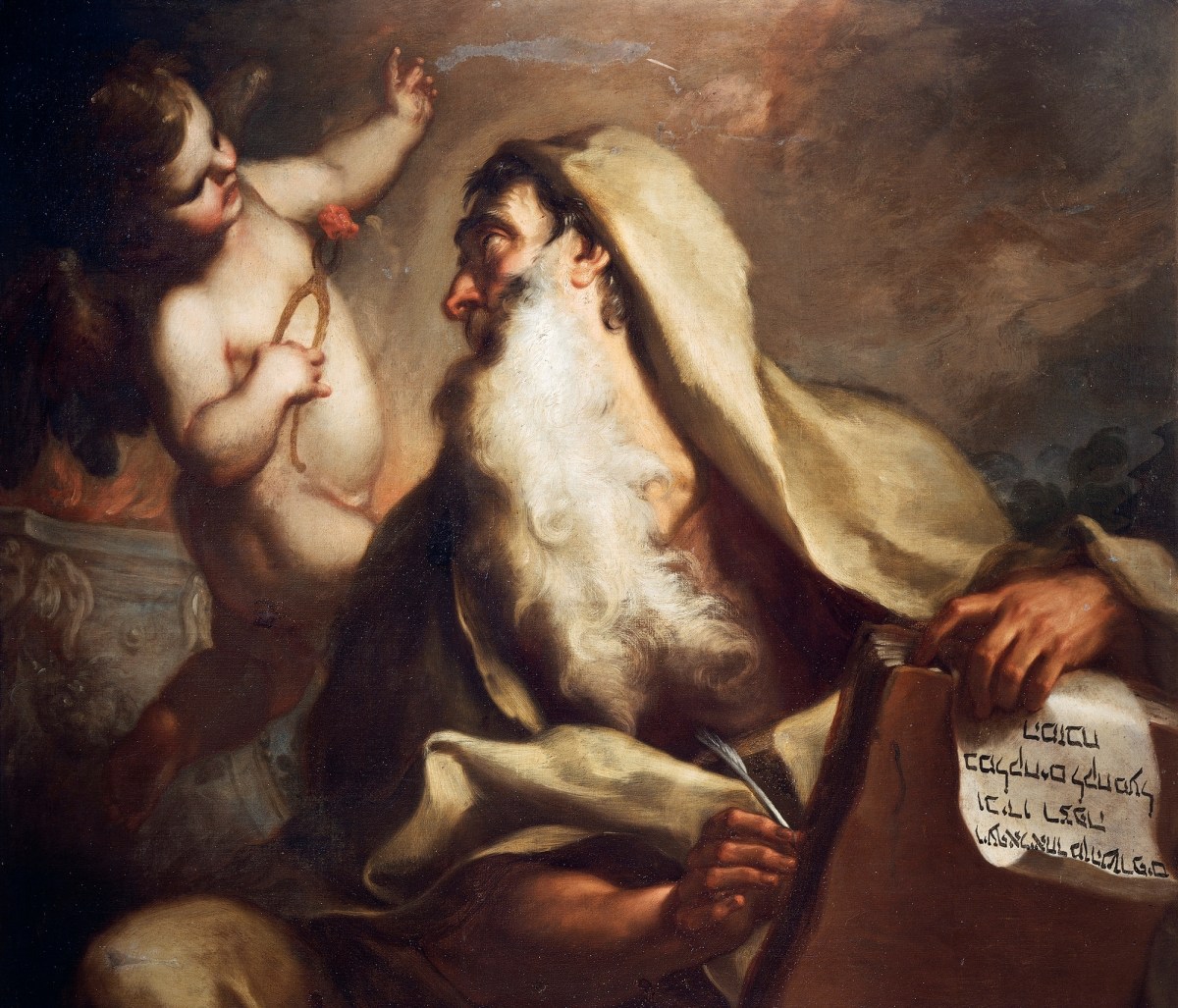
‘Woe is me; I am  lost!” Why does he feel so? The ending of the passage tells us why, but not so much in English as in Hebrew. “The king, the LORD of hosts, my eyes have seen.” It’s vital to note here that the term used of Uzziah is the same used of God—hammelek. The death of the king threatens stability, but God is all the stability that Judah needs. Isaiah appears before God in a state of unclean lips among a people of unclean lips. In our present existences, no one can see God and live (Exod. 33:18–20; cf. Gen. 32:30; Judg. 6:22). This was what frightened Isaiah. He assumed the sins of the people as well as his own and believed there was no way to survive this. However, the very God whose holiness can consume the profane (cf. Lev. 10:1–2; 2 Sam. 6:6–7), can also cleanse. In similar temple imagery, one of the seraphim takes burning coal to cleanse the prophet, atoning for his sin. Isaiah need not fear. He is cleansed. He can remain. 

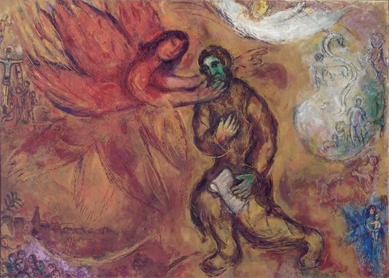
Isaiah’s commission began with seeing God. Now, it turns to hear him. Isaiah readily accepts God’s commission, but the message he is to deliver will fall on deaf ears. The wonders that he’ll work will be seen by blind eyes. The hearts of the people are already turned against God, and Isaiah’s ministry will be unsuccessful in terms of people responding positively to it. When the prophet inquires how long this will last, we see that God has decided to judge Judah. It’s going to last until judgment comes. Why bother? God bothers because he cares. He bothers because he wants them to know that they have heaped up judgment on themselves, not only through Isaiah’s ministry, but even through all those who’ve come before him. Success here isn’t defined by how many people respond to the prophetic call, but how faithful the prophet is to God in delivering the message. Fidelity to God—that’s success. 

When the Kingdom of God Encounters Legal Trouble

In the New Testament, we read about something that isn’t present in the Old Testament—the Sanhedrin. This council became the governing body of the Jews after the Babylonians destroyed the monarchy and subsequent exile. Though Israel had a king in the New Testament, he did the bidding of Rome, and it’s clear that Israel didn’t respect his authority given that entanglement. The Sanhedrin grew during the Hasmonean dynasty when they revolted against the Greeks to preserve their religion and identity as God’s people in a period often referred to as Intertestamental. This dynasty of priests recruited legal experts and priests—the former usually being Pharisees and the latter Sadducees. The Sanhedrin consisted of seventy men who were religious and civil authorities. They oversaw the temple and carried out religious duties. They also were a policing force as well as a court of law. Peter and John drew legal trouble for preaching Jesus as Christ (Acts 4:1–3). When they addressed the Sanhedrin, they boldly proclaimed Jesus (Acts 4:8–12). The body attempted to stop them, but they appealed to God as the standard of what they would do (Acts 4:18–21). 

This is how power works. Power corners the market on authority. The authority they had was a responsibility to a nation, and anyone who dared threaten that stability was an enemy. Because they ordered them not to speak in Jesus’ name, they set the stage to punish them if they broke that command. Power issues edicts followed by threats. Why? Because they’re authoritarian and demand to be obeyed. Jesus and the Kingdom’s manner is a threat to how they operate (Acts 4:23–30) because His ways threaten to upset the order by robbing authorities of their power. This was why He was crucified. The Jews offered up Jesus to maintain their standing with the Romans (cf. John 11:49–52), and the Romans crucified Jesus to keep the peace among the Jews. None of what Jewish leaders did stopped the movement Jesus began. However, the attention the Way received was of concern to many (cf. Acts 5:13). Peter and John were arrested a second time and, subsequently, beaten (Acts 5:40). Yet, the Sanhedrin knew that the tide was turning against them (cf. Acts 5:26).  

Notice the players: two former fishermen against highly educated holy men. Luke even points this much out (Acts 4:13). The leaders were astonished because they were “uneducated” and “untrained” (idiotes). The Kingdom of God doesn’t rely on credentials. Nor does it depend on someone having civil power. When a person has that kind of power, it doesn’t necessarily mean serving God. They can, but God doesn’t rely on that. If He did, we wouldn’t see His power but think it’s in our hands. So instead, He worked through them despite not having religious or civil authority. That’s the Kingdom of God. No seeking of esteem or grandeur. Just simple people allowing God to use them.

This Native American Heritage Day

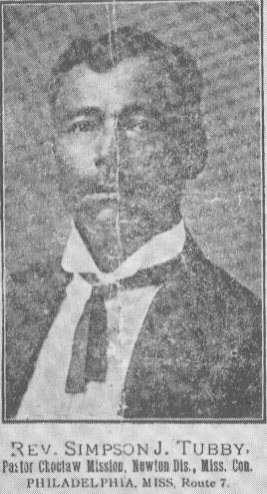
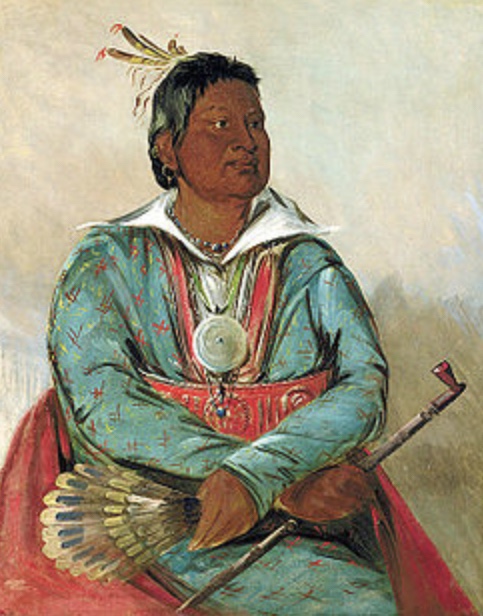
My Choctaw grandmother’s maiden name was “Tubby.” I always wondered what kind of Indian name that was, until I researched it. “Tubby” derived from “Tubbee”–which was my great-great-grandfather, Simpson’s surname as spelled out on the Dawes Rolls.

“Tubbee” was the ending of our ancestor’s name, Mushulatubbee. The records of this name were written by white men, and they likely wrote it how it was pronounced. There are variations in the spelling of his name, however, but it goes to show how up until my grandmother’s time, some of our people’s identity was erased. When we think of “tubby” today, we think about a chubby person. Then, we think, “What an odd Indian name.”

A monument to Mushulatubbee in Oklahoma gives his name as originally being “Amosholi T Vbi.” It can be translated based on its compounds: “vbi” means “to kill.” The “t” in the middle joins two words when one ends and the other begins with vowels. The “v” is pronounced as “ah” as in “father.”

So, the maiden name of my grandmother, “Tubby,” is originally pronounced as “tahbee,” meaning “to kill.” The first part of Mushulatubbee’s name, “amosholi,” can be translated as “resolute,” or “determined.” Hence, his name given to him as a war chief when he led raids against the Osage is “Determined to Kill” in English.

From the time of Indian Removal, when indigenous peoples were forced to assimilate, they were taken to boarding schools and their names changed. The Choctaw Academy in Kentucky shows evidence of this. Meashpulah’s name was changed to John Allen; Elahtahbee’s name was changed to Samuel Cornelius; Annutona’s name was changed to C. A. Harris; Okelumbee’s name was changed to Samuel Worcester.

A Choctaw lady just a few years younger than my late grandmother, in the 1950s, was relocated to Henning, TN. Government officials came to her home and told her parents that if they didn’t send her and her siblings to school, then the government would take them. She and her siblings stayed at a white families home through the week to ride the bus to school and they’d go home on weekends. They were forbidden to speak their native language.

Tubbee was the suffix to Choctaw names of the warrior class. Mushulatubbee was a warrior and Chief. His descendants, as with many others, were forced to assimilate. They had no say and choices were made for them regarding certain things.

As a way to honor my ancestors and demonstrate my own indigenousness, I petitioned to have my name amended. I’m now Steven Chad Hunter Oklatubbee. “Okla” means “people,” so I’m from the Tubbee people. Literally, “killer people.” While I’m no killer, I can choose to honor those who couldn’t choose for themselves by making a choice.

From the time I was a child, I was told that because I was more white than Choctaw, my indigenous blood didn’t matter. Yet, my father is obviously not white. Nor was my grandmother. I was nearly convinced that this part of me didn’t matter. When my grandmother died in 2018, I realized that my link with my Choctaw people was severed. I’m taking it upon myself to make sure my children know and are proud.

The Divine Pattern

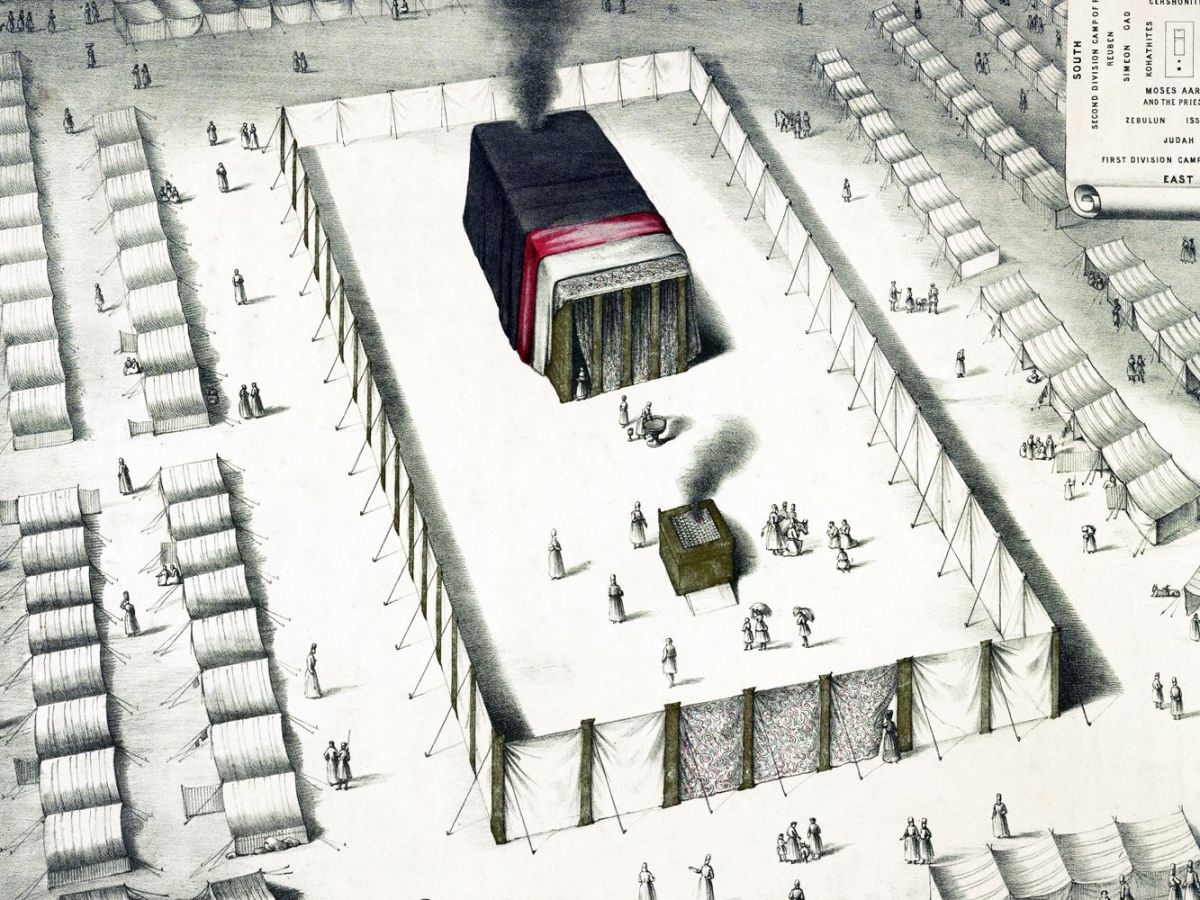
Decades ago, Goebel Music wrote a voluminous book, Behold the Pattern. While much of the information is helpful, he may have been capable of putting things more succinctly. Nevertheless, those of us in churches of Christ are patternists when it comes to the life of the church. As God gave the divine pattern of the tabernacle to Moses atop Mount Sinai, so Jesus endowed the apostles with the Holy Spirit to reveal to us a pattern for being Christians. Furthermore, that pattern extends to the organization and worship of the church.

The earliest account of worship appears in 1 Corinthians 11-16. While it isn’t written as a word-for-word instruction manual on how to worship, we can deduce enough from this passage to know how the early Christians worshipped and what not to do. Some disagree over whether the beginning of chapter 11 or the demarcation of 11:17-18 is the point at which Paul addresses the assembly. If we hold to the latter, which I may be more prone to, the focal point of worship begins with the Lord’s Supper. A reading through chapters 12-14 discloses that prayer and song was a part of that gathering. Prophecy or revelations of knowledge may have been akin to our modern sermon. In chapter 15, Paul invokes the Scriptures regarding Jesus’ death and arise from the grave, which may suggest that Scripture reading had a place in the worship (cf. 1 Tim. 4:13). When we arrive at 16:1-2, a contribution was given weekly, and if we take the weekly to apply to everything preceding the offering, then the Lord’s Supper, singing, praying, preaching, Scripture reading, and offering were what the early Christians did in worship. Not only should we do what they did, but we should embody the heart of Jesus too. It isn’t enough to simply do it absent the mind and heart of Christ.

As it relates to the organization of the church, 1 Timothy 3 discloses that elders and deacons were overseers and servants of the church. Timothy himself was referred to as a deacon, but the term is translated in English as “minister” (1 Tim. 4:6), which may denote a separate function. Elder, bishop, overseer, and pastor were one-in-the-same and not different offices (cf. Acts 20:17, 28; 1 Peter 5:1-5). Today, however, many fellowships follow more the Ignatian separation of pastor, elders, and deacons, or some version thereof.

Eden, Sinai, Tabernacle, and Temple

In trying to show a cohesive unit throughout Scripture, I’ve often referred back to creation and Eden. I’d like to show you nine ways that Eden was a Temple and that the later Mount Sinai and tabernacle/temple were built upon Eden.

  1. The Temple was where God’s presence dwelt, and He made Himself known to Israel. His walking with Adam and Eve is prototypical of this reality (Gen. 3:8).
  2. When placed in the Garden, Adam is to “cultivate” and “keep” it (Gen. 2:15), which were words used elsewhere regarding priestly service in maintaining sacred space (Num. 3:7–8; 8:25–26).
  3. The tree of life was the model for the lampstand in the Temple.
  4. The Temple was made with wood carvings of landscapes reminiscent of Eden (e.g., pomegranates, palm trees).
  5. The entrance to the Temple was to the east (Ezek. 40:2, 6), as was the entrance to the Garden of Eden (Gen. 3:24).
  6. The tree of the knowledge of good and evil and the Ark of the Covenant were touched on pain of death—both being the source of wisdom (e.g., Ten Commandments).
  7. A river flowed from Eden (Gen. 2:10) and the Temple (Ezek. 47:1–2).
  8. There’s a tripartite structure to the Temple (outer court, Holy Place, and Holy of Holies), the mountain at Sinai (base, middle, and summit) and Eden (Eden as Holy of Holies, the Garden as the Holy Place, and the outer world as the outer court).
  9. Eden, Sinai, and the Temple are all associated with a mountain (cf. Ezek. 28:13–14).

I would hope it would be safe to say that a unified cohesion exists concerning the significant theme of Scripture. Now, however, we turn to the pattern God gave Moses. God, in these instructions, spoke to Moses six times, the seventh being the Sabbath law. When God created the heavens and earth, he spoke six times and on the seventh rested. The tabernacle is, therefore, a microcosm, a new creation.

Patternistic Religion

Scripture marks three times that God reminds Moses to build the tabernacle according to the pattern he received. The first time entails the Ark of the Covenant pattern and the lampstand (Exod. 25:40). The second time appears after constructing the sanctuary, something into which the former two shall be housed (Exod. 26: 30). The final admonition appears after instructions on the veil between the Holy of Holies and the Holy Place (Exod. 27:8). As Christians, we are collectively (1 Cor. 3:16) and individually (1 Cor. 6:19) the holy of holies because God’s Spirit dwells in us.

The Ark of the Covenant has over it the mercy seat where two cherubim face one another to guard it, just as they were placed to protect the entrance to Eden. Moses received the law from the summit of Sinai. Since they were deposited in the Ark, the mercy seat now functions as the summit of Sinai, thus making this place a portable Sinai. The mercy seat is vital because the High Priest could only enter the Holy of Holies once a year on the Day of Atonement (Lev. 16:1–3, 29–34). He was to sprinkle the blood of a bull and goat on the mercy seat to remove the people’s uncleanness, transgressions, and sins (Lev. 16:14–16).

Later, the author of Hebrews informs us that the blood of bulls and goats cannot take away sins because these annual sacrifices would have only been one-time and not yearly (Heb. 10:1–4). What are we to do? Interestingly enough, when the Hebrew Scriptures were translated into Greek in the fourth century BCE, a word was used for “mercy seat” that appears as another word in the New Testament. Rather than translating the word as “mercy seat” in the New Testament, it’s translated as “propitiation” (Rom. 3:23–25). On that mercy seat, the footstool of God, the summit of Sinai, was the conduit between humanity and God. Jesus Himself is that mercy seat—the place where sacrifice and atonement meet. The place where the righteousness of God is revealed and the wrath of God abated.

If we want to understand the end, we must, first, understand the beginning. Jesus promises that those who overcome shall eat of the tree of life in the Paradise of God (Rev. 2:7). Interestingly enough, when the Old Testament was translated into Greek, the word that replaced “garden” in Genesis is the word paradise. The original audience of Revelation would have understood that the tree of life was in Eden, the holy of holies. They would have understood Paradise as the garden. When Jesus promised the overcomers that they would eat of the tree of life in paradise, they envisioned Eden. The end takes them back to the beginning, the very initial design that God had in mind.

How the Papacy Was Born

Ask anyone who attends a church what the leadership structure is, and you’ll get various answers. Some people have a pastorate, presbytery (elders), and a diaconate (deacons). Others have the pastorate and diaconate (e.g., Baptists). We have presbytery and diaconate with the ministers acting in a role akin to the monarchy of England—we really have no power but yield influence. It’s become common to refer to the preacher as “pastor” in nearly every tradition except the high church traditions where they’re notably called “priest” or “father.” Among us, such preachers are the minister unless also an elder. He can be called pastor then but is usually not.

The person standing in the pulpit is usually esteemed differently than what he would have been in the early church. Church leaders in the New Testament were well thought of but not venerated. They would have been respected for their station and looked to for concrete leadership since the Gospel Way was usually oral more than literary. The Hebrew Scriptures were indeed used in the early church, as they were in the synagogue. Still, the first-century church lacked a complete New Testament as we have today. Instead, they had the leaders of the church (1 Cor. 12:28; Eph. 4:11) and in the congregations (Acts 14:23) to guide them. Additionally, the early church liturgy included robustly doctrinal hymns instead of modern praise and worship one witnesses in most churches. The ancient hymns were statements of belief, and when chanted repetitiously, even the simplest of Christians was capable of repeating them to explain Christianity (Phil. 2:5–11; Col. 1:15–20; 1 Tim. 3:16; Heb. 1:1–3; 1 Peter 2:21–25).

By the end of the second century, Ignatius’ tripartite polity was common throughout the church. After all, his urging Christians to submit to their bishops in all things would have ensured that the one bishop was regarded as the protector of truth. He was a local bishop of a city at the time, but later the position would grow to a territory. By the end of the second century, Hegesippus and Irenaeus had produced lists of bishops throughout various cities. The latter would draw up a list of bishops and strengthen such by arguing their succession from apostles.

The blessed apostles, then, having founded and built up the [Roman] Church, committed into the hands of Linus the office of the episcopate. Of this Linus, Paul makes mention in the Epistles to Timothy. To him succeeded Anacletus; and after him, in the third place from the apostles, Clement was allotted the bishopric. This man, as he had seen the blessed apostles, and had been conversant with them, might be said to have the preaching of the apostles still echoing [in his ears], and their traditions before his eyes.

Irenaeus, Adv. Haer. 3.3.3

Gnostic teachers first claimed an apostolic succession of their teachers, so Irenaeus’ list became a hallmark of the orthodox faith taught in churches. The Roman church rose to prominence for numerous reasons, the least of which entailed Peter and Paul having ministered there for several years. 

The Rise of Roman Primacy

The church at Rome had emerged as a leader of Christianity by the end of the second century. “For it is a matter of necessity that every Church should agree with this [Roman] Church, on account of its preeminent authority” (Iren., Ag. Her. 3.3.2). Being the capital of the empire also had its perks. The Roman church grew immensely during the second and third centuries. Despite being as large as they were, they maintained fidelity in preserving apostolic traditions. Their wealth allowed them to be noticed for their charity, often sending aid to the churches throughout the known world when needed. Some of the members held political positions of influence in the empire as well. This congregation was known to have had direct contact with Peter and Paul, who were put to death in the city.[1] These factors elevated this church throughout the universal assembly of Christians. In time, this notoriety would vest significant authority in the church’s bishop.

Though Peter is often touted as the first pope and founder of the Roman church, history and Scripture would dictate otherwise. When Pentecost came in either the late twenties or early thirties CE, “visitors from Rome, both Jews and proselytes” (Acts 2:10), were among those who heard the good news. Jews had lived in Rome as far back as the second century BCE, with many more becoming slaves due to Pompey’s triumph in the first century BCE. Among the Jews who came for Pentecost were also proselytes—Gentiles who’d fully converted to Judaism.[2] That both existed in Rome indicates that a converted Gentile population already identified as Jewish, so the mix of Jew/Gentile in Rome existed before even the church’s first Pentecost.

When Paul wrote his letter to the church, he made no mention of Peter. Paul’s close familiars, Aquila and Prisca, met him in Corinth when Jews were exiled from Rome, suggesting that the church was already in existence (Acts 18:1–2). Peter went to Rome in 42 CE after having been a bishop of Antioch.[3] As an elder in Rome (1 Peter 5:1, 13), Peter may have aided the church in becoming better structured and ordered, but he didn’t establish the congregation. Paul wouldn’t arrive in Rome until 60 CE and would live there and minister for at least two years (Acts 28:30). After that, we don’t entirely know where he went until the traditional date of his and Peter’s martyrdom in 67 CE. Given the time they spent in Rome, they would have been able to make headways and solidify Christian orthodoxy that would have been the envy of the church.

Ignatius, Clement, and Hermas wrote to the Roman church in the late first and early second centuries. In their writings, the Roman church had a plurality of presbyters-bishops and not a pope. Near the end of the second century, an ongoing debate on the proper date of Easter persisted. Until this time, peaceful tolerance over this difference had prevailed, but the discussion flared up again. Bishops from all over called meetings to discuss this. Some in Asia reaffirmed the practice of observing Easter on the 14th day of Nisan regardless of which day of the week it fell.

In contrast, the others insisted that it should always be celebrated on a Sunday. Victor of Rome grew frustrated by this ongoing controversy and attempted to excommunicate the Asian churches for their view (Hist. Eccl. 5.24.9). This was likely the first time a Roman bishop exercised power over the church universal. Still, this attempt at ex-communication failed despite Sunday being the day that prevailed. Nearly fifty years later, however, Cyprian of Carthage and Stephen of Rome disputed over baptism. Stephen of Rome invoked Matthew 16:18 for the first time to assert Roman privilege. By 382 CE, that text was solidified as a passage of Roman primacy since the see of Rome was then taught to have succeeded Peter. Then, the occupier of Peter’s see became regarded as holding priority over others but was not then necessarily head of the church universal.[4]  

The Papacy as We Know It

As time went on and Christianity grew, the bishop over a capital city or province became known as a metropolitan. Among the metropolitans, those in a city with a more extraordinary claim to apostolic succession were given the title of patriarch. This form of church polity was extant at the Council of Nicaea in 325 CE. An enormous issue arose when Constantine, in 330 CE, relocated the empire’s capital from Rome to Constantinople (Istanbul, Turkey). This city, so named after the emperor, was referred to as “New Rome.” Some believed that the relocation of the imperial capital meant a change for the church, but Rome did not take well to this belief. If the seat of imperial power now rested in Constantinople, fine. However, the Roman church was still to be esteemed as first among equals because both Peter and Paul had pastored there, thus giving them the purest form of Christianity. The first three patriarchates were Rome, Antioch, and Alexandria. Later added to them were Constantinople and Jerusalem. The Nicene Council gave more tremendous honor to Rome and Constantinople, but not authority.

At the Council of Chalcedon (c. 451), equal privileges were given to Constantinople as Rome wielded. These two sees were constantly battling over power and prestige. The Patriarch of Constantinople in 595 assumed the title of “Ecumenical Patriarch.” John the Faster, who’d taken that title, provoked Gregory the Great (Pope Gregory I) to petition the emperor, requesting that he not acknowledge such. By this time, the Western Roman Empire had fallen, and people in the West looked to Gregory for a sense of continuity. Being from a senatorial family, one might think that Emperor Maurice would have weighed this. Still, instead, he acknowledged John the Faster as Ecumenical Patriarch. Maurice was slain by a usurper a few years later, and Gregory sent letters praising the new emperor. Emperor Phocas would, in 606, transfer the title “Universal Bishop” to Boniface III, thus establishing the Roman supremacy of the pope. As you might imagine, the Eastern church didn’t accept this.


[1] Everett Ferguson, Church History: From Christ to Pre-Reformation, vol. 1 (Grand Rapids: Zondervan, 2005), 138.

[2] Horace portrayed the Jews as forceful in their proselytizing (Sat. 1.4.142–3; cf. Matt. 23:15). Many were Jews by conversion rather than by birth (Acts 13:43. Cf. Juvenal, Sat. 14.102–03). A Gentile could become Jewish by circumcision, immersion, and a sacrifice (Keritot 9a; cf. Pesahim 8.8; Exod. 24:8).However, Gentile conversion was not always welcomed and in some cases was even rejected.

[3] Jerome, On Illustrious Men 1.

[4] Henry Chadwick, The Early Church, rev. ed. (New York: Penguin Books, 1993), 237–38.
The New Testament Canon

The twenty-seven books that make up the New Testament appear in the 39th Festal Letter of Athanasius (c. 367)—a prominent bishop—and this is the typical starting point for many as to their history of the canon. Because of such a detailed letter regarding the New Testament, some have concluded that the canon was a late invention considering the letter’s dating. Still, as our last lesson demonstrated, the canon was emerging in the first century itself and is evident in the writings of the early church fathers as functional before the fourth century. Athanasius wrote this letter to end the disputes about other orthodox letters believed to be equal to apostolic writings—Shepherd of Hermas and Epistle of Barnabas. It also detailed Peter’s epistles and Revelation’s authenticity, something that was questionable to some.

Earlier than his festal letter, a catalog from North Africa listed twenty-four books, named the Mommsen Catalog (c. 359). Cyril of Jerusalem had earlier listed all the books except Revelation (c. 350), but the Council of Nicea is often the canon’s accepted settling point (c. 325). However, the council’s entirety wasn’t about the canon, but the divinity of Jesus, hence the Nicean creed. Because they affirmed the canon doesn’t mean that they “created” it. Similarly, regional church councils also acknowledged the canon, but they also didn’t determine it. As Michael Kruger puts it, “These councils were declaring the way things had been, not the way they wanted them to be.” 

Around 250 CE, the early church theologian, Origen produced a list of the New Testament in his commentary on Joshua.

Matthew … Mark also; Luke and John each … Even Peter … in two of his epistles; also James and Jude. In addition, John … through his epistles, and Luke, as he describes the Acts of the Apostles … in fourteen of [Paul’s] epistles.

Hom. Josh. 7.1; cf. Hom. Gen. 13.2

This list would have included Revelation in John’s epistles and Hebrews would have counted as a letter of Paul because many in the early church believed that Paul wrote Hebrews. 

What, however, precipitated the list and the official declaration of the canon? It all began around 144 CE because of an early church heretic named Marcion. He only listed the gospel of Luke and ten of Paul’s epistles, omitting the pastorals and Hebrews. A harmony of the four gospels appear in 170 CE by Tatian and entitled Diatessaron. About the same time, Melito of Sardis identified the Old Testament canon used by the Jews. The earliest response to Marcion’s list with a list is what’s called the Muratorian Canon (c. 180), so named after its discoverer. It contains twenty-two of our twenty-seven books, omitting James, 1 & 2 Peter, 3 John, and Hebrews. Interestingly enough, around the same time as the Muratorian Canon, Irenaeus was the first to refer to a New Testament (Adv. Haer. 4.15.2).  

This leads to the truth that some books we now acknowledge as inspired weren’t always regarded as such by everyone in the early church. Athanasius explained the reasoning for excluding two well-regarded writings, but a few were disputed earlier such as 2 Peter, 2–3 John, Jude and James. Other writings were outright rejected: Acts of Paul, Apocalypse of Peter, Gospels of Peter, Thomas, and Matthias (Eus. Eccl. Hist. 3.25). 

The Emergence of a New Testament

One can easily make the case that a New Testament, or a canon of the new covenant Scriptures, was expected. When we examine the Mosaic covenant, we notice in Hebrews 9:18–21 the facets making up the first covenant that appears in Exodus 24:3–8, and among them is the book (Heb. 9:19). Unlike the first covenant, no tabernacle or vessels in the New Covenant are cleansed because the church and individual Christians are God’s temple (1 Cor. 3:16; 6:19). Nevertheless, we who comprise the church and are of the Way are sprinkled with the lamb’s blood in our baptisms, and in due course, a book would necessarily emerge. Now, this perspective isn’t accepted by everyone. Some scholars contend that the New Testament could not have been foreseen and wasn’t expected. Others contend that the canon wasn’t created until the end of the second century CE, but I tend to disagree with both of those propositions. 

The earliest hint of an emerging canon appears in 2 Peter 3:16. Peter recognizes Paul’s writings as on par with Scripture. What he has in mind when referring to Paul’s letters isn’t altogether clear, because Paul wrote some letters that were widely accepted while others were questionable. Peter assumes that his audience knows what he’s talking about, and he likely expects that they receive his own letter similarly given that he addressed himself as an apostle (2 Peter 1:1; cf. 2 Peter 3:2). Another hint at recognizing authoritative writings in the first century is 1 Timothy 5:18, which is a quotation from Luke 10:7 and Deut. 25:4. The opening phrase, “For the Scripture says,” recognizes both passages as being Scripture. This initial phrase comes from Deut while the rest is identical to Luke’s wording. Thus far, Paul’s writings and Luke’s gospel account are considered Scripture on the basis of internal evidence from the letters. 

Another aspect worthy of considering is the nature of public readings in the assembly. In several New Testament letters, we observe the command to have them read publicly which indicates that they carried authority (Col. 4:16; 1 Thess. 5:27; 2 Cor. 10:9; Rev. 1:3). We’re able to base this conclusion, in part, on how portions of the Old Testament were read in synagogue meetings (Luke 4:17–20; Acts 13:15; 15:21). Other scholars have additionally pointed out that the Greek structure of Matthew and Mark lent itself to a liturgical structure—which means that they would have been used for year-round public readings. The fact that such letters were urged to be read publicly along with Paul’s command to “devote yourself to the public reading of Scripture” (1 Tim. 4:13) may in fact suggest that he already believed his writings to have been such (cf. 2 Peter 3:2). 

The earliest historical source about a Christian assembly details the authority of the apostolic writings. 

And on the day called Sunday, all who live in cities or in the country gather together to one place, and the memoirs of the apostles or the writings of the prophets are read, as long as time permits; then, when the reader has ceased, the president verbally instructs, and exhorts to the imitation of these good things.

Justin Martyr, 1 Apol. 67.3

What’s clear from history is that Scripture were not exclusively read in early church assemblies. Some popular writings that were often read in the church, but that were not placed among the acknowledged books, was The Shepherd of Hermas (Eus., Eccl. Hist. 3.3.6; cf. Rom. 16:14) and 1 Clement (Eus., Eccl. Hist. 4.23.11). Serapion, the Antiochian bishop (190–211 CE) wrote to dispel the Gospel of Peter that had been read in Rhossus because it had led some astray (Eus., Eccl. Hist. 6.12.2). Certain epistles were well esteemed because of the author, while others were forgeries.  

Some might find the notion of reading non-canonical letters in the assembly challenging. However, the reason these writings weren’t ultimately included in the canon was because they were not universally accepted. There were three criteria for canonicity: 1) universality, 2) apostolicity, and 3) orthodoxy. If a writing fit into all three, it was accepted into the canon. However, there’s debate over another point: did the church create the canon? If so, authority primarily rests with the church—which is what Catholics and Orthodox believe, their definition of “church” here meaning the priesthood. However, while it’s true that prelates assembled to formalize the canon, they didn’t “determine” so much as “acknowledge” what had, up to that time, been regarded as Scripture. From the latter point of view, Scripture is more authoritative. This is the great divide between Protestants and Catholics/Orthodox. 

God Confuses Languages

The story about the Tower of Babel is sandwiched between genealogies.[1] Still, these are more than portions of Scripture we’d want to skip. It’s what’s often referred to as the Table of Nations. It comes between two toledoth (10:1; 11:10), the second of which is followed by yet another (11:27). The sections become more extended from here out, so while we have ten in total and six already used, their frequency becomes less. What’s interesting to note, first, is that all of these nations have their own language (Gen. 10:5, 20, 31). Still, when we arrive at Babel’s story, it begins with everyone having the same language (Gen. 11:1). Some might see this as a contradiction, but it’s actually a literary device that beckons the reader to pay attention.

We could detail the various people and the nations from them, but I want to focus on the point leading up to the story about the Tower of Babel. Cush (Ethiopia) is the father of Nimrod, a name often used to insult someone else in our time. Nimrod built Babel and Nineveh, who would later be two of Israel’s greatest enemies (Gen. 10:8–11). Jonah would preach to Nineveh, which later became the Capitol city of Assyria—who conquered the northern ten tribes of Israel. They led them into captivity while importing foreigners to intermingle with them, thus diluting the bloodline in 721 BCE. Years later, Babylon would subdue Judah and Benjamin, the Southern Kingdom, and lead them into captivity in 586 BCE.  

Centuries before, however, these two enemies of Israel can be traced to one person, Nimrod, who we eventually trace back to the degraded son of Noah, Ham. When we look at Ham’s sons, all of them are later enemies of Israel (Gen. 10:6). Cush, whom we’ve already looked at, birthed enemy kingdoms of Israel. Ham’s son, Canaan, well, we know about him. Mizraim was the Aramaic name of the Egyptians, who were often hostile to Israel. Put (Libya) was further west than Egypt and often supported the Egyptians and other Israel enemies (cf. Nahum 3:9; Ezek. 27:10; 30:5; 38:5).

Let’s say you’re an ancient Israelite who lives either before, during, or after Jerusalem’s siege by the Babylonians. This story and the Table of Nations are especially intriguing to you. The part about the Tower of Babel appears mid-genealogy in explaining your own lineage, so you sit up straight and take note. These post-flood people come together in the plain of Shinar (11:1; cf. 10:10), which is Iraq today. Iraq was, long ago, Babylon, and before then, it was the land of the Chaldeans. That’s important because it’s where Abraham came from, Ur of the Chaldeans.

Nevertheless, these people come together to build a city and a tower. This ancient tower is what’s known as a ziggurat. This sort of structure was common in ancient Mesopotamia. They weren’t built for people to go up despite it looking like a pyramid with stairs around it and the top having an altar. Ancient people often sought high places to worship the gods because they were “up there,” so the higher you could get, the closer to the gods. In this case, the ziggurat was for the gods to come down more than for the people to go up. In Genesis 3, humanity lost the presence of God by being cast from Eden, so they build this structure with the hope that God would come to them. They were often made next to temples, and the thinking was that God would come down and enter His temple to occupy it and so that they could have His presence among them once more.  

The two indicators of what might have been wrong here are that they 1) wanted to make a name for themselves, and 2) didn’t want to be scattered (11:4). I’m going to get to what I believe was wrong here, keeping in mind the story of Genesis up to this point. Still, God’s solution is to balal (“confuse”) their language. Literally, God is going to balal babel. It’s sort of punny. Ok, so what’s the problem? Humanity is at it again. From the beginning, humanity has crossed the boundaries of being creatures. We, time and again, want to be gods. Our initial fall was aspiring to have God’s wisdom (Gen. 3:4). Sons of God come down once again, transgressing the earthy and heavenly boundaries (Gen. 6:1–4). Humanity, or a portion of humanity, wants to break through those exact boundaries, not by going up (Gen. 11:4), but by making a name for God rather than self. That was their sin. That was what displeased God. There were several ways they could have made a name for themselves, but when it came to sacred space, that was to be done for God and not for oneself.

God is the one who creates and orders. Still, in building this tower and city, these people were making their own order and unity around themselves and not God, so He confuses and disperses them. Yet, God undid His work at Babel on Pentecost (Acts 2:1–7). The Holy Spirit gave the apostles the ability to speak in languages for which they were untrained, but what’s even more marvelous is how everyone present heard in their own language. They listened to the good news about Jesus, who came to rectify humanity’s errors plagued upon the earth. He did this by dying on the cross, and those who have faith in Him will be saved. They exalted the name of Jesus rather than themselves.


[1] Archaeologists have uncovered a relief detailing the building of a ziggurat during the reign of Nebuchadnezzar II. The archaeological evidence, including bricks from the ziggurat in question, plus the story in Genesis has caused scholars to date the account here to the exilic period that began in 586 BCE. A redactor is believed to have inserted it as a fictional story with a very real meaning.

What the Flood in Genesis is Really About

Did you know that some of the fairy tales we grew up learning as children were actually sanitized horror stories, some of which were very salacious? For example, Little Red Riding Hood was originally about the werewolf fornicating with the girl, who herself was equated with a prostitute, and killing her after, first, seducing her. In the sixteenth century, the story was written during Europe’s werewolf epidemic. Men who committed horrific murders were said to have been werewolves since it would have taken such a beast to have achieved such horrible things. This was actually a legal charge of which some people were convicted in those days.

Sleeping Beauty, originally from the seventeenth century, was about a woman being assaulted in her sleep by a sex-starved king. Snow White and the Seven Dwarfs was initially about child labor in coal mines. Snow White was based on a beautiful woman whose father employed children in the mines since they were so small that only children could work in them. Disney went along and sanitized these stories to make them more child-friendly. Don’t even get me started on Pocahontas! Nevertheless, Sunday schools throughout the world have done the same with Noah and the Ark. We’ve caricatured this story by focusing only on Noah, the ark, and the animals going two-by-two, but this is actually very sad when read with ancient lenses.

In reading the flood story, we have to understand how ancient people told stories. We tend to read this as literal history with our Western minds. Still, ancient Easterners told stories using hyperbole—like some of the fishing stories our dads and uncles tell. We know the fish wasn’t that big and didn’t almost drown you with its strength, but we get your point. The flood was clearly a historical event, but the details surrounding this may, in fact, just be hyperbole. Take a comparison of Genesis 6:5–7 and Genesis 6:9. If we read this as literal, these passages are in contradiction of one another. Was not Noah a man, and would he not have been as guilty as the others? But the point is that amid such depravity on the earth, one man from whom the Israelites descended found grace in God’s eyes.

We see in Genesis a narrowing of their lineage. We’ve gone from Adam and Eve to Seth, and through him Noah, and from him Shem—from whom the Semitic people descend. As the story goes on and on, the focus becomes narrower and narrower until we arrive at Jacob and his descendants. The genealogy of Genesis 5 followed Seth and his son, Enosh, at the point when they began to call on the name of Yahweh (Gen. 4:25–26), which was another way to say that they worshipped God. Noah’s story derives from there and explains why he was a righteous man in a corrupt time, which will lead us closer to Israel and the Promised Land. Remember, Genesis is about Israel’s national story, its beginning, and focuses on land (that of Canaan) and people (Israel).

The Deluge

There is, however, something that should be noted: Israel wasn’t the only ancient civilization with a flood story. The oldest of these stories is the Epic of Gilgamesh (2150–1400 BCE). Other Mesopotamian civilizations had flood stories, as well as even the Greeks and Aztecs. Some archaeologists estimate that there was a catastrophic flood in the ancient Near East around 2900 BCE.[1] The telling of the story here should emphasize why more so than how. We should focus on why God did what He did rather than recreate a historical event with the details we have supplied. Sorry, Ken Ham. The point is human corruption precipitated the flood (Gen. 6:5, 11–13), and we may conclude that murder and the eating of live animals were a part of the issue (Gen. 9:1–7). There’s also the intro to this where divine figures are leaving their first estate (Jude 1:6; cf. 2 Peter 2:45; Eph. 6:12) to consort with humans, and the comingling of the earthly and divine figures are antithetical to God’s design making it, therefore, sinful to do so. This precipitates what follows. God, however, is not concerned with just being mean to humans, but out of all those who are on the face of the earth, none are good like Noah. God is going to hit the reset button. The flood will ultimately result in wiping off those humans who’ve placed themselves against God and His design. The one who honors Him will survive and go on to perpetuate people who, hopefully like himself, will continue in a good way.

This isn’t destruction so much as recreation. At least, this would be how Peter would explain it centuries later (2 Peter 3:5–6). There are some striking similarities between this recreation and creation itself. On the first day of creation, an empty void exists as a water mass (Gen. 1:2). God divided the waters above and below, and he partitioned the waters above with a dome or firmament (Gen. 1:6). We, next, read about this dome having windows in Genesis 7:11, so the flood-doors were opened and even the waters elevated from the deep below. God had divided creation, but now He’s undoing what He had done. Where chaos had existed, and God ordered it, He removes His order for the disorder to reign on inhabited earth. “If God’s creation behaves in a ‘disorderly’ and chaotic way, God will unleash the forces of chaos upon it.”[2] However, for Noah and his family, God has provided salvation.

After the flood is over, Noah builds the first-ever altar to Yahweh (Gen. 8:20). The animals on the ark are for offering to God. Remember Cain and Abel and offerings. Noah is now the new creation, the new Adam, who teaches worship via an altar. Then, we witness another first: God makes a covenant (Gen. 9:9–11). Rather than humanity living in constant fear of God’s judgment, God promises society to never allow chaos to have control, and the sign of this is the bow in the sky (Gen. 9:12–17). As God makes later covenants, we see Him give indications of the covenant. To Abraham, He gave the sign of circumcision (Gen. 17:9–14), and to Moses, He gave the Sabbath (Exod. 31:12–18). To we who are Christians, the covenant sign is the Lord’s Supper (Luke 22:20). “These signs are like brands. They serve as a reminder to the covenant partners of the relationship established between them.”[3]


[1] Enns and Byas, Genesis for Normal People, 74.

[2] Ibid., 82.

[3] Temper Longman III and John H. Walton, The Lost World of the Flood: Mythology, Theology, and the Deluge Debate (Downers Grove: InterVarsity Press, 2018), 106.